Artwork
Portrait of the Brak Family, Amsterdam Mennonites
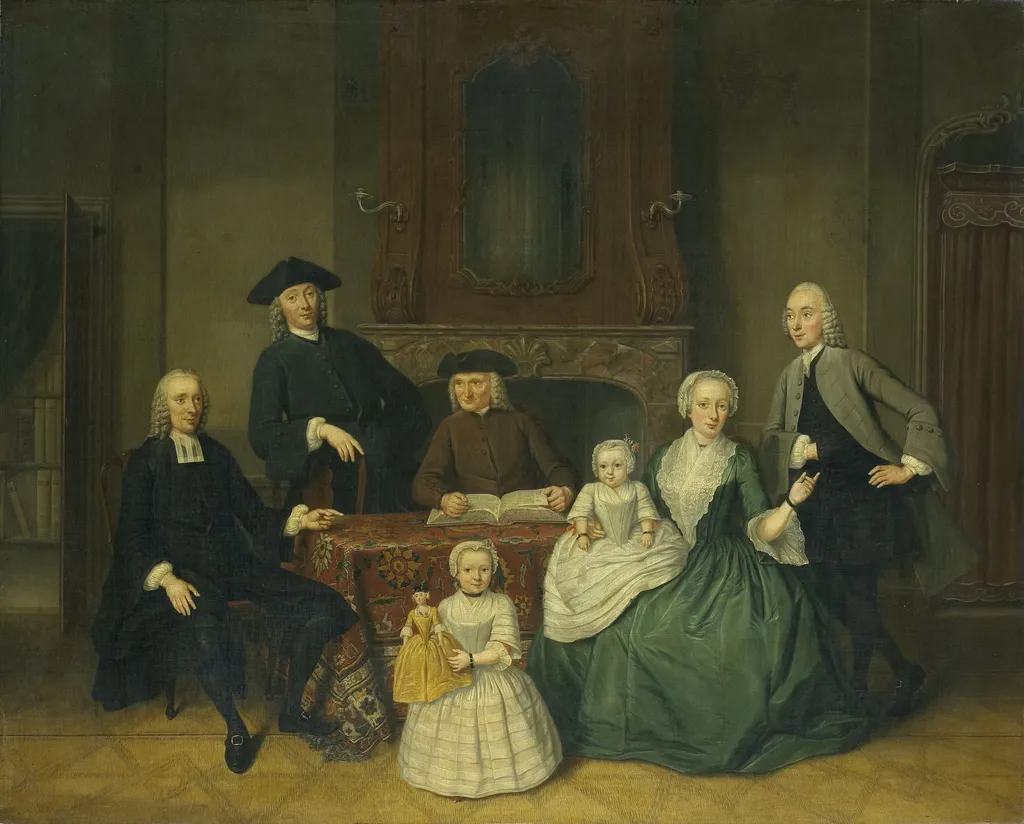
Portrait of the Brak Family, Amsterdam Mennonites is an unspecified painting by the Rococo painting artist Unknown. It dates from 1752 and is held in the collection of the Rijksmuseum.
About this work
Overview
From left to right sit the minister Jan Brak, his brother Pieter, their father Harmen, and the sister‑in‑law Margaretha Hasselaar with her husband Cornelis.
The canvas depicts three generations of the Brak family, a Dutch Mennonite household from Amsterdam, gathered around a fireplace in a modest, wood‑panelled interior. From left to right sit the minister Jan Brak, his brother Pieter, their father Harmen, and the sister‑in‑law Margaretha Hasselaar with her husband Cornelis. In the foreground a young daughter clutches a doll while a baby rests on her mother’s lap, and a doorway opens onto a book‑filled library.
Subject & Meaning
The composition emphasizes familial bonds and the quiet piety characteristic of Mennonite culture, reflected in the restrained attire and unadorned setting. By presenting multiple generations together, the portrait underscores continuity of faith and lineage within the community, while the inclusion of children suggests the transmission of those values to the next generation.
Technique & Style
Executed in a realistic manner, the work employs careful modelling of faces and hands to convey individuality, yet the overall palette remains muted, reinforcing the sober aesthetic preferred by the family’s religious tradition. The interior space is rendered with attention to perspective, allowing a view through a doorway into a library that adds depth and hints at the family’s intellectual pursuits.
History & Provenance
The painting dates from the mid‑18th century, a period when Mennonite families typically avoided elaborate portraiture. Its survival is notable given the community’s general reticence toward such displays. The work’s authorship remains unknown, and it has been retained within the family’s collection before entering public holdings, where it now serves as a rare visual record of Mennonite domestic life.
Context
In the Dutch Republic, family portraiture flourished, yet Mennonite subjects were scarce due to doctrinal modesty. This piece therefore offers a unique glimpse into how a devout, middle‑class family negotiated the conventions of portraiture while adhering to their religious principles, contrasting with the more opulent depictions of contemporary Calvinist or Catholic patrons.
Artist & collection

 Domestic Scene
 Giacomo and Cardinal Marco, investing Andrea, Abbot of San Zeno, with his Benefice
 The Nymph of Fontainebleau
 Portrait of a Woman
 Madonna and Child with Saints in the Enclosed Garden
 Venus and Minerva
 Family Group of Four on Sofa
 Wall painting from Room H of the Villa of P. Fannius Synistor at Boscoreale
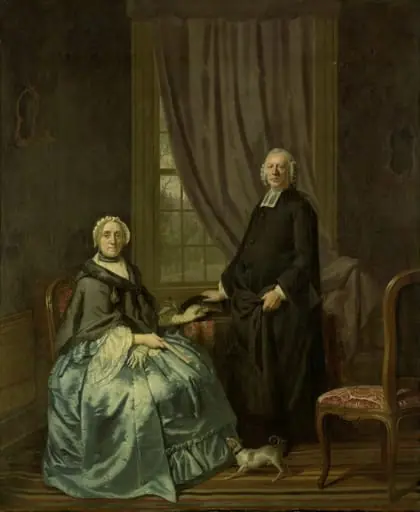 Portrait of Petrus Bliek, Remonstrant Minister in Amsterdam, with his Wife Cornelia Drost
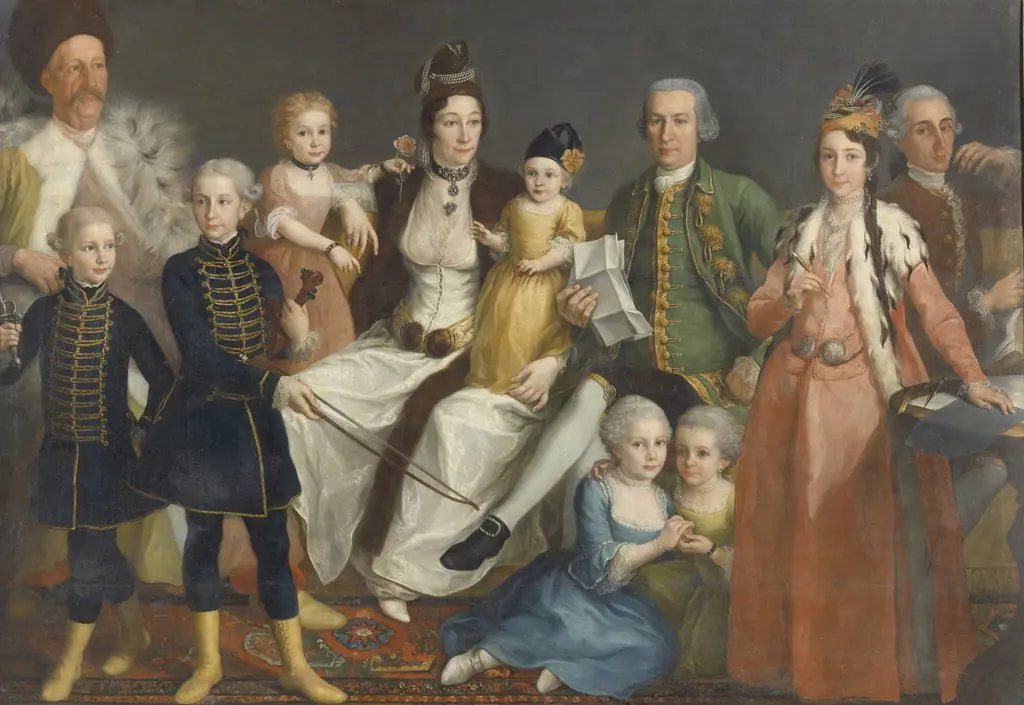 Portrait of David George van Lennep, Chief Merchant of the Dutch Factory at Smyrna (Izmir) and his Wife and Children
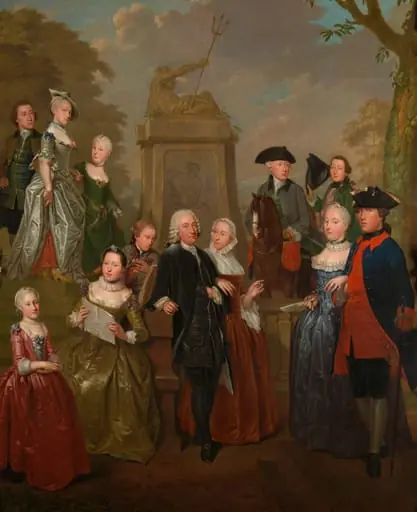 Portrait of Theodorus Bisdom van Vliet and his Family
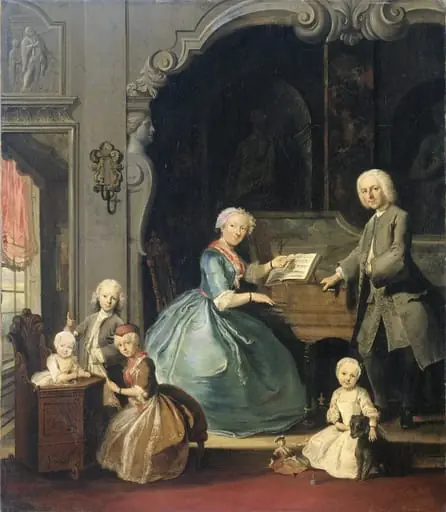 Familiegroep bij een klavecimbel
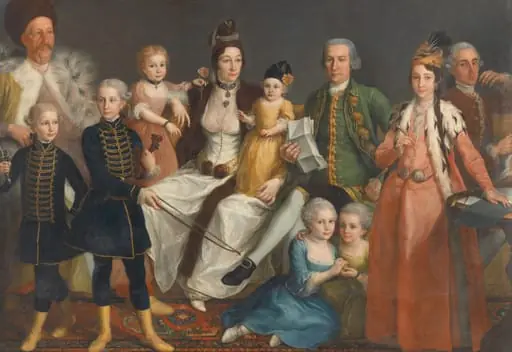 Portrait of the Van Lennep Family, a Merchant Family in Izmir
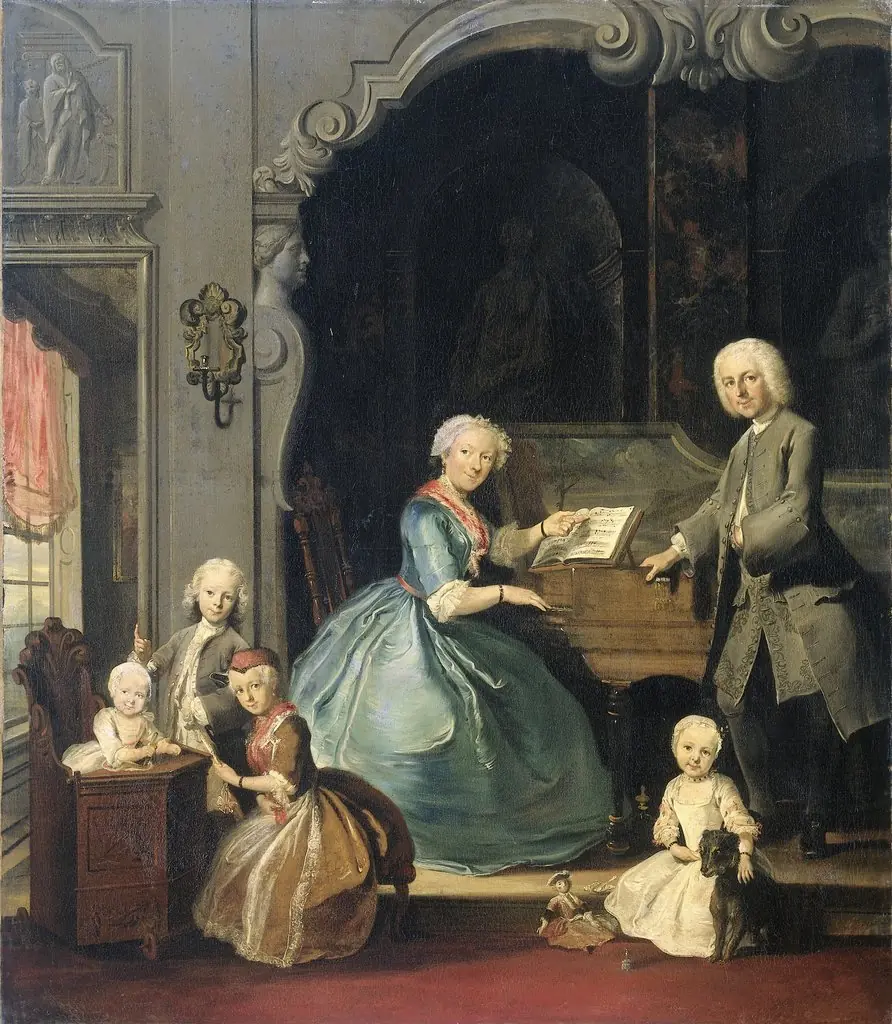 Family Group near a Harpsichord
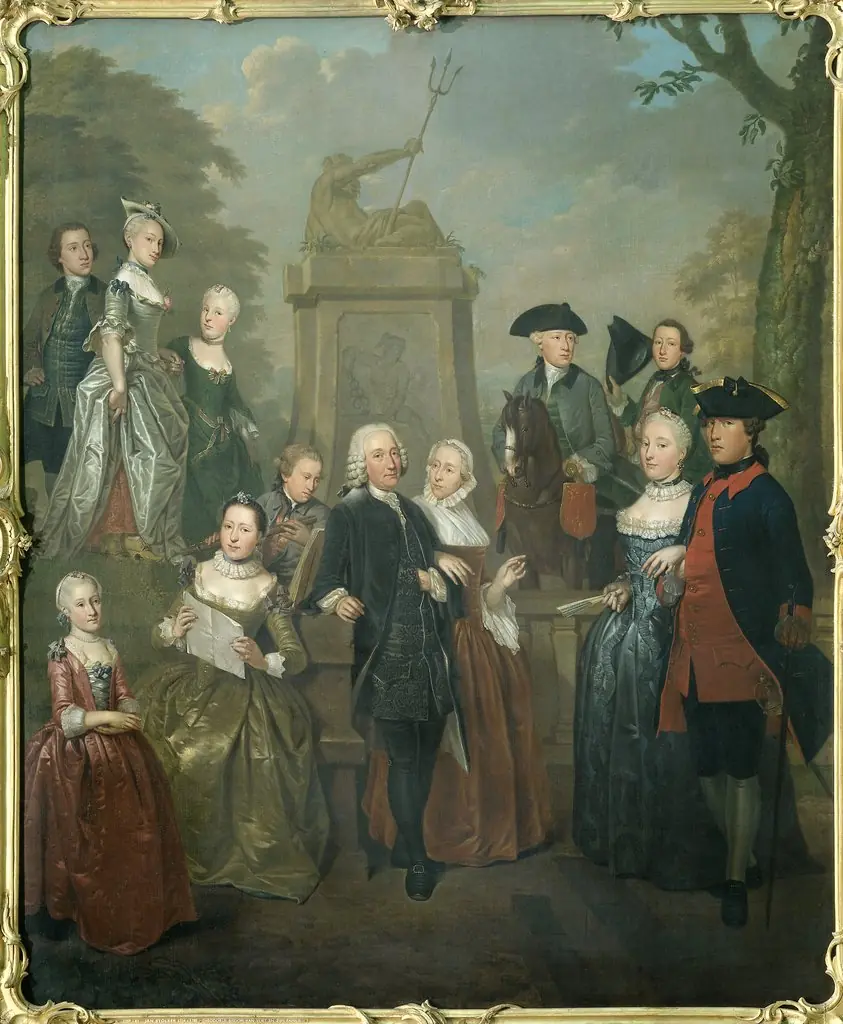 Portrait of Theodorus Bisdom van Vliet and his Family
 Portrait of the Family Hinlopen
 The Strong Family