Artwork
The Upper Flights of the Spanish Steps in Rome
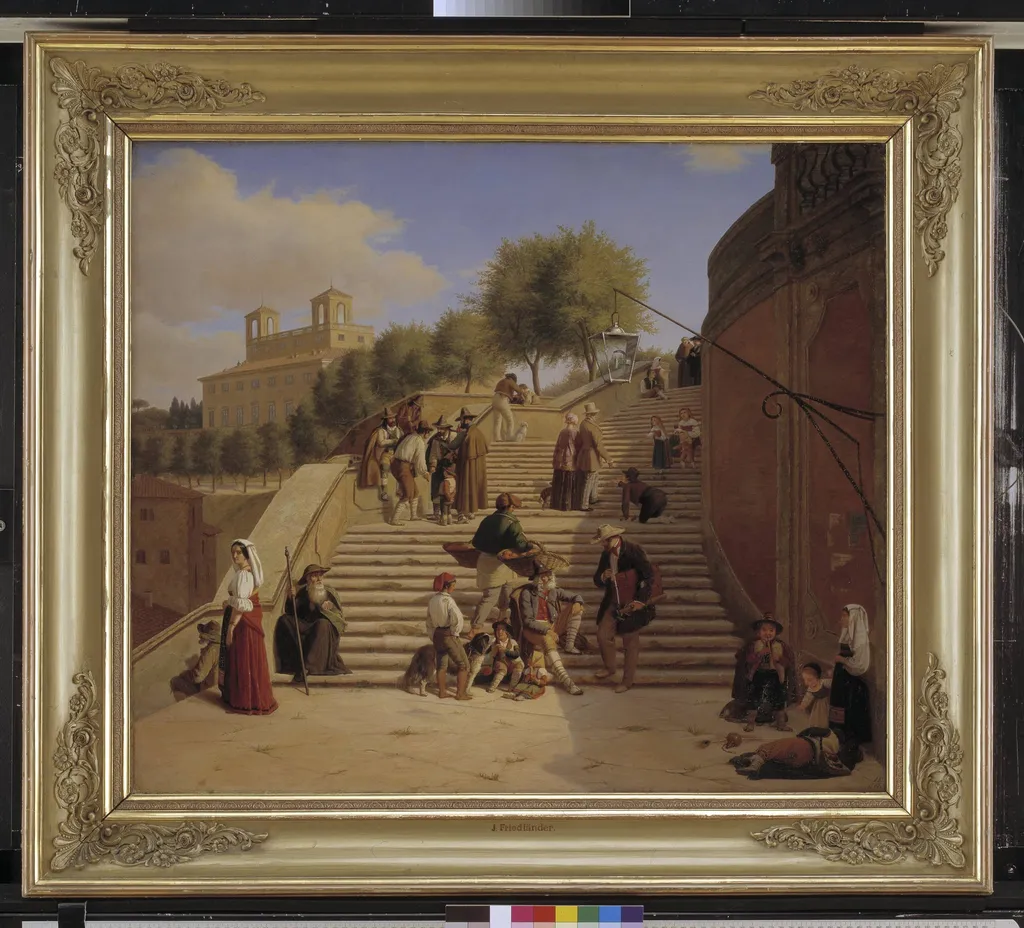
The Upper Flights of the Spanish Steps in Rome is a photography by the Romanticist artist Unknown. It dates from 1847 and is held in the collection of the Statens Museum for Kunst. This image captures the upper portion of the Spanish Steps in Rome, rendered in 1847 by an artist whose name is recorded as 625_person.
About this work
Overview
This image captures the upper portion of the Spanish Steps in Rome, rendered in 1847 by an artist whose name is recorded as 625_person. The work is part of the Museum of Ethnography’s collection. It presents a quiet, unidealized view of public life on the steps, emphasizing ordinary movement and casual interaction rather than ceremonial or dramatic moments.
Subject & Meaning
The scene depicts pedestrians ascending and descending the steps in mid-19th-century attire—some carrying parcels, others resting or conversing.
The scene depicts pedestrians ascending and descending the steps in mid-19th-century attire—some carrying parcels, others resting or conversing. A woman in a red dress stands out near the base, drawing attention without dominating the composition. The focus on routine behavior suggests an interest in the rhythms of urban life, reflecting a shift toward documenting everyday experience over staged narratives.
Technique & Style
The image employs soft, diffused lighting to model the stone steps and figures with gentle shadows, avoiding harsh contrasts. Details are rendered with observational precision rather than idealization, aligning with emerging realist tendencies. The composition frames the steps as a natural stage for human activity, with the towered building at the summit providing a quiet architectural anchor.
History & Provenance
Created in 1847, the work entered the Museum of Ethnography’s holdings at an unspecified later date. Its survival as a visual record of Rome’s public spaces during a period of social transition offers insight into how non-elite life was visually documented before the widespread use of photography.
Context
Produced during the height of Romanticism, the image diverges from the movement’s typical emphasis on drama or sublime nature. Instead, it aligns with a quieter strand of Romantic thought that valued authenticity in daily life. Similar depictions of urban crowds and public spaces emerged across Europe as artists turned toward the social fabric of modern cities.
Legacy
The image contributes to a growing visual archive of 19th-century urban life, predating photographic documentation of such scenes. Its quiet realism influenced later documentary approaches to public space, offering a model for observing human behavior in architectural settings without narrative embellishment.
Artist & collection

 Domestic Scene
 Giacomo and Cardinal Marco, investing Andrea, Abbot of San Zeno, with his Benefice
 The Nymph of Fontainebleau
 Portrait of a Woman
 Madonna and Child with Saints in the Enclosed Garden
 Venus and Minerva
 Family Group of Four on Sofa
 Wall painting from Room H of the Villa of P. Fannius Synistor at Boscoreale
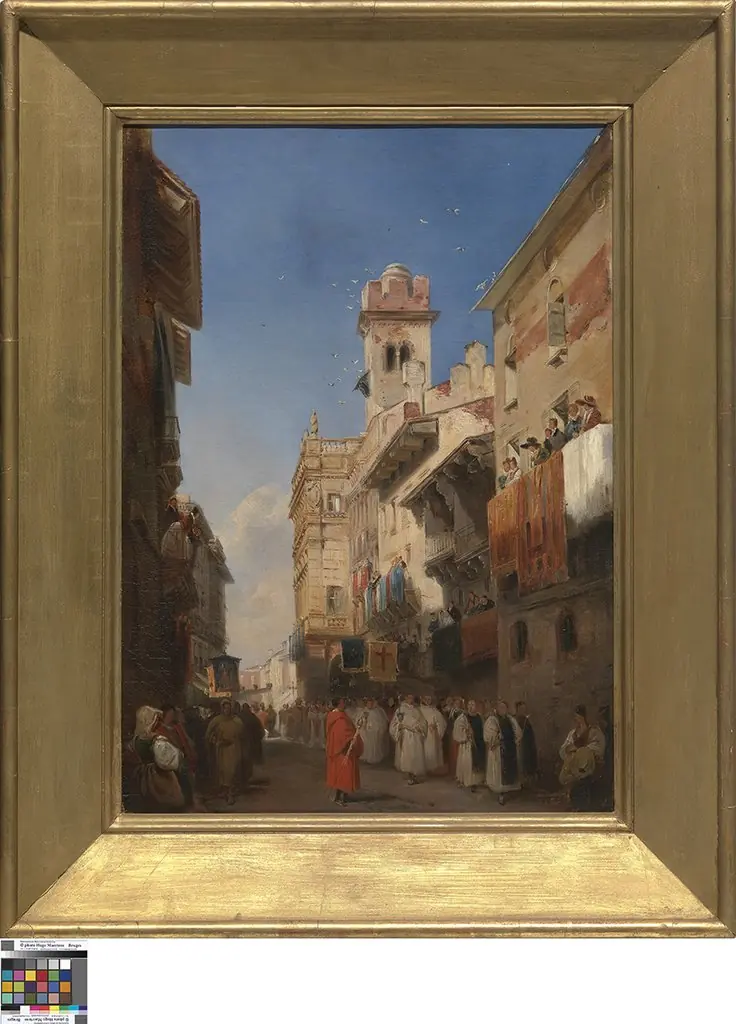 Processie in Verona
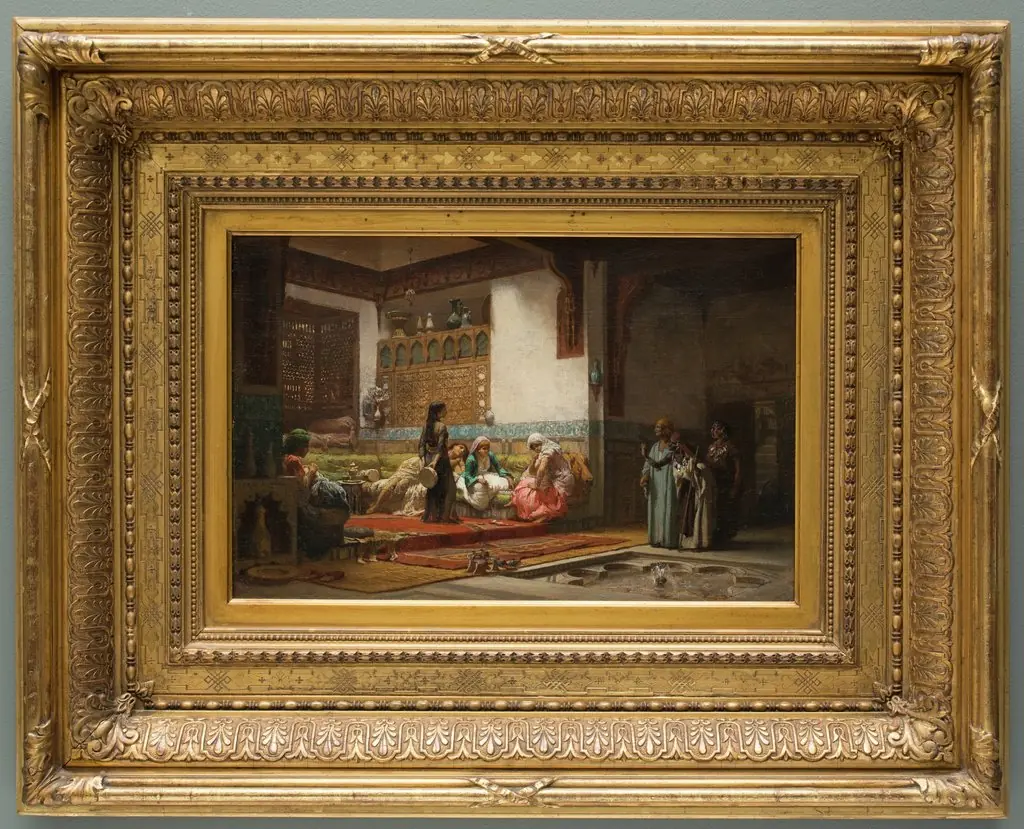 Moorish Interior
 The Valley of Guiuk-Suey, Sweet Waters of Asia
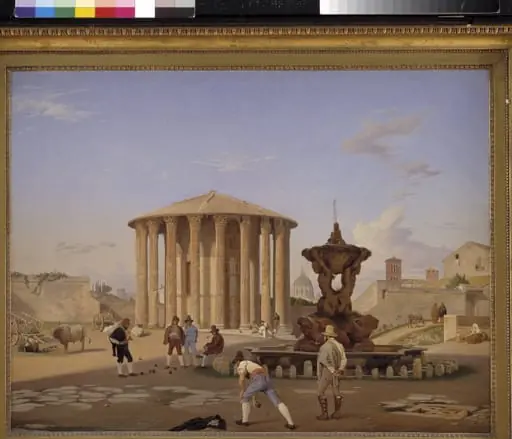 Piazza della Bocca della Verità with the so-called Vesta Temple in Rome
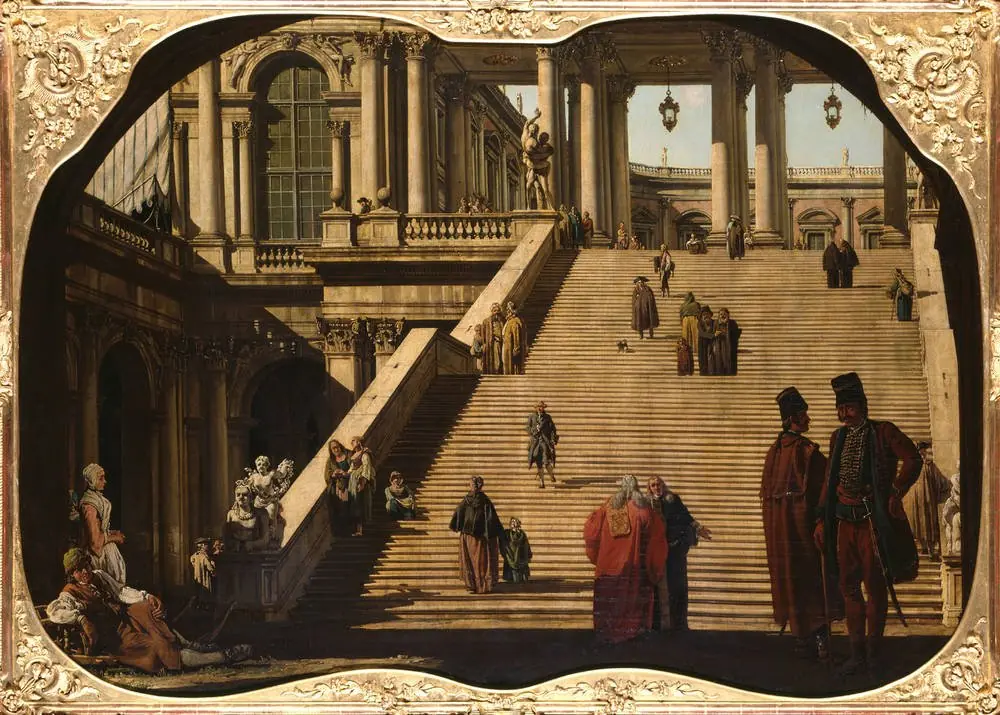 Stairs Leading to the Colonnade of a Palace
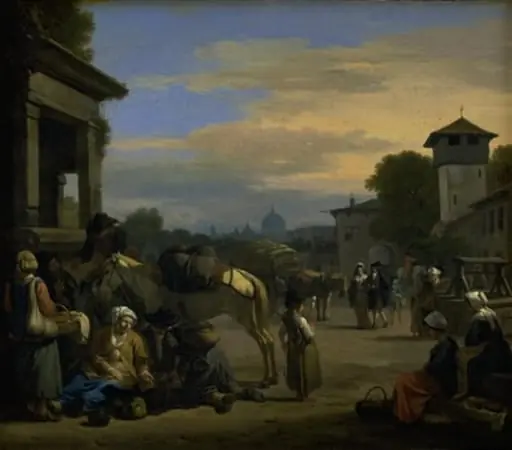 Street Scene in Rome
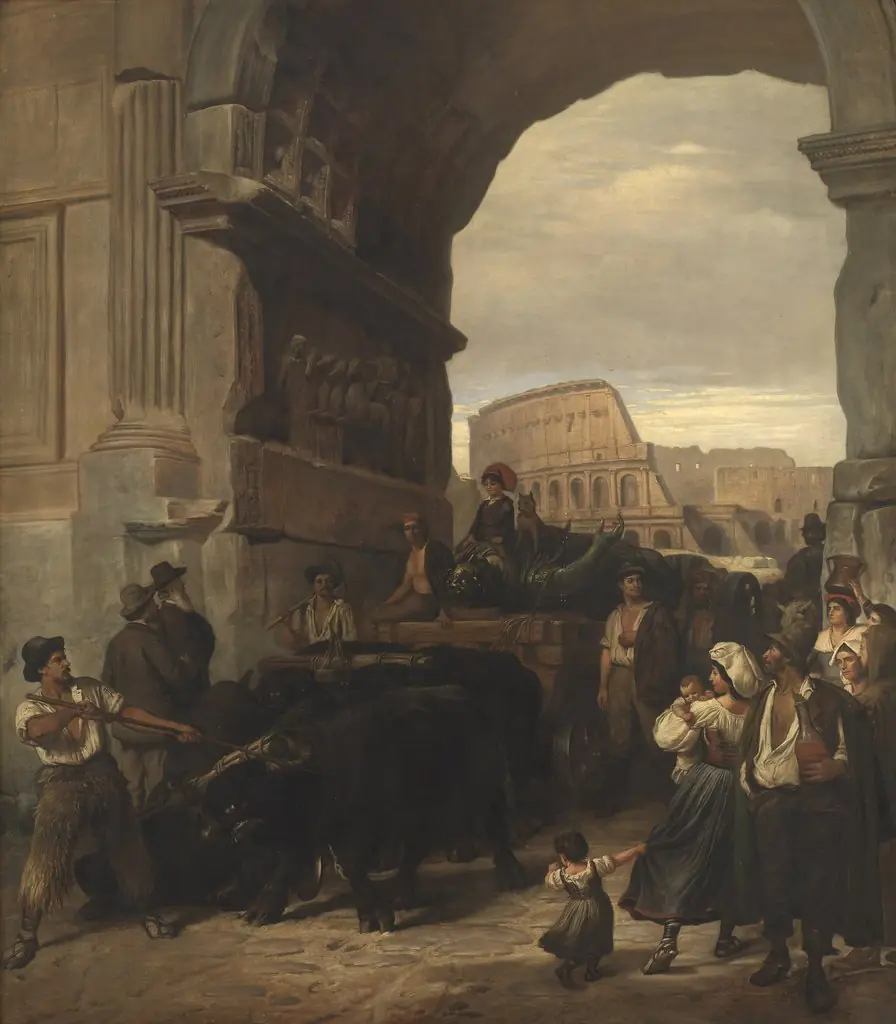 Roman Workmen Transporting an Antique Imperial Statue from the Colosseum through the Arch of Titus to the Capitoline Museums
 Landscape
 Tordurchblick