Artwork
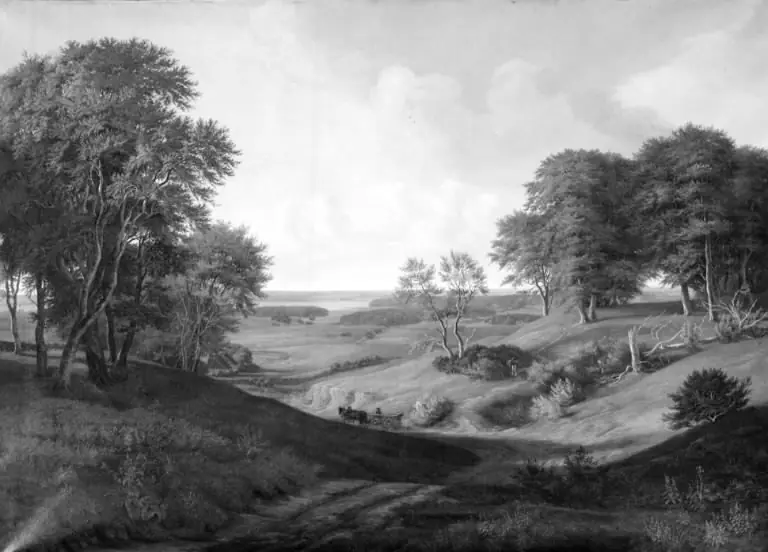
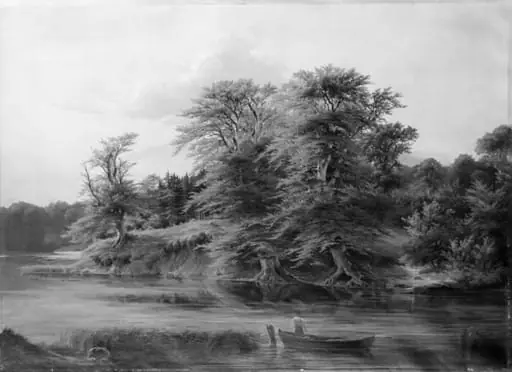
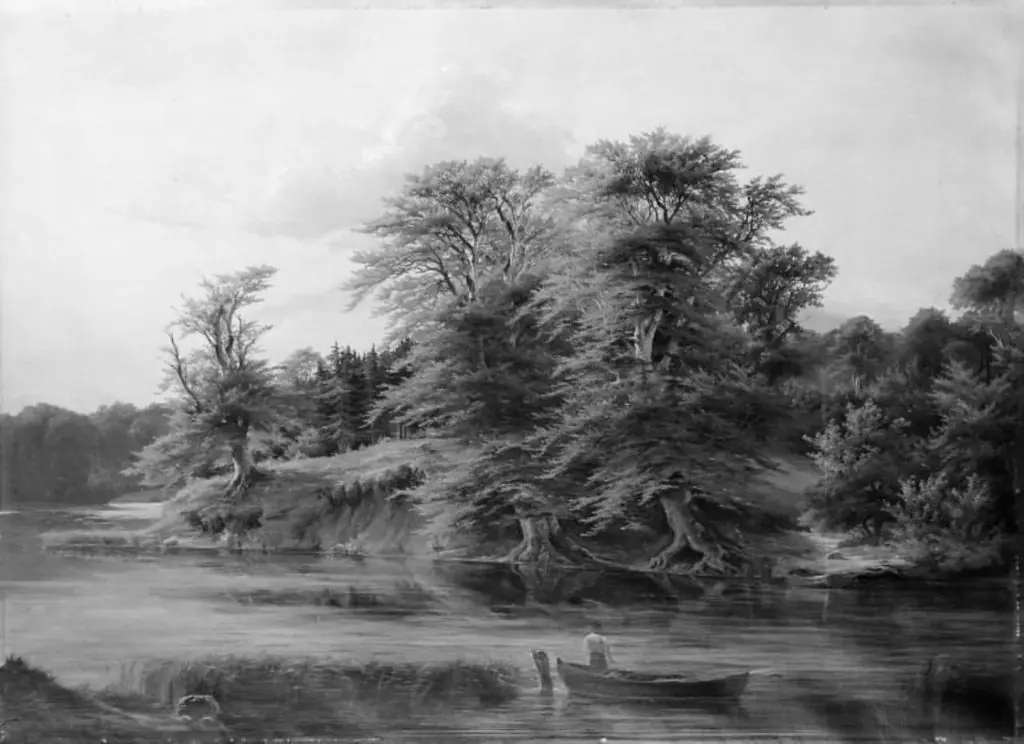
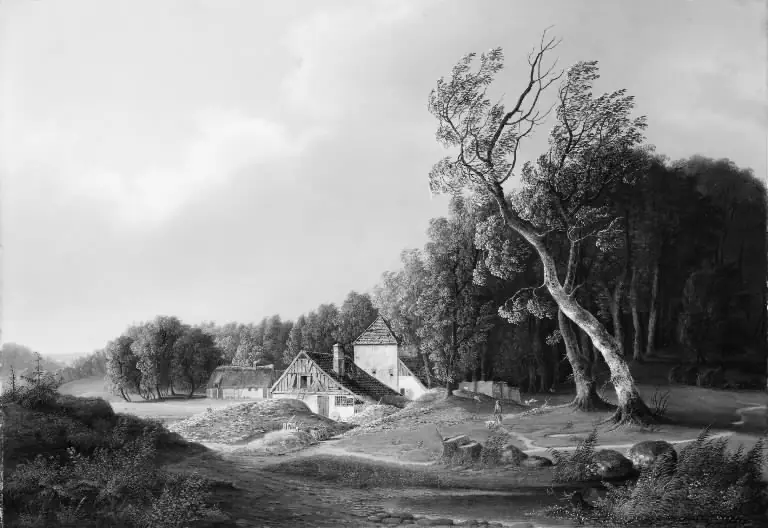
Parti ved Esrom med udsigt mod Kattegat
Parti ved Esrom med udsigt mod Kattegat is a photography by the Romanticist artist Unknown. It dates from 1842 and is held in the collection of the Statens Museum for Kunst. Created in 1842, this black-and-white image depicts a tranquil riverside scene near Esrom, with a view toward the Kattegat.
About this work
Overview
Created in 1842, this black-and-white image depicts a tranquil riverside scene near Esrom, with a view toward the Kattegat. The work is attributed to an artist associated with early photographic experimentation. It is currently held in the collection of the Museum of Ethnography, where it is preserved as an example of 19th-century landscape documentation through emerging photographic techniques.
Subject & Meaning
The composition emphasizes stillness and solitude, reflecting a contemplative engagement with nature rather than narrative or symbolic intent.
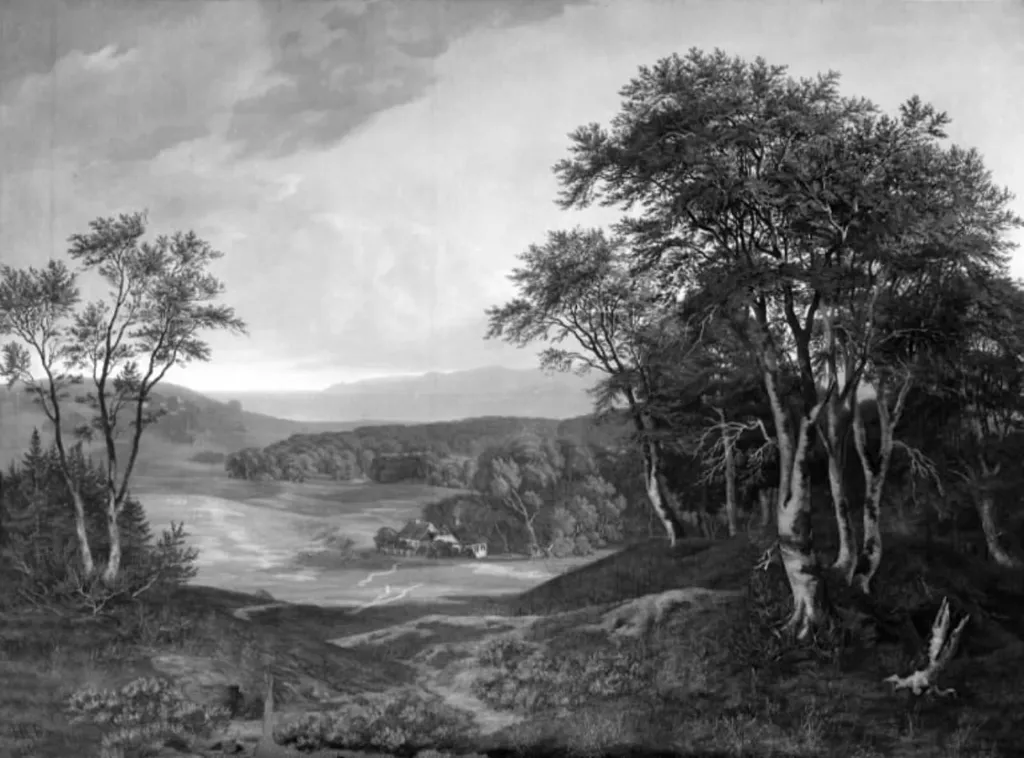
The scene captures a quiet stretch of river winding through a wooded landscape, framed by slender trees and distant hills. A solitary house near the water suggests human presence without intrusion. The composition emphasizes stillness and solitude, reflecting a contemplative engagement with nature rather than narrative or symbolic intent. The mood is subdued, aligned with early photographic attempts to evoke the quietude of the natural world.
Technique & Style
The image employs soft tonal gradations to suggest depth and atmospheric haze, mimicking the aesthetic of hand-drawn landscapes common in Romantic-era prints. The lack of sharp detail and the blurred transitions between elements reflect the limitations and intentional stylistic choices of early photographic processes. This approach prioritized mood over precision, aligning photography with prevailing artistic conventions of the time.
History & Provenance
The work was produced in 1842, during a period when photography was transitioning from scientific curiosity to artistic practice. It entered the collection of the Museum of Ethnography, likely as part of a broader effort to document regional landscapes and cultural environments. Its preservation there suggests an interest in its value as both visual record and cultural artifact, rather than purely as fine art.
Context
In the 1840s, photography in Denmark was beginning to be used for topographical and ethnographic study. This image reflects a broader trend of using the new medium to capture rural and natural scenes, often influenced by Romantic ideals of nature as serene and sublime. Though not overtly emotional, the composition aligns with contemporary visual culture that valued quiet, unspoiled landscapes as subjects of contemplation.
Legacy
As one of the early photographic landscapes from Denmark, the work contributes to the historical record of how photography adapted visual traditions from painting. Its preservation in an ethnographic museum underscores its role as a document of place and perception, rather than a celebrated artwork. It remains a quiet example of how new technologies were integrated into existing aesthetic frameworks.
Artist & collection

 Domestic Scene
 Giacomo and Cardinal Marco, investing Andrea, Abbot of San Zeno, with his Benefice
 The Nymph of Fontainebleau
 Portrait of a Woman
 Madonna and Child with Saints in the Enclosed Garden
 Venus and Minerva
 Family Group of Four on Sofa
 Wall painting from Room H of the Villa of P. Fannius Synistor at Boscoreale