Artwork
Christian VIII (1786-1848) and Queen Caroline Amalie (1796-1881) in Coronation Robes
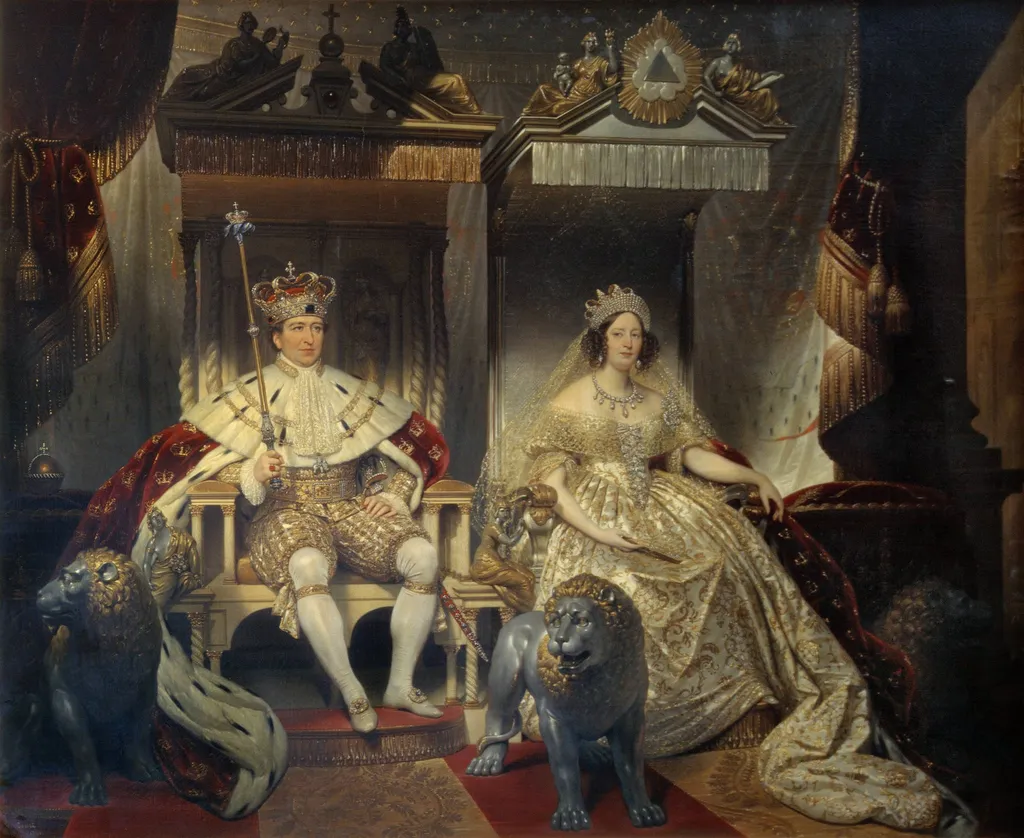
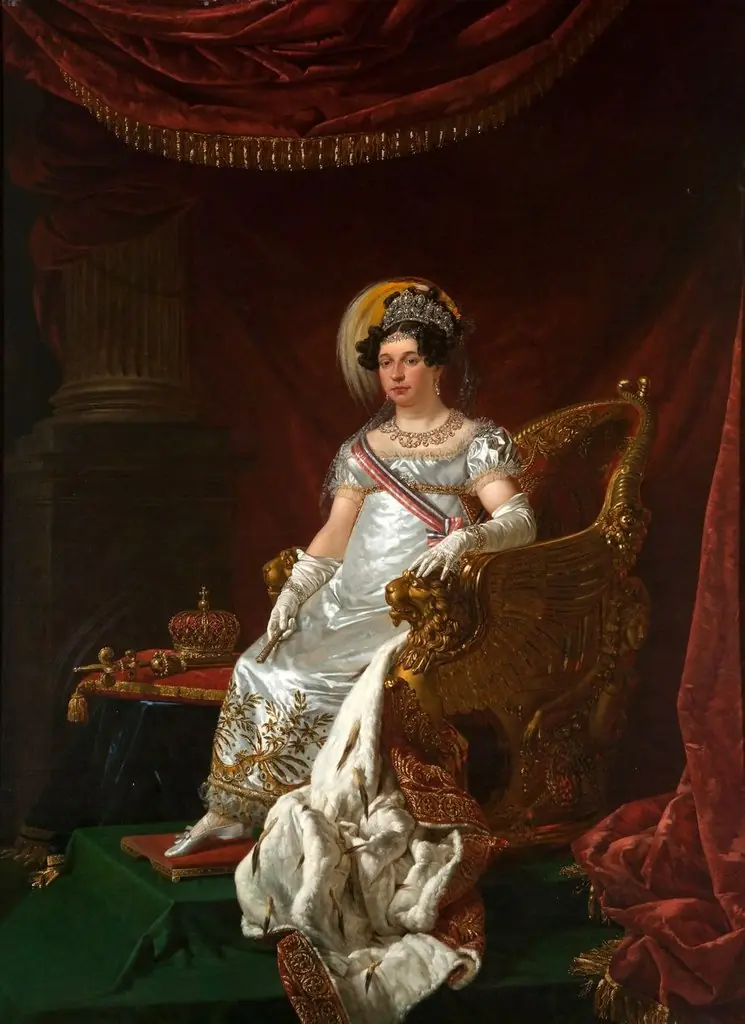
Christian VIII (1786-1848) and Queen Caroline Amalie (1796-1881) in Coronation Robes is a photography by the Romanticist artist Unknown. It dates from 1841 and is held in the collection of the Statens Museum for Kunst.
About this work
Overview
This 1841 portrait depicts King Christian VIII and Queen Caroline Amalie of Denmark in their coronation attire, painted to commemorate their 1840 ascension.
This 1841 portrait depicts King Christian VIII and Queen Caroline Amalie of Denmark in their coronation attire, painted to commemorate their 1840 ascension. The subjects are shown seated on ornate thrones under a rich red curtain, flanked by stone lions. The composition follows formal royal portraiture conventions, emphasizing dignity and state authority rather than individual expression. The work is held in the collection of the Museum of Ethnography.
Subject & Meaning
The painting captures the monarchs at the moment of their formal investiture, symbolizing the continuity of the Danish monarchy. Christian VIII holds the scepter, while Caroline Amalie wears the queen’s crown and regalia. Their direct gaze and rigid posture convey solemnity and legitimacy. The lions, traditional emblems of power, reinforce the idea of royal strength and permanence, anchoring the image in monarchical tradition.
Technique & Style
Rendered with precise detail, the robes and jewelry are rendered in fine brushwork to highlight texture and material richness. The background is simplified, focusing attention on the figures. While the composition reflects neoclassical formality, the emphasis on fabric, light, and emotional gravity aligns with Romantic-era tendencies. The lighting is even and controlled, avoiding dramatic contrasts to preserve the dignity of the subjects.
History & Provenance
Commissioned shortly after the couple’s coronation in 1840, the painting was intended for official display. It entered the Museum of Ethnography’s collection in the late 19th century, likely as part of a broader effort to document Danish state rituals. Its presence in an ethnographic institution reflects 19th-century practices of treating royal ceremonial objects as cultural artifacts rather than purely artistic works.
Context
Created during a period of rising nationalism in Europe, the portrait served to visually affirm the monarchy’s role in Danish identity. Coronation imagery was used to unify the public around inherited authority, especially as liberal movements gained momentum. The choice of formal, static composition contrasted with more dynamic Romantic trends elsewhere, signaling a preference for tradition over innovation in state representation.
Legacy
Though not widely exhibited today, the portrait remains a key visual record of Danish royal ceremony in the mid-19th century. It provides insight into how monarchy was visually constructed during a time of political change. Its preservation in an ethnographic museum underscores its value as a cultural document, offering researchers a window into the symbolism and ritual of Danish kingship.
Artist & collection

 Domestic Scene
 Giacomo and Cardinal Marco, investing Andrea, Abbot of San Zeno, with his Benefice
 The Nymph of Fontainebleau
 Portrait of a Woman
 Madonna and Child with Saints in the Enclosed Garden
 Venus and Minerva
 Family Group of Four on Sofa
 Wall painting from Room H of the Villa of P. Fannius Synistor at Boscoreale
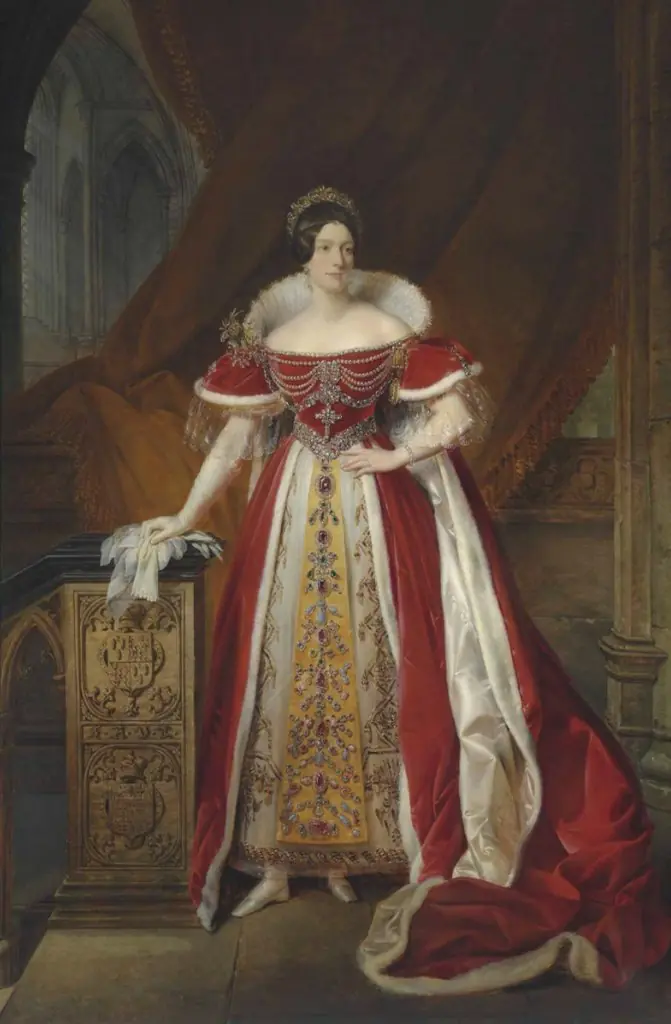 Portrait of Frances Anne Vane, Marchioness of Londonderry
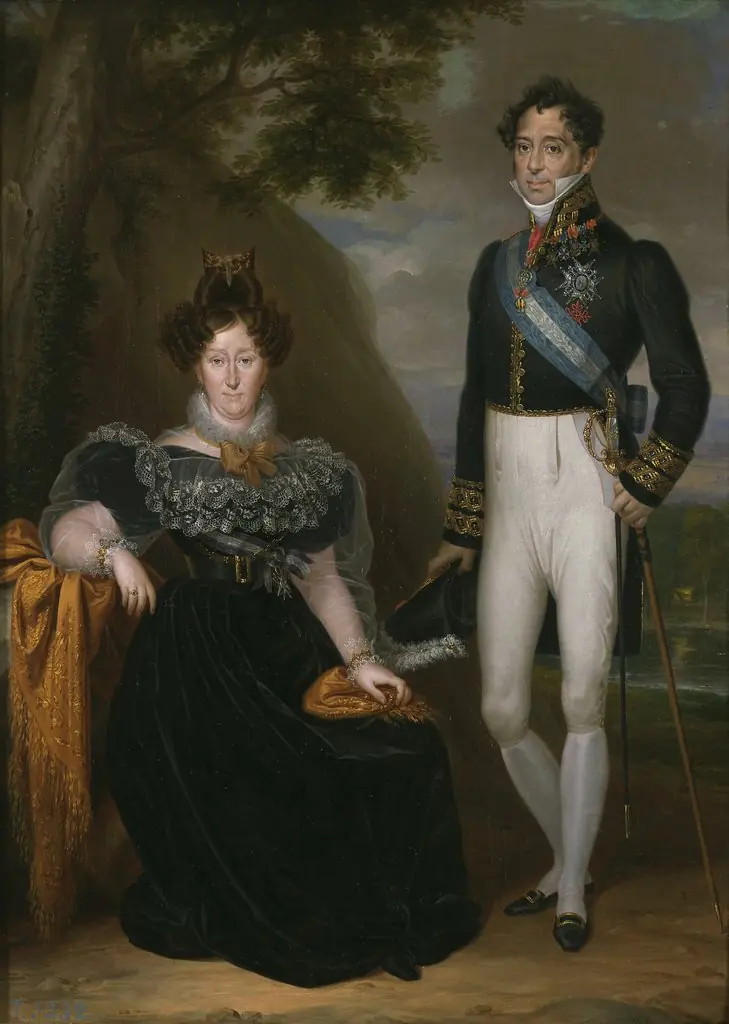 The Duke and Duchess of San Fernando de Quiroga
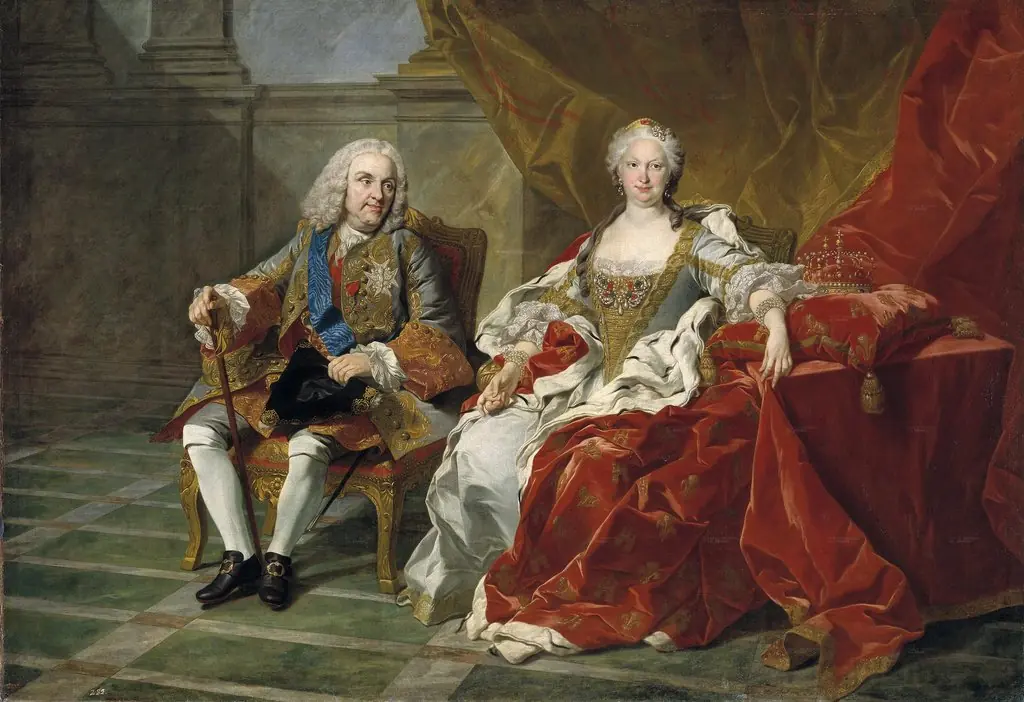 Felipe V e Isabel Farnesio
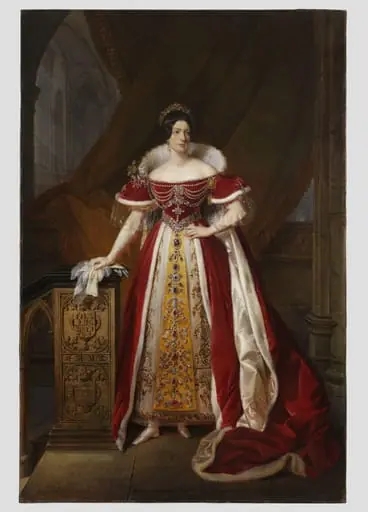 Portrait of Frances Anne Vane, Marchioness of Londonderry
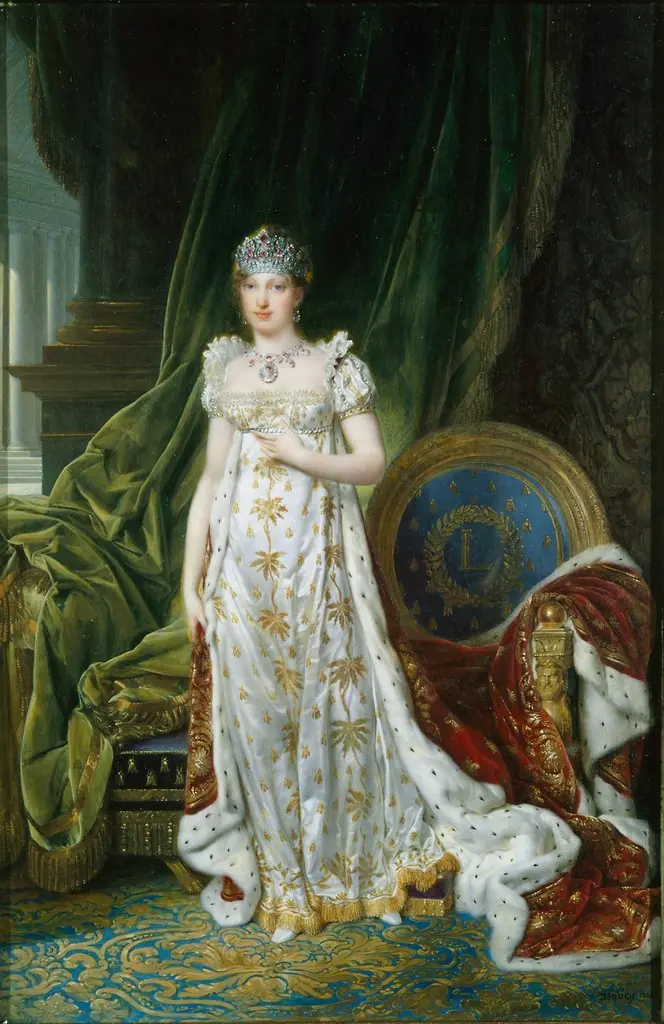 Portrait of Empress Marie-Louise
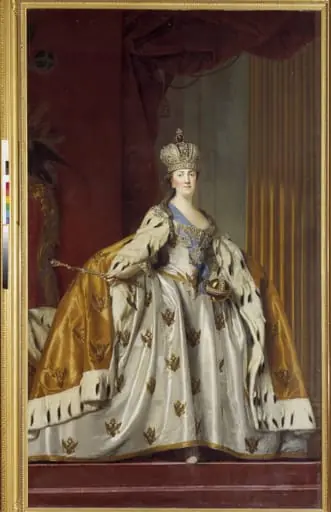 Katharina II af Rusland i kroningsdragt
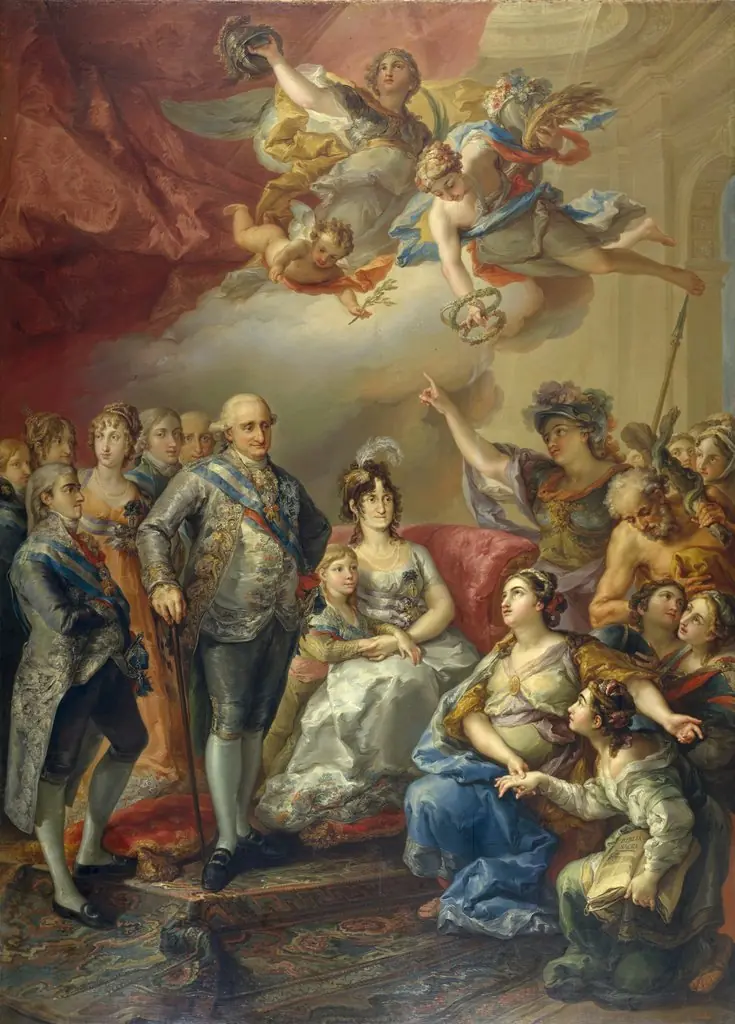 Charles IV and his Family honoured by the University of Valencia
 María Isabella of Spain (1789-1848)