Artwork
Elisabeth, Christian II's dronning
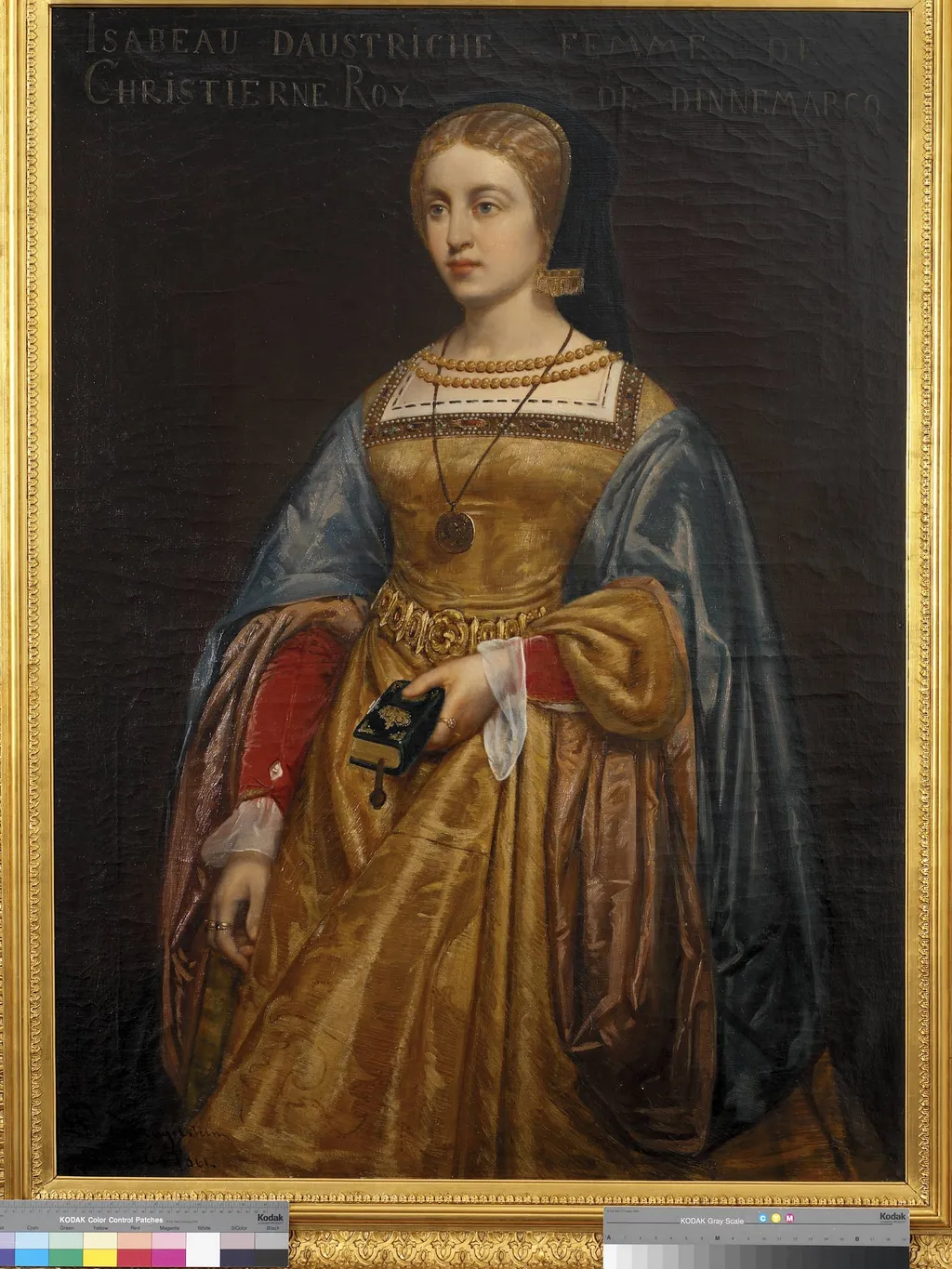
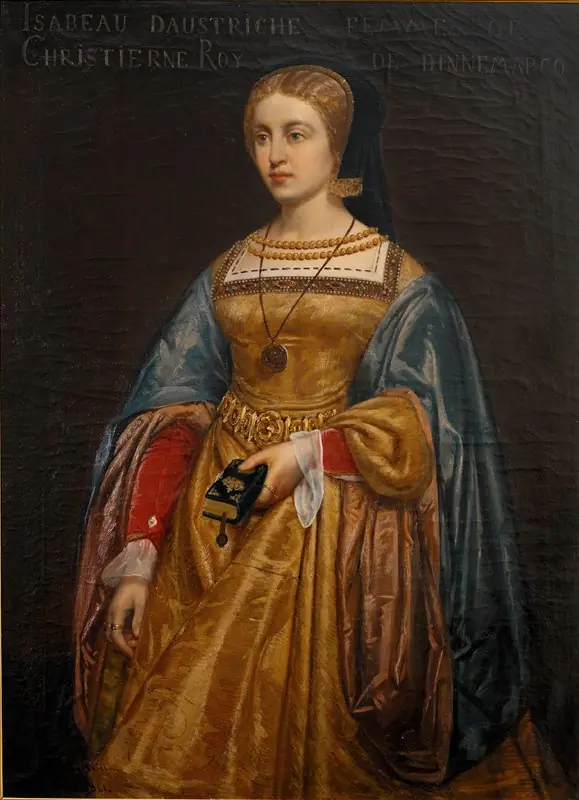
Elisabeth, Christian II's dronning is a photography by the Impressionist artist Unknown. It dates from 1861 and is held in the collection of the Statens Museum for Kunst. Painted in 1861, this portrait depicts Elisabeth, queen consort to Christian II of Denmark, as a figure of quiet dignity.
About this work
Overview
Painted in 1861, this portrait depicts Elisabeth, queen consort to Christian II of Denmark, as a figure of quiet dignity.
Painted in 1861, this portrait depicts Elisabeth, queen consort to Christian II of Denmark, as a figure of quiet dignity. Executed in oil on canvas, the work belongs to the collection of the Museum of Ethnography. Though the artist’s identity remains unverified in public records, the painting reflects 19th-century conventions of historical portraiture, emphasizing personal presence over narrative context.
Subject & Meaning
Elisabeth is portrayed not as a ruler in action, but as a contemplative noblewoman. Her modest gaze and restrained posture suggest introspection rather than authority. The small black book she holds may reference devotion or record-keeping, hinting at her role as a pious and literate consort. The absence of royal regalia shifts focus from political power to personal identity and inner life.
Technique & Style
The artist employs a restrained palette dominated by gold, deep blue, and muted tones to highlight the subject’s attire against a shadowed background. Fine brushwork renders the texture of fabric, the sheen of metal jewelry, and the softness of hair with precision. The lighting is even and directional, enhancing three-dimensionality without theatricality, aligning with the principles of Realism in mid-19th-century portraiture.
History & Provenance
The painting entered the Museum of Ethnography’s collection in the late 19th century, though its origins prior to that are undocumented. It was likely commissioned by a descendant or patron seeking to commemorate the queen’s legacy. No contemporary records confirm the artist’s identity, and the work has never been attributed to a known painter of the period.
Context
Created during a period of renewed interest in Denmark’s royal past, the portrait reflects 19th-century efforts to visually reconstruct historical figures through idealized realism. While not part of official state portraiture, it aligns with private and institutional projects aimed at preserving national memory, often blending historical accuracy with romanticized aesthetics.
Legacy
Though not widely exhibited or studied, the portrait remains a quiet testament to how historical women were visually framed in the 1800s—not as political actors, but as symbols of virtue and refinement. Its preservation in an ethnographic museum, rather than a royal or fine arts collection, underscores its role as cultural artifact over artistic achievement.
Artist & collection

 Domestic Scene
 Giacomo and Cardinal Marco, investing Andrea, Abbot of San Zeno, with his Benefice
 The Nymph of Fontainebleau
 Portrait of a Woman
 Madonna and Child with Saints in the Enclosed Garden
 Venus and Minerva
 Family Group of Four on Sofa
 Wall painting from Room H of the Villa of P. Fannius Synistor at Boscoreale
 Portrait of a Lady
 Dronning Christine
 Dronning Christine
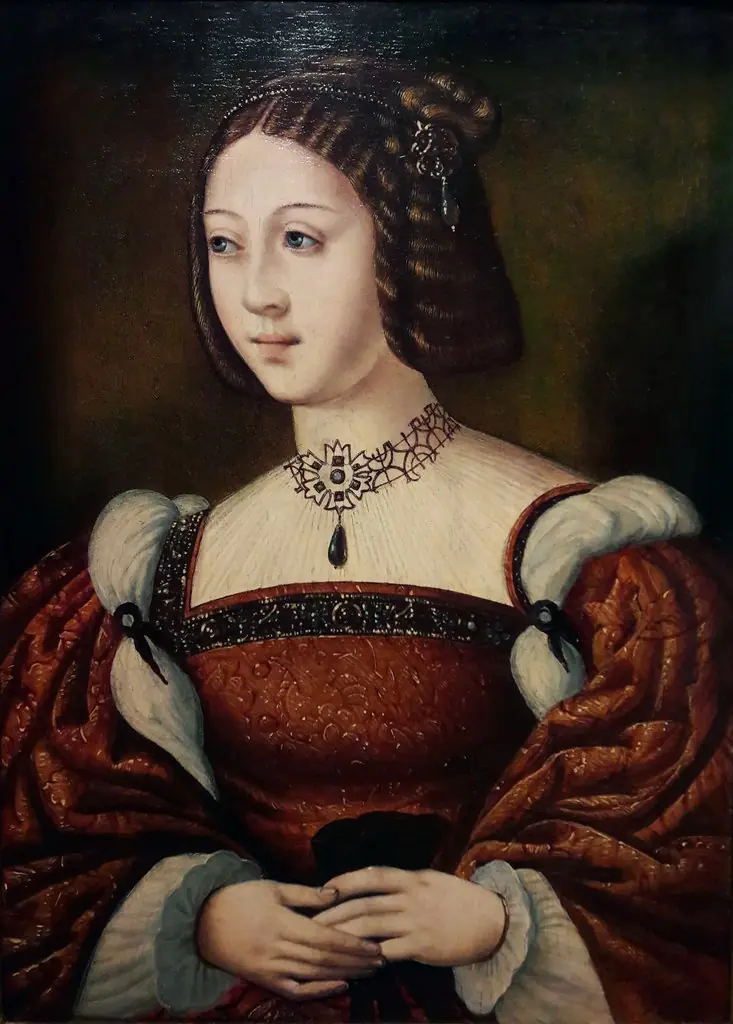 Portrait of Isabella of Portugal (1503-1539).
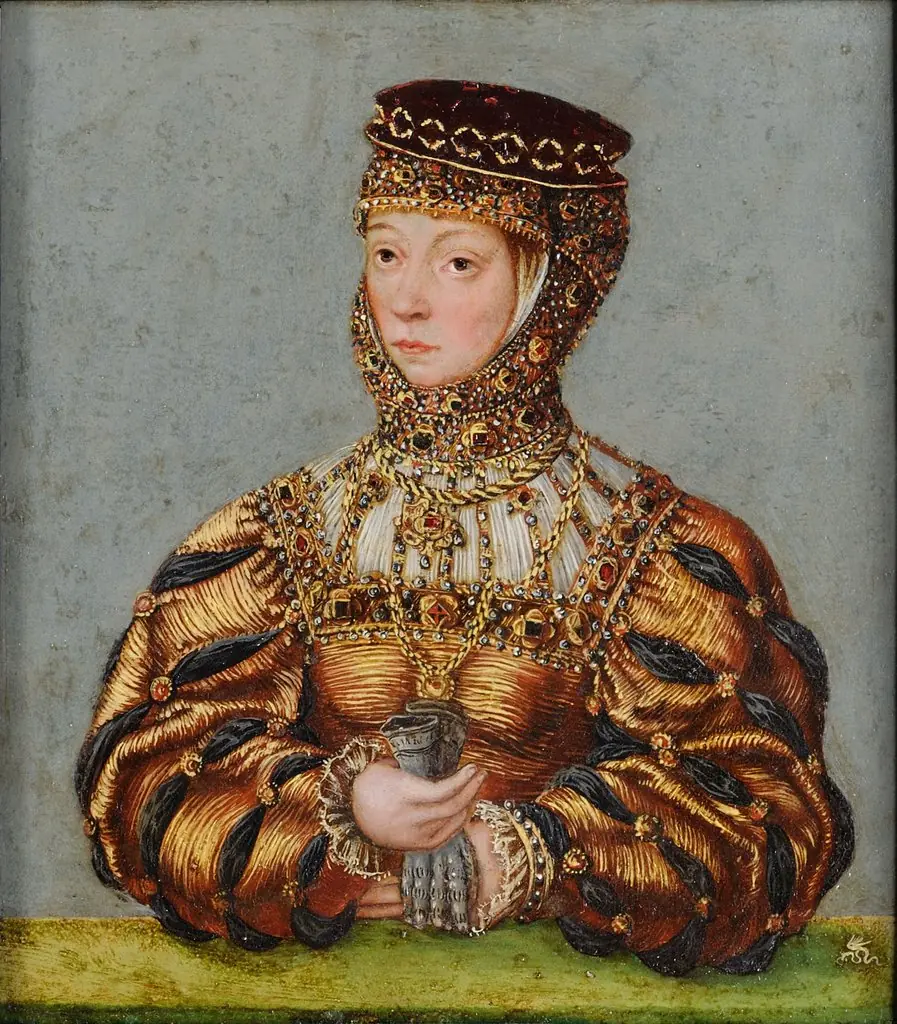 Barbara Radziwill
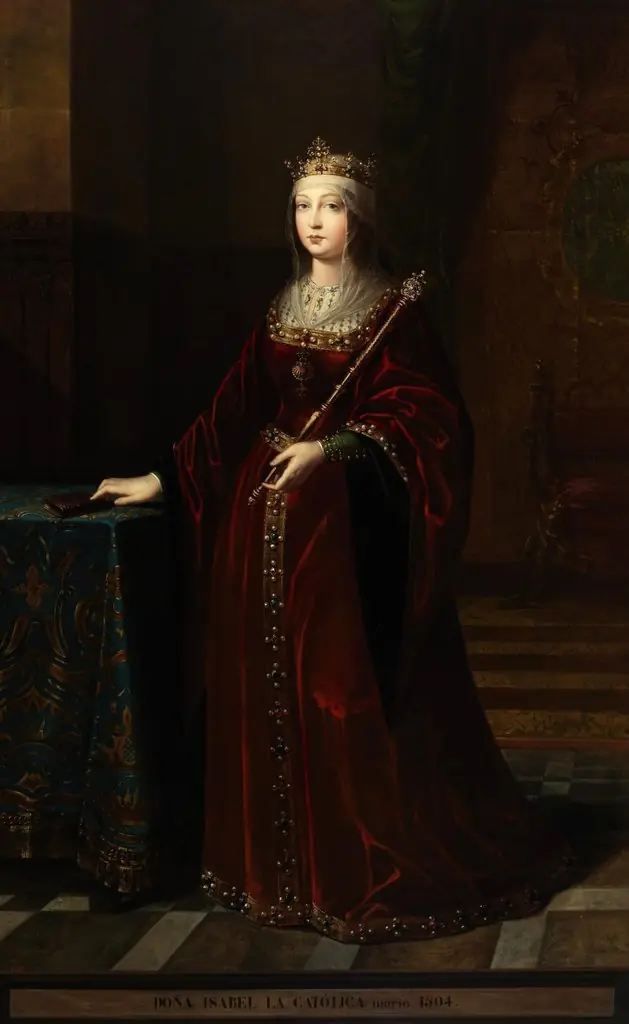 Isabel la Católica, de Luis de Madrazo
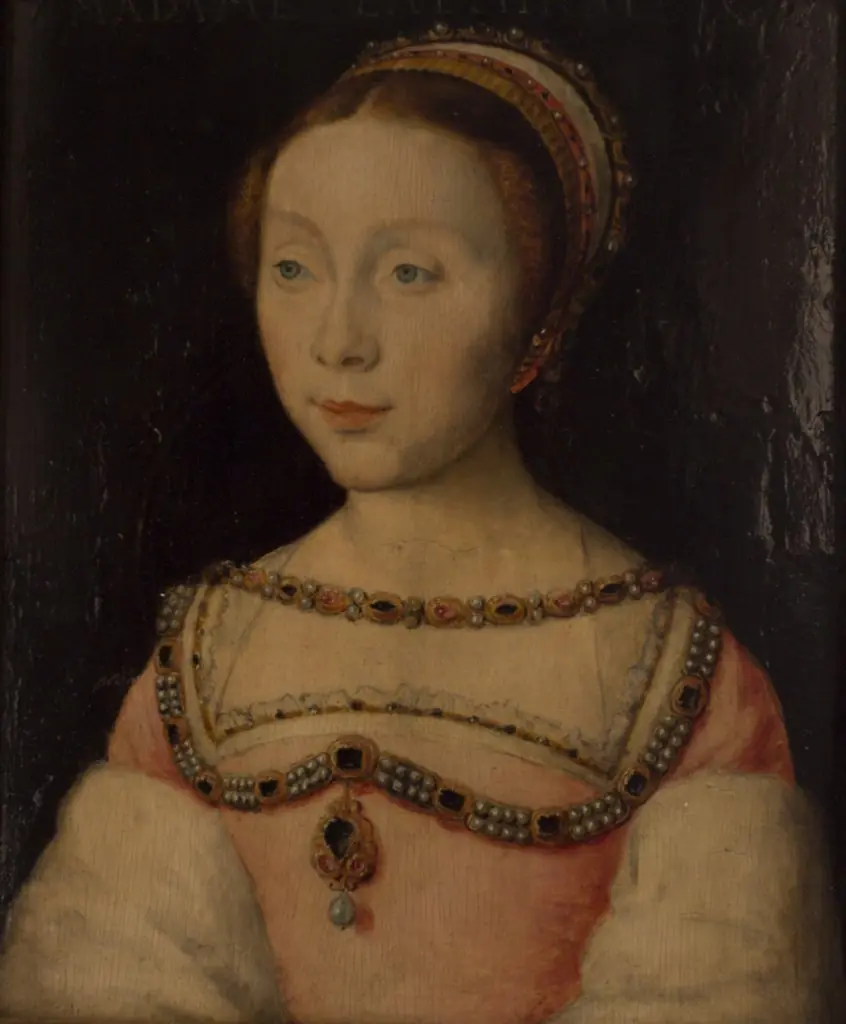 Françoise de Longwy, Countess of Chabot
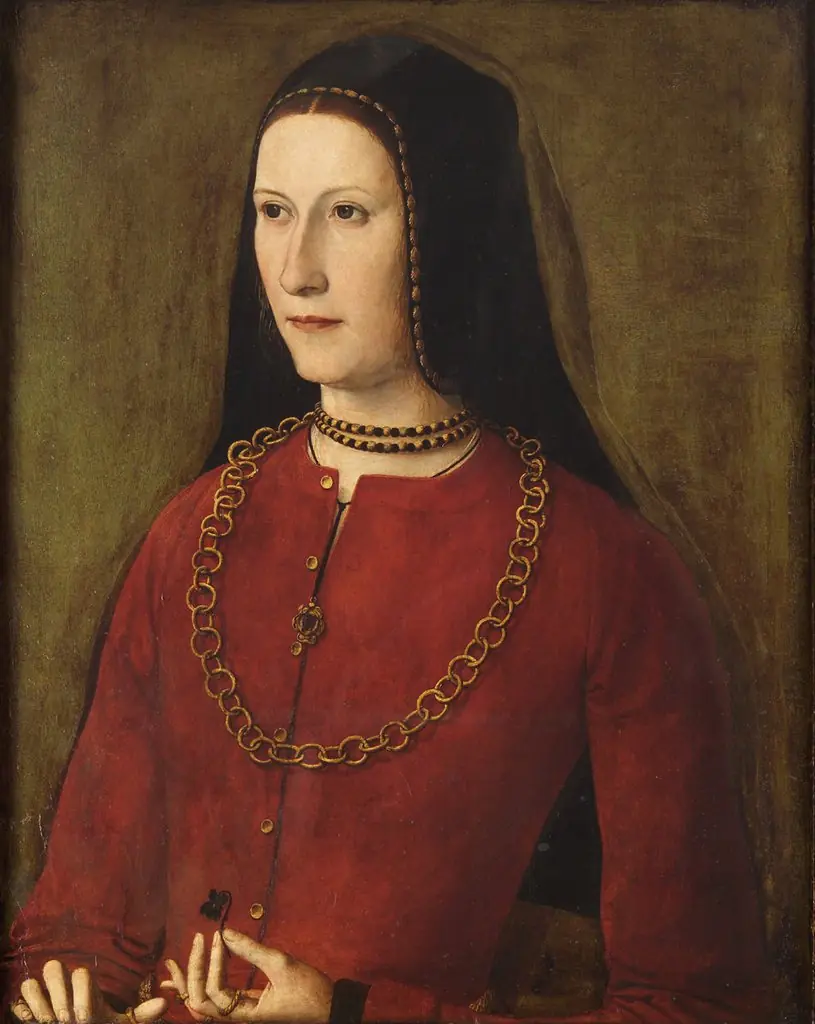 Portrait of a woman
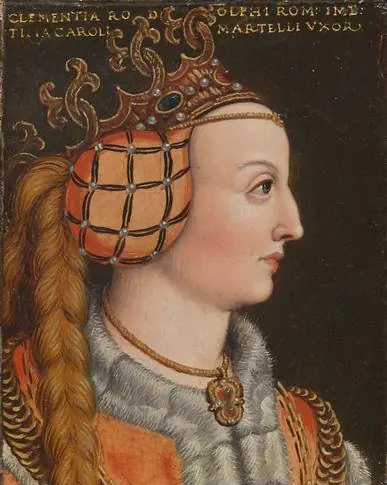 Clementia of Habsburg
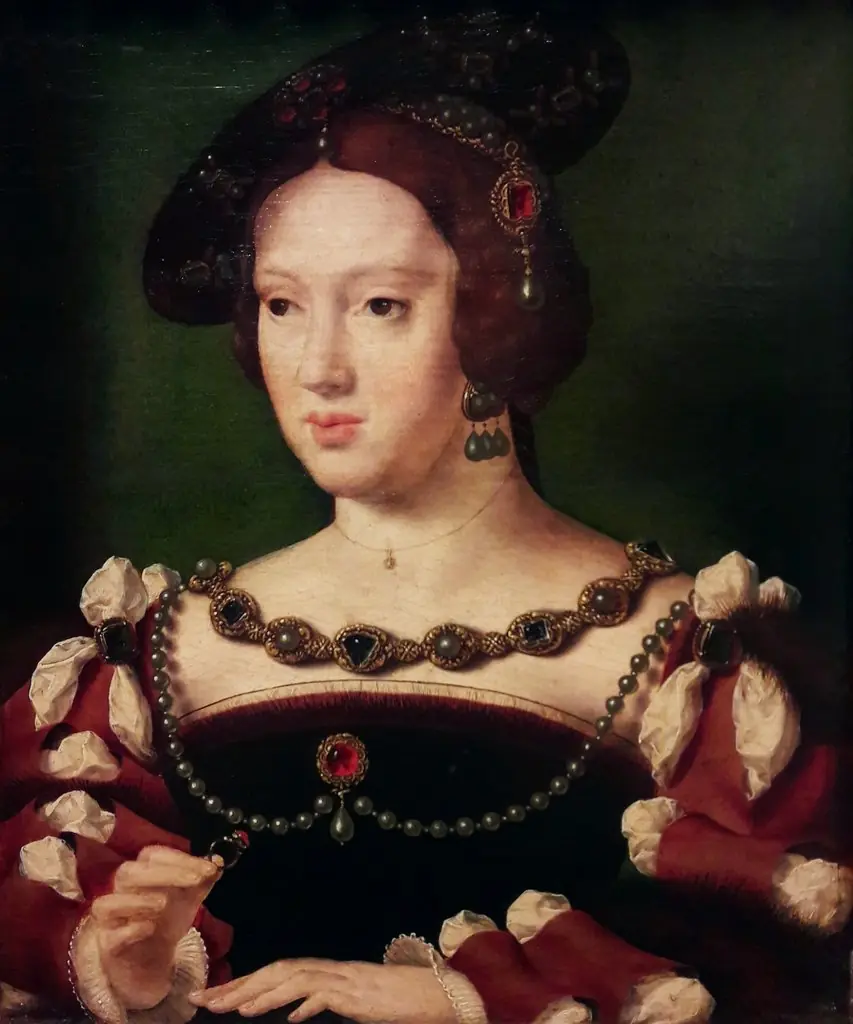 Portrait of Eleanor of Austria
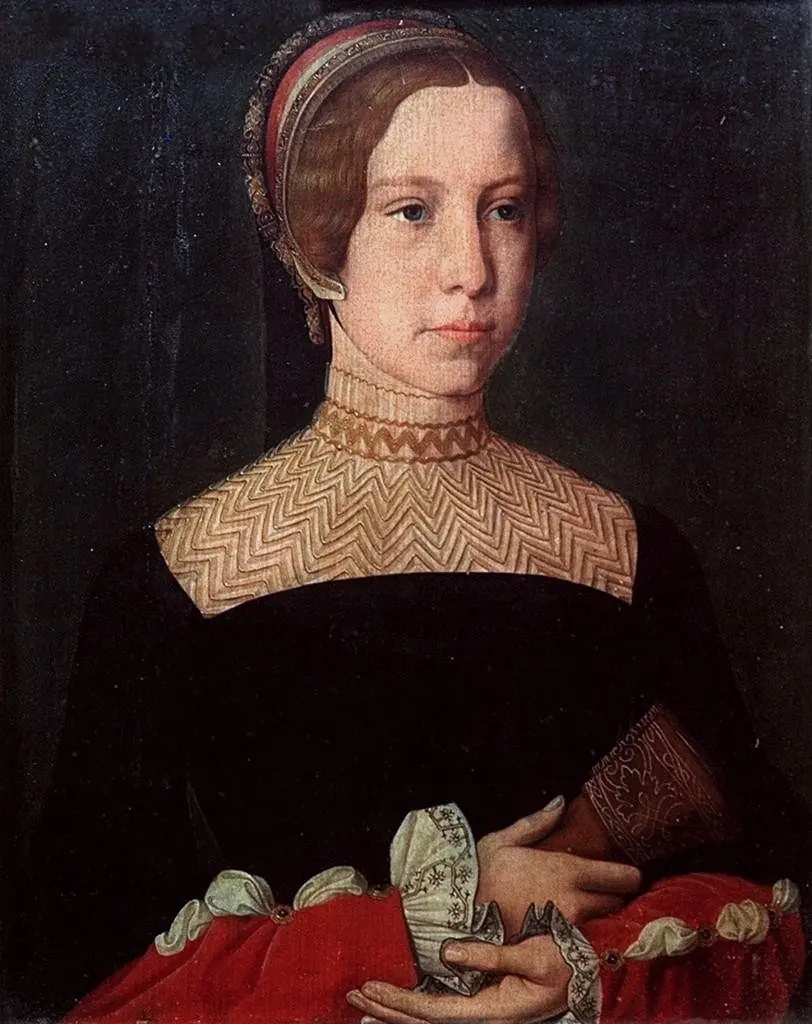 Ritratto di donna (Madeleine de la Tour d'Auvergne ?)
 Elisabeth, Christian II's dronning