Artwork
Franske kyrasserer, som angriber en russisk forpost
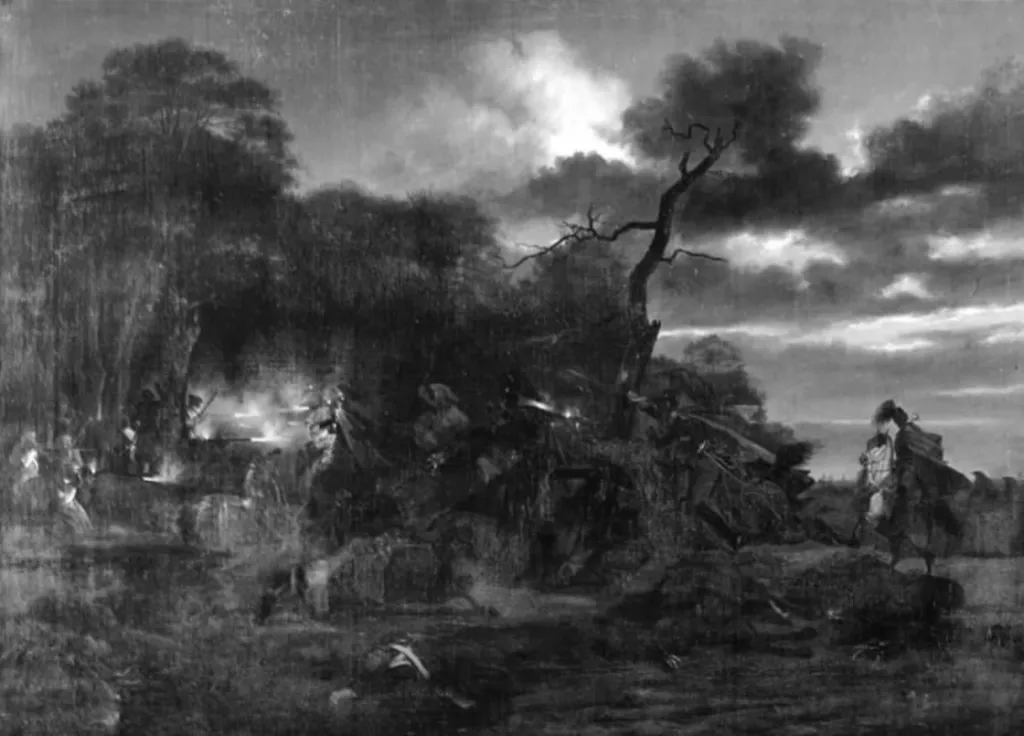
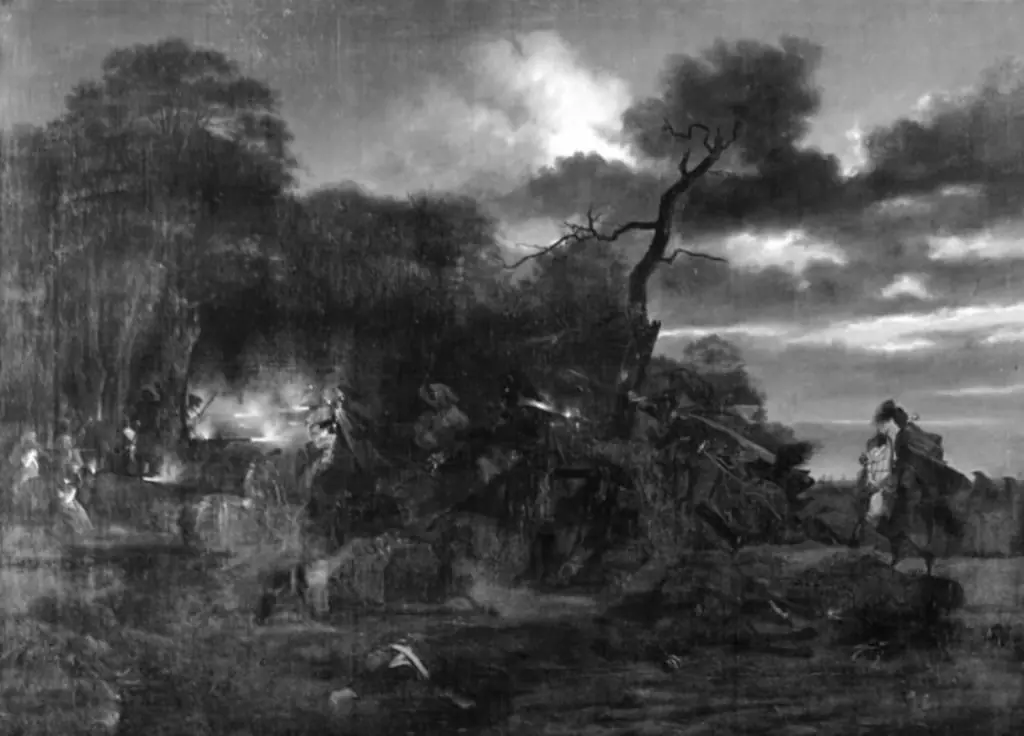
Franske kyrasserer, som angriber en russisk forpost is a photography by the Romanticist artist Unknown. It dates from 1827 and is held in the collection of the Statens Museum for Kunst. Created in 1827, this black-and-white image depicts French cuirassiers launching an assault on a Russian outpost.
About this work
Overview
The scene is rendered with intense contrast and dynamic movement, capturing a moment of violent encounter within a dense woodland.
Created in 1827, this black-and-white image depicts French cuirassiers launching an assault on a Russian outpost. The scene is rendered with intense contrast and dynamic movement, capturing a moment of violent encounter within a dense woodland. Though labeled as an image, its composition aligns with Romantic-era military painting traditions, emphasizing chaos and emotional weight over topographical accuracy.
Subject & Meaning
The work portrays a skirmish between French cavalry and Russian infantry amid forested terrain, likely referencing the Napoleonic Wars. The absence of clear national symbols or identifiable leaders shifts focus to the raw intensity of combat. The setting suggests a guerrilla-style engagement, where terrain and weather become active participants in the conflict, underscoring the unpredictability of war.
Technique & Style
The artist employs strong chiaroscuro to model figures and landscape, using deep shadows and stark highlights to amplify tension. Brushwork is energetic, with blurred edges and angular forms conveying motion. The stormy sky, punctuated by flashes of light, enhances the dramatic atmosphere. This approach reflects Romanticism’s preference for emotional resonance over classical restraint, prioritizing mood over precision.
History & Provenance
The image resides in the Museum of Ethnography, an unusual placement given its military subject. Its origin as a standalone print or study remains unclear, and no documentation links it to a known artist or commission. Its presence in an ethnographic collection may reflect 19th-century efforts to categorize cultural expressions of conflict, rather than its intended artistic context.
Context
Produced during the height of Romanticism, the work aligns with a broader European fascination with war’s emotional and sublime dimensions. Artists like Géricault and Delacroix similarly dramatized battle, rejecting Enlightenment ideals of order. The forest setting, uncommon in formal military art, suggests a shift toward depicting irregular warfare and the disorientation of combat in natural environments.
Legacy
Though not widely reproduced or cited in mainstream art histories, the image contributes to a lesser-known corpus of Romantic military imagery that prioritizes atmosphere over narrative clarity. Its preservation in an ethnographic museum hints at evolving institutional approaches to visual culture, where even ambiguous war scenes were valued as records of human experience.
Artist & collection

 Domestic Scene
 Giacomo and Cardinal Marco, investing Andrea, Abbot of San Zeno, with his Benefice
 The Nymph of Fontainebleau
 Portrait of a Woman
 Madonna and Child with Saints in the Enclosed Garden
 Venus and Minerva
 Family Group of Four on Sofa
 Wall painting from Room H of the Villa of P. Fannius Synistor at Boscoreale
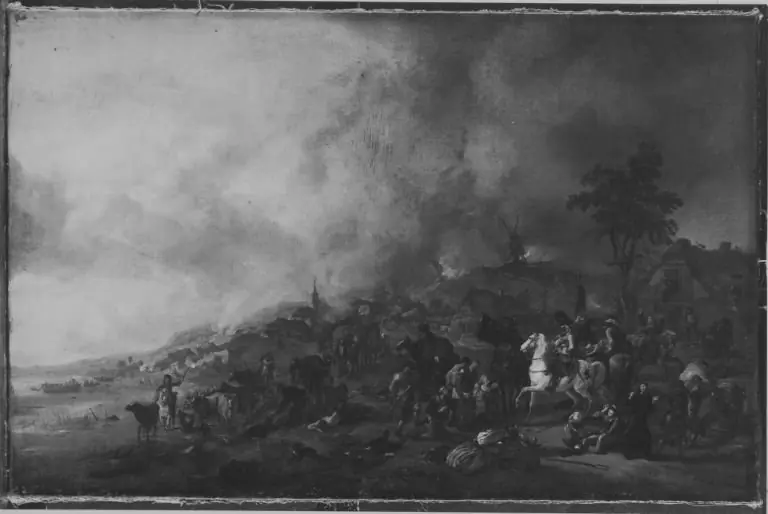 Soldiers plundering a Village
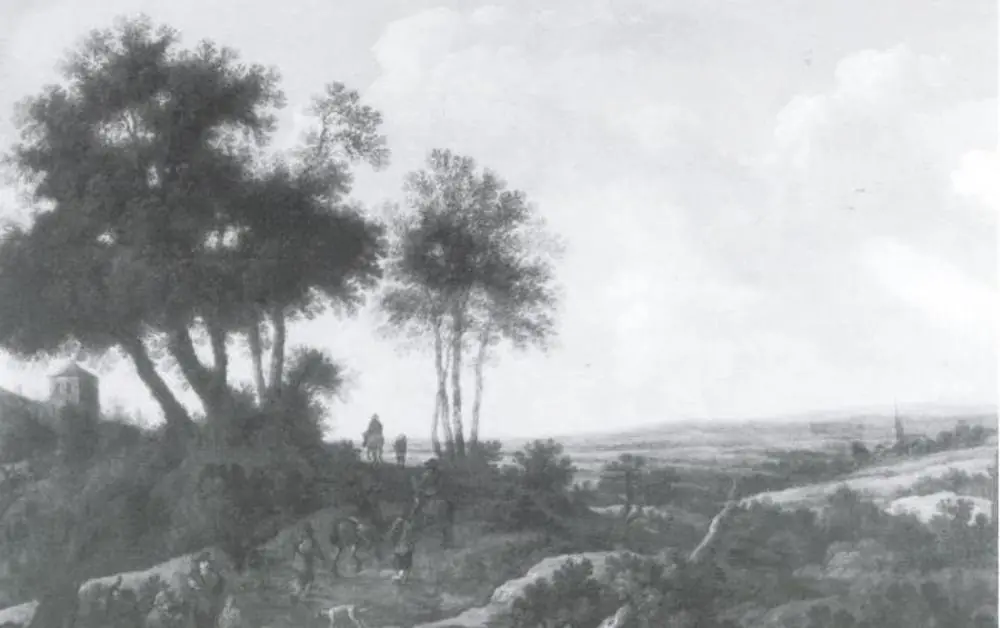 Landscape with Riders
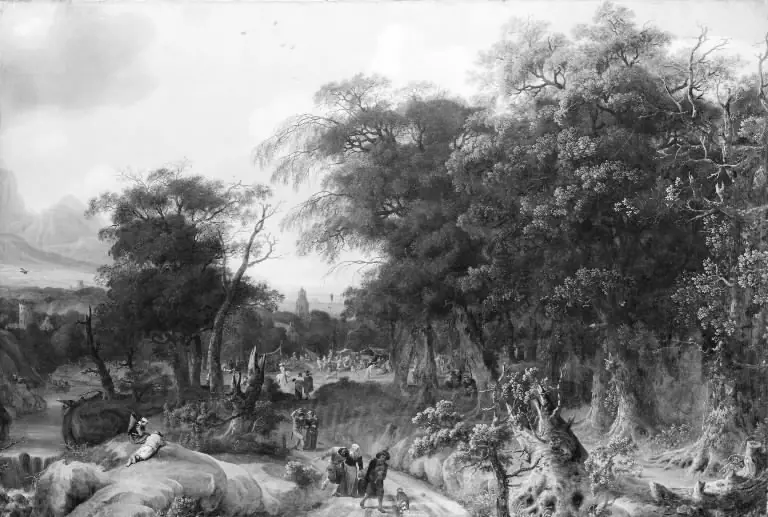 May Festival in the Mountains
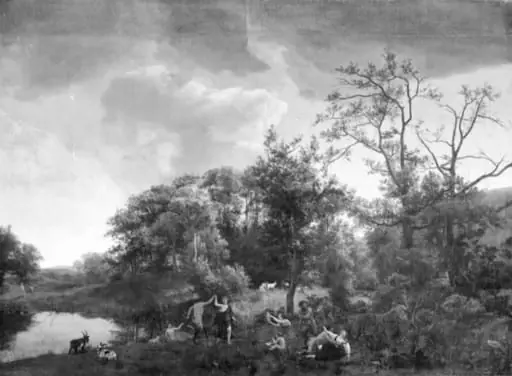 Landscape with Fauns and Nymphs
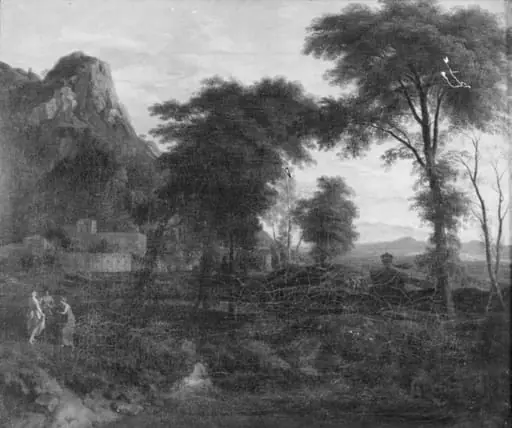 Landscape
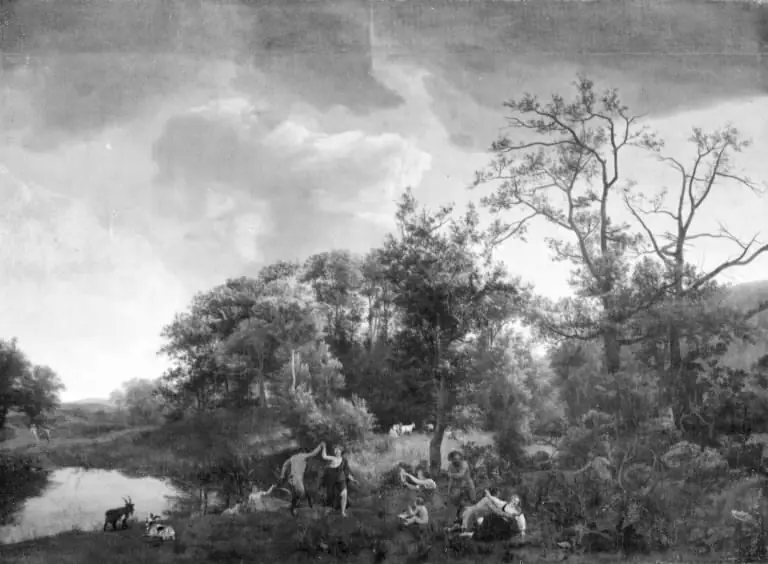 Landscape with Fauns and Nymphs
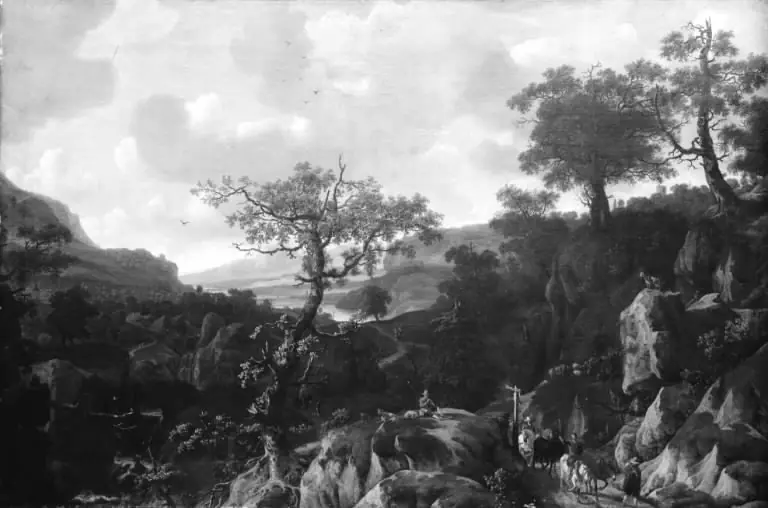 Mountain Landscape
 Landscape with Figures and Buildings
 May Festival in the Mountains
 Landschaft mit Falkner
 Study of Evening Sky and Trees
 Franske kyrasserer, som angriber en russisk forpost