Artwork
View of Marina Piccola, Capri: Morning Light
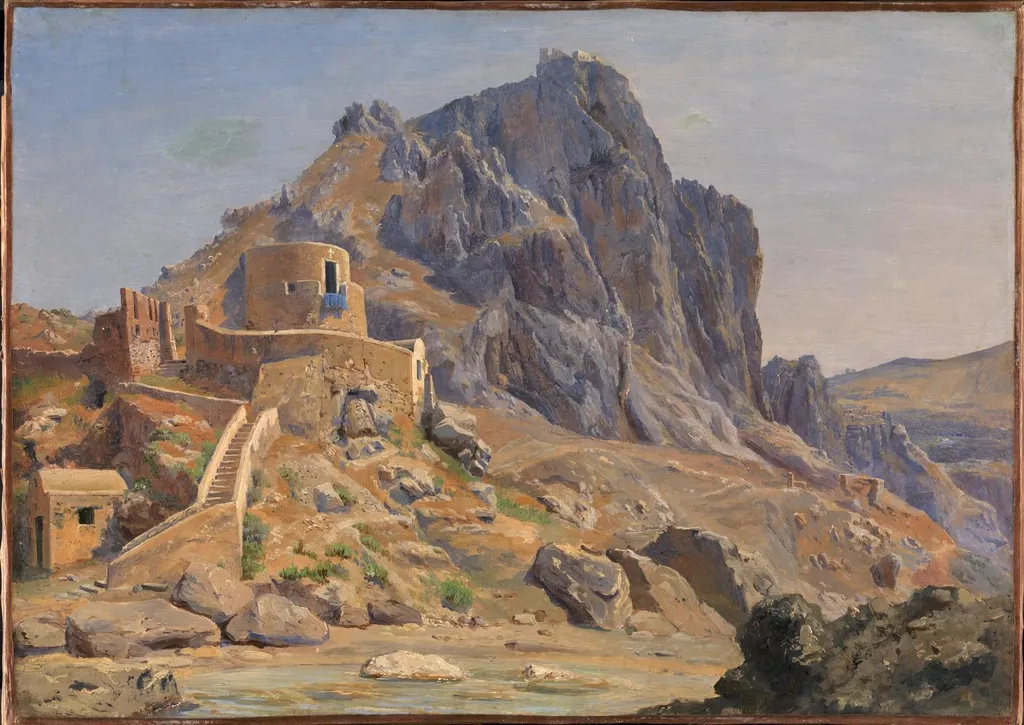
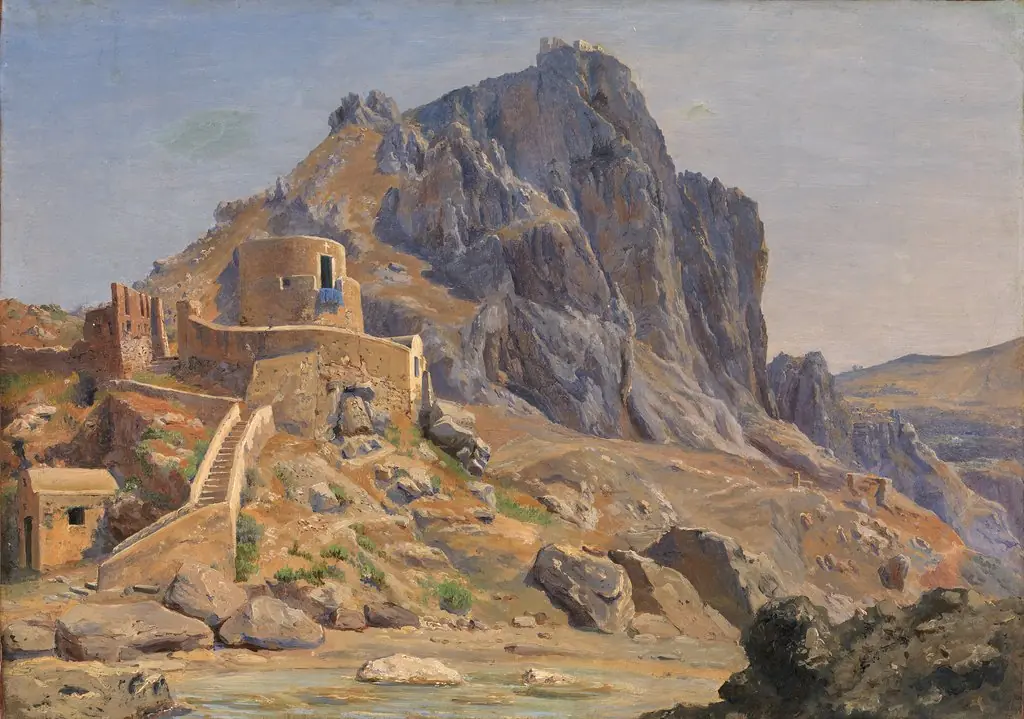
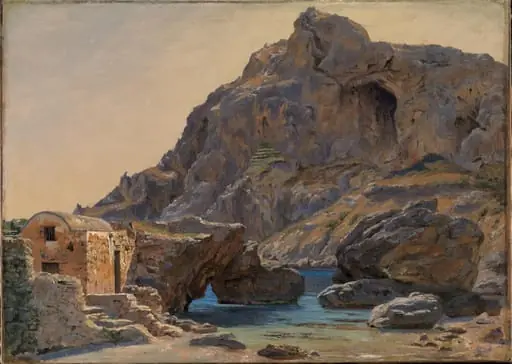
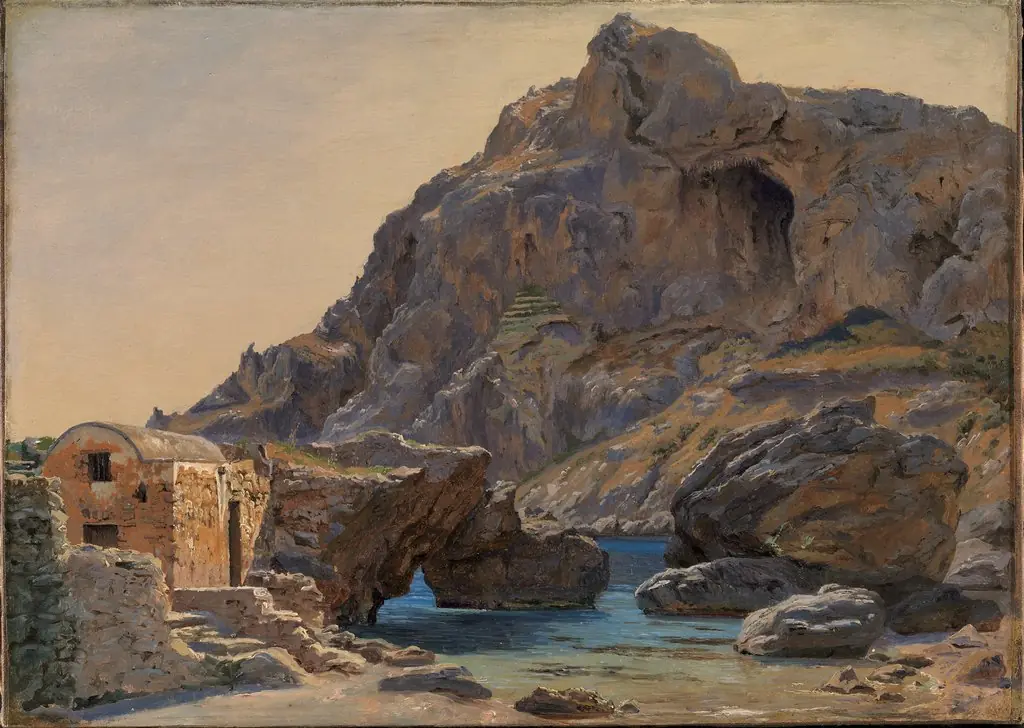
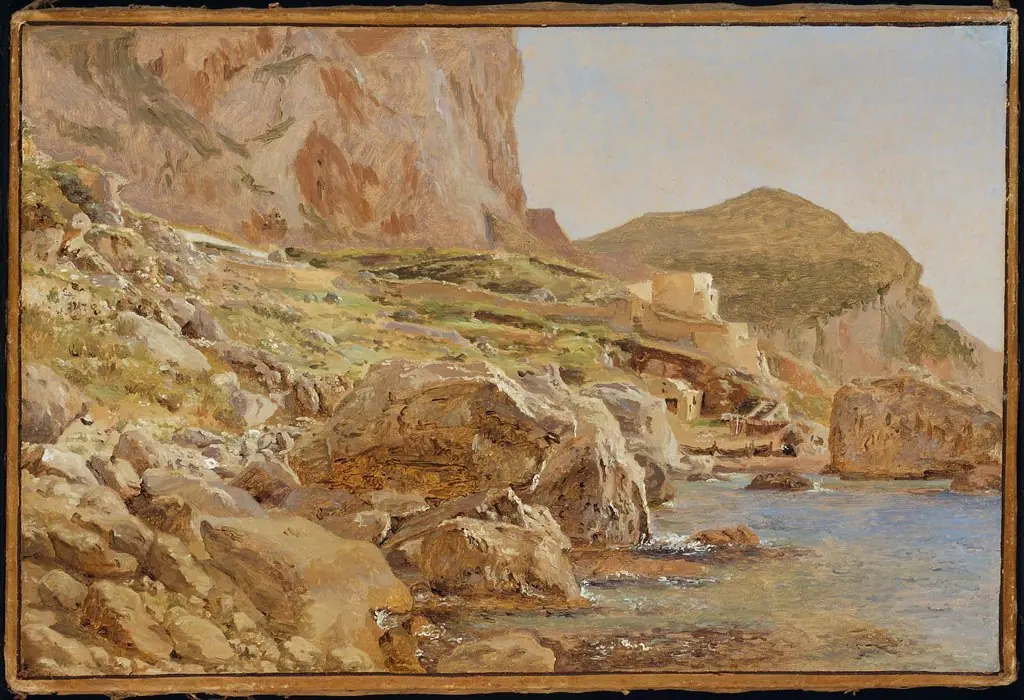
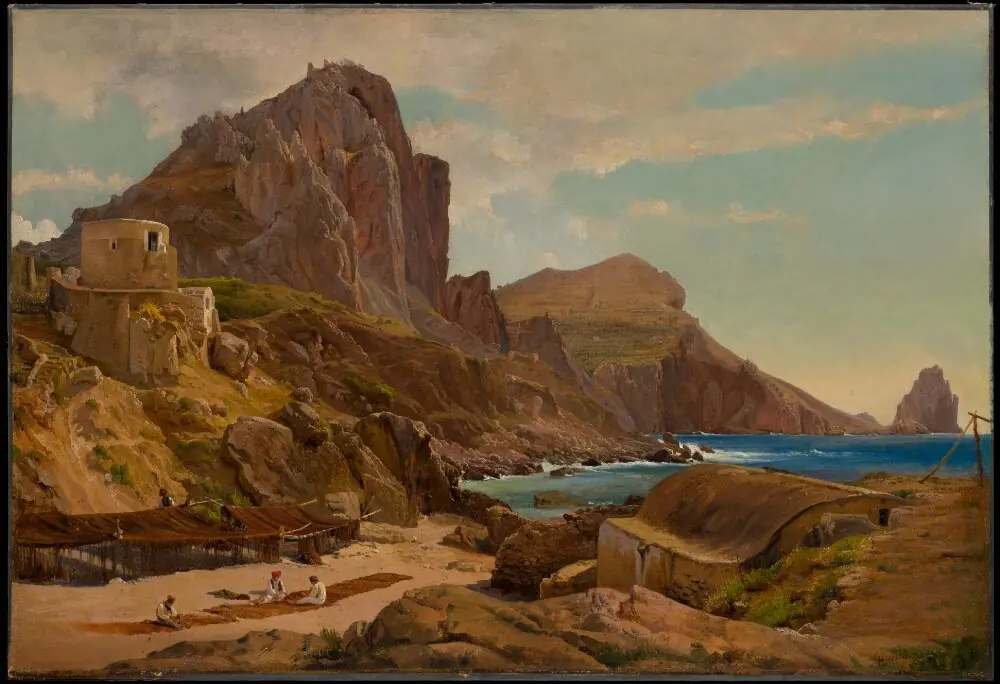
View of Marina Piccola, Capri: Morning Light is a photography by the Impressionist artist Unknown. It dates from 1851 and is held in the collection of the Statens Museum for Kunst. Painted in 1851, this landscape depicts Marina Piccola on the island of Capri, capturing the quiet stillness of early morning.
About this work
Overview
The scene is rendered in soft, warm tones with a luminous sky, emphasizing the interplay of natural light across rock and architecture.
Painted in 1851, this landscape depicts Marina Piccola on the island of Capri, capturing the quiet stillness of early morning. The scene is rendered in soft, warm tones with a luminous sky, emphasizing the interplay of natural light across rock and architecture. Though classified as a cityscape, the work focuses on a rural coastal setting, blending human structures with the rugged terrain. It resides in the Museum of Ethnography, where its placement reflects broader 19th-century interests in regional life and environment.
Subject & Meaning
The painting presents a modest coastal hamlet nestled against a dramatic cliff face. A solitary towered building and fragmented stone walls suggest abandoned or modest habitation, while a winding path connects the structures to the shore. The absence of figures and the quiet, sunlit atmosphere convey solitude and the passage of time. The scene evokes a sense of enduring, unaltered nature, where human presence is subtle and weathered by the elements.
Technique & Style
Brushwork is loose and responsive, with visible strokes that suggest movement and immediacy rather than polished finish. The artist uses muted earth tones—ochres, olive greens, and soft browns—to ground the composition, while the sky’s bright blue introduces contrast and luminosity. Light is not merely depicted but implied through tonal shifts, particularly along the cliff’s edge and the stream’s surface, creating a sense of dawn’s transient glow.
History & Provenance
Created in 1851, the work entered the collection of the Museum of Ethnography at an early stage, likely as part of a broader effort to document regional European landscapes and vernacular architecture. Its acquisition predates the formal emergence of Impressionism, yet its emphasis on light and atmospheric effect aligns with emerging trends in plein air observation. The painting’s journey to the museum reflects 19th-century ethnographic interests in place and daily life.
Context
Painted decades before Impressionism gained recognition, this work anticipates key concerns of the movement: the fleeting quality of light, direct observation of nature, and rejection of idealized composition. While not part of any formal group, its approach mirrors the growing interest among artists in capturing transient effects outdoors. Capri, then a remote destination, offered a landscape untouched by industrialization, making it a compelling subject for those seeking authenticity.
Legacy
Though not widely exhibited or reproduced, the painting stands as an early example of naturalistic landscape observation in mid-19th-century Europe. Its emphasis on light and informal composition influenced later artists who sought to depict nature without romantic embellishment. Within its institutional context, it contributes to a lesser-known thread in the evolution of modern landscape painting, bridging academic tradition and emerging modern sensibilities.
Artist & collection

 Domestic Scene
 Giacomo and Cardinal Marco, investing Andrea, Abbot of San Zeno, with his Benefice
 The Nymph of Fontainebleau
 Portrait of a Woman
 Madonna and Child with Saints in the Enclosed Garden
 Venus and Minerva
 Family Group of Four on Sofa
 Wall painting from Room H of the Villa of P. Fannius Synistor at Boscoreale