Artwork
Palazzo Ferrante i Cività d'Antino
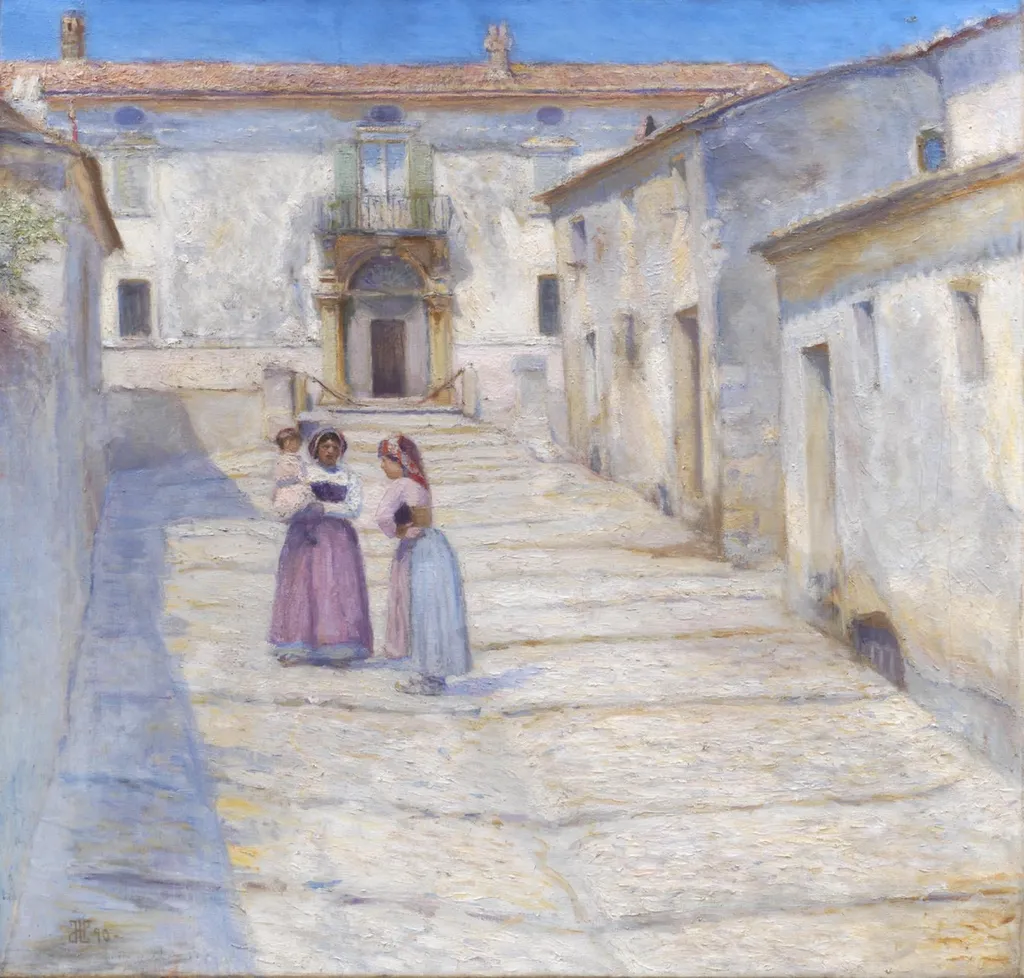
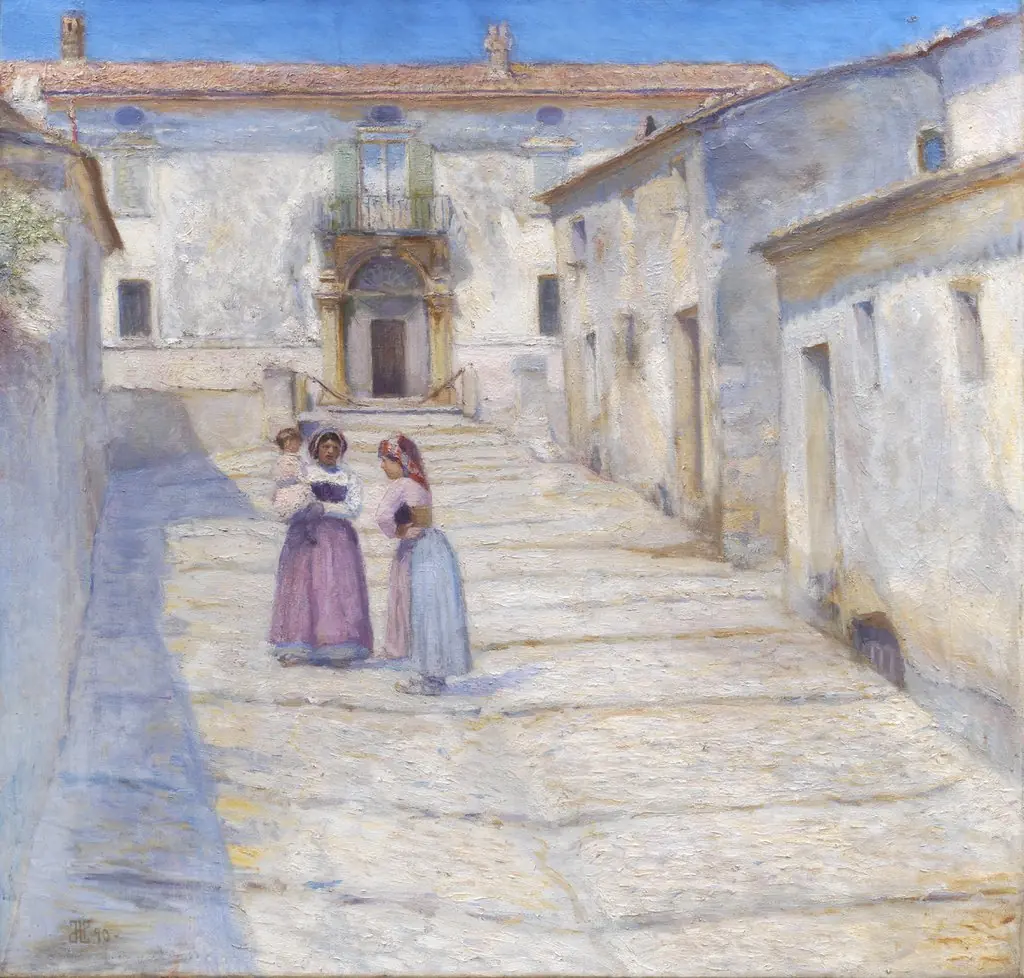
Palazzo Ferrante i Cività d'Antino is a photography by the Impressionist artist Unknown. It dates from 1890 and is held in the collection of the Statens Museum for Kunst. Created in 1890, this image depicts Palazzo Ferrante in Cività d'Antino, a rural Italian village structure in advanced states of decay.
About this work
Overview
Created in 1890, this image depicts Palazzo Ferrante in Cività d'Antino, a rural Italian village structure in advanced states of decay. The work is held in the collection of the Museum of Ethnography and is attributed to 701_person. It captures the building’s weathered stone façade, broken steps, and modest architectural details with a quiet attention to environmental texture and light.
Subject & Meaning
The painting centers on the palazzo’s deteriorating architecture, framed by two women in traditional dress standing on its worn steps. Their presence suggests daily life persisting amid neglect, offering a subtle commentary on rural continuity and the passage of time. The figures are not idealized; their quiet posture anchors the scene in ordinary reality rather than romanticized ruin.
Technique & Style
The handling of light evokes Impressionist concerns with natural illumination, though the subject remains grounded in ethnographic observation.
The brushwork is loose and atmospheric, with soft transitions between tones that suggest direct outdoor observation. Colors are subdued, dominated by earthy grays and ochres, while the women’s dresses—purple and blue—introduce restrained chromatic emphasis. The handling of light evokes Impressionist concerns with natural illumination, though the subject remains grounded in ethnographic observation.
History & Provenance
The work entered the Museum of Ethnography’s collection shortly after its creation, likely acquired as part of a broader effort to document vernacular architecture and rural life in late 19th-century Italy. Its attribution to 701_person remains unverified in public records, and no exhibition history prior to its institutional acquisition is documented.
Context
Made during a period of national consolidation in Italy, the image reflects growing interest in regional identities and disappearing rural traditions. Cività d'Antino, a small hilltop village, was increasingly abandoned as populations migrated to urban centers. This work contributes to a visual archive of places deemed culturally significant but economically marginal.
Legacy
Though not widely exhibited, the image remains a quiet example of how early ethnographic documentation intersected with painterly techniques of the time. It offers a non-heroic view of heritage—unrestored, unglorified—preserving a moment in which architecture and daily life coexisted in quiet decline, valued for its authenticity rather than its grandeur.
Artist & collection

 Domestic Scene
 Giacomo and Cardinal Marco, investing Andrea, Abbot of San Zeno, with his Benefice
 The Nymph of Fontainebleau
 Portrait of a Woman
 Madonna and Child with Saints in the Enclosed Garden
 Venus and Minerva
 Family Group of Four on Sofa
 Wall painting from Room H of the Villa of P. Fannius Synistor at Boscoreale
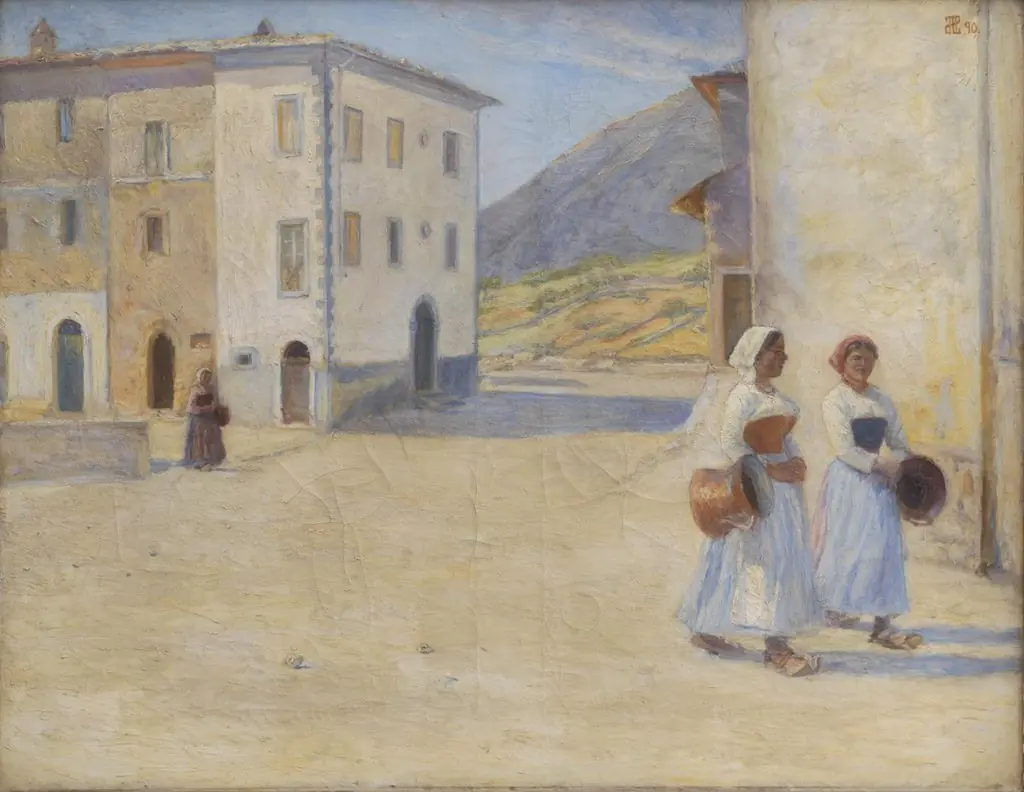 Piger på vej til brønden efter vand ved middagstid. Cività d'Antino
 Piger på vej til brønden efter vand ved middagstid. Cività d'Antino
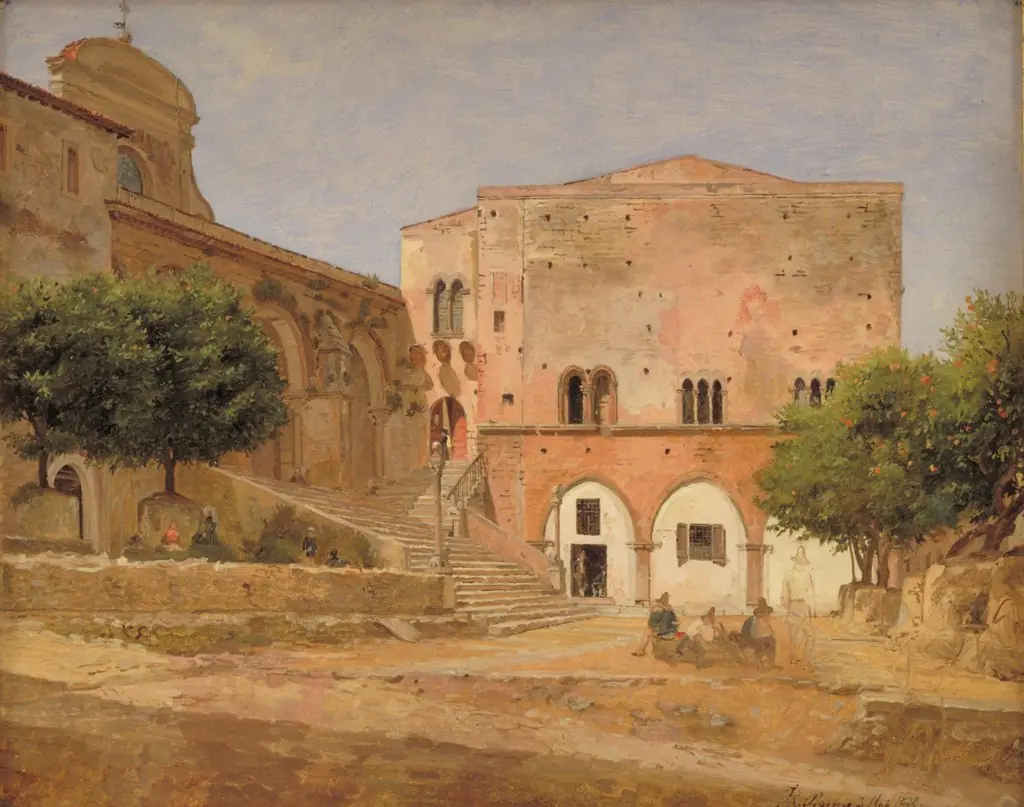 The Market Place in Priverno
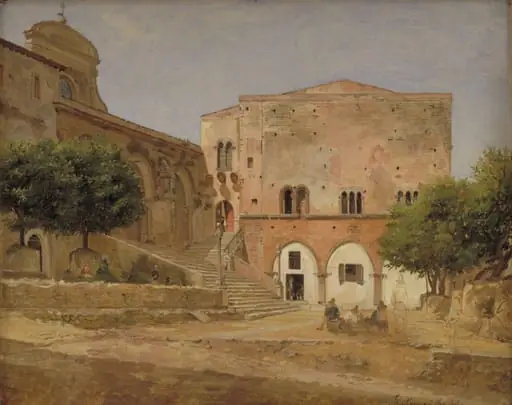 The Market Place in Priverno
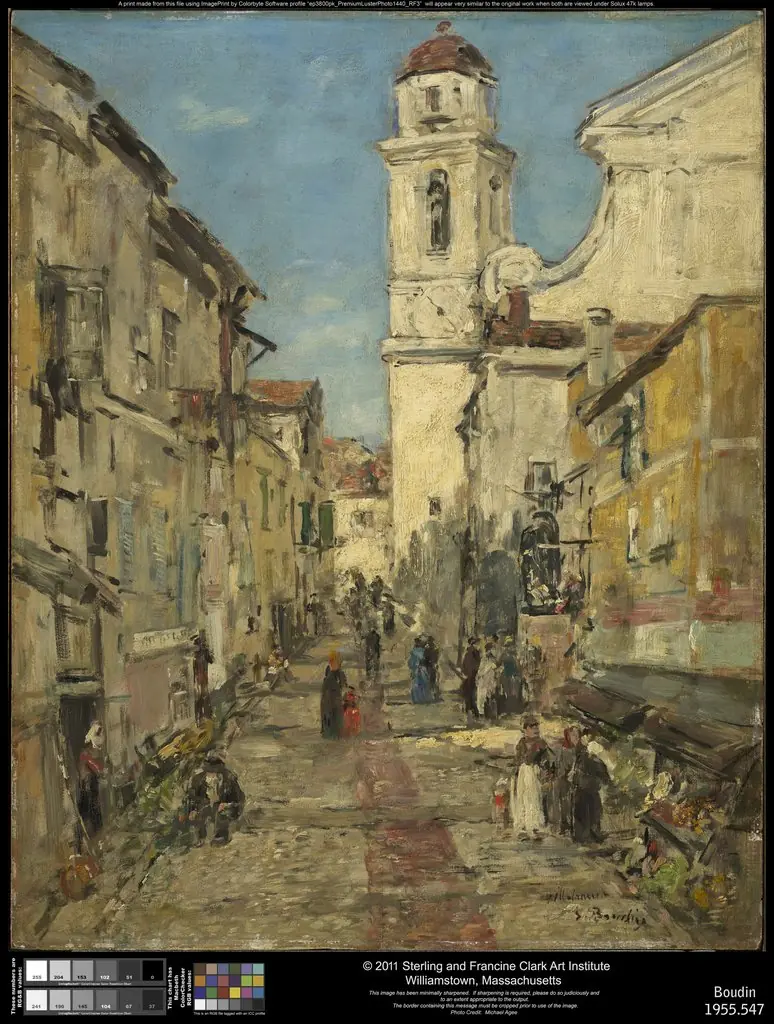 Villefranche
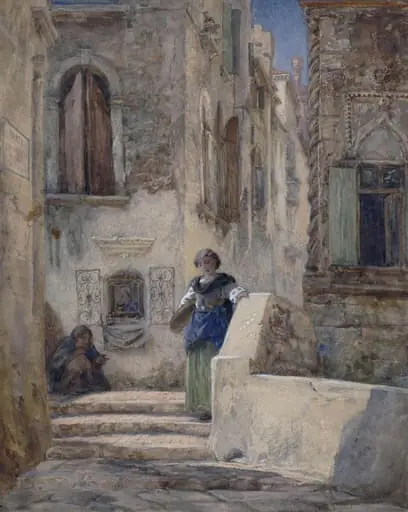 Street in Venice
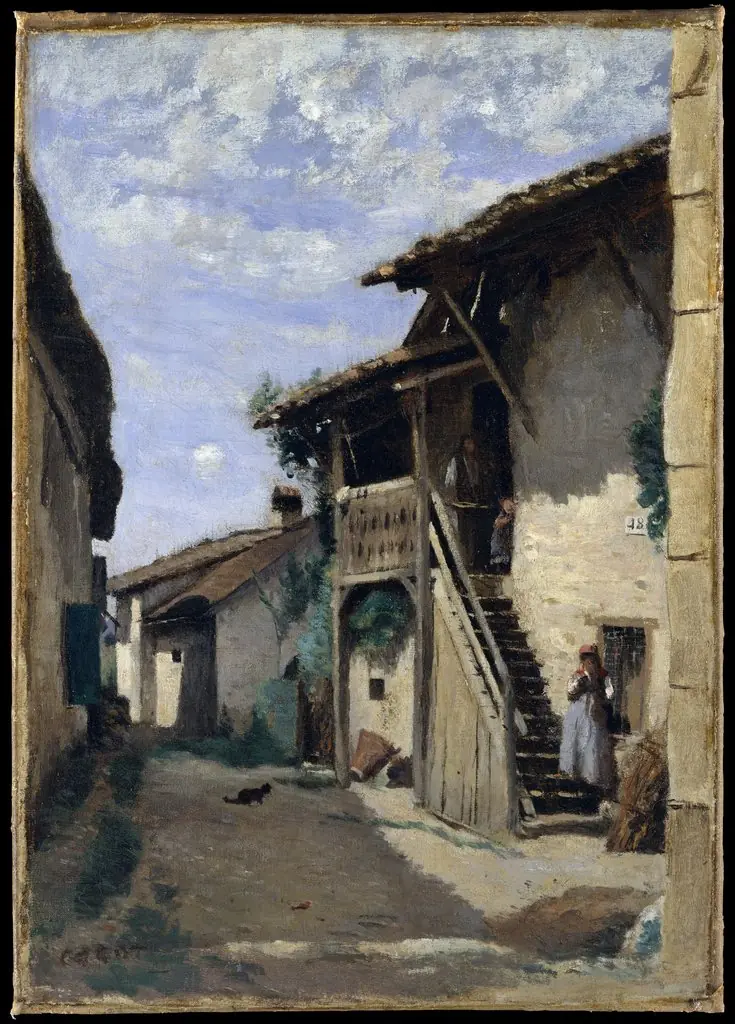 A Village Street: Dardagny
 Torvet i Sulmona
 San Esteban de Pravia
 Curte interioară la Contrexéville
 Breezy day in Venice
 Palazzo Ferrante i Cività d'Antino