Artwork
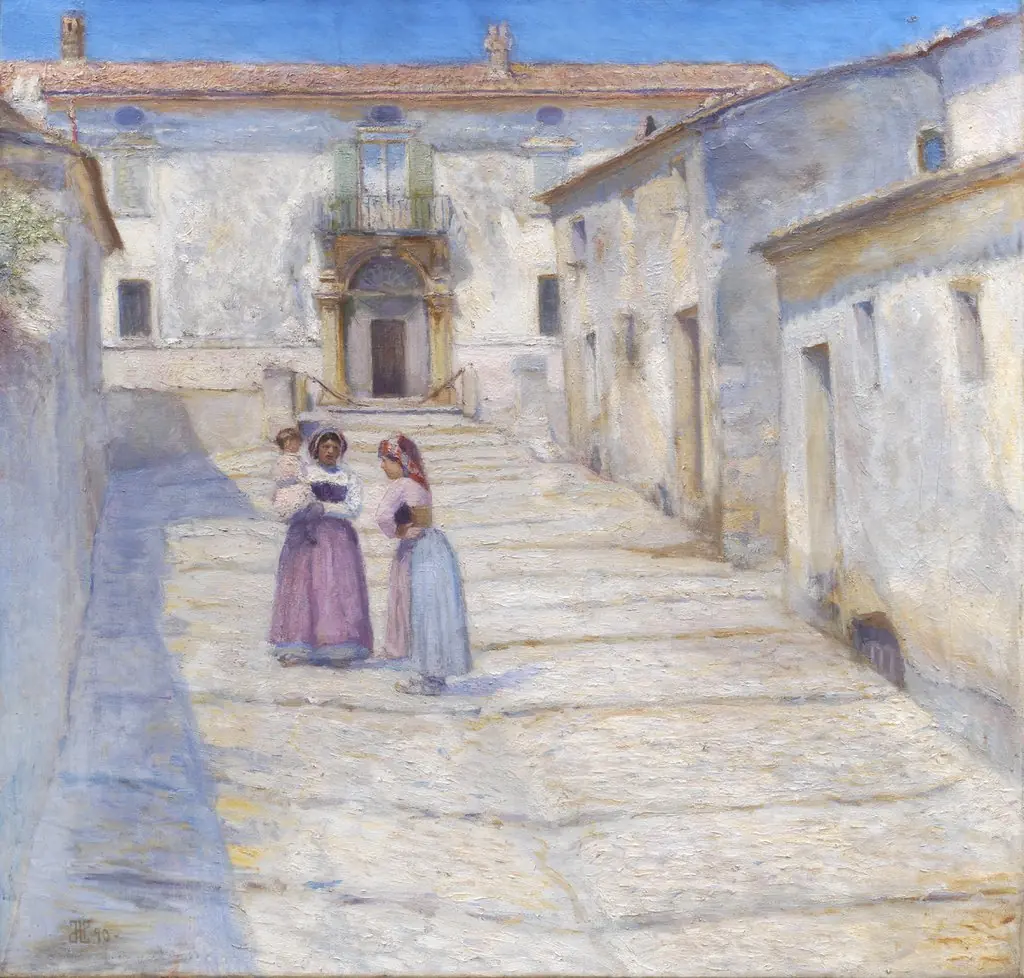
Piger på vej til brønden efter vand ved middagstid. Cività d'Antino
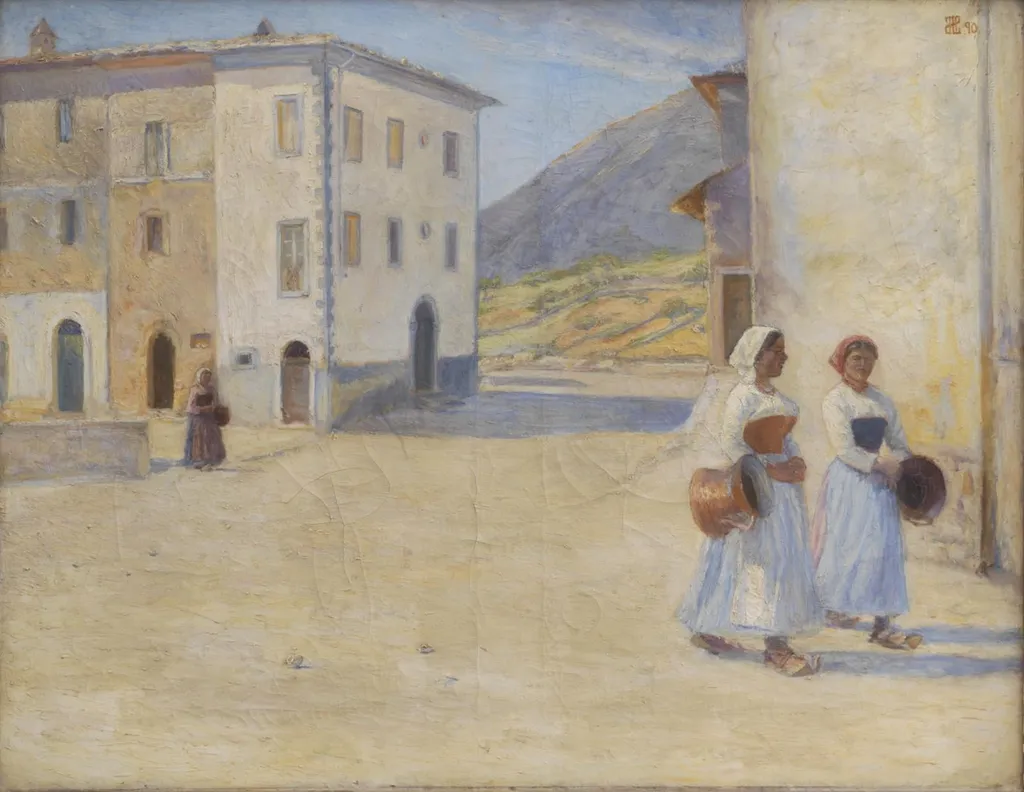
Piger på vej til brønden efter vand ved middagstid. Cività d'Antino is a photography by the Impressionist artist Unknown. It dates from 1890 and is held in the collection of the Statens Museum for Kunst. This photograph, taken in 1890 in Cività d'Antino, captures two women returning from fetching water at midday.
About this work
Overview
This photograph, taken in 1890 in Cività d'Antino, captures two women returning from fetching water at midday. The image is part of the Museum of Ethnography’s collection and reflects early documentary photography’s interest in daily rural life. The composition is unposed, emphasizing natural movement and ordinary attire, offering a quiet glimpse into domestic routines of the time.
Subject & Meaning
The two women, dressed in light blue dresses with white aprons and head coverings, are engaged in a routine chore: carrying water from a well.
The two women, dressed in light blue dresses with white aprons and head coverings, are engaged in a routine chore: carrying water from a well. One holds a basket, the other a dark hat, suggesting they are returning home. Their synchronized stride and unremarkable demeanor convey the quiet rhythm of daily labor, where water collection was an essential, unglamorous task shaping the structure of rural life.
Technique & Style
The photograph is rendered in a straightforward, unembellished style typical of late 19th-century ethnographic documentation. Natural light illuminates the narrow street and weathered stone buildings, enhancing texture and depth. The subjects are framed within their environment, with no theatrical staging—emphasizing authenticity over artistic flourish, aligning with emerging documentary practices of the era.
History & Provenance
Created in 1890 by 701_person, the photograph was likely made during fieldwork in the Abruzzo region of Italy. It entered the Museum of Ethnography’s collection as part of a broader effort to record cultural practices before industrialization transformed rural communities. Its preservation reflects early institutional interest in visual anthropology and material culture.
Context
In late 19th-century southern Italy, fetching water was a daily responsibility often carried by women and girls. The stone architecture, arched doorways, and sloping hillside reflect the region’s traditional building methods and topography. This image sits within a wider visual record of pre-industrial life, documenting how geography and labor shaped domestic rhythms in isolated communities.
Legacy
The photograph contributes to a historical archive of everyday life in rural Italy, offering insight into gendered labor and material conditions before modern infrastructure. It remains a reference point for scholars studying ethnographic photography and the representation of working-class existence in the late 1800s, valued for its unmediated observation rather than aesthetic ambition.
Artist & collection

 Domestic Scene
 Giacomo and Cardinal Marco, investing Andrea, Abbot of San Zeno, with his Benefice
 The Nymph of Fontainebleau
 Portrait of a Woman
 Madonna and Child with Saints in the Enclosed Garden
 Venus and Minerva
 Family Group of Four on Sofa
 Wall painting from Room H of the Villa of P. Fannius Synistor at Boscoreale