Artwork
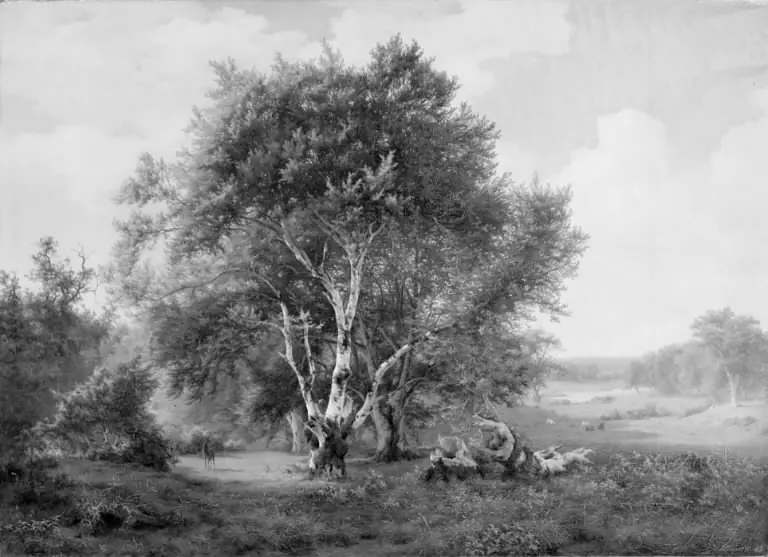
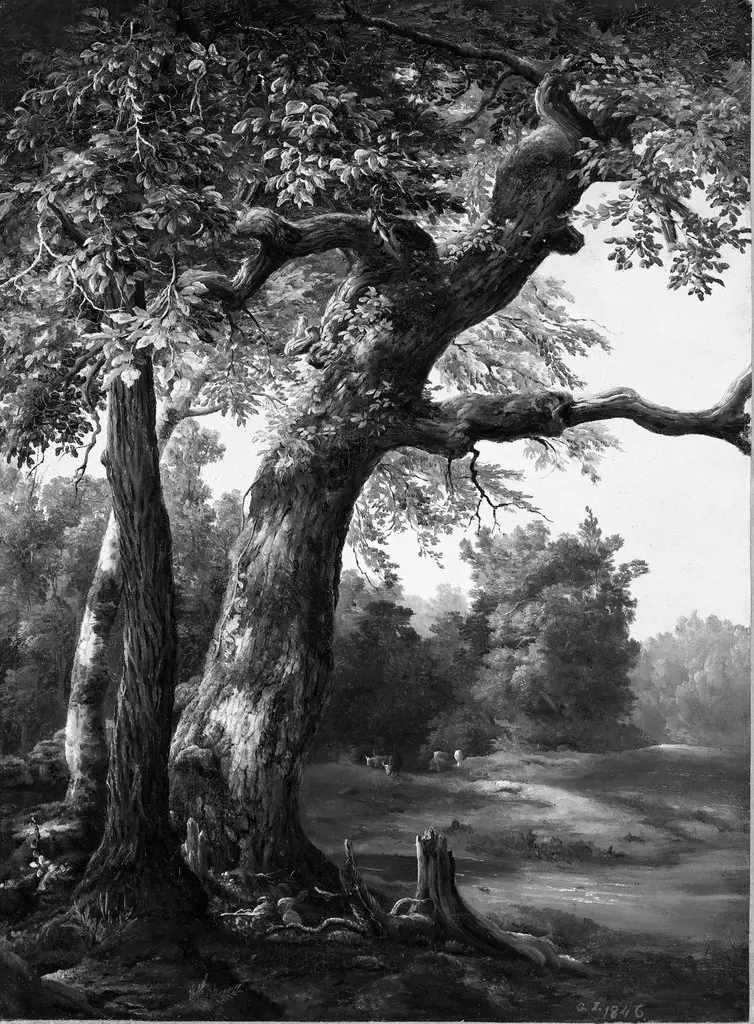
En gravhøj ved Løvenborg
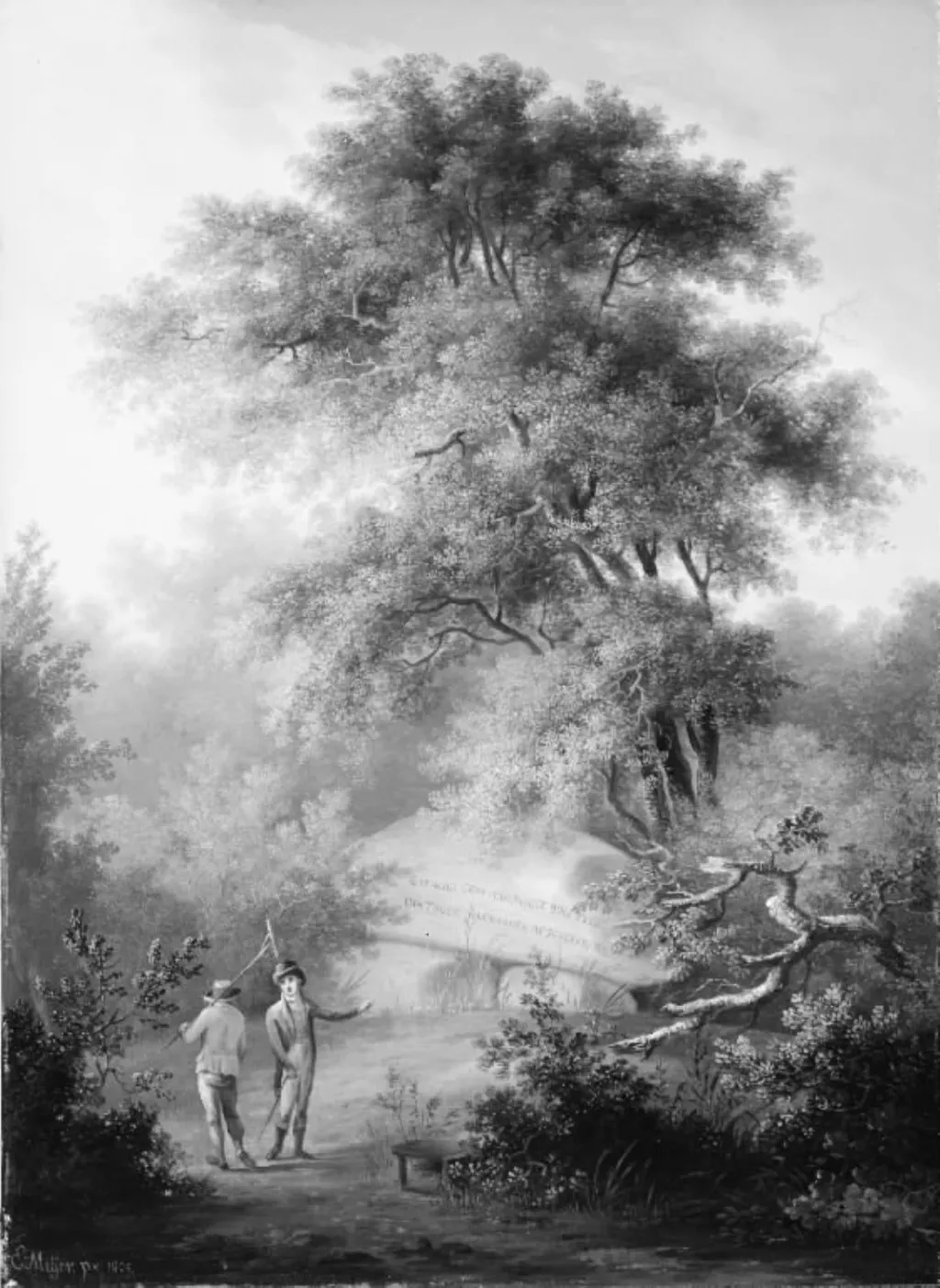
En gravhøj ved Løvenborg is a photography by the Romanticist artist Unknown. It dates from 1805 and is held in the collection of the Statens Museum for Kunst.
About this work
Overview
The work is attributed to an artist associated with the early 19th-century Nordic tradition of landscape painting.
Painted in 1805, En gravhøj ved Løvenborg depicts a quiet, atmospheric scene in a Danish forest. The work is attributed to an artist associated with the early 19th-century Nordic tradition of landscape painting. It is currently held in the collection of the Museum of Ethnography, where it is preserved as an example of regional naturalism during a period of growing interest in本土 landscapes and ancient sites.
Subject & Meaning
Two figures stand amid dense woodland, one holding a walking stick, the other pointing toward a massive, twisted tree. The tree may symbolize an ancient burial mound, suggesting a connection to ancestral memory or local folklore. The muted tone and stillness evoke contemplation rather than narrative, inviting viewers to consider the passage of time and the quiet persistence of nature over human presence.
Technique & Style
The artist employs chiaroscuro to model forms through subtle gradations of light and shadow, enhancing the sense of depth and volume. Soft, diffused lighting filters through the canopy, blurring edges between figures and foliage. The brushwork is restrained, favoring atmospheric effect over detail, aligning with early Romantic tendencies that prioritized mood and emotional resonance over precise representation.
History & Provenance
Created in 1805, the painting entered the Museum of Ethnography’s collection in the late 19th or early 20th century. Its acquisition reflects a broader institutional interest in documenting vernacular landscapes and cultural memory. While little is documented about its early ownership, its preservation suggests recognition of its role in capturing Denmark’s natural and spiritual topography during a period of national identity formation.
Context
In the early 1800s, Scandinavian artists increasingly turned to native landscapes as subjects, moving away from classical ideals toward local, often melancholic scenes. This work aligns with a trend that linked ancient earthworks and forests to national heritage. The misty, subdued setting reflects Romantic-era sensibilities, where nature was seen as a vessel for introspection and historical continuity.
Legacy
Though not widely reproduced, the painting contributes to a body of Nordic landscape works that helped define a visual language of quiet reverence for the land. Its emphasis on atmosphere and symbolic natural forms influenced later generations of Danish painters interested in the spiritual dimensions of the countryside, preserving a mode of seeing that valued stillness over spectacle.
Artist & collection

 Domestic Scene
 Giacomo and Cardinal Marco, investing Andrea, Abbot of San Zeno, with his Benefice
 The Nymph of Fontainebleau
 Portrait of a Woman
 Madonna and Child with Saints in the Enclosed Garden
 Venus and Minerva
 Family Group of Four on Sofa
 Wall painting from Room H of the Villa of P. Fannius Synistor at Boscoreale