Artwork
Frederiksborg Slot
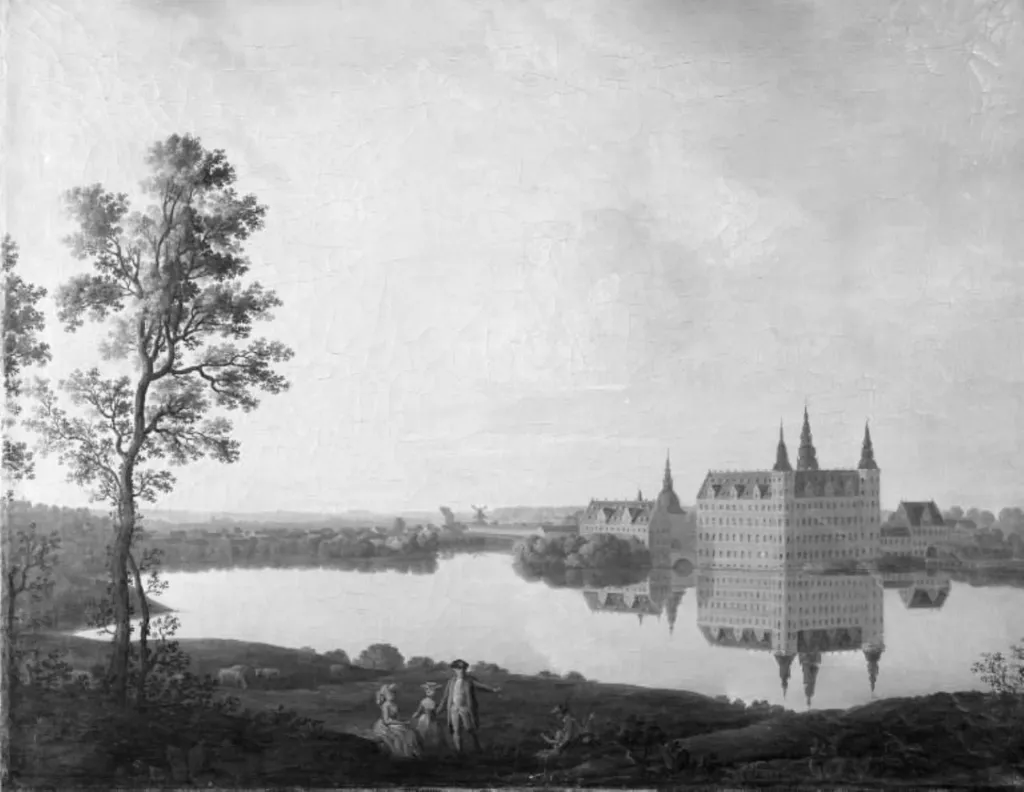
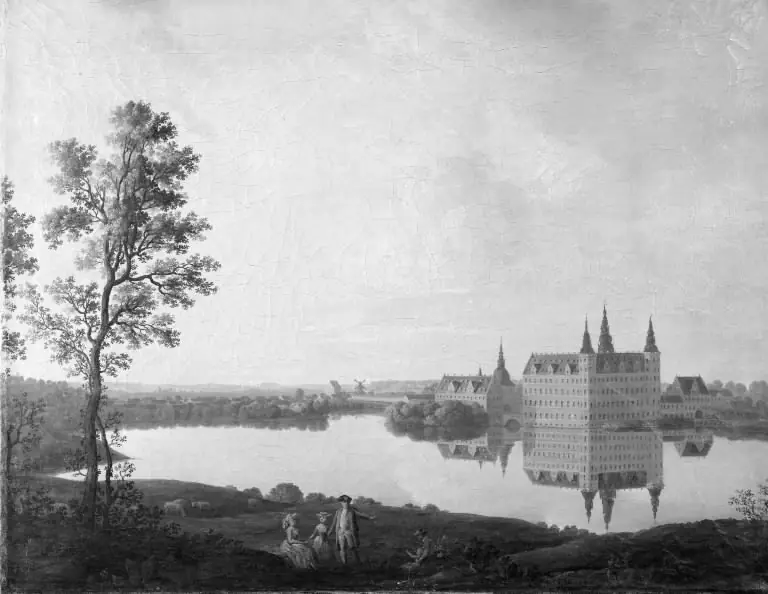
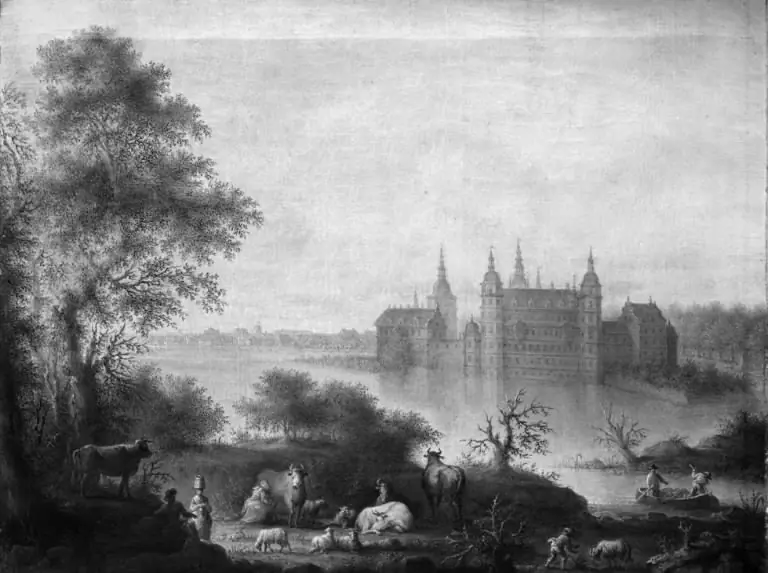
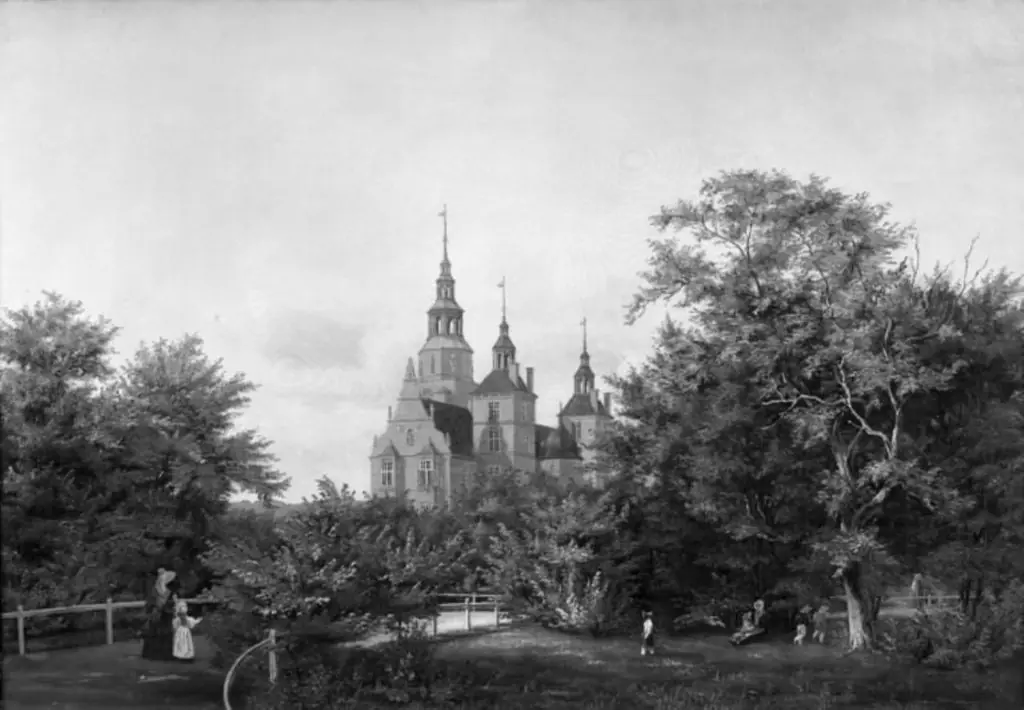
Frederiksborg Slot is a photography by the Romanticist artist Unknown. It dates from 1786 and is held in the collection of the Statens Museum for Kunst. This 1786 image depicts Frederiksborg Castle, a Renaissance palace in Denmark, rendered with quiet precision.
About this work
Overview
Two figures in long robes sit beneath a leafless tree on the riverbank, their stillness reinforcing the serenity of the landscape.
This 1786 image depicts Frederiksborg Castle, a Renaissance palace in Denmark, rendered with quiet precision. The scene is composed with a calm river reflecting the building’s twin spires and elongated façade. Two figures in long robes sit beneath a leafless tree on the riverbank, their stillness reinforcing the serenity of the landscape. The composition emphasizes harmony between architecture and nature, using subtle tonal shifts to guide the viewer’s eye.
Subject & Meaning
The painting presents Frederiksborg Castle not as a symbol of power, but as an enduring presence within a tranquil natural setting. The human figures, small and undisturbed, suggest contemplation rather than activity. Their placement invites the viewer to share in a moment of quiet observation, framing the castle as a quiet monument to time rather than royalty. The reflection in the water blurs the boundary between structure and environment, hinting at impermanence.
Technique & Style
The artist employs chiaroscuro to model the castle’s surfaces and the tree’s form, using soft gradations of light and shadow to suggest volume without harsh contrast. The palette is restrained, dominated by muted grays, browns, and pale greens, enhancing the subdued mood. Brushwork is delicate, particularly in the water’s reflection, where horizontal strokes mimic stillness. The lack of dramatic action aligns with early Romantic sensibilities favoring mood over narrative.
History & Provenance
The image was created in 1786 and entered the collection of the Museum of Ethnography, though the artist’s identity remains unconfirmed. Its presence in an ethnographic institution, rather than a fine arts museum, suggests it was valued for its documentary quality or regional significance. No records indicate it was commissioned; it may have been produced as a personal study or travel sketch, later preserved for its cultural resonance.
Context
In late 18th-century Denmark, interest in national heritage was growing, with historic sites like Frederiksborg Castle becoming subjects of artistic attention. While grander portraits of royalty dominated official art, this work reflects a quieter trend: the depiction of architecture in harmony with nature, influenced by emerging Romantic ideals. The scene’s calmness contrasts with the political turbulence of the era, offering a retreat into stillness.
Legacy
Though not widely exhibited, the image contributes to a body of Danish landscape works that shifted focus from imperial grandeur to intimate, reflective scenes. Its preservation in an ethnographic context underscores its role as a record of place rather than artistic innovation. Later viewers have recognized its quiet composition as an early example of how architecture could be rendered as part of a contemplative natural world.
Artist & collection

 Domestic Scene
 Giacomo and Cardinal Marco, investing Andrea, Abbot of San Zeno, with his Benefice
 The Nymph of Fontainebleau
 Portrait of a Woman
 Madonna and Child with Saints in the Enclosed Garden
 Venus and Minerva
 Family Group of Four on Sofa
 Wall painting from Room H of the Villa of P. Fannius Synistor at Boscoreale