Artwork
View of Bogstad in Norway
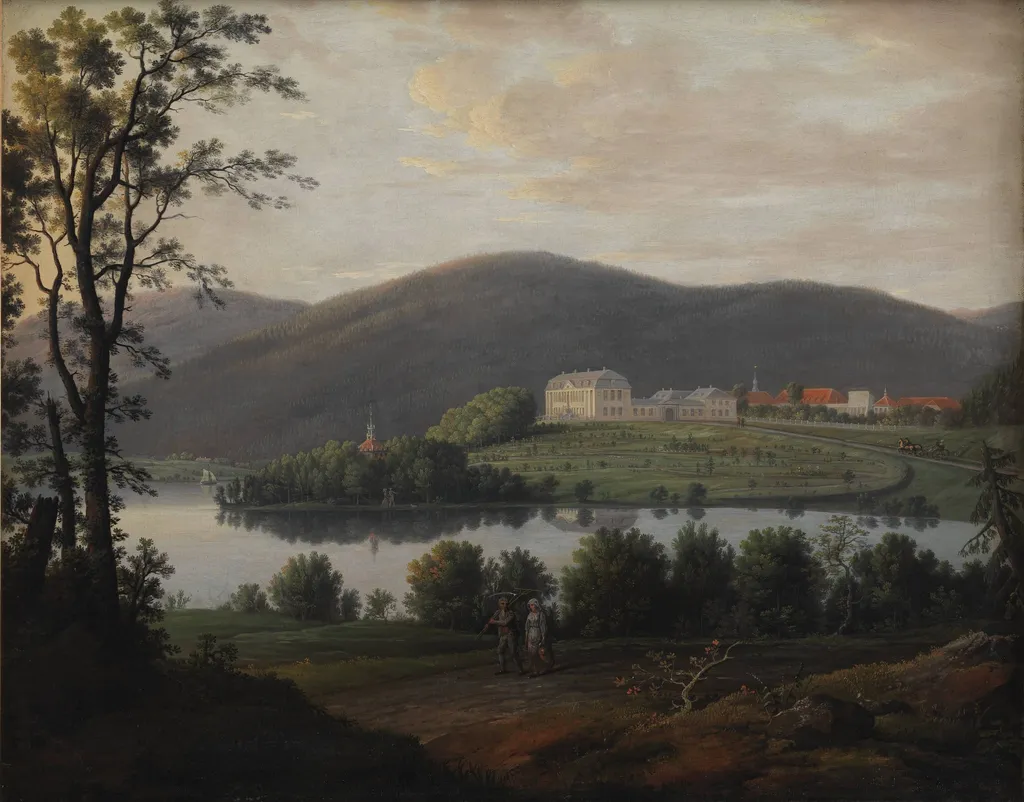
View of Bogstad in Norway is a photography by the Romanticist artist Unknown. It dates from 1789 and is held in the collection of the Statens Museum for Kunst. Painted in 1789, this landscape depicts the rural estate of Bogstad in Norway.
About this work
Overview
Painted in 1789, this landscape depicts the rural estate of Bogstad in Norway. Executed in oil on canvas, the work captures a tranquil moment in the countryside, emphasizing stillness and subtle natural harmony. It is part of the collection at the Museum of Ethnography, where it is preserved as an example of early Nordic landscape representation.
Subject & Meaning
The scene centers on a large country house nestled among trees and beside a calm lake. Two figures, barely detailed, walk along a path near the water, their presence suggesting quiet contemplation rather than activity. The composition invites reflection, aligning with emerging Romantic ideals that valued solitude and nature’s emotional resonance over human drama.
Technique & Style
The artist employed soft, muted tones and delicate brushwork to render light filtering through trees and reflecting on the lake’s surface. Atmospheric perspective is used to soften distant hills, creating depth through hazy gradients. The lighting is diffused, avoiding sharp contrasts, which enhances the scene’s serene, almost ethereal quality.
History & Provenance
The painting was completed in 1789 and entered the Museum of Ethnography’s collection in the late 19th century. Its origins trace to a Norwegian landowning family connected to Bogstad, likely commissioned as a personal record of the estate. It remained in private hands before institutional acquisition, preserving its connection to local heritage.
Context
Created during the rise of Romanticism in Northern Europe, the work reflects a cultural shift toward valuing nature as a source of emotional and spiritual meaning. Unlike grand historical scenes, this quiet depiction of everyday rural life aligns with contemporary interest in domestic landscapes and the sublime in ordinary settings.
Legacy
Though not widely exhibited, the painting contributes to the understanding of early Norwegian landscape painting. It represents a transitional moment in Nordic art, where local scenery began to be valued for its intrinsic beauty rather than merely as a backdrop for narrative or status. Its preservation underscores the growing institutional interest in regional visual culture.
Artist & collection

 Domestic Scene
 Giacomo and Cardinal Marco, investing Andrea, Abbot of San Zeno, with his Benefice
 The Nymph of Fontainebleau
 Portrait of a Woman
 Madonna and Child with Saints in the Enclosed Garden
 Venus and Minerva
 Family Group of Four on Sofa
 Wall painting from Room H of the Villa of P. Fannius Synistor at Boscoreale
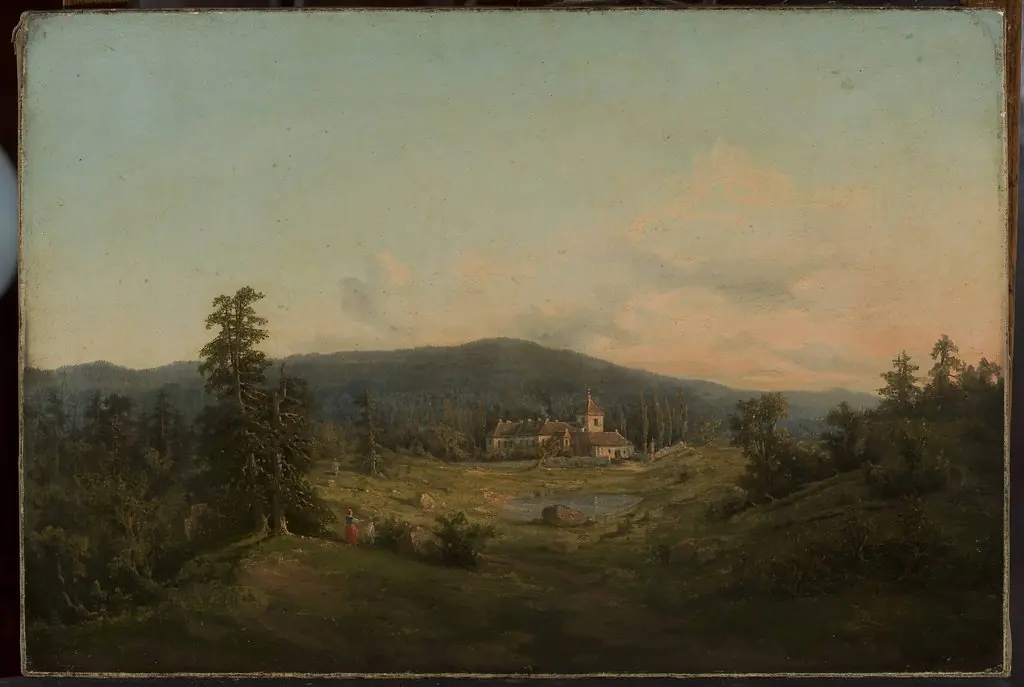 Mountain landscape with church and monastery
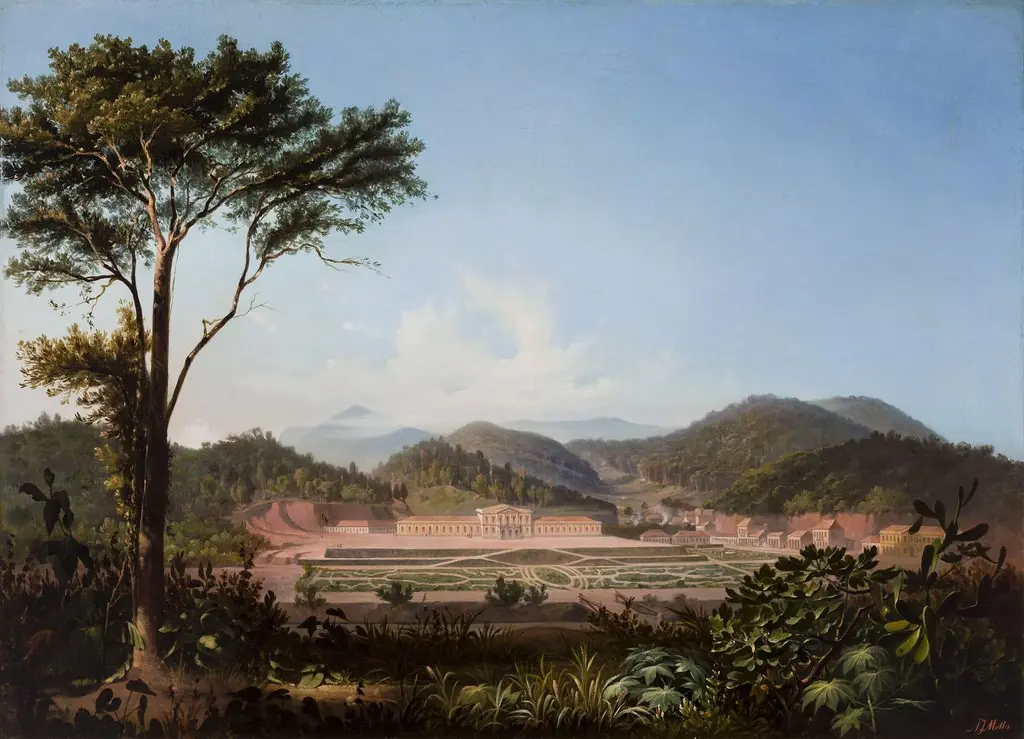 Palácio Imperial de Petrópolis
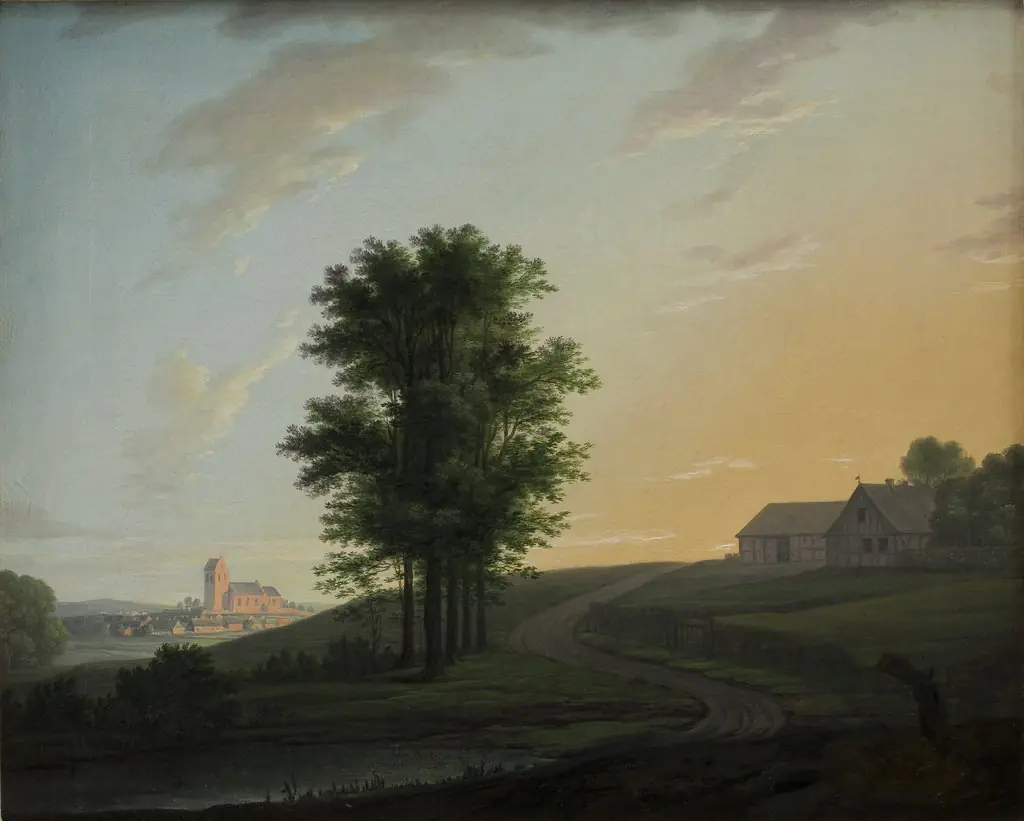 Evening Landscape near Gentofte, North of Copenhagen
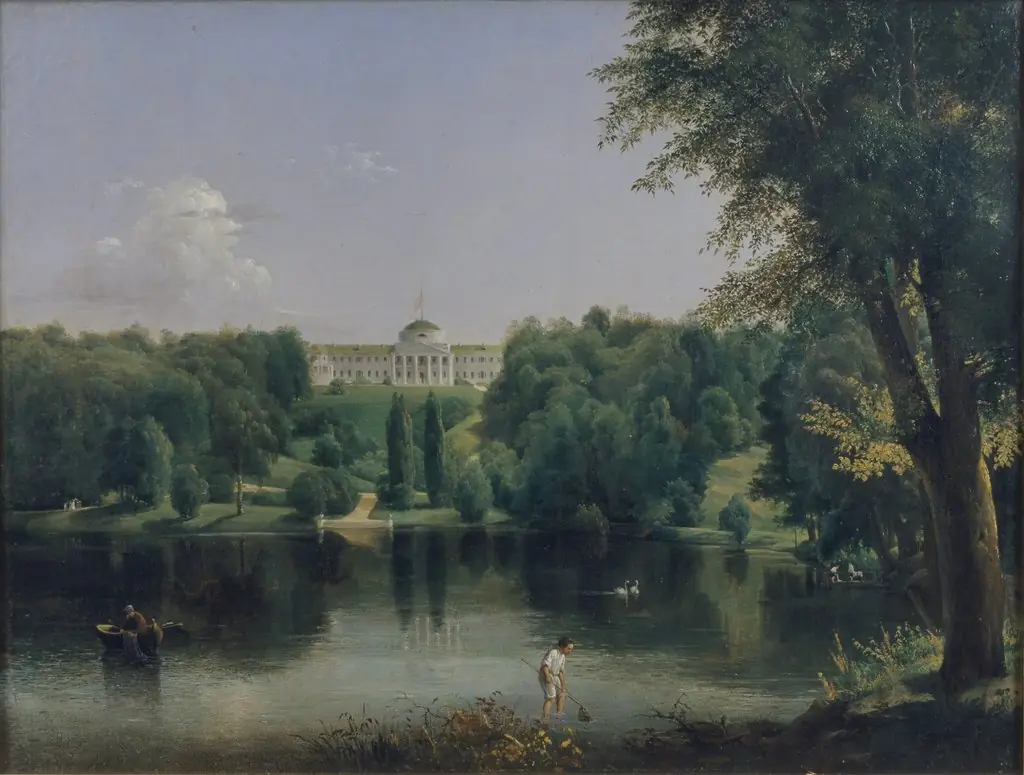 The estate of G. S. Tarnovsky in Kachanovka.
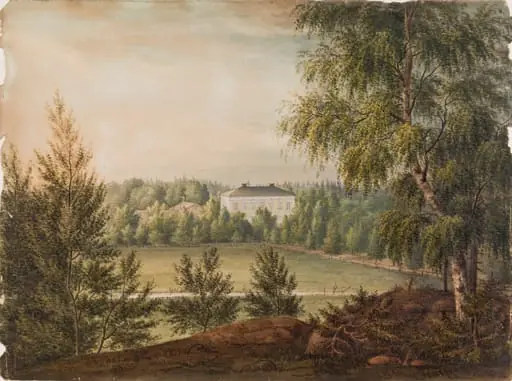 Huopalahden kartano, Hoplaks gård i Helsinge socken
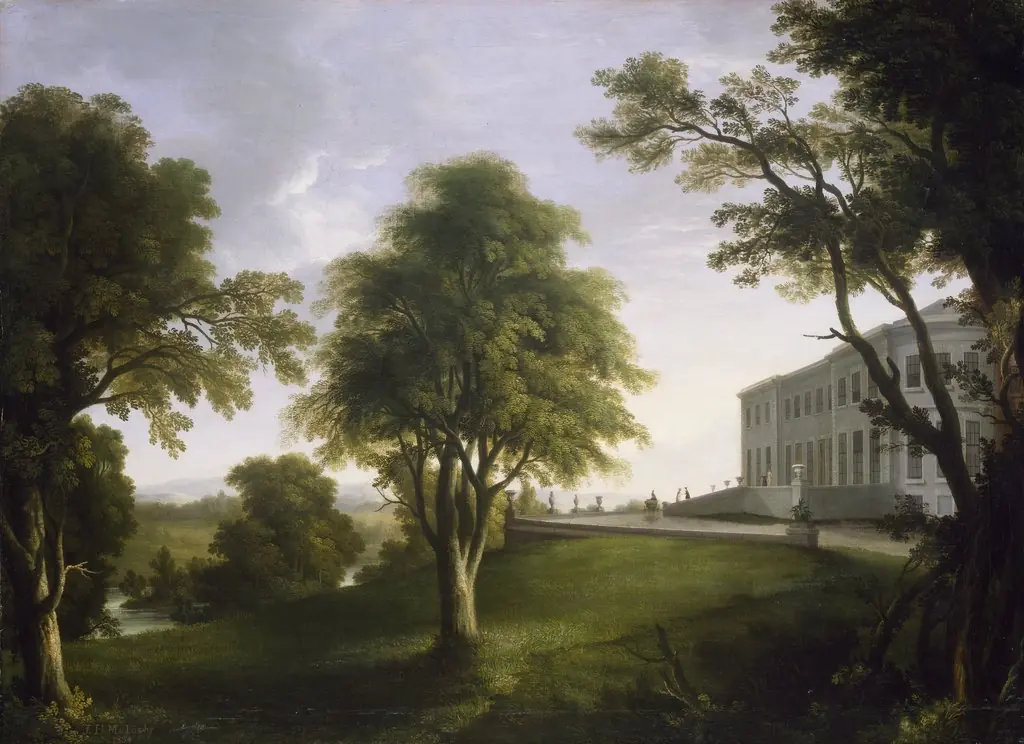 A Landscape with Curragh Chase, County Limerick
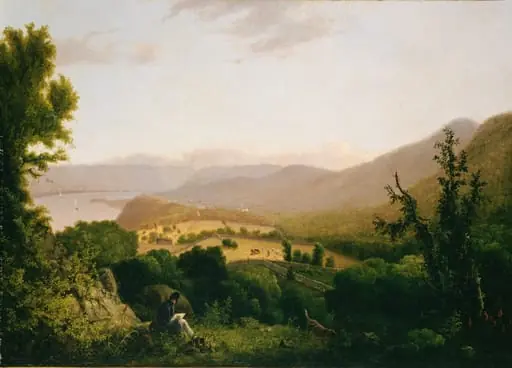 View at West Point
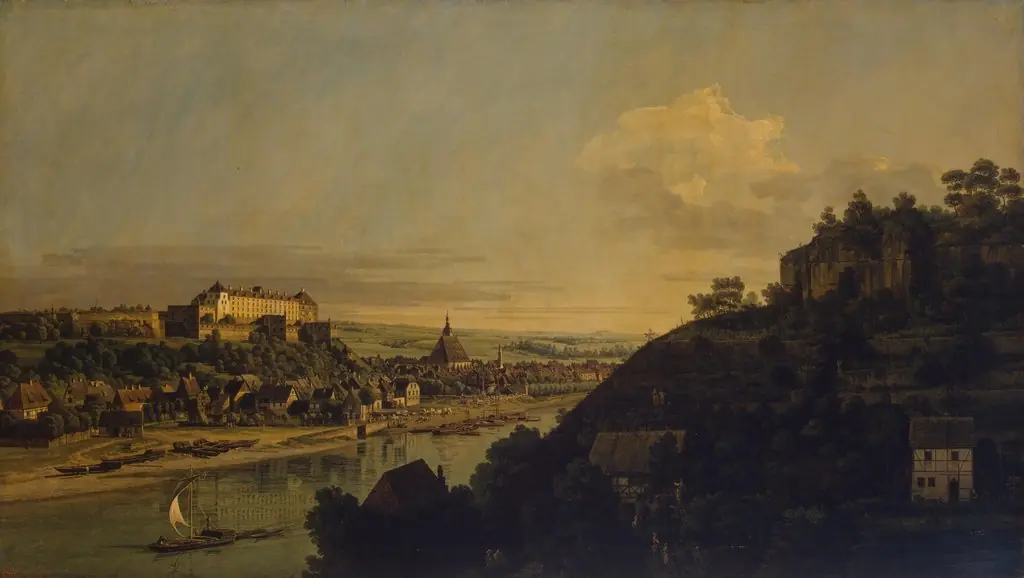 View of Pirna from the Right Bank of the Elba above the Town
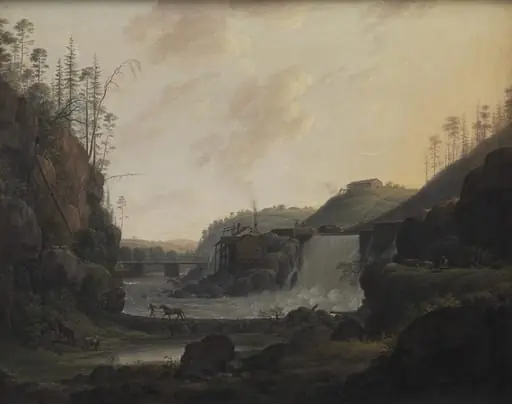 River Landscape with a Waterfall near Bogstad in Norway