Artwork
Huopalahden kartano, Hoplaks gård i Helsinge socken
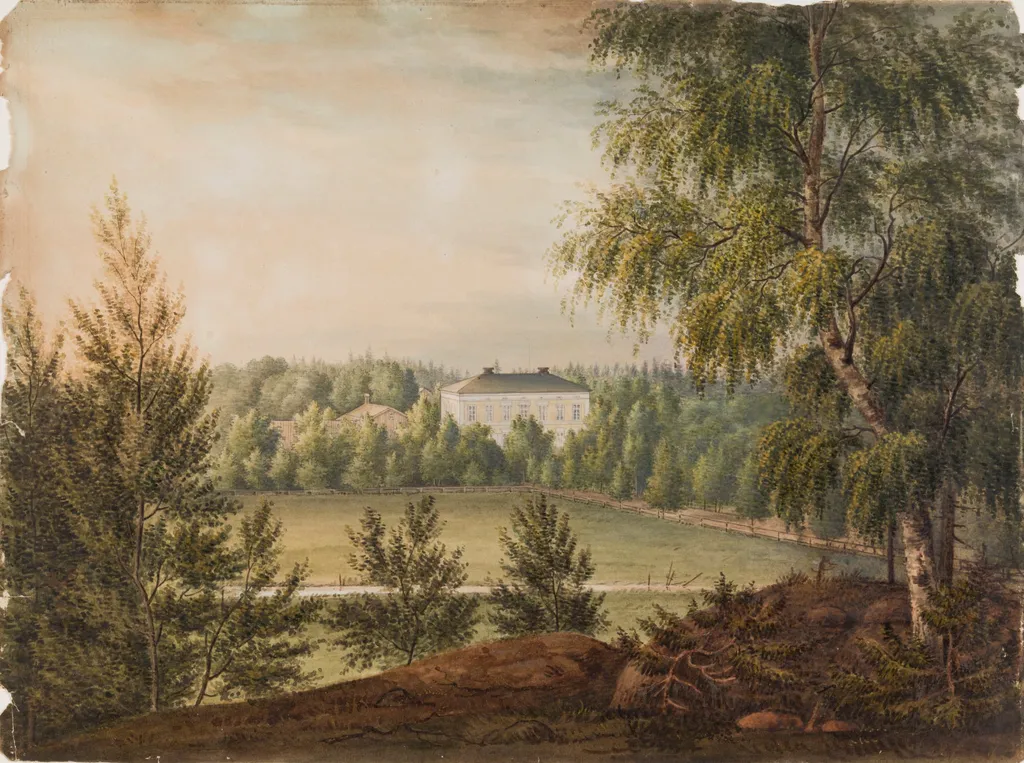
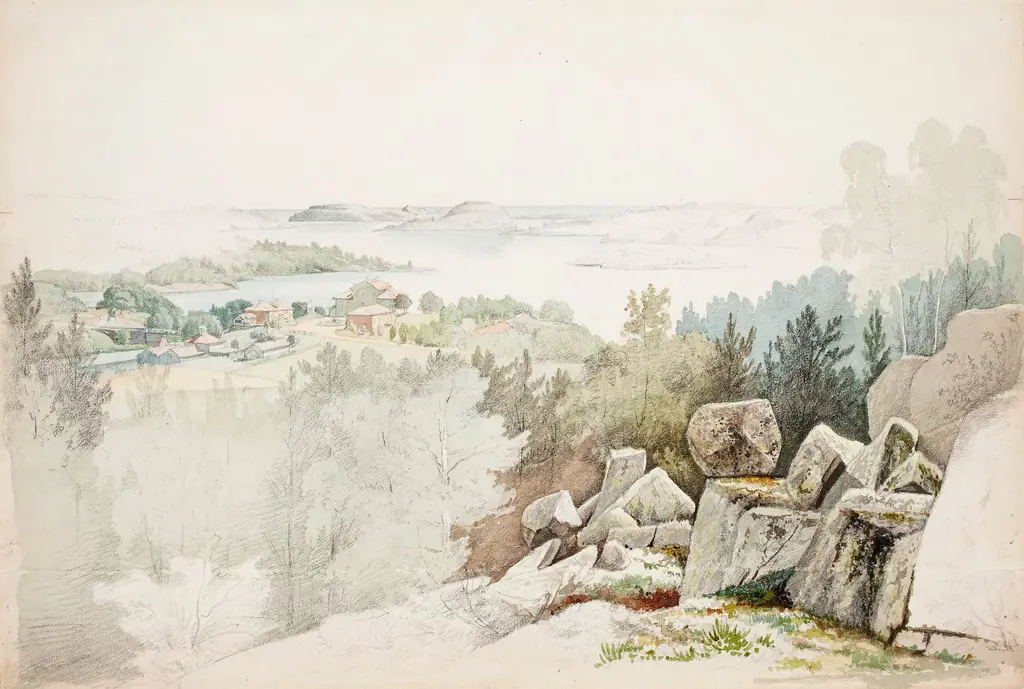
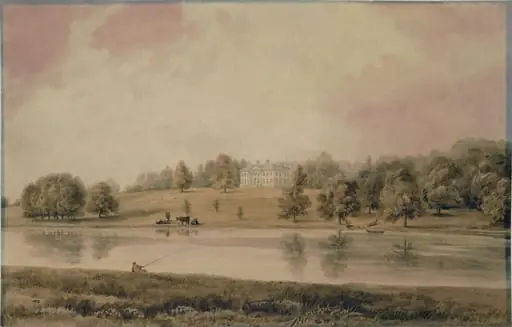
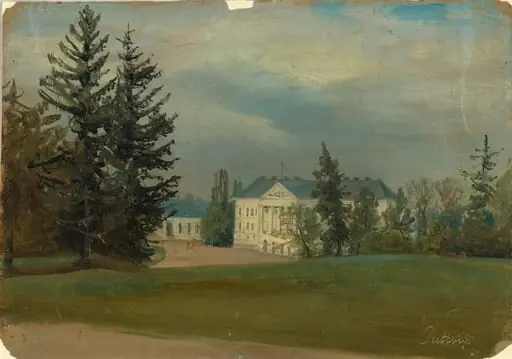
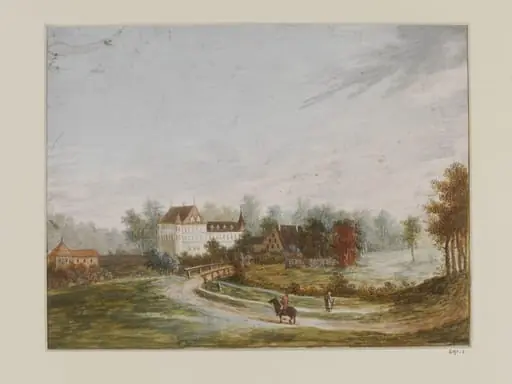
Huopalahden kartano, Hoplaks gård i Helsinge socken is a drawing by Magnus von Wright. It is held in the collection of the Helsinki City Museum. This image portrays Huopalahden kartano, a manor house located in Helsinge parish, rendered as a tranquil landscape.
About this work
Overview
The composition guides the eye from foreground foliage toward the building, suggesting depth without dramatic contrast.
This image portrays Huopalahden kartano, a manor house located in Helsinge parish, rendered as a tranquil landscape. The central structure, painted in white, stands amid a quiet arrangement of trees and open grassland. Soft gradients in the sky—light blue merging with pale pink—enhance the calm atmosphere. The composition guides the eye from foreground foliage toward the building, suggesting depth without dramatic contrast.
Subject & Meaning
The subject is a rural Finnish manor, likely functioning as a residence or estate center in its time. Its placement at the center of the frame emphasizes stability and harmony with nature. The absence of human figures or activity reinforces a contemplative mood, suggesting an idealized vision of domestic life integrated into the natural environment rather than dominating it.
Technique & Style
The artist employs muted, atmospheric coloration to evoke serenity. Brushwork is gentle, with soft edges between land, sky, and architecture. Foreground trees are rendered with subtle detail, while the manor and distant elements are more diffused, creating atmospheric perspective. The palette favors pastel tones, avoiding sharp contrasts to maintain a quiet, unified tone.
History & Provenance
The painting depicts Huopalahden kartano in Helsinge, a region historically associated with Swedish-speaking Finnish landowners. While the artist is identified as Magnus von Wright, the work’s exact date and early ownership remain undocumented. It likely originated in the mid-19th century, consistent with von Wright’s focus on Finnish landscapes during that period.
Context
Magnus von Wright was part of a Swedish-Finnish artistic tradition that documented the Finnish countryside during the 1800s, a time of growing national identity. His landscapes often avoided romantic drama, instead favoring quiet observation. This work aligns with broader European trends of pastoral realism, reflecting a cultural interest in rural life as a source of continuity and order.
Legacy
The painting contributes to a body of work that helped define visual representations of Finnish rural architecture in the 19th century. Though not widely exhibited, it remains a reference point for studies of von Wright’s landscape approach. Its restrained aesthetic continues to inform perceptions of Finnish natural heritage in art historical discourse.
Own this work as a print
Artist & collection
Artist
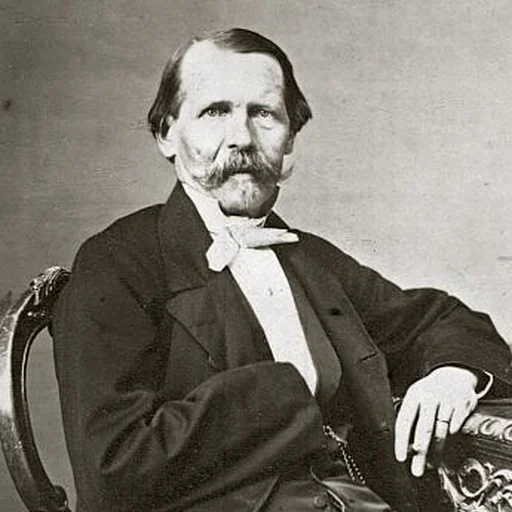
Magnus von Wright (13 June 1805 – 5 July 1868) was a Finnish painter and educator. In addition to bird illustrations, he was also known for his landscapes. He was one of the four sibling von Wright artists.