Artwork
Corydalis
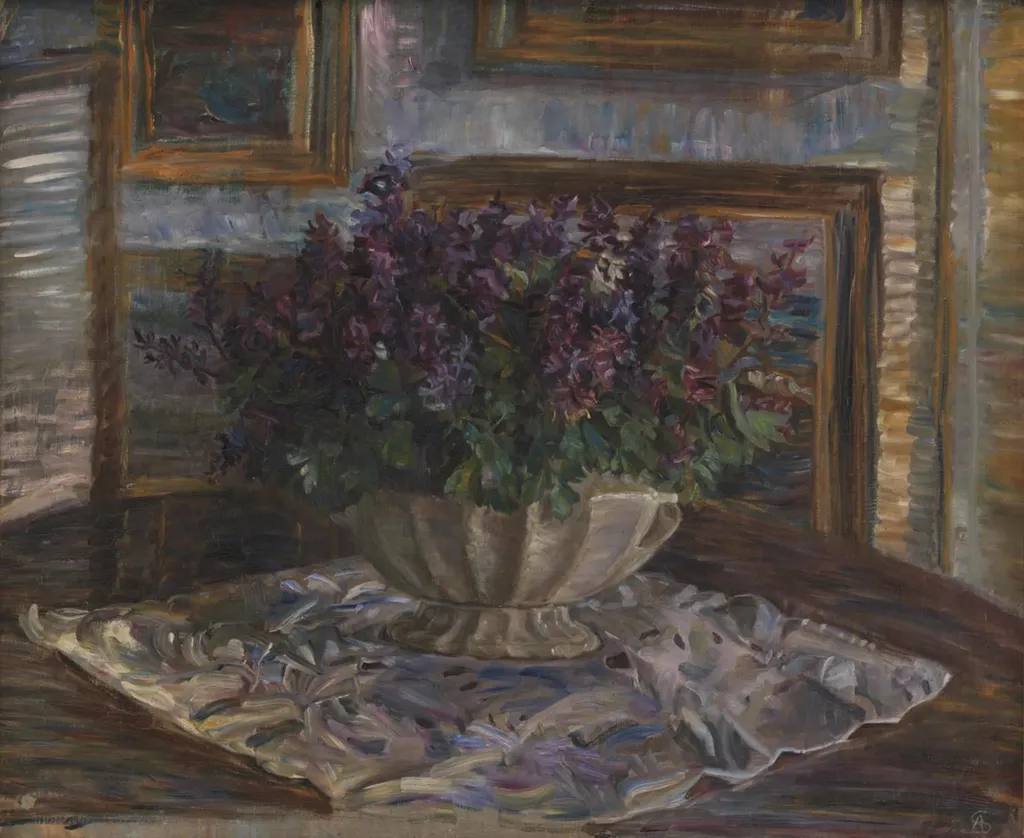
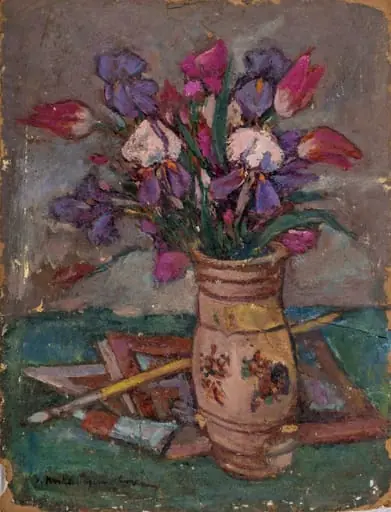
Corydalis is a photography by Unknown. It dates from 1905 and is held in the collection of the Statens Museum for Kunst.
About this work
Overview
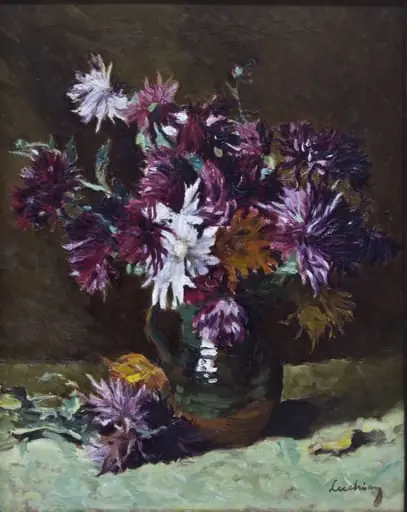
Created around 1905, Corydalis is a photographic image depicting a modest still life: a dark ceramic vase holding purple flowers on a wooden surface.
Created around 1905, Corydalis is a photographic image depicting a modest still life: a dark ceramic vase holding purple flowers on a wooden surface. The composition is deliberately restrained, with blurred surroundings and soft lighting to isolate the arrangement. The Museum of Ethnography holds the work, which reflects early 20th-century photographic interest in quiet, natural forms rather than grand subjects.
Subject & Meaning
The subject is a simple arrangement of wilting flowers in a plain vase, suggesting transience and quiet decay. The scattered petals imply passage of time, evoking themes of impermanence without overt symbolism. The absence of human presence or ornate decoration directs focus to the organic forms themselves, inviting contemplation of natural cycles rather than narrative or cultural reference.
Technique & Style
The photograph employs soft focus and muted tones to emphasize texture and subtle color variation. Lighting is diffused, enhancing the delicate surfaces of petals and ceramic without harsh contrast. The blurred background eliminates distraction, reinforcing the intimacy of the scene. The approach aligns with pictorialist tendencies of the era, valuing tonal harmony and emotional resonance over sharp detail.
History & Provenance
The work was created circa 1905 by 742_person and entered the collection of the Museum of Ethnography shortly after its making. Its preservation suggests early recognition of photography’s capacity to capture everyday beauty. No record of public exhibition or commercial reproduction exists, indicating it was likely a personal or experimental piece rather than a widely circulated image.
Context
In the early 1900s, photographers increasingly turned to domestic and natural subjects as alternatives to staged portraiture or documentary realism. Corydalis reflects this shift, aligning with broader artistic movements that valued mood and subtlety. Its simplicity contrasts with the ornate aesthetics of the preceding century, signaling a growing appreciation for understated, intimate imagery in visual culture.
Legacy
Though not widely known outside institutional circles, Corydalis exemplifies a quiet strain in early photographic practice that prioritized atmosphere over spectacle. Its preservation in an ethnographic museum underscores the growing acceptance of photography as a medium capable of conveying cultural and aesthetic sensitivity. The work remains a quiet reference point for studies of early 20th-century visual quietude.
Artist & collection

 Domestic Scene
 Giacomo and Cardinal Marco, investing Andrea, Abbot of San Zeno, with his Benefice
 The Nymph of Fontainebleau
 Portrait of a Woman
 Madonna and Child with Saints in the Enclosed Garden
 Venus and Minerva
 Family Group of Four on Sofa
 Wall painting from Room H of the Villa of P. Fannius Synistor at Boscoreale