Artwork
Portræt af Louise, Frederik V's første dronning
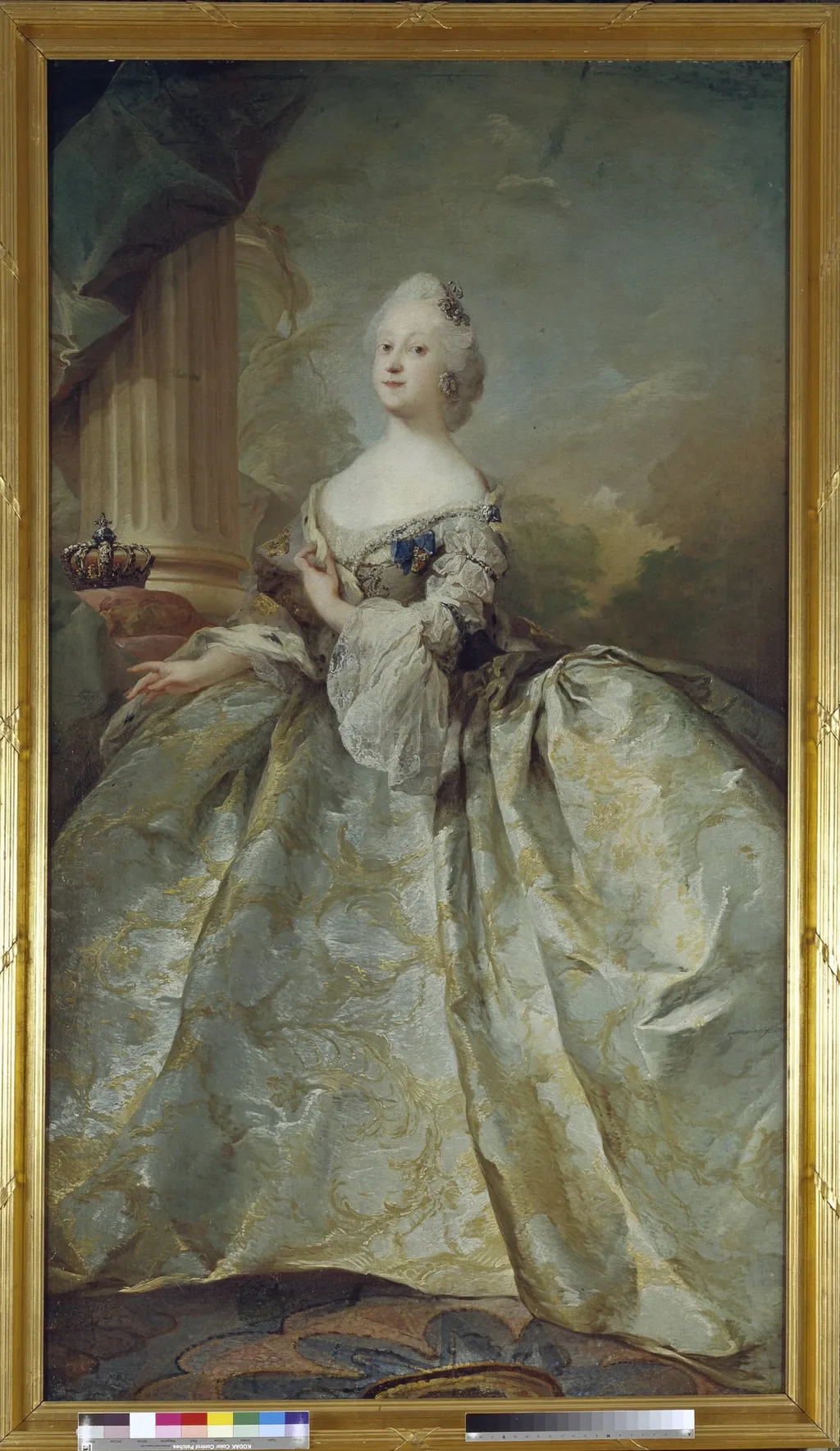
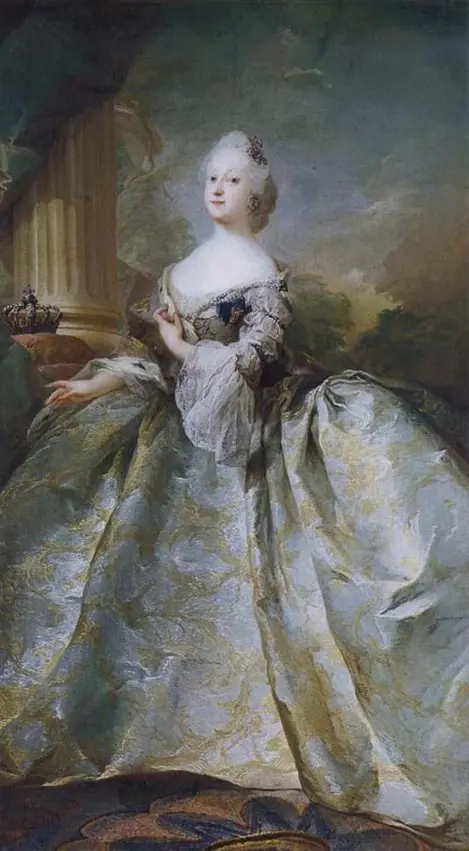
Portræt af Louise, Frederik V's første dronning is a photography by the Romanticist artist Unknown. It dates from 1751 and is held in the collection of the Statens Museum for Kunst. This portrait depicts Louise of Great Britain, the first queen consort of King Frederick V of Denmark, painted in 1751.
About this work
Overview
This portrait depicts Louise of Great Britain, the first queen consort of King Frederick V of Denmark, painted in 1751. Though described here as a photograph, the work is in fact a painted representation, likely executed by a court artist. It resides in the Museum of Ethnography, a placement that reflects its historical and cultural significance rather than its artistic origin.
Subject & Meaning
The presence of jewelry and an elaborate hairstyle reinforces her position as a figure of courtly refinement and political alliance between Britain and Denmark.
Louise is portrayed in ceremonial attire, emphasizing her royal status. The white gown adorned with gold embroidery symbolizes purity and dignity, while the crown she holds in her hand suggests both her authority and the transient nature of power. The presence of jewelry and an elaborate hairstyle reinforces her position as a figure of courtly refinement and political alliance between Britain and Denmark.
Technique & Style
The painting employs meticulous brushwork to render the textures of fabric, lace, and metalwork. Light falls softly across the dress, highlighting its intricate folds and metallic thread patterns. The background is simplified, with a single column suggesting architectural grandeur without distraction. The composition prioritizes clarity and dignity over dramatic flair, aligning with 18th-century royal portraiture conventions.
History & Provenance
Commissioned shortly after Louise’s marriage to Frederick V in 1743, the portrait was likely intended to affirm her role as queen. It entered the collection of the Museum of Ethnography in the late 19th or early 20th century, possibly as part of a broader effort to document European royalty within anthropological contexts. Its current location reflects shifting museum priorities rather than its original function.
Context
Louise’s portrait was created during a period when Scandinavian courts sought to align themselves with the visual language of British and French royalty. Her British lineage made her a symbol of dynastic connection, and such portraits served as diplomatic tools. The emphasis on elegance and restraint reflects the emerging neoclassical taste in European courts, moving away from Baroque excess.
Legacy
The portrait remains a key visual record of Louise’s brief but influential tenure as queen. Though her life ended prematurely in 1751, the image preserves her public persona. Its preservation in an ethnographic museum underscores how royal figures were later interpreted as cultural artifacts, bridging personal history and institutional memory.
Artist & collection

 Domestic Scene
 Giacomo and Cardinal Marco, investing Andrea, Abbot of San Zeno, with his Benefice
 The Nymph of Fontainebleau
 Portrait of a Woman
 Madonna and Child with Saints in the Enclosed Garden
 Venus and Minerva
 Family Group of Four on Sofa
 Wall painting from Room H of the Villa of P. Fannius Synistor at Boscoreale
 The Infanta María Teresa Rafaela of Spain, future Dauphine of France (1726-1746)
 Portrait of Maria Josepha of Saxony (1731–1767), Dauphine of France
 Portrait of a Woman Standing in a Garden
 Portrait of Victoire of France
 Margravine Maria Anna Josepha of Baden-Baden
 Tanskan kuningatar Louise
 The Queen Dowager Juliane Marie
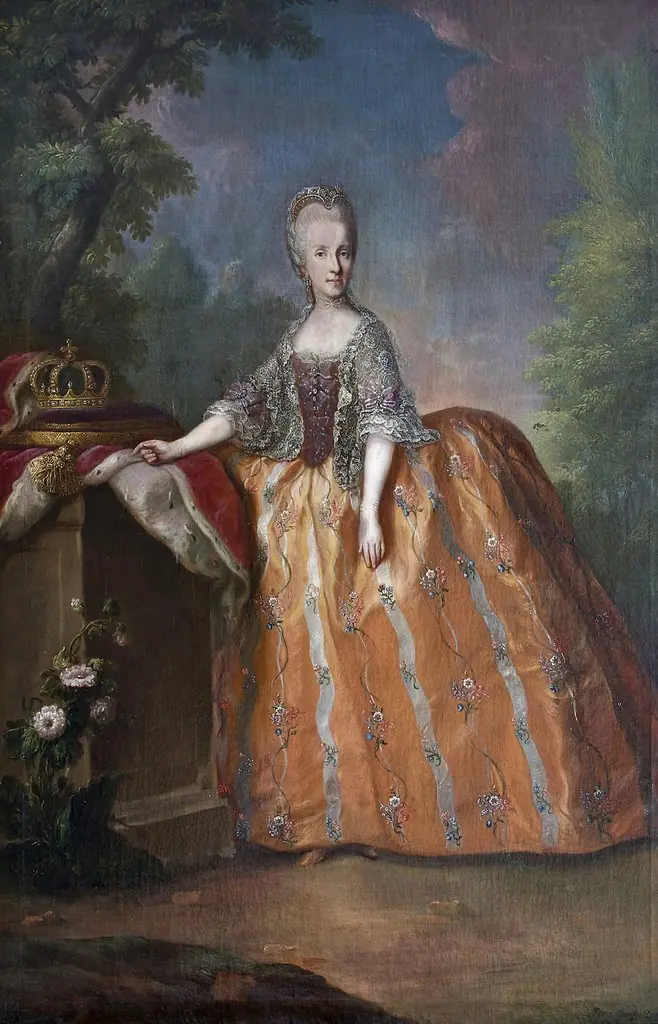 Maria Luisa of Spain, Holy Roman Empress
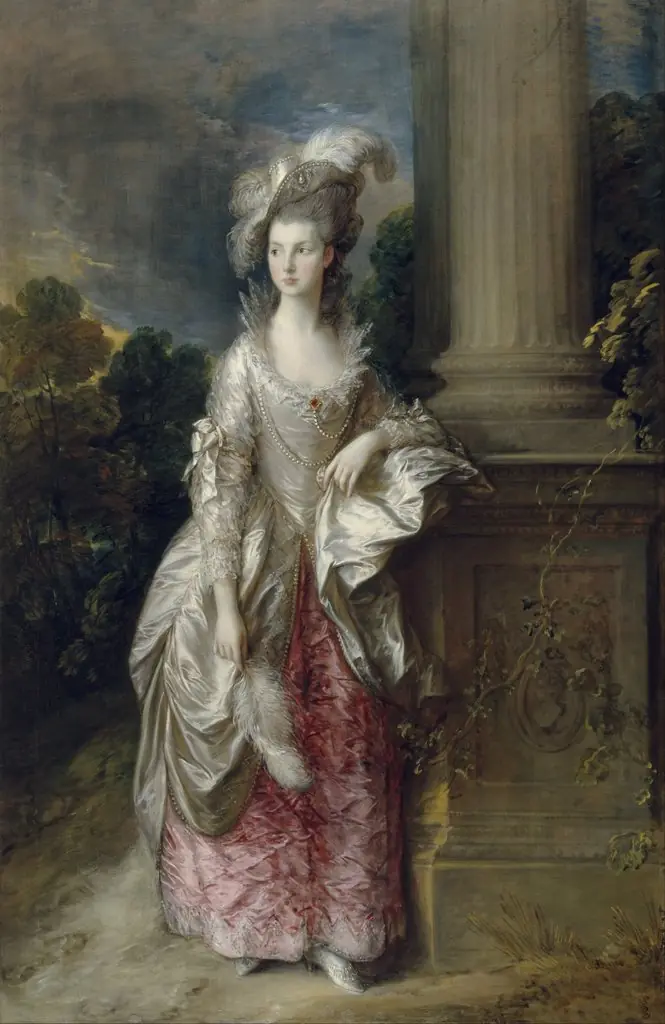 The Honourable Mrs Graham
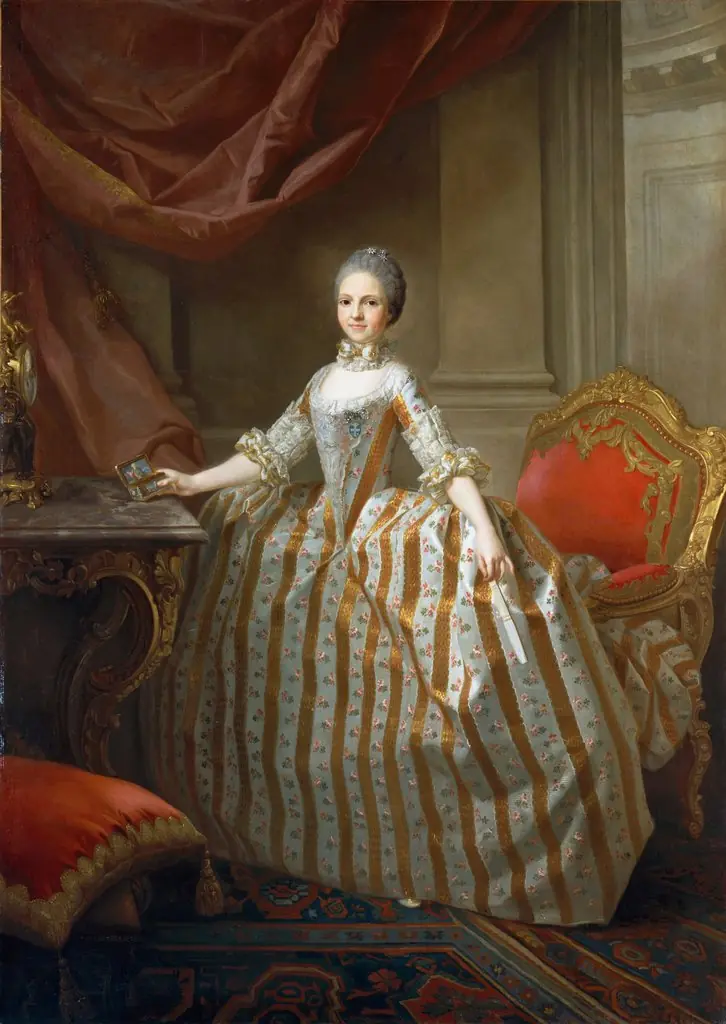 Maria Luisa of Parma (1751–1819), Later Queen of Spain
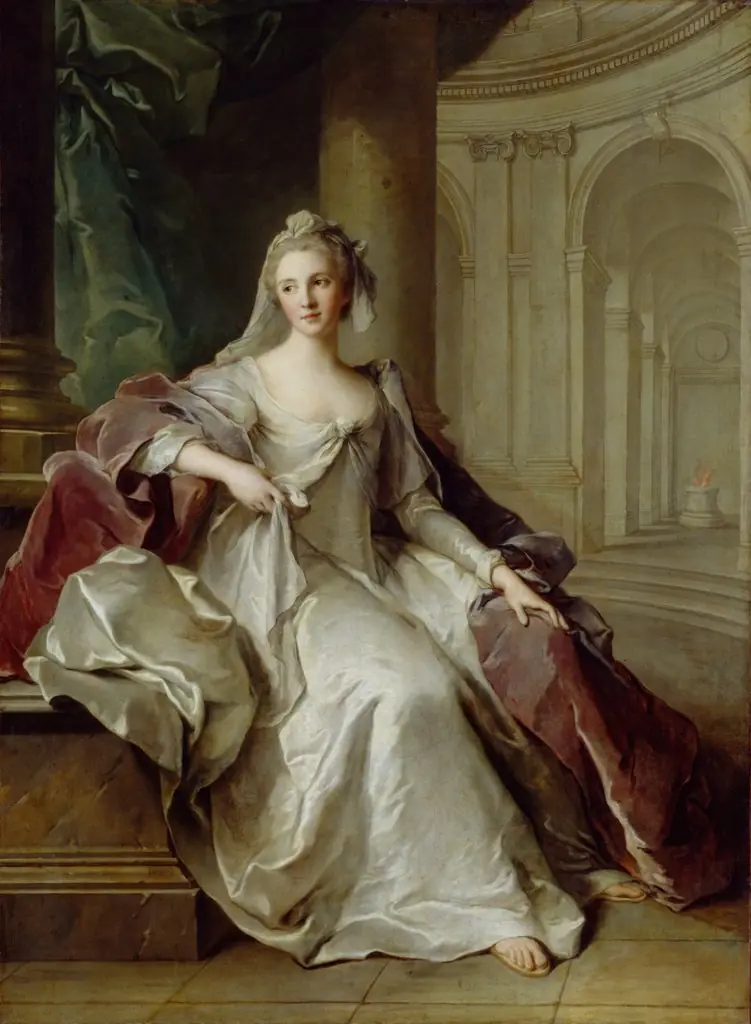 Madame Henriette de France as a Vestal Virgin
 Portræt af Louise, Frederik V's første dronning