Artwork
The Sacrifice of Iphigenia
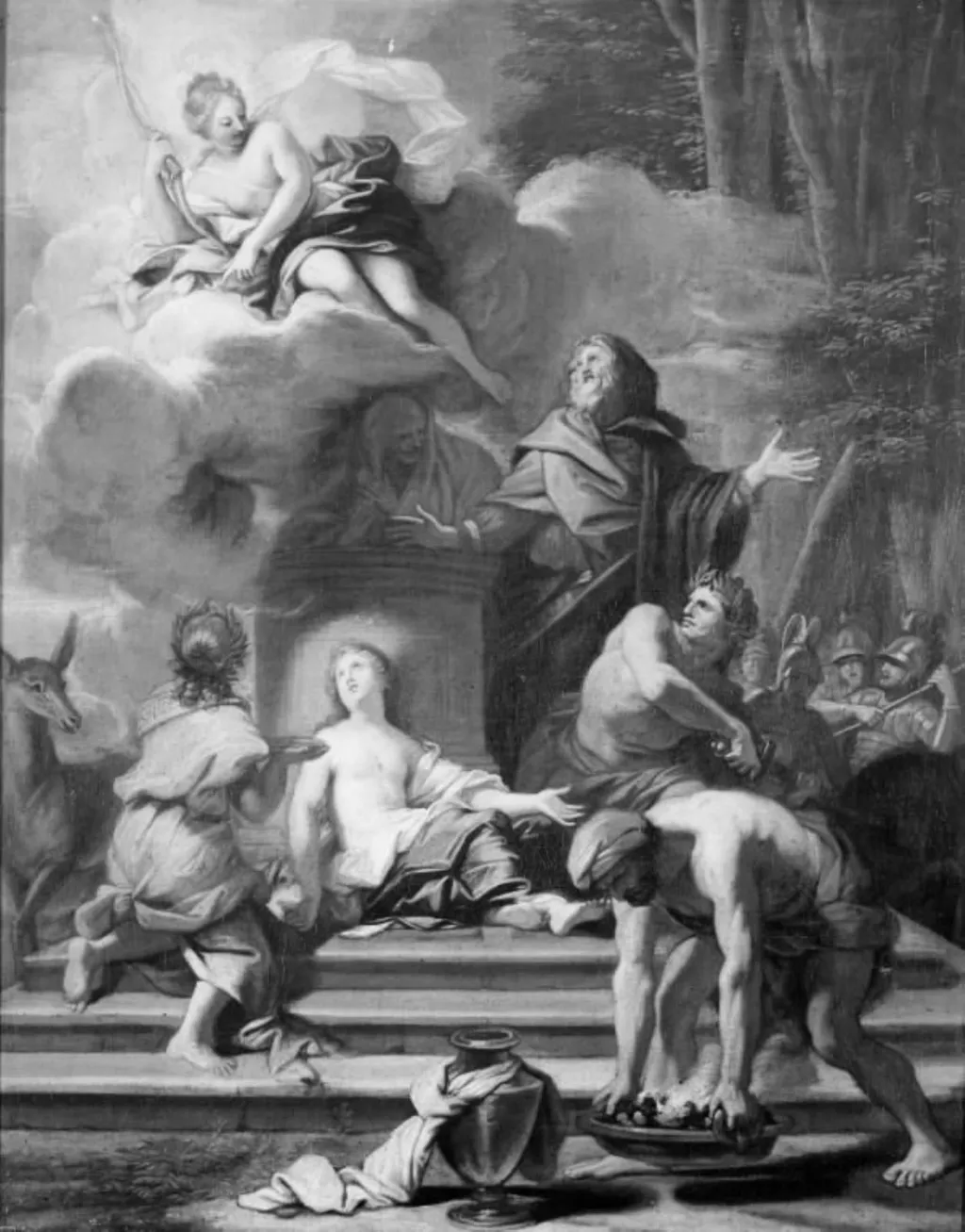
The Sacrifice of Iphigenia is a photography by Unknown. It dates from 1750 and is held in the collection of the Statens Museum for Kunst. Painted around 1750, this work depicts the mythological moment of Iphigenia’s sacrifice, a scene drawn from Greek legend.
About this work
Overview
Painted around 1750, this work depicts the mythological moment of Iphigenia’s sacrifice, a scene drawn from Greek legend.
Painted around 1750, this work depicts the mythological moment of Iphigenia’s sacrifice, a scene drawn from Greek legend. It is held in the collection of the Museum of Ethnography. The composition centers on ritual action, with multiple figures arranged to convey urgency and solemnity. The artist employs strong contrasts of light and shadow to heighten emotional intensity and spatial depth, aligning with broader European traditions of dramatic narrative painting.
Subject & Meaning
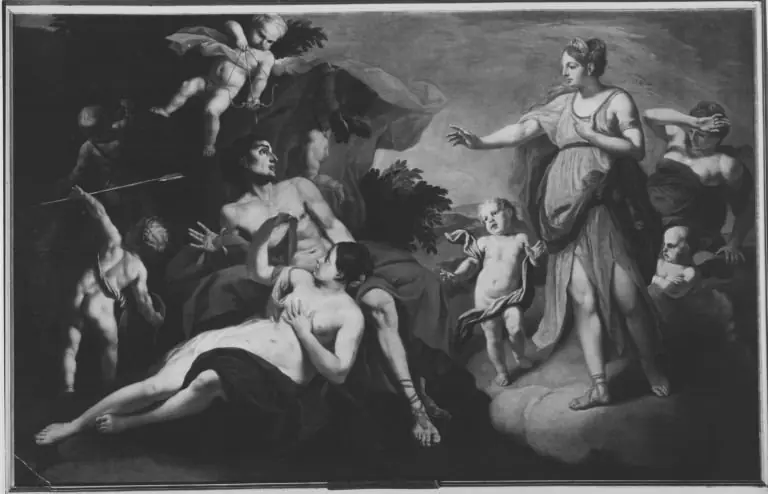
The scene illustrates the moment when Iphigenia, daughter of Agamemnon, is prepared for sacrifice to appease the goddess Artemis and ensure favorable winds for the Greek fleet bound for Troy. A figure in the foreground holds fruit, possibly symbolizing an offering, while another gestures toward the altar. Above, a celestial woman with bow and arrow represents Artemis, suggesting divine intervention. The tension between human duty and divine will underpins the narrative.
Technique & Style
The artist uses chiaroscuro to model forms and direct attention, with light falling sharply on the central figures and receding into shadowed backgrounds. This technique enhances the three-dimensionality of the bodies and the emotional gravity of the moment. The brushwork is controlled, with attention to gesture and drapery, reflecting influences from Baroque and early Neoclassical traditions, though the composition retains a distinct regional character.
History & Provenance
The painting entered the Museum of Ethnography’s collection in the late 19th century, likely acquired during a period of expanded European interest in mythological subjects as cultural artifacts. Its origins before this are undocumented, and the artist’s identity remains unconfirmed. No records indicate commission or exhibition history prior to its institutional acquisition.
Context
Created during the mid-18th century, the painting reflects a continued fascination with classical myths in European visual culture, even as Enlightenment thought began to question mythological narratives. While Italian and French artists frequently treated such subjects, this version appears to stem from a regional studio, blending classical themes with local stylistic conventions, possibly intended for private or civic display.
Legacy
Though not widely reproduced or studied in mainstream art history, the painting contributes to a broader corpus of lesser-known mythological works from the period. Its preservation in an ethnographic museum suggests an early recognition of its cultural significance beyond aesthetic value, positioning it as a document of how classical stories were interpreted and visualized in non-canonical contexts.
Artist & collection

 Domestic Scene
 Giacomo and Cardinal Marco, investing Andrea, Abbot of San Zeno, with his Benefice
 The Nymph of Fontainebleau
 Portrait of a Woman
 Madonna and Child with Saints in the Enclosed Garden
 Venus and Minerva
 Family Group of Four on Sofa
 Wall painting from Room H of the Villa of P. Fannius Synistor at Boscoreale
 Christus am Ölberg
 Aeneas am Numicius
 Hl. Johannes auf Patmos
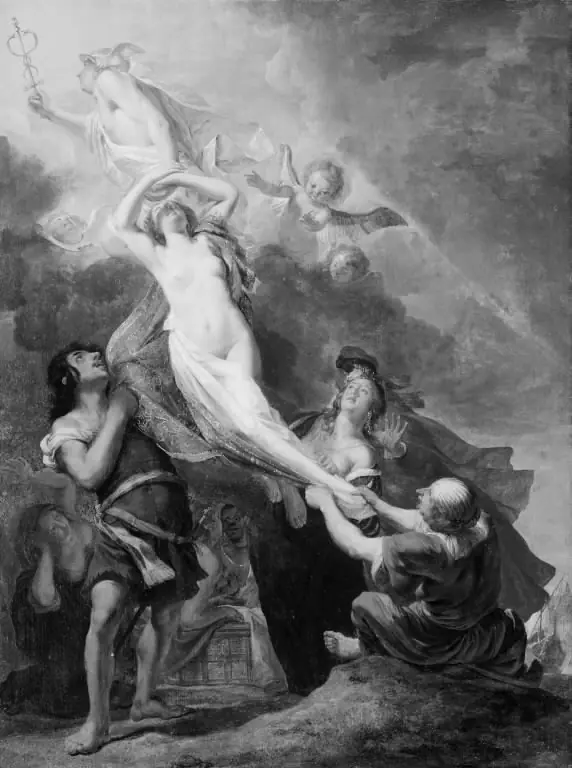 "Il Contento". Mercury abducting the Goddess Contento from the Earth
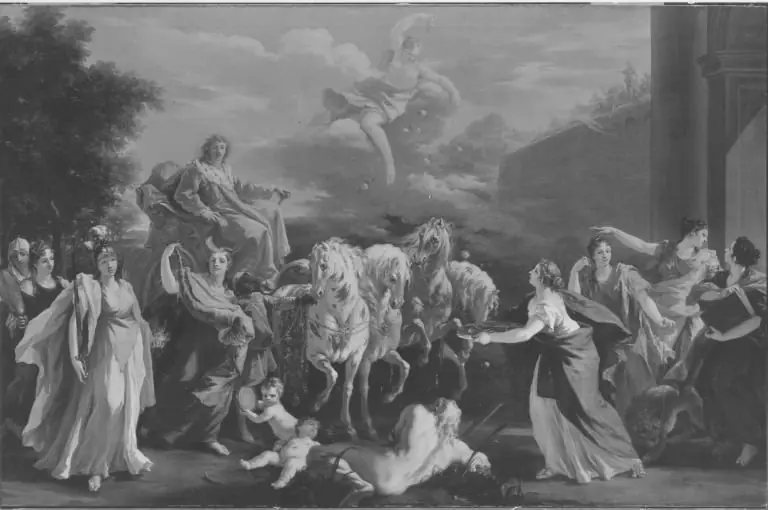 Einzug des Kurfürsten Johann Wilhelm von der Pfalz
 "Il Contento". Mercury abducting the Goddess Contento from the Earth
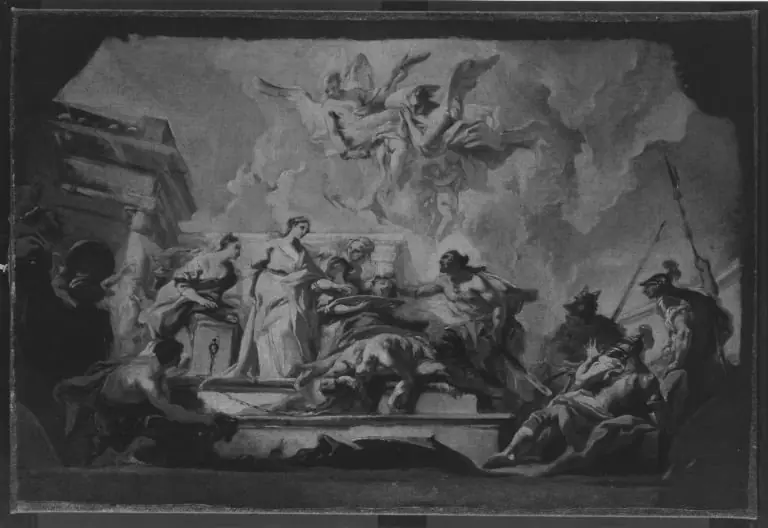 Enthauptung Johannes des Täufers
 Fehltritt der Kallisto
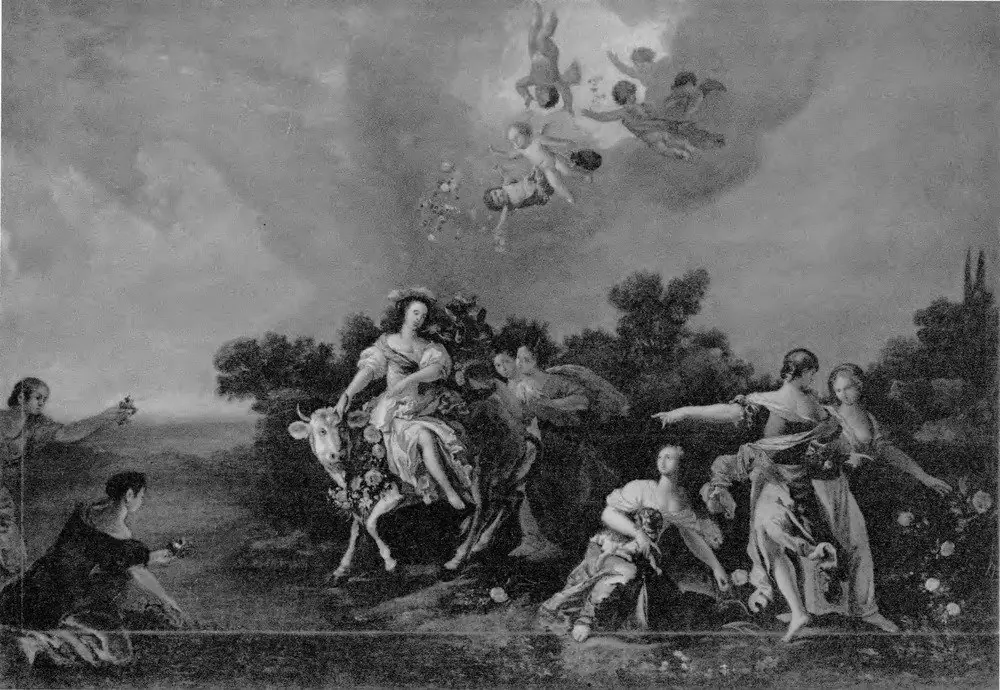 The Rape of Europa
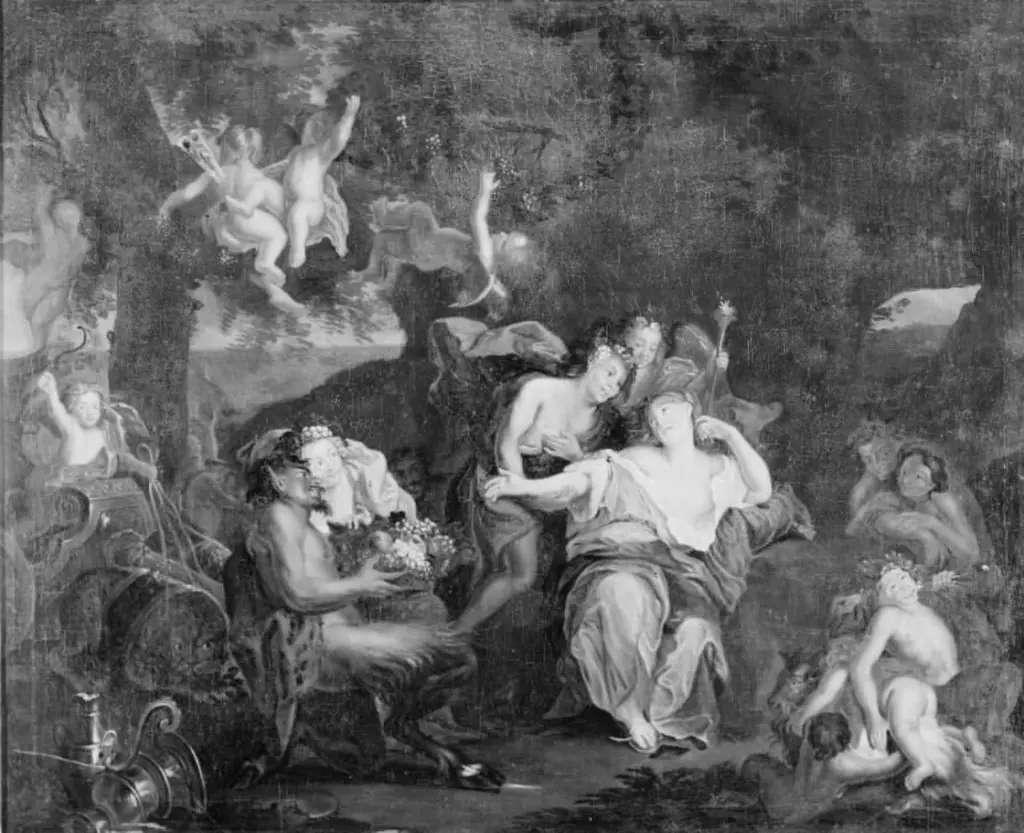 Bacchus og Ariadne sidder sammen i et landskab omgivne af amoriner, bacchantinder og satyrer