Artwork
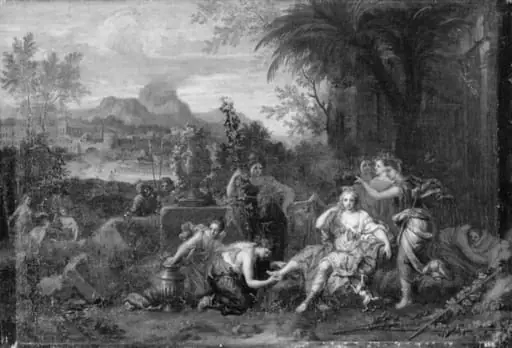
Bacchus og Ariadne sidder sammen i et landskab omgivne af amoriner, bacchantinder og satyrer
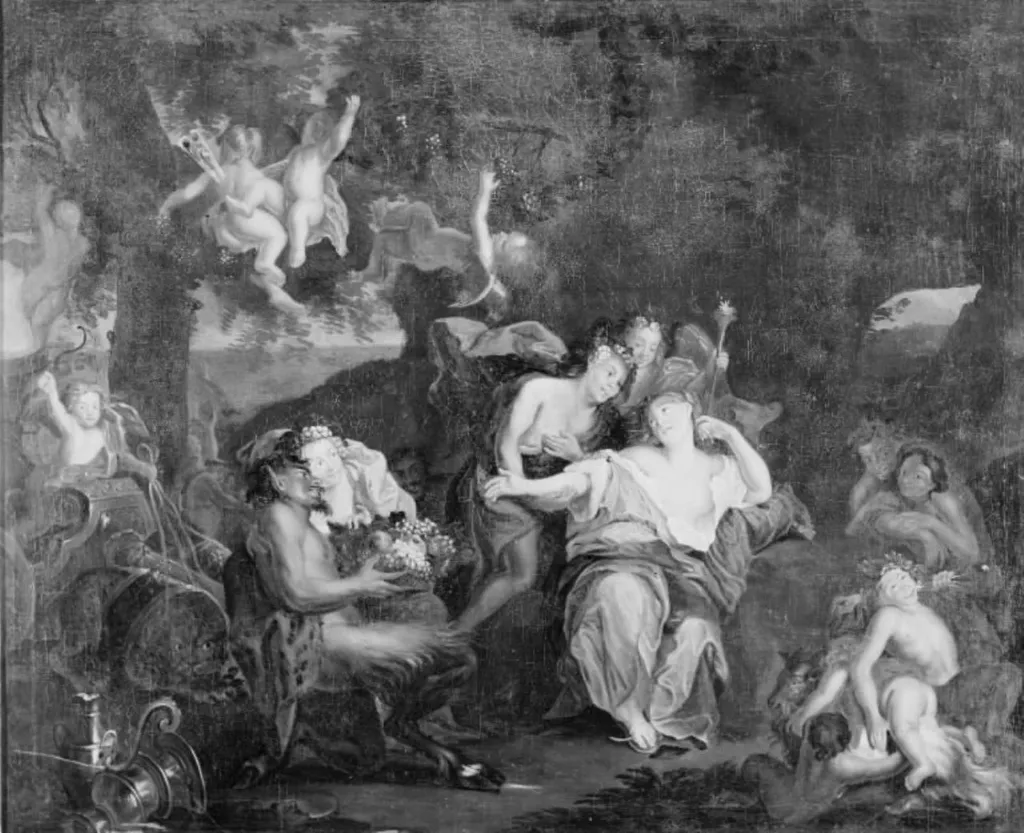
Bacchus og Ariadne sidder sammen i et landskab omgivne af amoriner, bacchantinder og satyrer is an oil painting by Unknown. It is held in the collection of the Statens Museum for Kunst. The oil painting presents a densely populated, nocturnal landscape where half‑clothed figures intermingle amid swirling darkness.
About this work
Overview
Around them, winged cupids, frolicking satyrs, and dancing women occupy the air and ground, creating a lively, almost theatrical tableau.
The oil painting presents a densely populated, nocturnal landscape where half‑clothed figures intermingle amid swirling darkness. Central to the composition are two seated individuals, one clutching a bouquet and the other resting a hand on the companion’s shoulder, exuding a quiet intimacy. Around them, winged cupids, frolicking satyrs, and dancing women occupy the air and ground, creating a lively, almost theatrical tableau.
Subject & Meaning
The central pair appears detached from the surrounding revelry, suggesting a moment of personal connection amid collective excess. Their calm demeanor contrasts with the surrounding frenzy of mythological beings, hinting at themes of love, restraint, or perhaps a fleeting sanctuary within a world of indulgence. The inclusion of Bacchic elements underscores the tension between ecstatic celebration and private affection.
Technique & Style
The artist employs a pronounced chiaroscuro, juxtaposing luminous figures against a murky, smoky backdrop. Thick, impasto brushwork gives the bodies a tactile, near‑three‑dimensional presence, while the blurred horizon dissolves into shadow, enhancing the sense of depth. The dynamic arrangement of figures and the vigorous handling of paint convey movement and emotional intensity.
Context
Rooted in the tradition of mythological painting, the work draws on classical narratives of Bacchus and Ariadne, integrating typical iconography such as satyrs and cupids. By situating the lovers amid a chaotic Bacchanalian scene, the composition reflects a 19th‑century fascination with romanticized antiquity and the interplay between order and disorder in human experience.
Artist & collection

 Domestic Scene
 Giacomo and Cardinal Marco, investing Andrea, Abbot of San Zeno, with his Benefice
 The Nymph of Fontainebleau
 Portrait of a Woman
 Madonna and Child with Saints in the Enclosed Garden
 Venus and Minerva
 Family Group of Four on Sofa
 Wall painting from Room H of the Villa of P. Fannius Synistor at Boscoreale
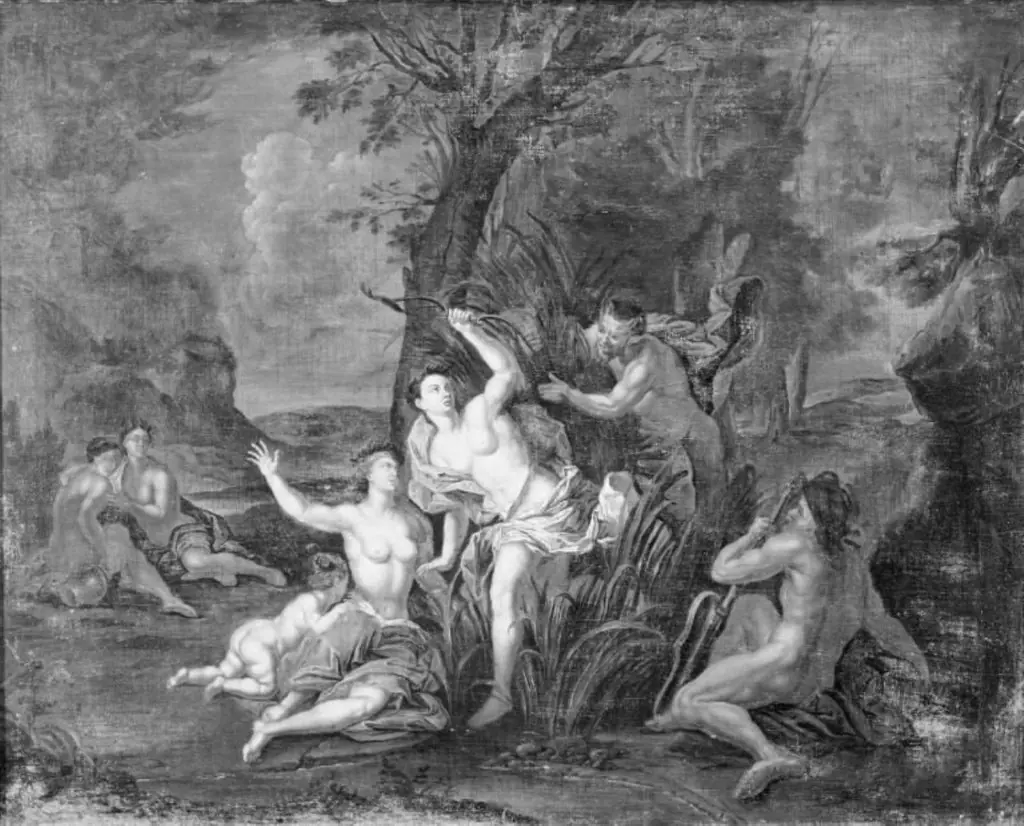 Nogle nymfer overraskes af en satyr. Ved siden sidder en flodgud
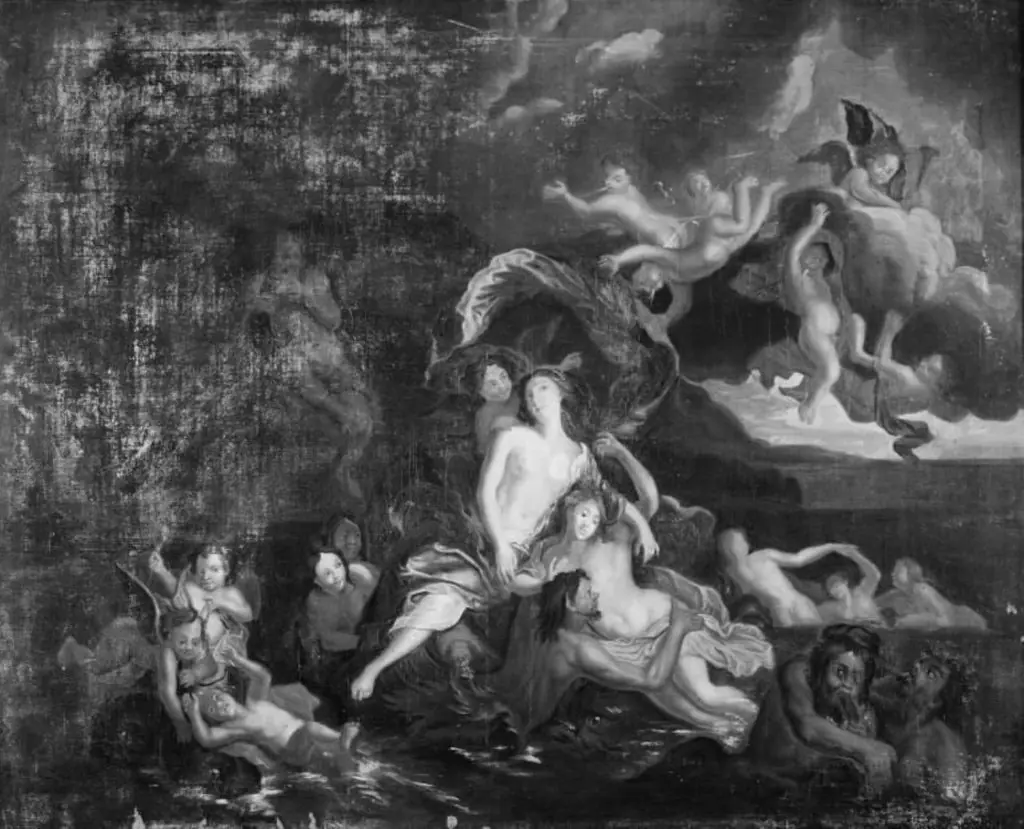 Galathea føres over havet, ledsaget af nymfer, tritoner og amoriner
 Nogle nymfer overraskes af en satyr. Ved siden sidder en flodgud
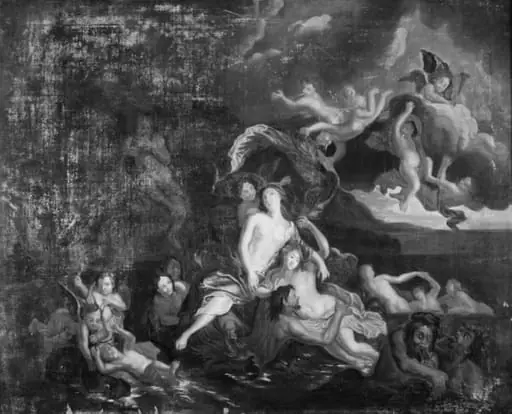 Galathea føres over havet, ledsaget af nymfer, tritoner og amoriner
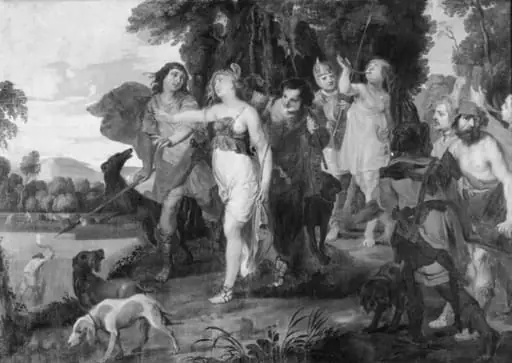 Hunting Party with Diana
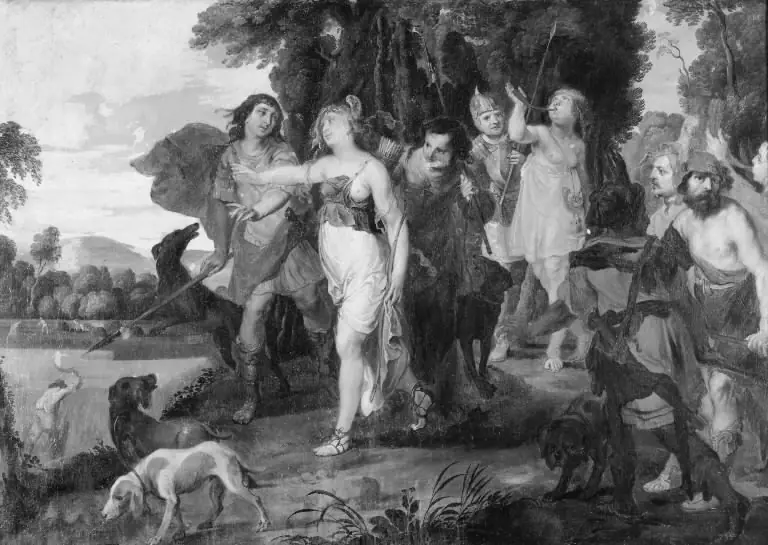 Hunting Party with Diana
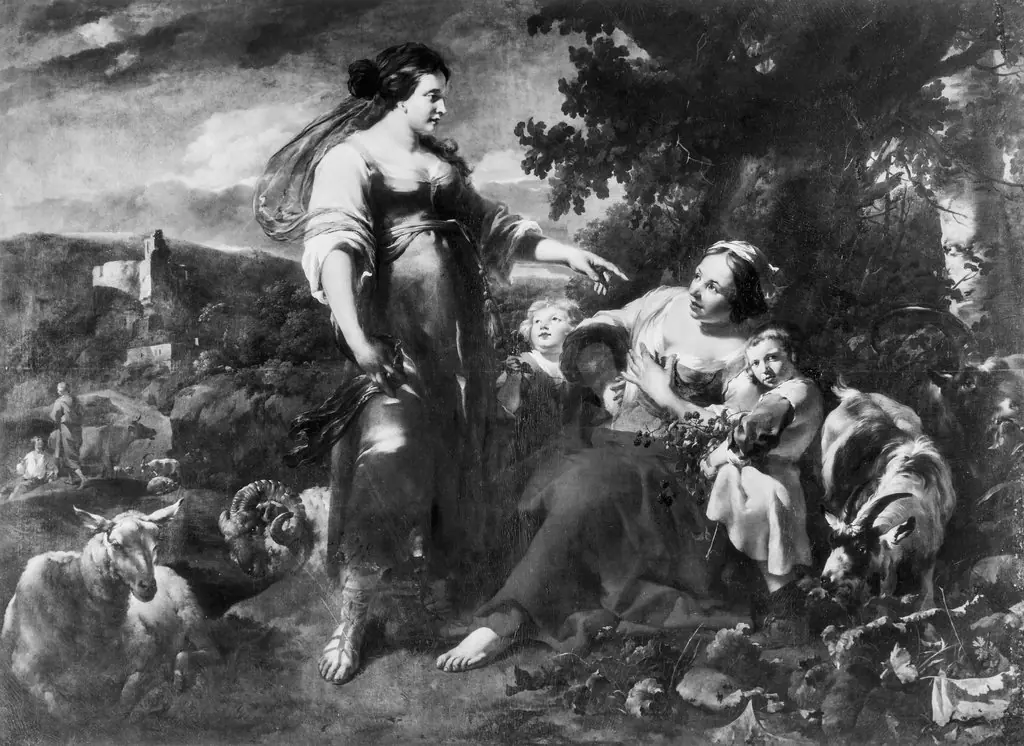 Rachel and Leah fighting over the Dudaim berries found by Ruben, Lea's son
 Landscape with Messalina's Wedding