Artwork
Interior of a Dutch Church
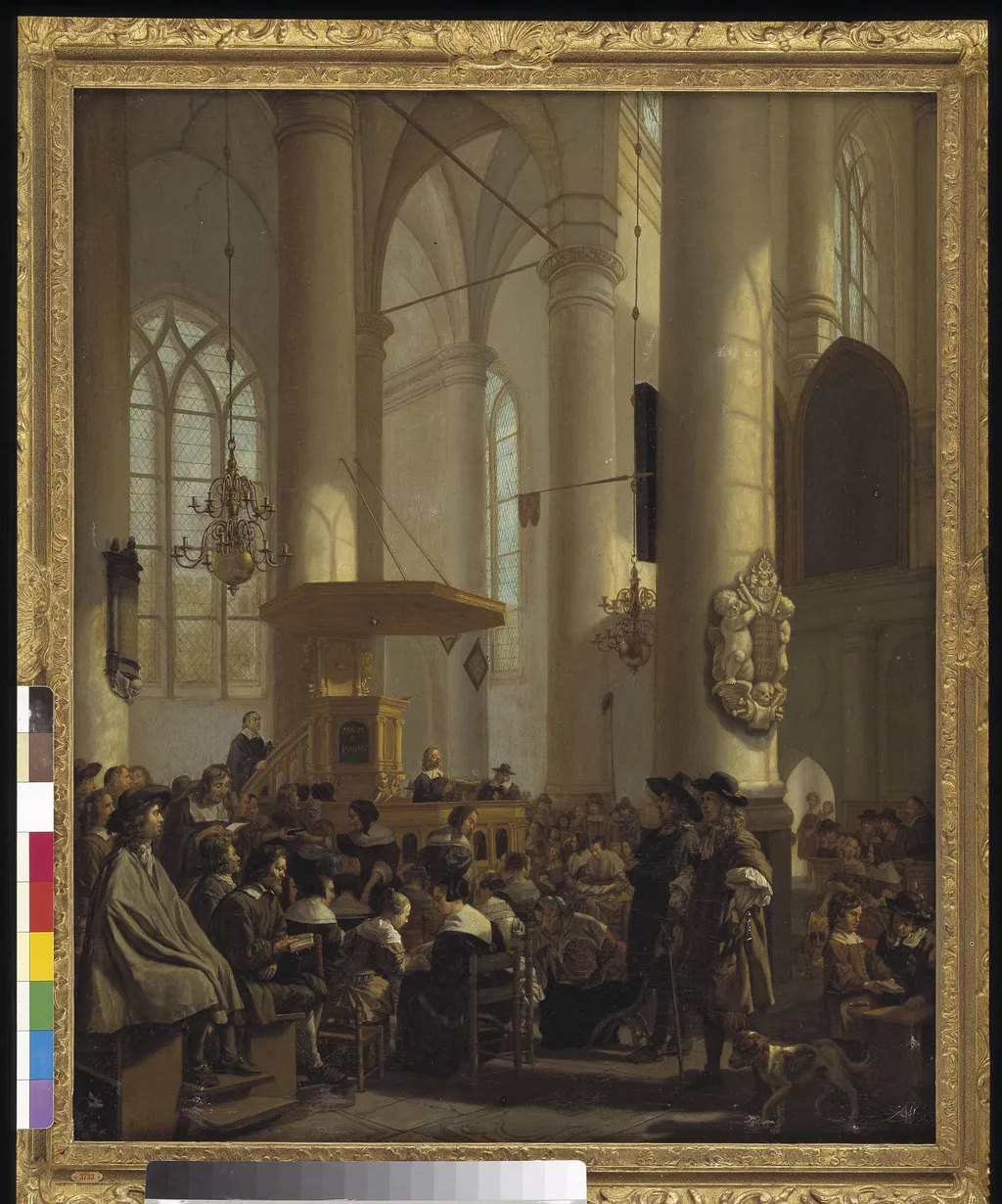
Interior of a Dutch Church is a photography by the Baroque artist Unknown. It dates from 1659 and is held in the collection of the Statens Museum for Kunst. Painted in 1659, this work depicts the interior of a Dutch Reformed church during a service.
About this work
Overview
It is currently held in the collection of the Museum of Ethnography, where it is studied for its cultural and spatial representation of Protestant worship.
Painted in 1659, this work depicts the interior of a Dutch Reformed church during a service. The scene captures a moment of quiet devotion amid architectural grandeur. Though the artist’s identity is uncertain, the painting reflects the visual language of 17th-century Dutch realism. It is currently held in the collection of the Museum of Ethnography, where it is studied for its cultural and spatial representation of Protestant worship.
Subject & Meaning
The painting portrays a congregation engaged in private and collective acts of worship: sitting, kneeling, reading, or whispering. The preacher, positioned at a modest pulpit, is one focal point among many, suggesting a shift from hierarchical religious authority to individual piety. The absence of ornate decoration and the presence of a single statue hint at Calvinist austerity, while the crowded pews emphasize communal religious life in the Dutch Republic.
Technique & Style
The artist employs chiaroscuro to model forms and create spatial depth, with light streaming through high windows to illuminate faces, columns, and pews. Shadows define the architecture’s volume, while subtle gradations in tone unify the composition. Brushwork is precise yet unobtrusive, favoring naturalism over theatricality. The treatment of light and texture aligns with Dutch Baroque tendencies, prioritizing observed reality over idealized form.
History & Provenance
The painting’s early ownership is undocumented, but it entered the Museum of Ethnography’s collection in the late 19th or early 20th century. Its classification within an ethnographic institution suggests it was valued for its anthropological insight into Dutch religious practice rather than its artistic pedigree. No significant alterations or restorations are recorded, preserving its original tonal balance and surface integrity.
Context
Created during the Dutch Golden Age, the painting reflects the Protestant Reformation’s impact on religious space: stripped of Catholic imagery, churches became venues for sermons and silent contemplation. The emphasis on light, order, and quiet activity mirrors broader cultural values of discipline and moderation. Similar interiors appear in works by artists like Pieter Jansz. Saenredam, though this version includes more human presence.
Legacy
Though not widely exhibited, the painting contributes to scholarly understanding of how Dutch artists rendered sacred space without iconography. Its focus on ordinary congregants and subdued drama distinguishes it from more theatrical religious scenes elsewhere in Europe. It remains a quiet testament to the visual culture of Protestant worship in 17th-century Holland, studied for its documentation of daily ritual and architectural form.
Artist & collection

 Domestic Scene
 Giacomo and Cardinal Marco, investing Andrea, Abbot of San Zeno, with his Benefice
 The Nymph of Fontainebleau
 Portrait of a Woman
 Madonna and Child with Saints in the Enclosed Garden
 Venus and Minerva
 Family Group of Four on Sofa
 Wall painting from Room H of the Villa of P. Fannius Synistor at Boscoreale
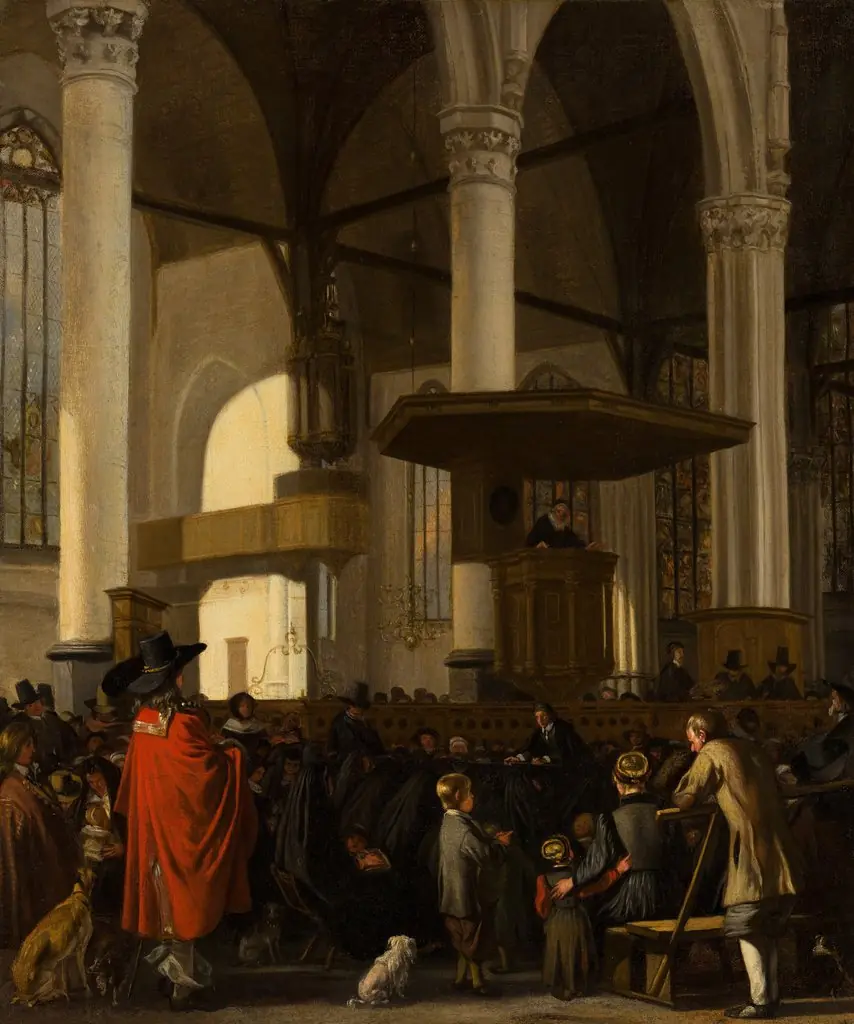 The Oude Kerk in Amsterdam during a Service
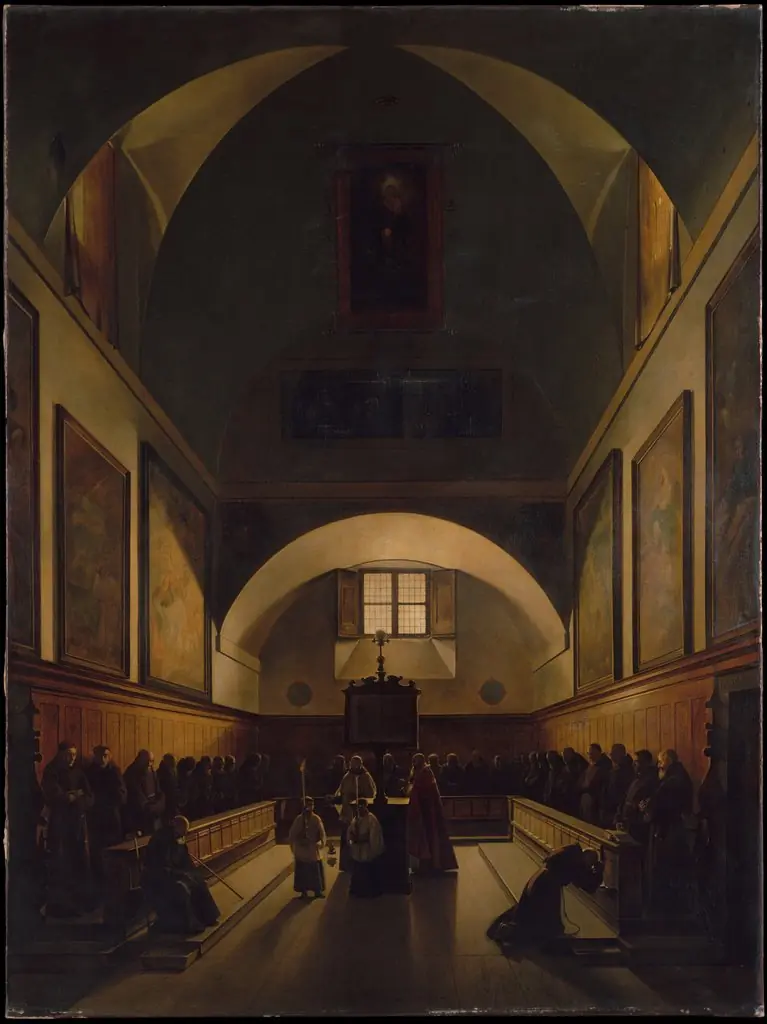 The Choir of the Capuchin Church in Rome
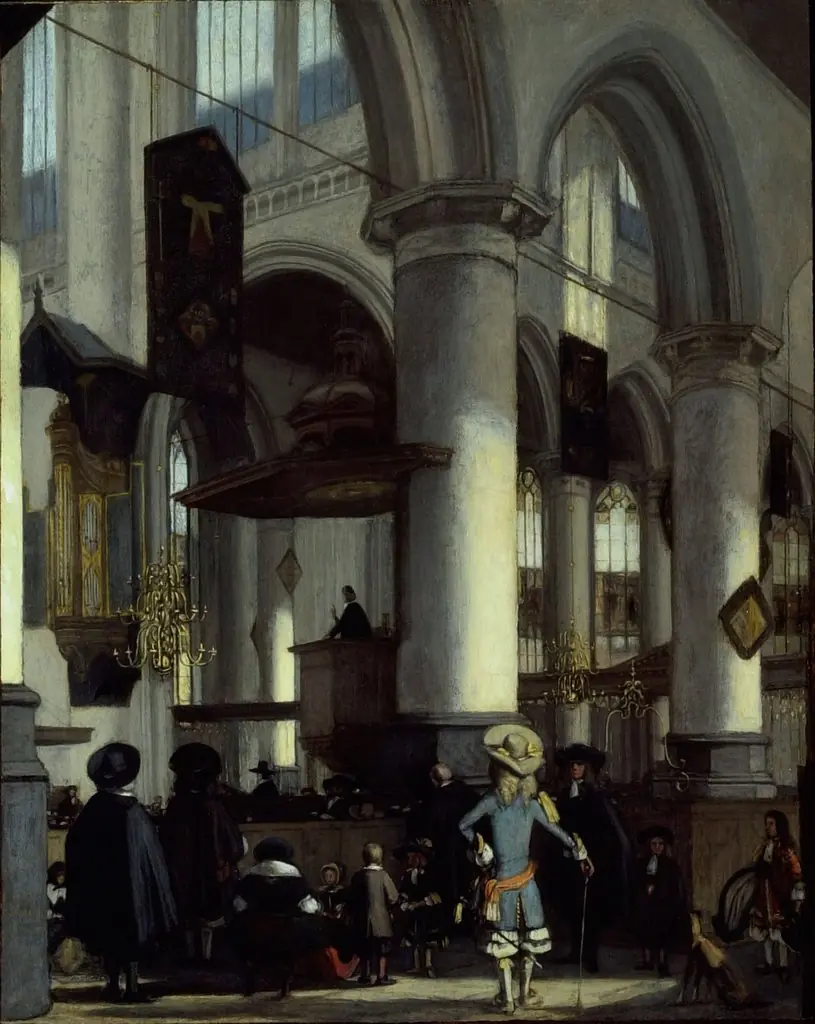 Interior of the Oude Kerk, Delft
 Vestry of the Church of St Stephen in Nijmegen
 Prince Maurits Receiving a Russian Delegation in 1614
 Interior of the Oude Kerk in Amsterdam
 The Interior of the Dominican Church, Antwerp, Looking East, with the Procession of the Holy Sacrament
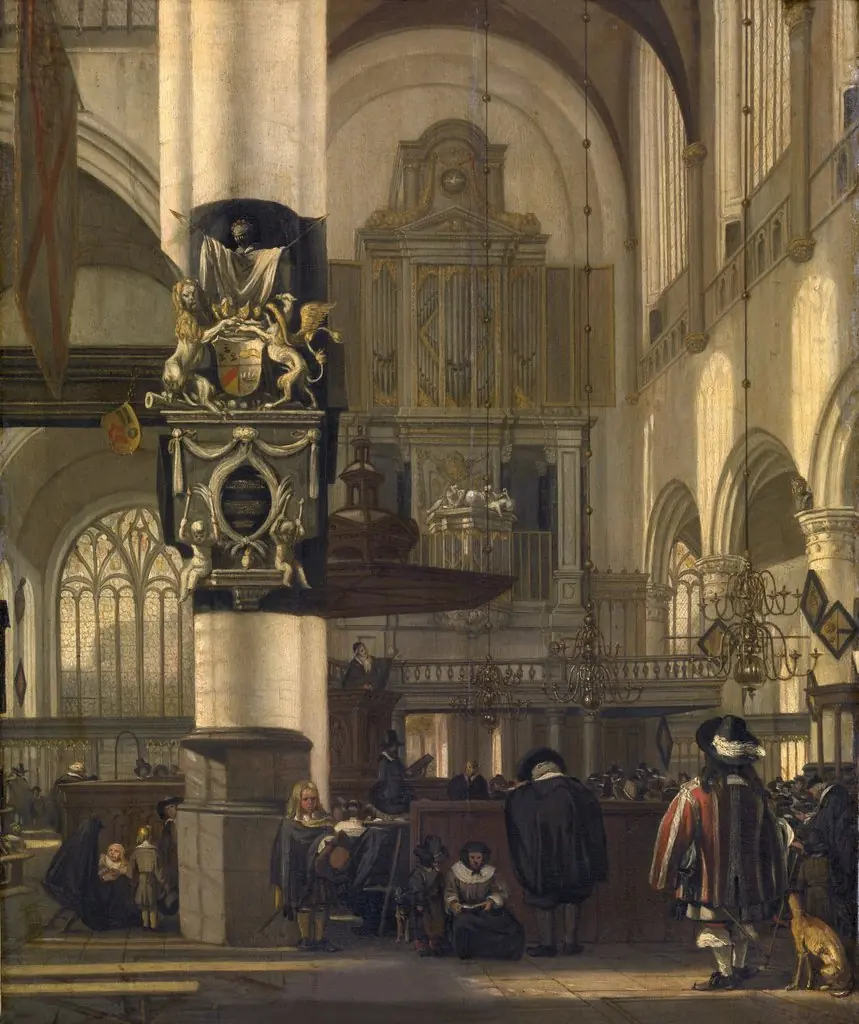 Interior of a protestant church