Artwork
Interior of a protestant church
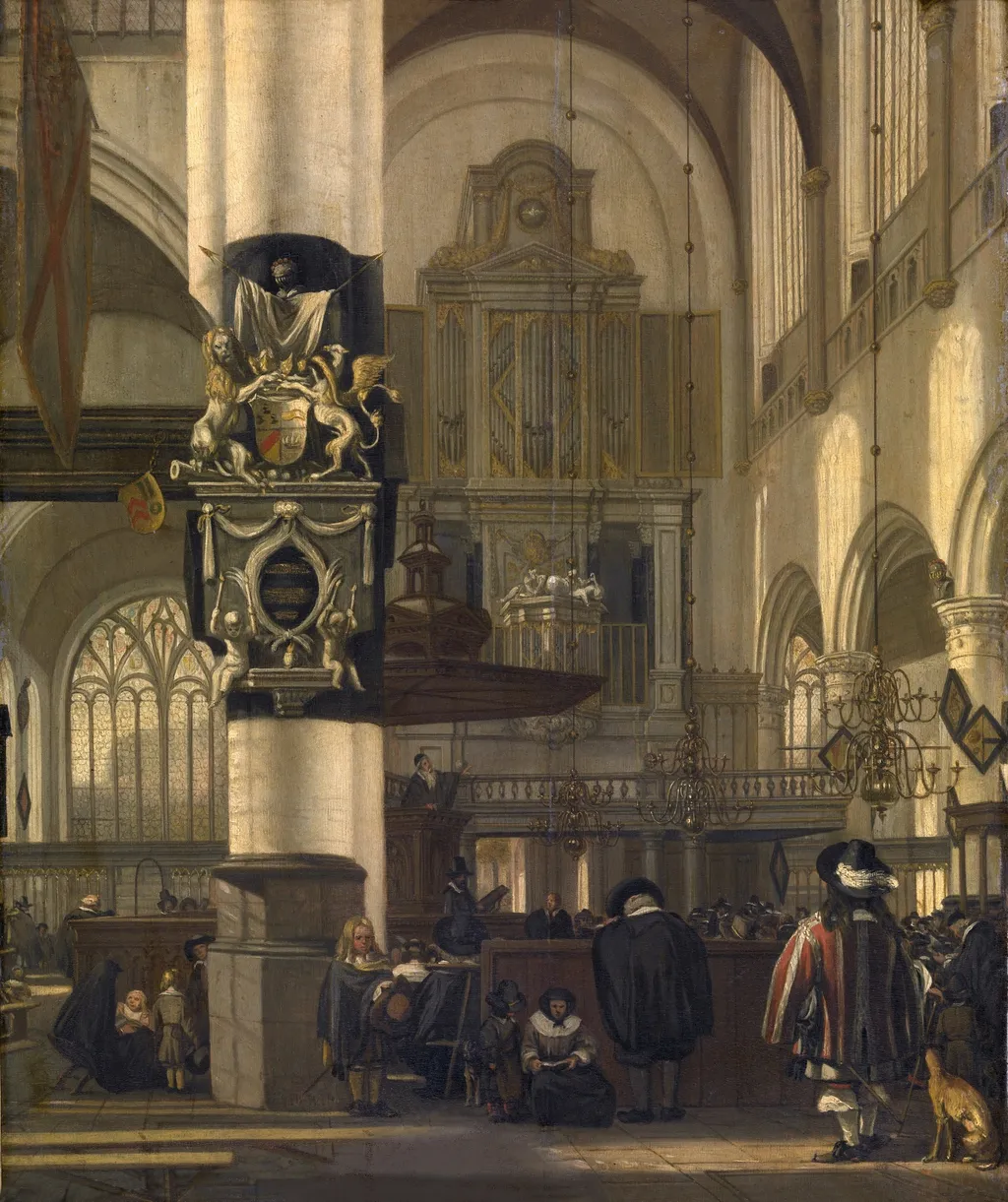
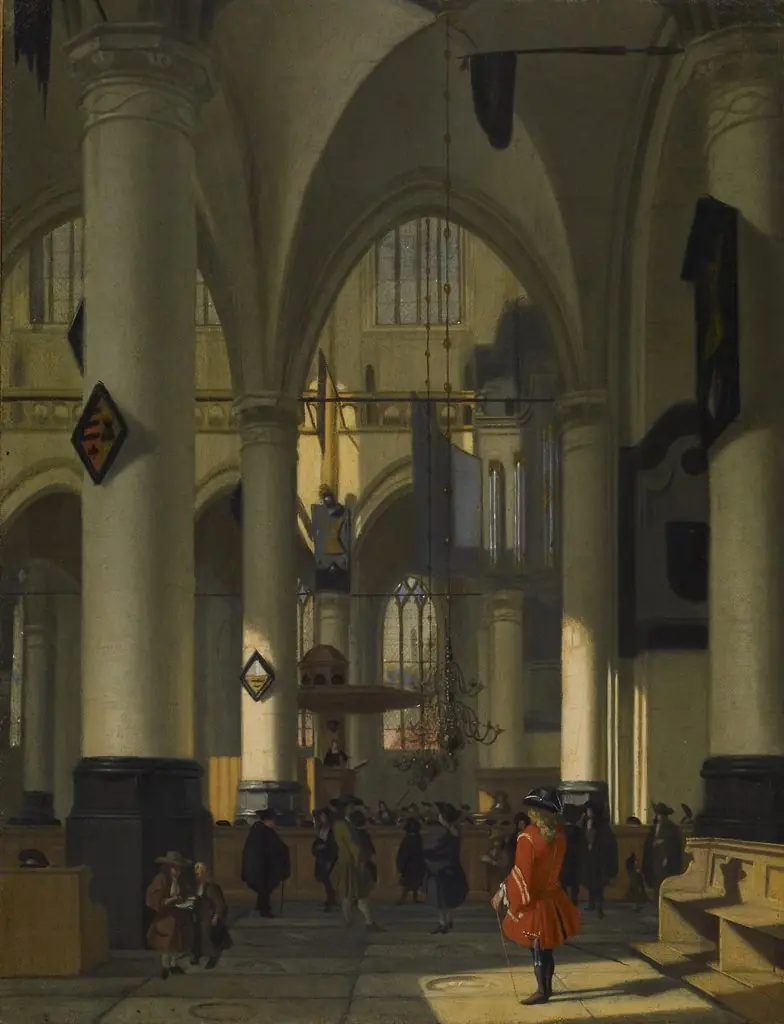
Interior of a protestant church is an oil painting by the Dutch Golden Age artist Emanuel de Witte. It is held in the collection of the Royal Museum of Fine Arts Antwerp.
About this work
Overview
Emanuel de Witte's oil painting depicts the interior of a Protestant church, rendered with careful attention to spatial depth and natural light.
Emanuel de Witte's oil painting depicts the interior of a Protestant church, rendered with careful attention to spatial depth and natural light. The work belongs to the collection of the Royal Museum of Fine Arts Antwerp and exemplifies the Dutch tradition of architectural interiors. De Witte captures the quiet activity of congregants within a vast, unadorned sacred space, emphasizing atmosphere over narrative.
Subject & Meaning
The scene portrays ordinary worshippers moving through the church—some conversing, others observing—without overt religious ceremony. The presence of a pulpit suggests a recent or imminent sermon, yet the focus remains on the space itself and the mundane behaviors of its occupants. This reflects Protestant values of simplicity and the integration of faith into daily life, rather than ritual spectacle.
Technique & Style
De Witte employs precise linear perspective to convey the church’s soaring architecture, with white columns and vaulted arches receding into the distance. Soft, diffused light streams through tall windows, illuminating dust motes and textures of stone and wood. Figures are rendered with subtle detail, their postures and garments grounding the composition in everyday reality without distracting from the architectural harmony.
History & Provenance
Painted in the mid-17th century, the work entered the Royal Museum of Fine Arts Antwerp’s collection in the 19th century. De Witte was known for his church interiors, often commissioned by patrons who valued the quiet dignity of Protestant worship spaces. The painting’s survival and preservation reflect its early recognition as a significant example of Dutch genre and architectural painting.
Context
In post-Reformation Netherlands, churches were stripped of Catholic ornamentation, becoming spaces defined by light, structure, and communal presence. De Witte’s paintings responded to this cultural shift, documenting how sacred architecture accommodated new forms of worship. His works stand as visual records of a society redefining religious experience through simplicity and spatial clarity.
Legacy
De Witte’s approach influenced later artists interested in interior light and human behavior within architectural settings. His church interiors are studied for their technical precision and psychological subtlety, offering insight into 17th-century Dutch life beyond religious doctrine. The painting remains a quiet testament to the aesthetic and spiritual values of its time.
Own this work as a print
Artist & collection

Artist
Emanuel de Witte was born circa 1617 in Alkmaar, the son of Pieter de Wit, a local schoolmaster.

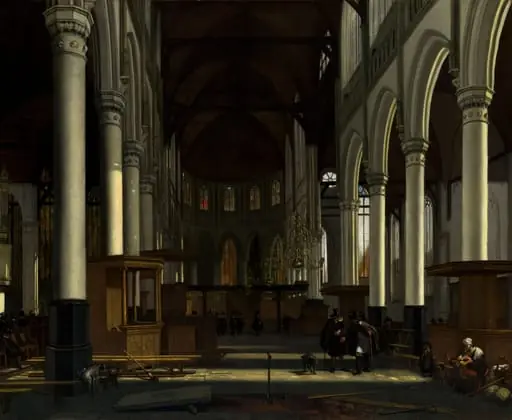 The Interior of the Oude Kerk, Amsterdam
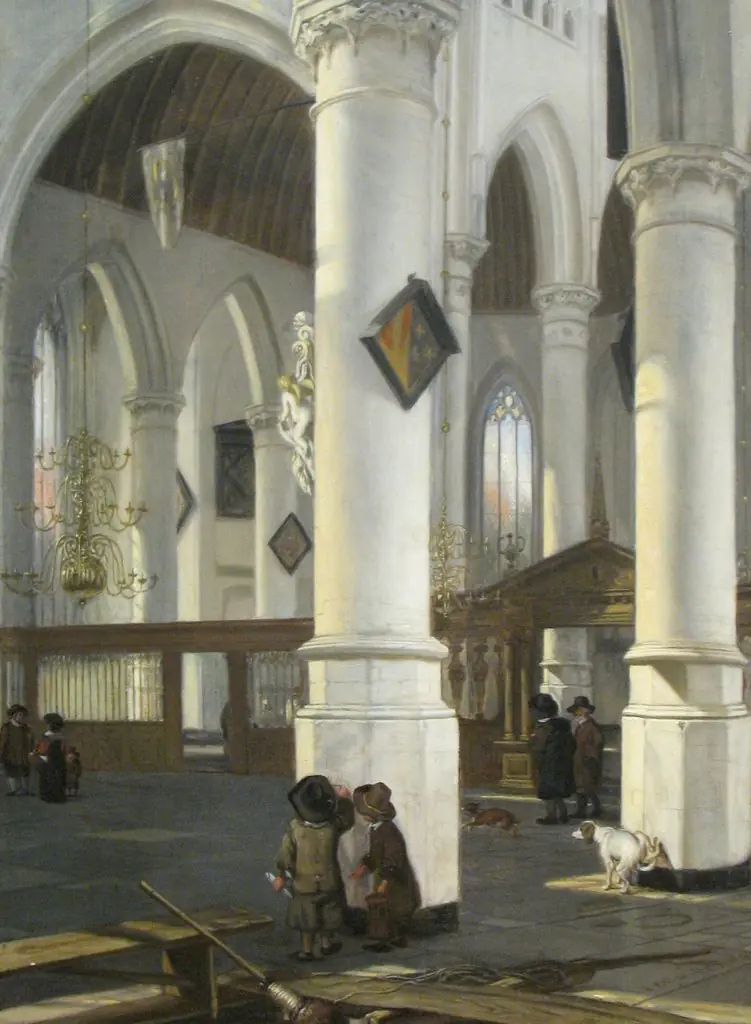 Interior of the Oude Kerk, Delft
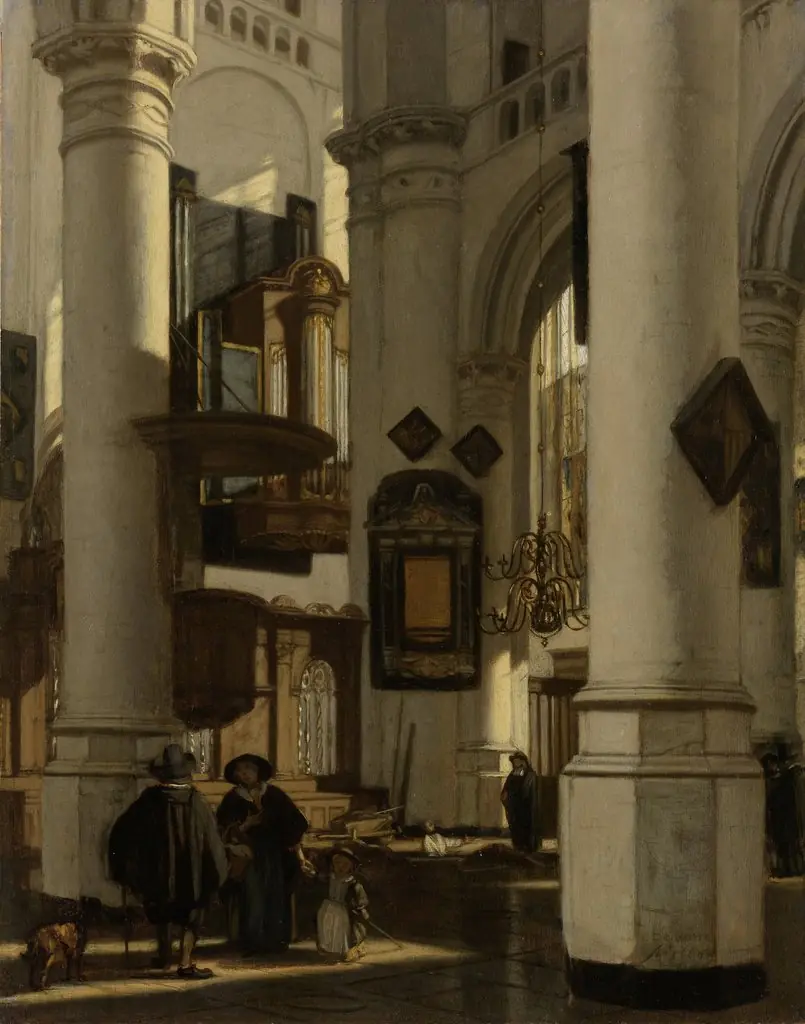 Interior of a Protestant, Gothic Church, with a Gravedigger in the Choir
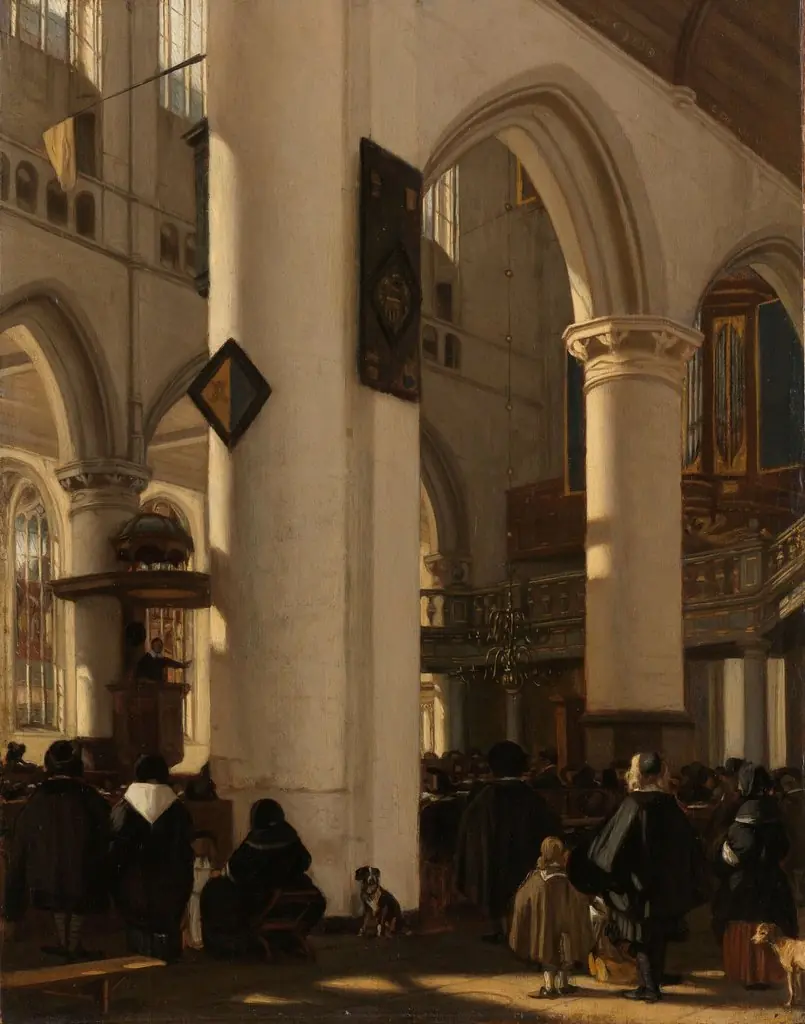 Interior of a Protestant, Gothic Church during a Service
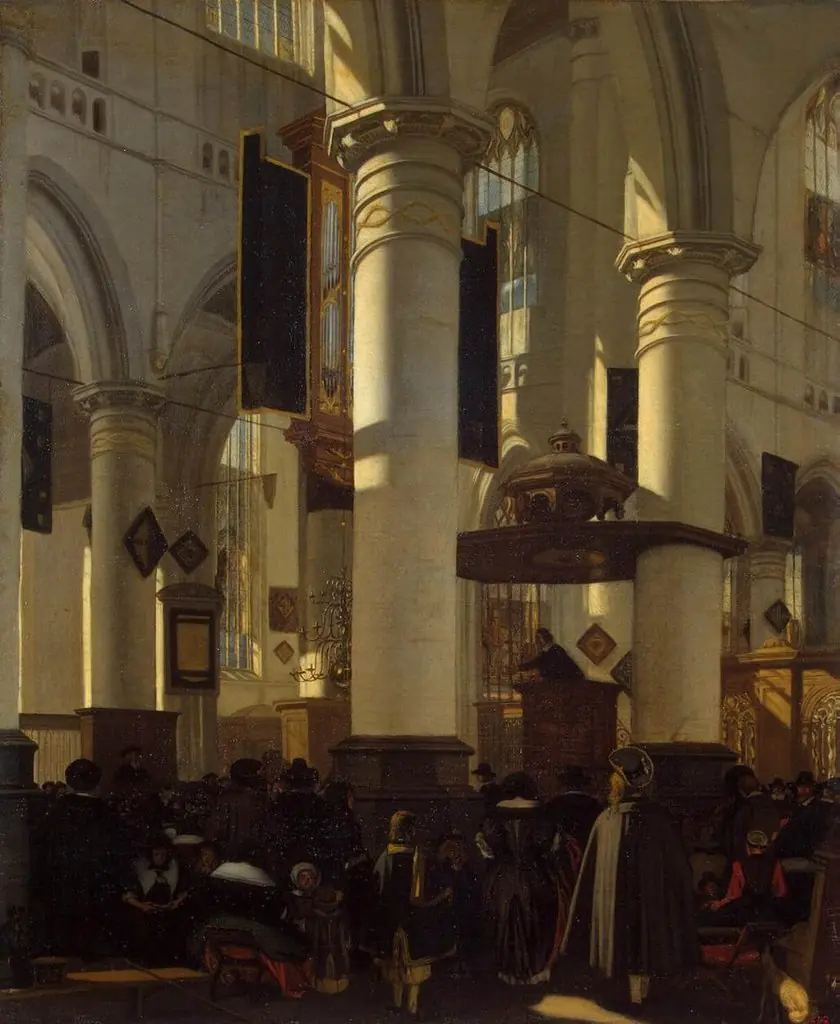 Interior of a Church
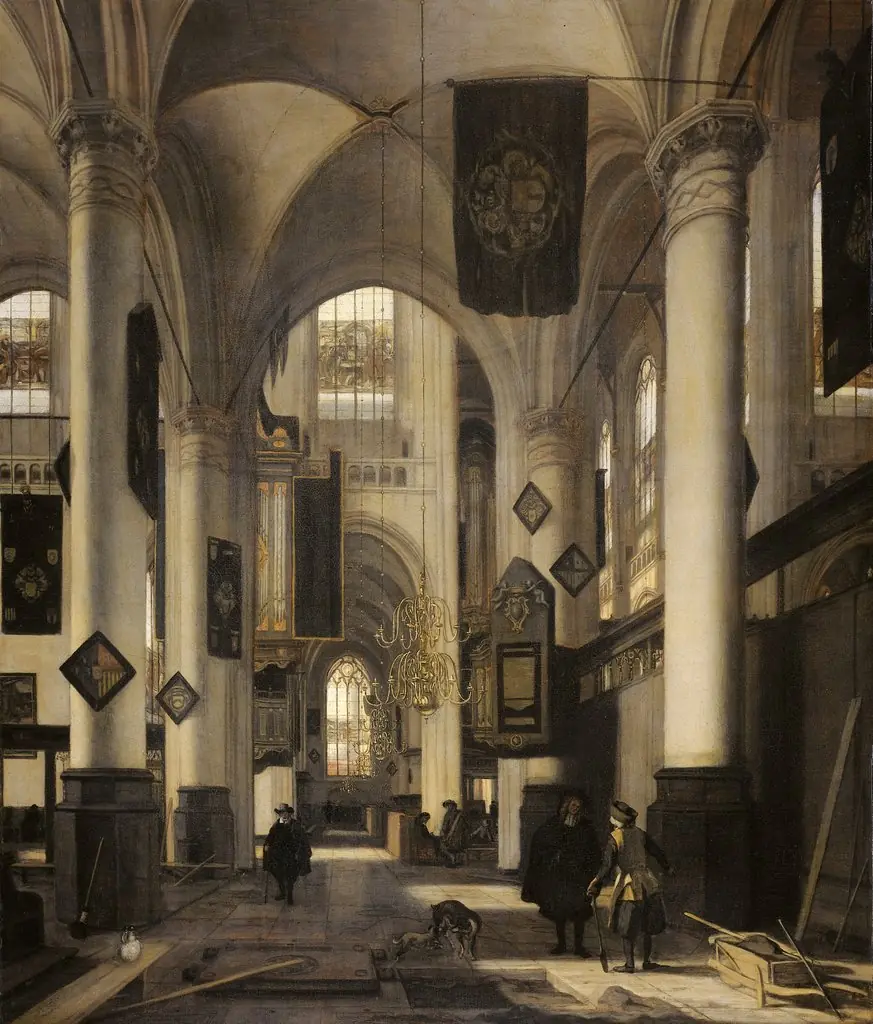 Interior of a Protestant Gothic Church
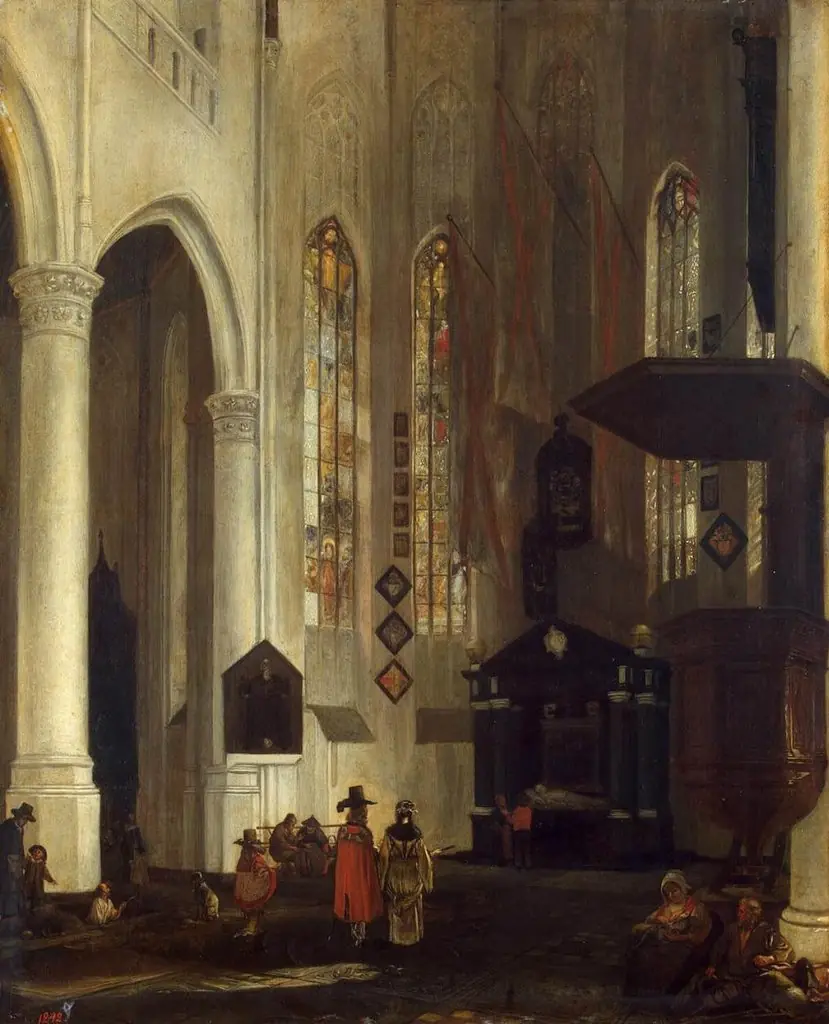 Old Church (Oudekerk) in Delft with the Tomb of Admiral Pieter Pieterszoon Hein (Heyn)
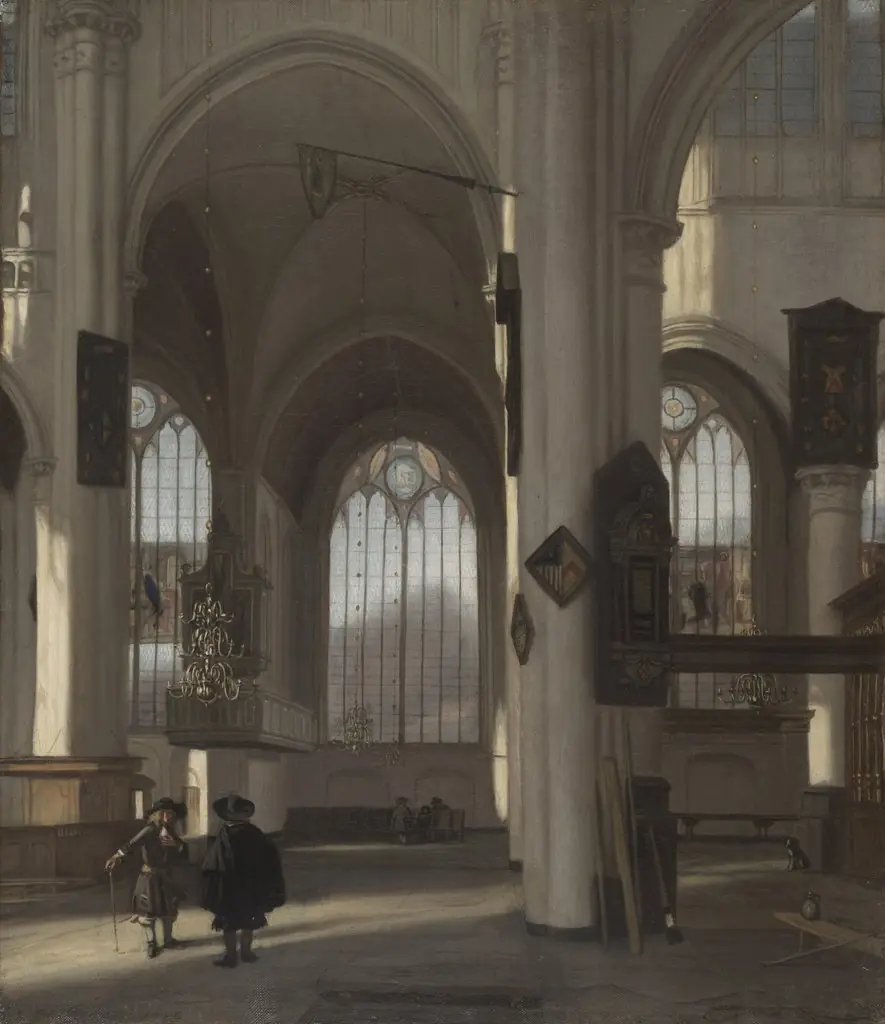 Interior of a Church