Artwork
Self-Portrait as Pierrot
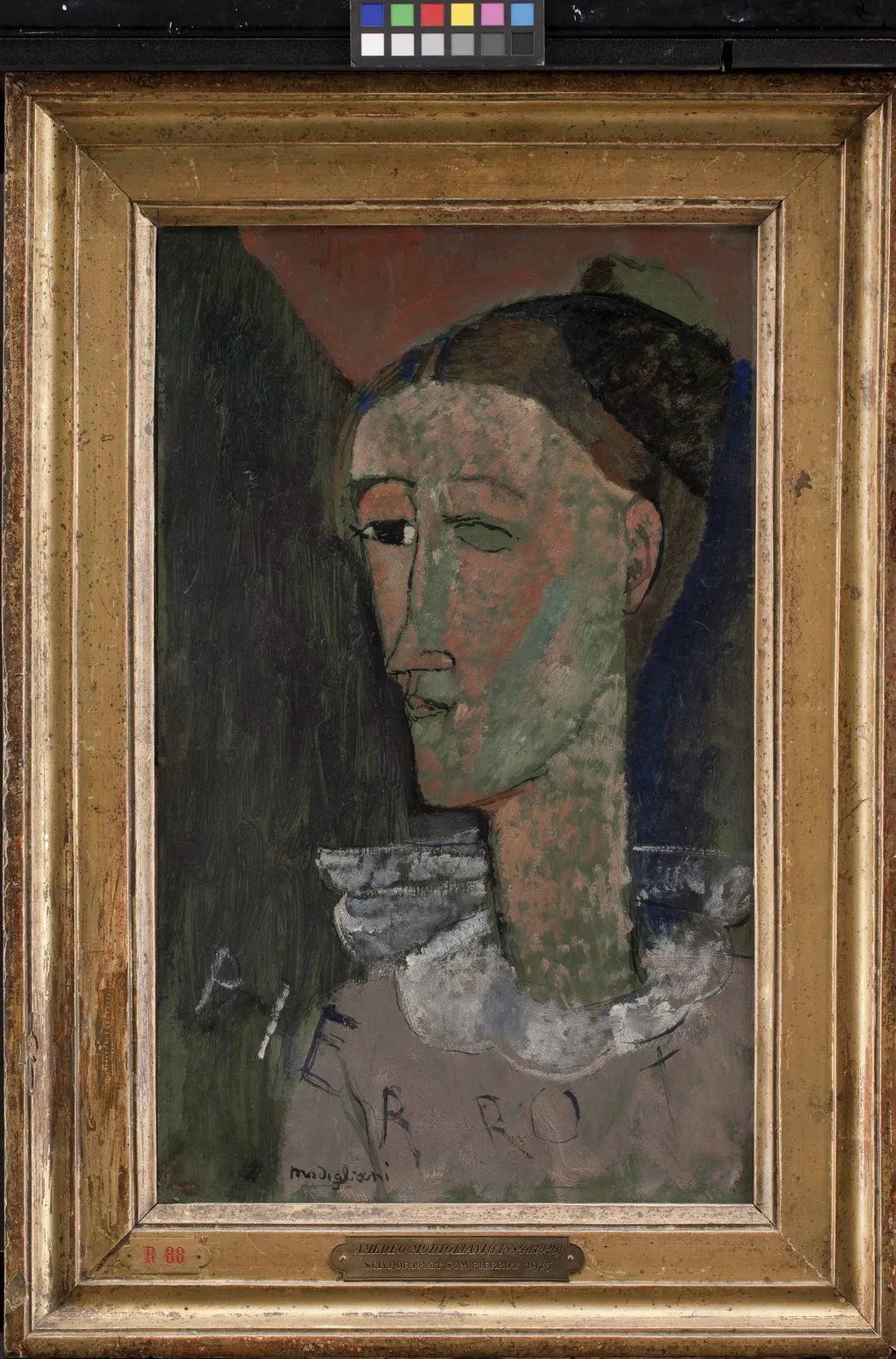
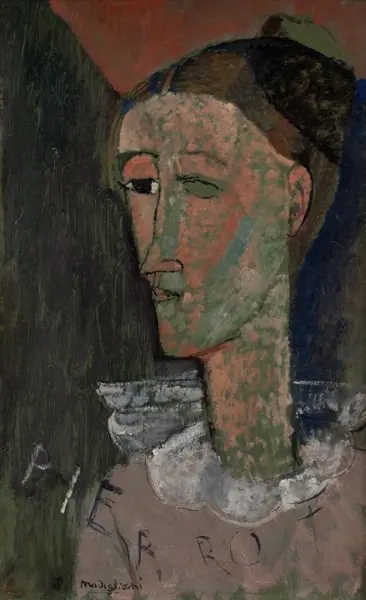
Self-Portrait as Pierrot is an unspecified painting by Unknown. It dates from 1915 and is held in the collection of the Statens Museum for Kunst. Painted in 1915, this self-portrait depicts the artist assuming the guise of Pierrot, the melancholic clown of commedia dell'arte.
About this work
Overview
Painted in 1915, this self-portrait depicts the artist assuming the guise of Pierrot, the melancholic clown of commedia dell'arte.
Painted in 1915, this self-portrait depicts the artist assuming the guise of Pierrot, the melancholic clown of commedia dell'arte. Executed in oil, the work is held by the Museum of Ethnography. The composition is tightly framed, focusing on the face beneath a white mask, with a dark wig framing the forehead. The surface is marked by visible, uneven brushwork and a palette dominated by muted greens, browns, and reds.
Subject & Meaning
By adopting the Pierrot mask, the artist engages with a figure associated with sorrow, isolation, and performative emotion. The subtle, ambiguous smile suggests a tension between outward appearance and inner weariness. The choice of this archetype may reflect personal or artistic alienation, using theatrical disguise to explore identity beyond the self. The mask becomes a vessel for emotional ambiguity rather than mere costume.
Technique & Style
The painting employs thick, irregular brushstrokes, creating a textured surface that borders on the chaotic. Pigments are layered with little refinement, producing a raw, almost scribbled effect in places. The background recedes into near-black, heightening the intensity of the face. The impasto technique is evident, yet the work lacks polish, suggesting deliberate incompleteness or a focus on immediacy over finish.
History & Provenance
The work was completed in 1915 and entered the collection of the Museum of Ethnography shortly thereafter. Its early acquisition suggests it was recognized within artistic circles, though it never entered mainstream public discourse. The artist’s signature, faintly placed in the corner, indicates authorship without asserting dominance over the image. No significant alterations or restorations are documented.
Context
Created during the First World War, the painting reflects a broader cultural turn toward psychological introspection and fragmentation in European art. The Pierrot figure, popular in fin-de-siècle symbolism, resonated with artists confronting disillusionment. This work aligns with contemporaneous explorations of identity and performance, particularly among those rejecting traditional portraiture in favor of emotional authenticity.
Legacy
Though not widely exhibited, the painting remains a quiet example of early 20th-century introspective portraiture. Its raw technique and symbolic subject matter influenced later artists interested in the intersection of identity and disguise. It is occasionally referenced in studies of masked self-representation, particularly in contexts where art serves as a site for psychological exposure rather than public presentation.
Artist & collection

 Domestic Scene
 Giacomo and Cardinal Marco, investing Andrea, Abbot of San Zeno, with his Benefice
 The Nymph of Fontainebleau
 Portrait of a Woman
 Madonna and Child with Saints in the Enclosed Garden
 Venus and Minerva
 Family Group of Four on Sofa
 Wall painting from Room H of the Villa of P. Fannius Synistor at Boscoreale