Artwork
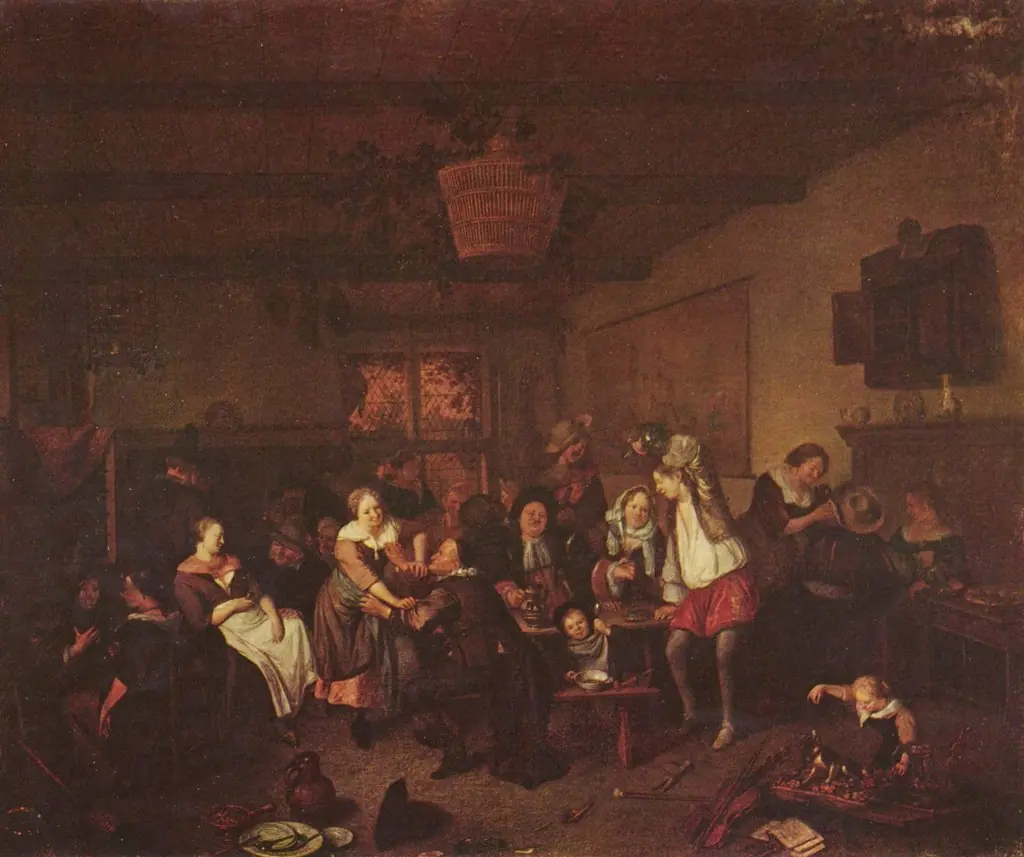
The Bean King is Drinking
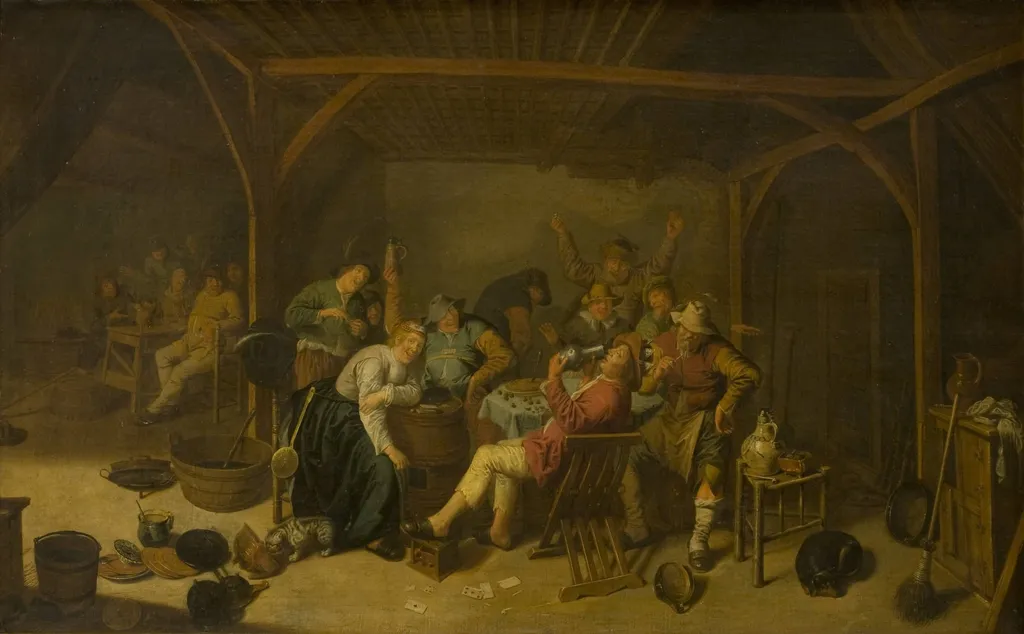
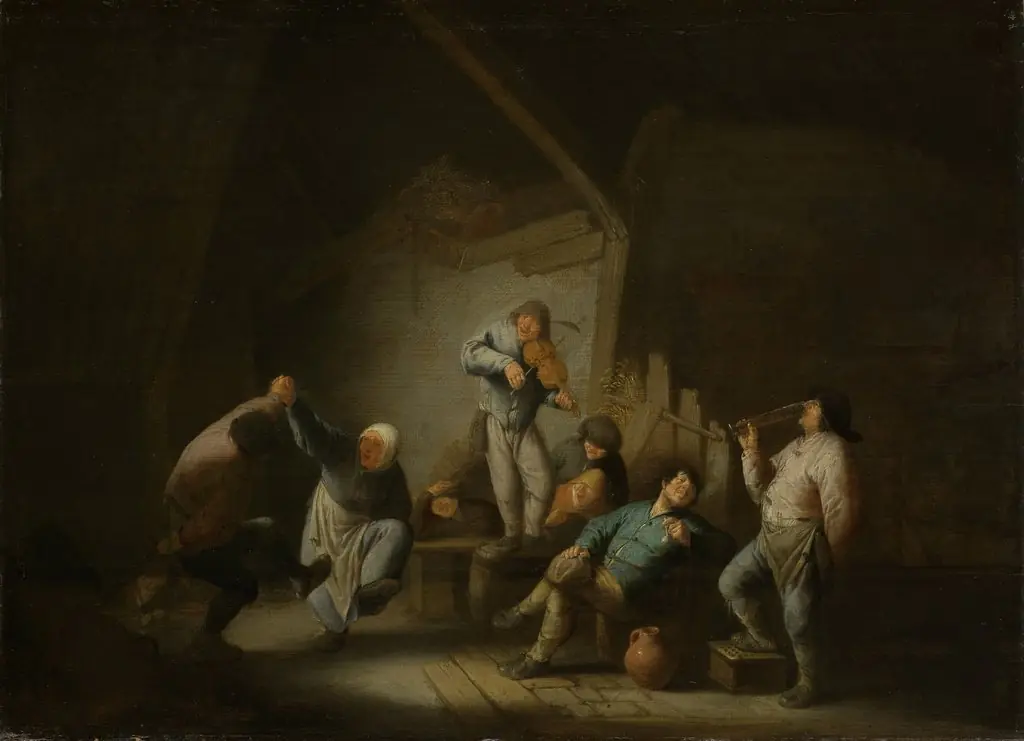
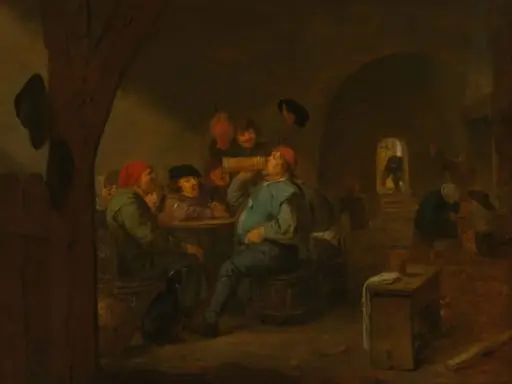
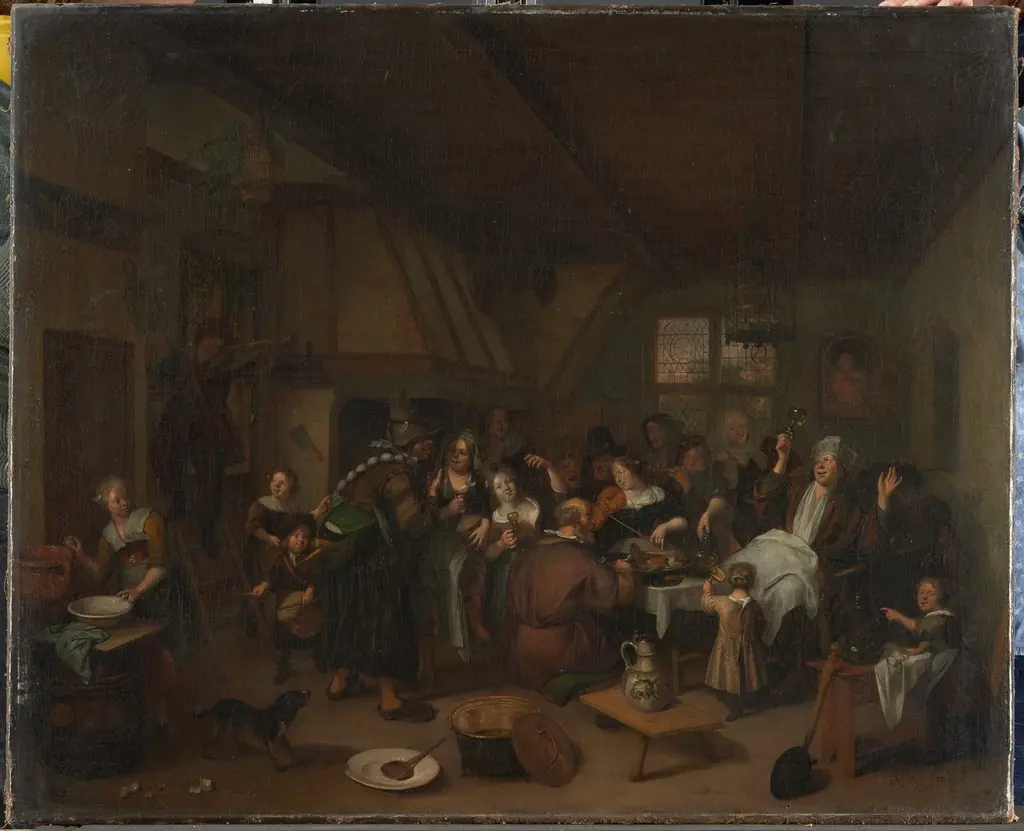
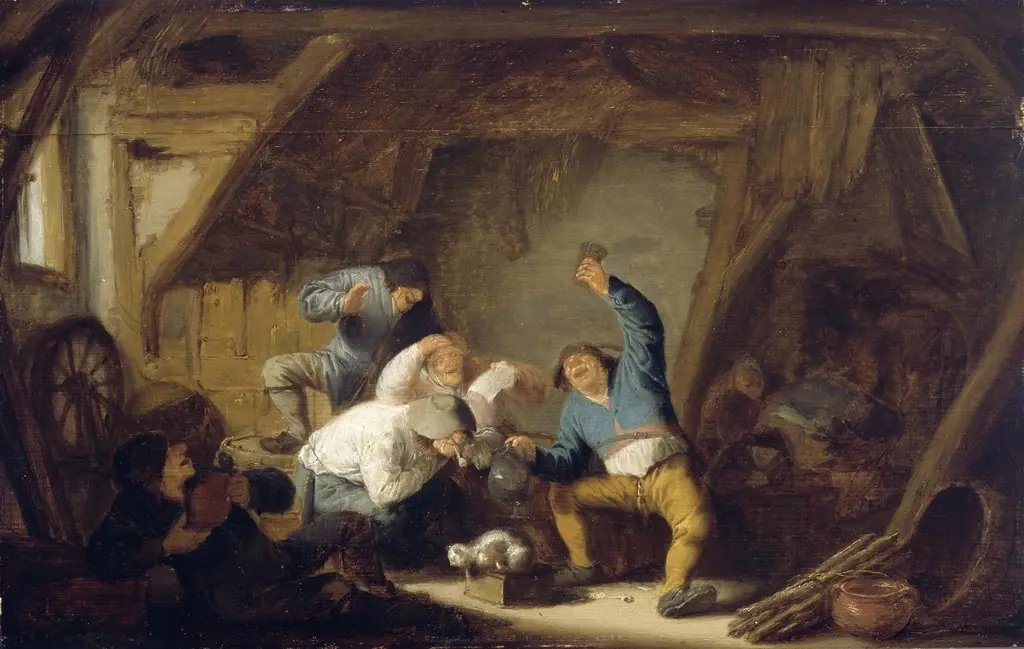
The Bean King is Drinking is a photography by Unknown. It dates from 1646 and is held in the collection of the Statens Museum for Kunst.
About this work
Overview
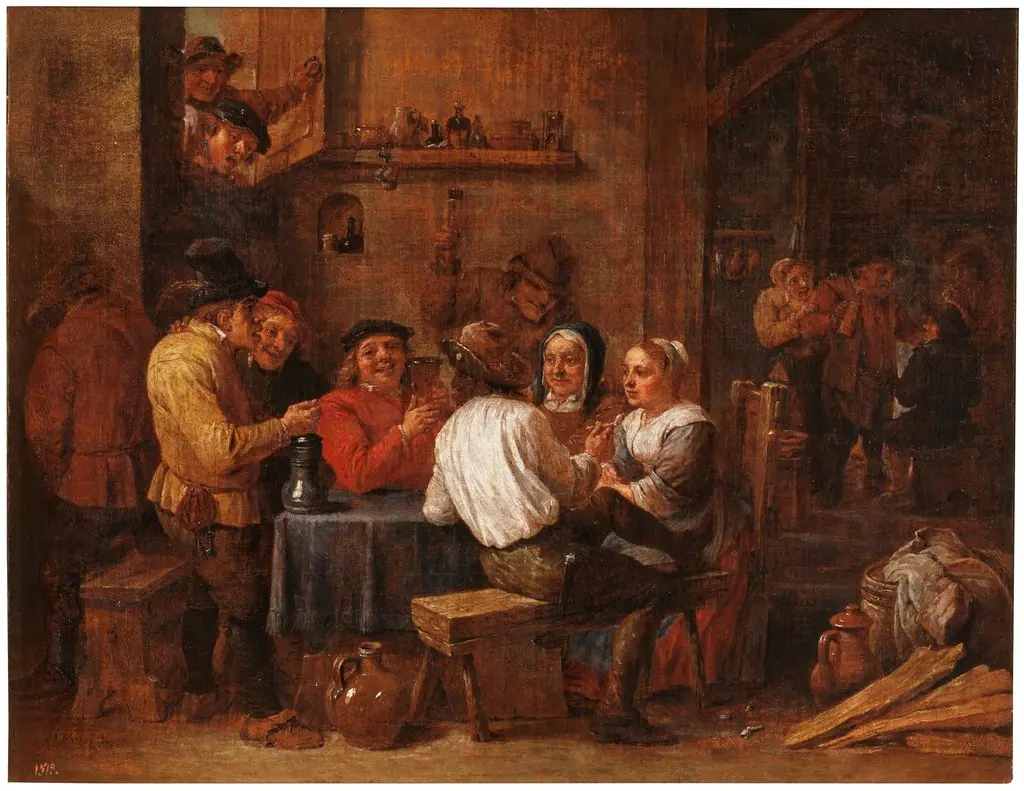
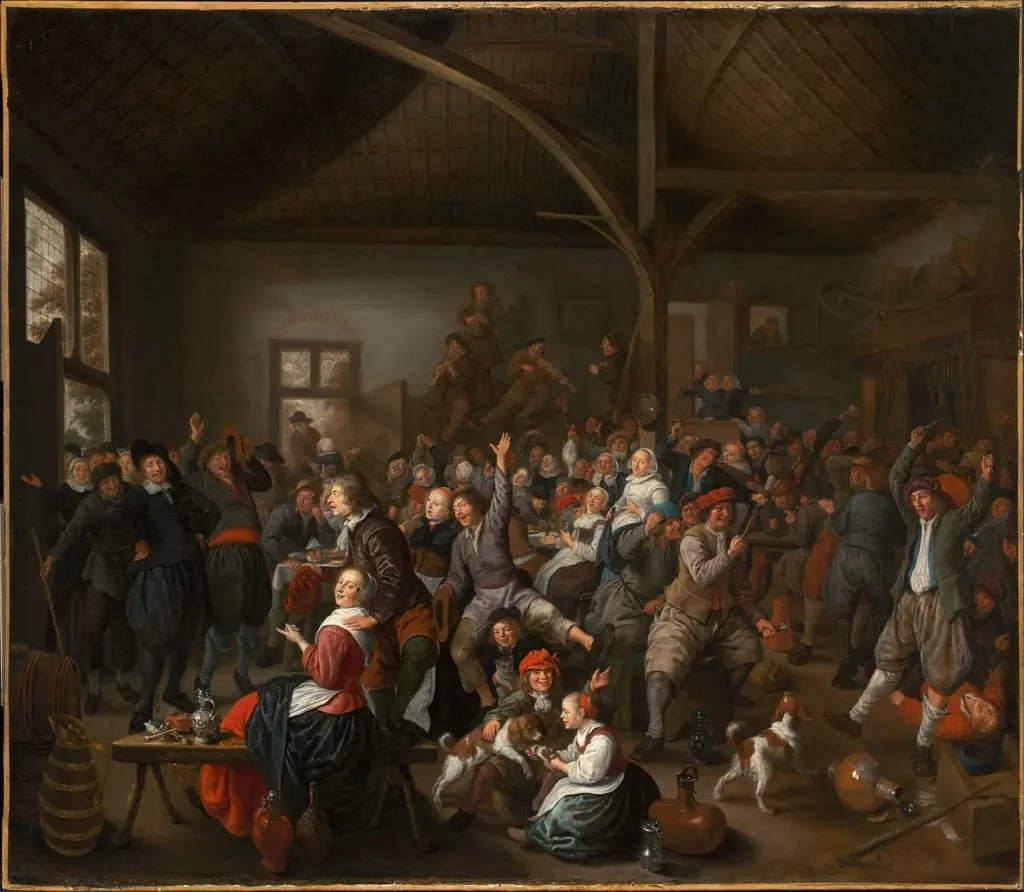
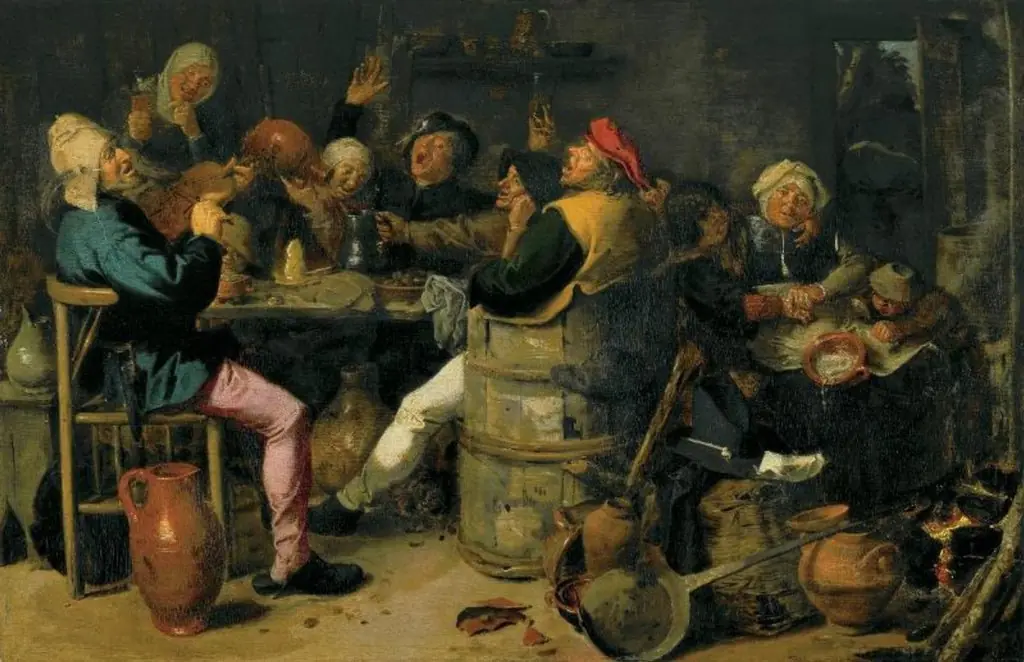
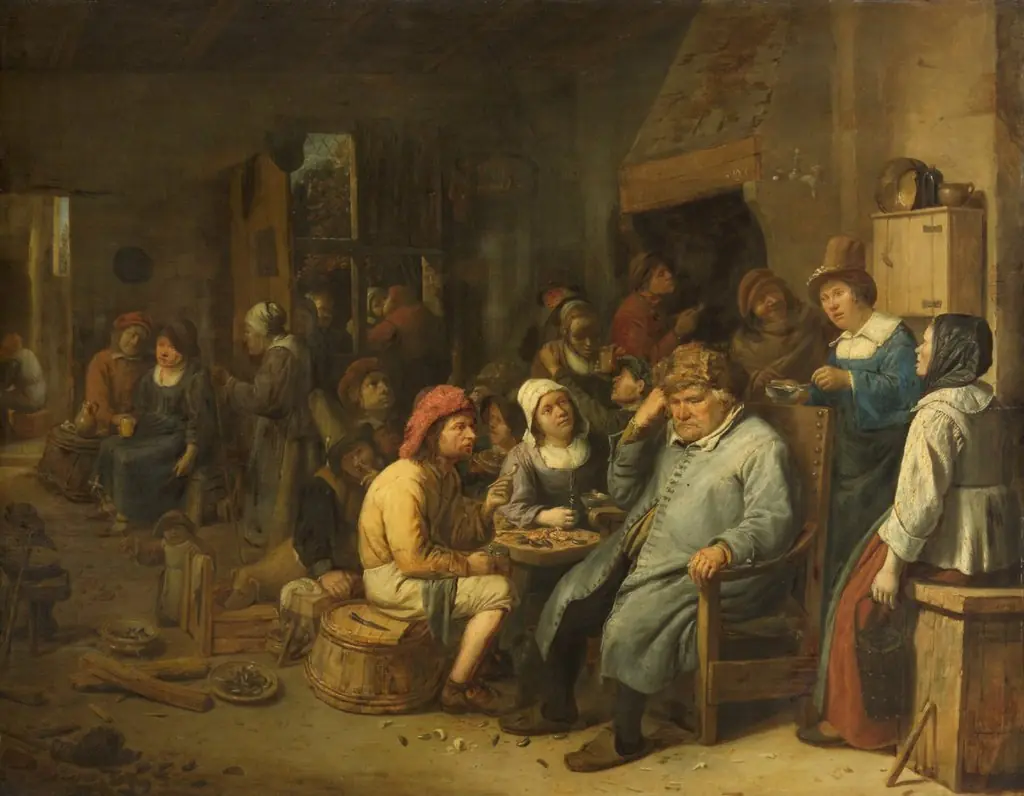
Created around 1646, this painting depicts an intimate, unidealized interior scene of ordinary people engaged in daily rituals of consumption and leisure.
Created around 1646, this painting depicts an intimate, unidealized interior scene of ordinary people engaged in daily rituals of consumption and leisure. Executed in oil on panel, it is part of the collection at the Museum of Ethnography. The composition captures a transient moment—figures absorbed in their actions, surroundings cluttered with evidence of use. The artist’s focus on mundane activity distinguishes it from grand historical or religious narratives of the period.
Subject & Meaning
The scene centers on communal drinking, with a woman pouring from a barrel as others eat, play cards, and rest. A dead bird on the floor and scattered tableware suggest a recent meal, while a cat observes from the sidelines. No single figure dominates; instead, the painting emphasizes collective, unremarkable behavior. The absence of ceremony or hierarchy implies a quiet celebration of everyday life, perhaps reflecting regional customs or social realism.
Technique & Style
The artist employs chiaroscuro to model forms through stark contrasts of light and shadow, enhancing the tactile quality of surfaces—wood, fabric, ceramic. The dim, uneven illumination draws attention to faces and hands, while the rest recedes into gloom. Brushwork is direct and unpolished, avoiding idealization. The palette is muted, dominated by earth tones, reinforcing the scene’s gritty realism and intimate atmosphere.
History & Provenance
The painting entered the Museum of Ethnography’s collection in the late 19th century, acquired as part of a broader effort to document folk life. Its origins prior to that are undocumented, though stylistic analysis suggests it was made in the Low Countries. No signatures or inscriptions survive, and its attribution to a specific hand remains tentative, though consistent with regional genre painting traditions of the mid-17th century.
Context
In mid-17th-century Northern Europe, genre scenes of taverns and domestic interiors gained popularity among urban patrons. This work aligns with a trend toward depicting ordinary people without moralizing or allegory. Unlike Dutch counterparts that often included symbolic warnings, this painting offers no clear lesson—its value lies in its unembellished observation of social behavior, reflecting a growing interest in lived experience over idealized narratives.
Legacy
Though not widely exhibited or reproduced, the painting contributes to scholarly understanding of vernacular visual culture in early modern Europe. It stands as a quiet testament to the artistic value placed on unremarkable moments. Its preservation in an ethnographic context underscores its role as a record of material life, influencing later studies of social history through visual evidence rather than textual sources.
Artist & collection

 Domestic Scene
 Giacomo and Cardinal Marco, investing Andrea, Abbot of San Zeno, with his Benefice
 The Nymph of Fontainebleau
 Portrait of a Woman
 Madonna and Child with Saints in the Enclosed Garden
 Venus and Minerva
 Family Group of Four on Sofa
 Wall painting from Room H of the Villa of P. Fannius Synistor at Boscoreale