Artwork
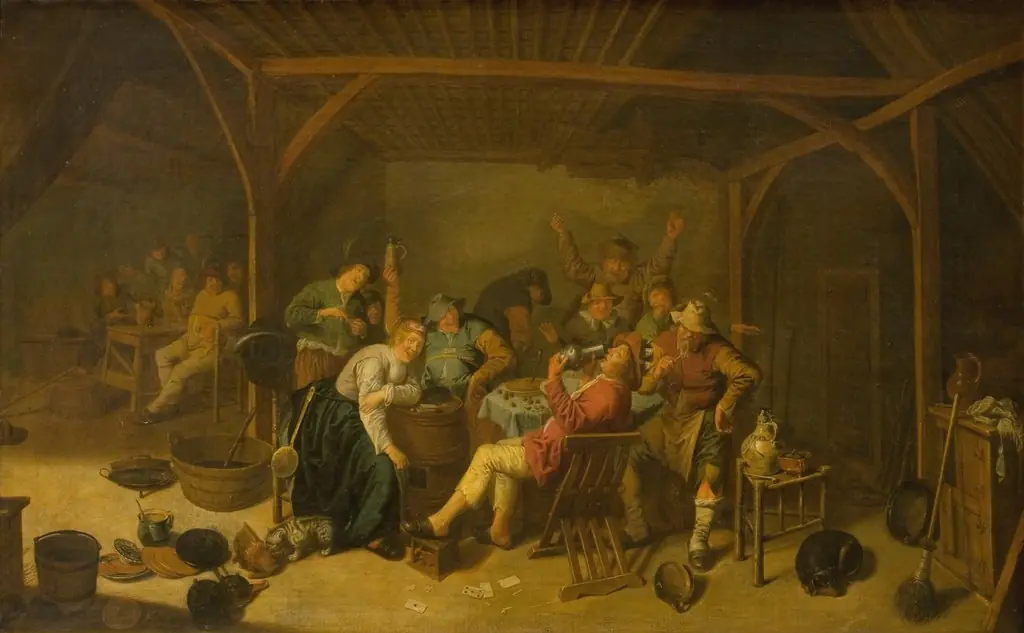
Drinking Bout in a Tavern
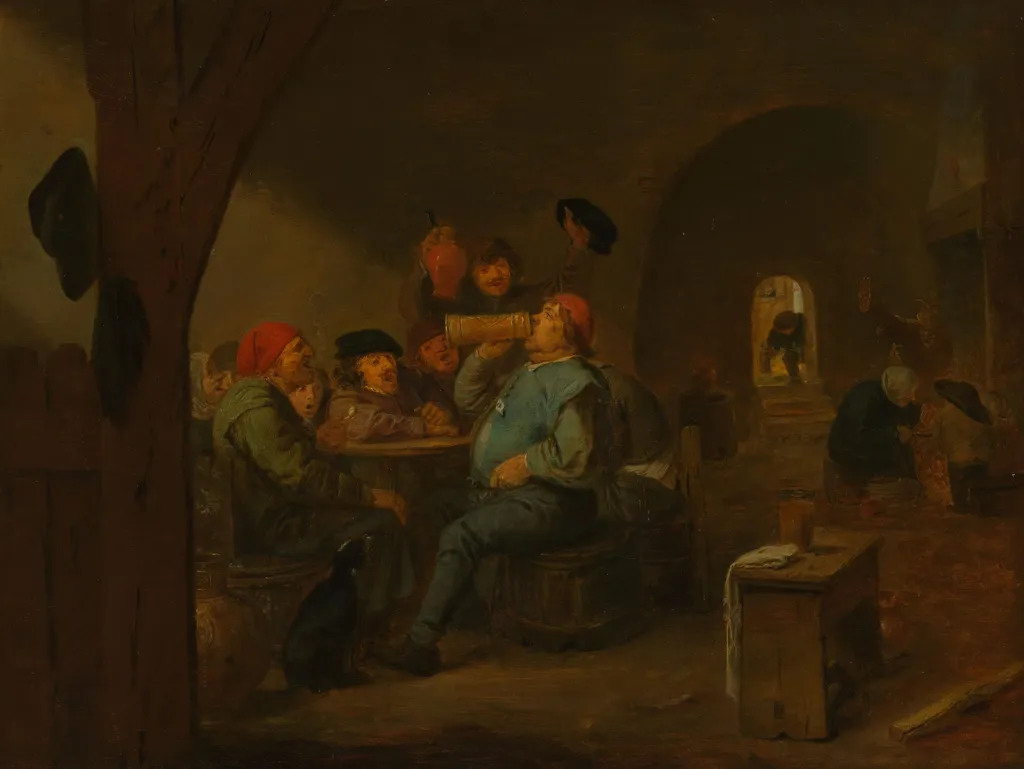
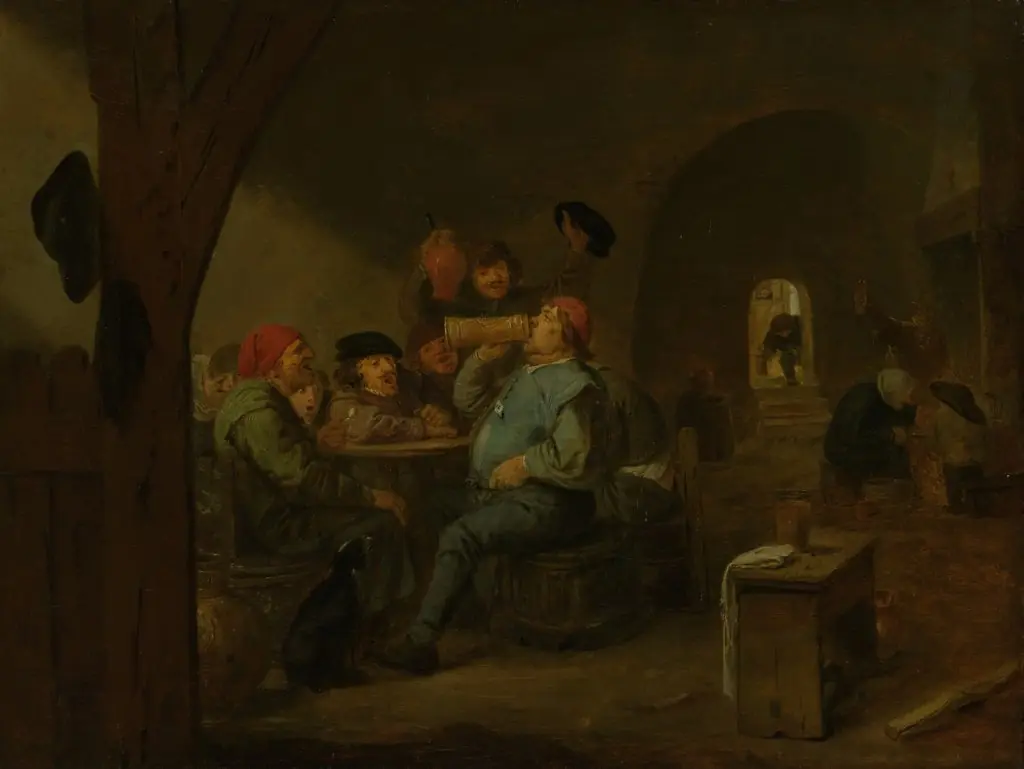
Drinking Bout in a Tavern is an unspecified painting by the Rococo painting artist Unknown. It dates from 1700 and is held in the collection of the Rijksmuseum. This untitled tavern scene captures a moment of unguarded merriment in a modest Dutch interior.
About this work
Overview
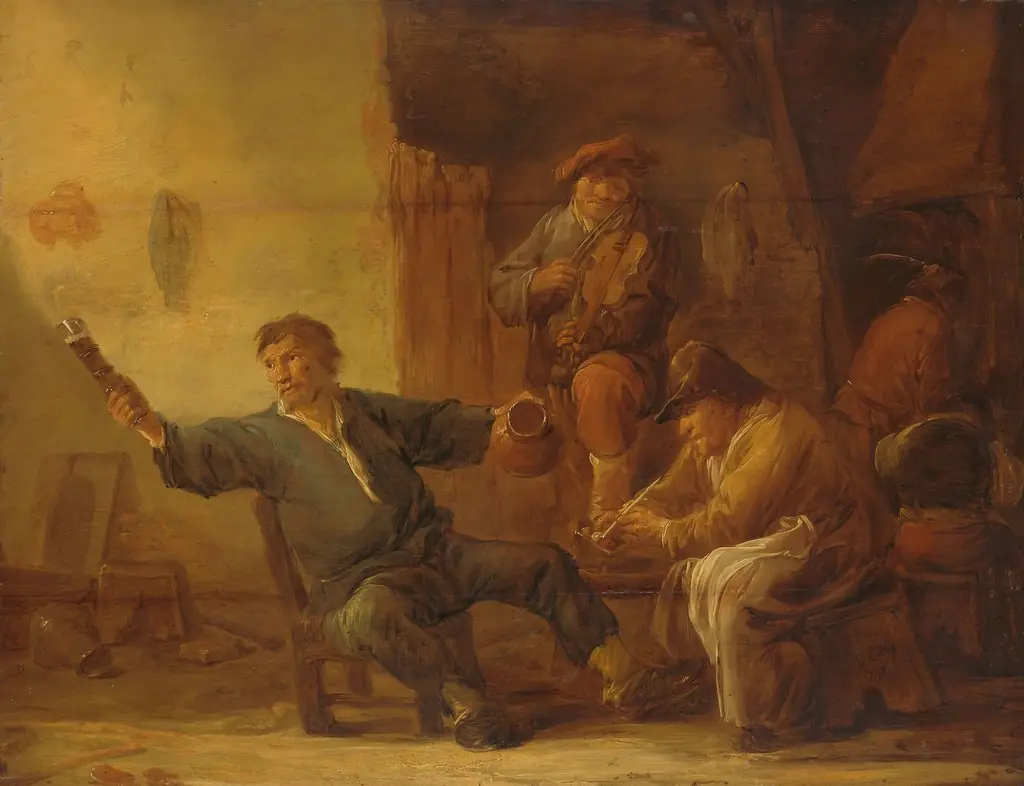
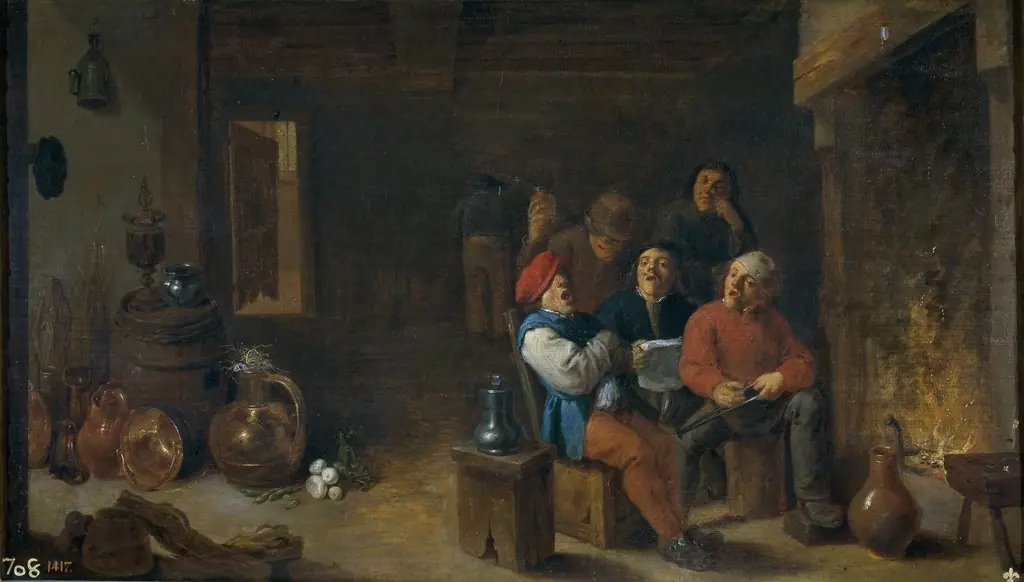
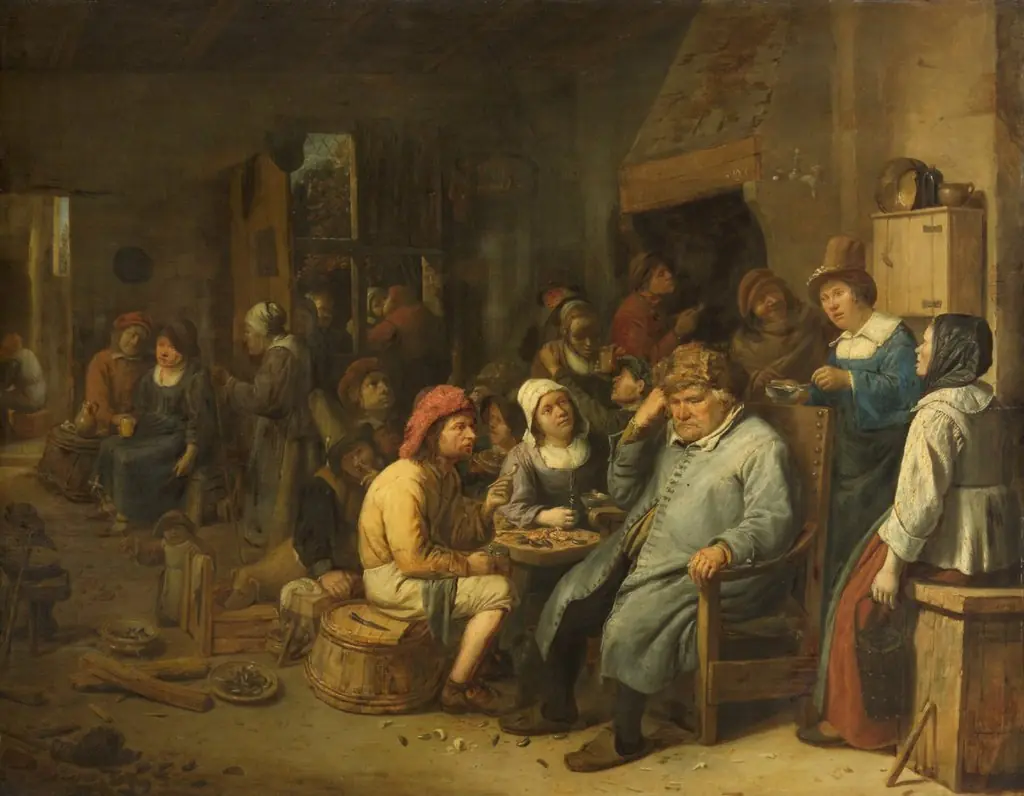
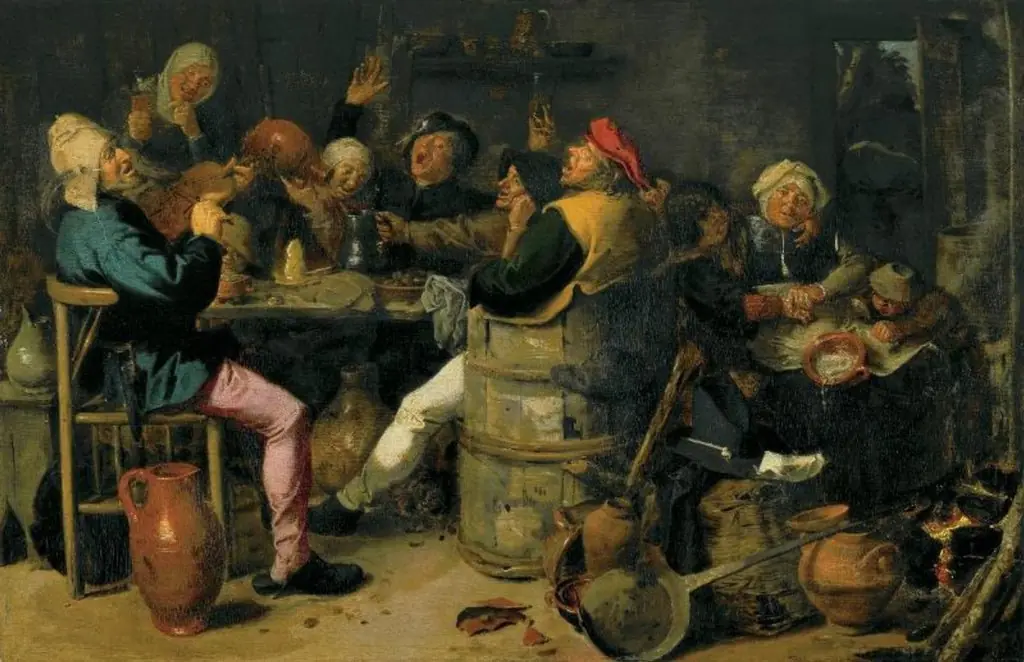
This untitled tavern scene captures a moment of unguarded merriment in a modest Dutch interior. No artist’s signature survives, and the work remains anonymous, yet its energy and attention to ordinary life suggest it was made by a skilled practitioner of genre painting in the 17th century. The composition unfolds naturally, as if observed mid-activity, with no formal hierarchy among the figures.
Subject & Meaning
The scene centers on a stout man drinking deeply from a beer jug, surrounded by companions who sing and gesture in celebration.
The scene centers on a stout man drinking deeply from a beer jug, surrounded by companions who sing and gesture in celebration. Behind him, an elderly woman tends pancakes over an open hearth, her quiet labor contrasting with the revelry. The painting presents no moralizing tone; instead, it affirms the value of communal joy and domestic routine, reflecting the everyday rhythms of lower- and middle-class life.
Technique & Style
Brushwork is loose and energetic, favoring movement over precision. Warm tones of amber, ochre, and sooty brown dominate, enhancing the cozy, smoke-tinged atmosphere. Light falls unevenly, pooling around the drinkers and the hearth, while shadows soften edges and unify the space. The lack of polished finish lends immediacy, as if the scene were caught in passing rather than staged.
History & Provenance
The painting entered the Rijksmuseum’s collection in the 19th century, though its earlier ownership is undocumented. It was likely produced in the Netherlands during the mid-1600s, a period when tavern interiors were a popular subject among regional painters. Its anonymity reflects the common practice of unsigned genre works, often created for private patrons rather than public display.
Context
Tavern scenes like this were part of a broader Dutch tradition that celebrated ordinary life with honesty and humor. Unlike grand historical or religious paintings, these works appealed to viewers through familiarity. The presence of food, drink, and music underscores the cultural importance of social gatherings, even in modest settings, and aligns with contemporary prints and writings on civic life.
Legacy
Though unsigned and unattributed, the painting endures as a representative example of Dutch genre painting’s quiet realism. It contributes to the understanding of how artists of the time observed and elevated daily rituals without idealization. Its continued display in the Rijksmuseum affirms its role as a window into the unremarkable yet vital moments of 17th-century Dutch society.
Artist & collection

 Domestic Scene
 Giacomo and Cardinal Marco, investing Andrea, Abbot of San Zeno, with his Benefice
 The Nymph of Fontainebleau
 Portrait of a Woman
 Madonna and Child with Saints in the Enclosed Garden
 Venus and Minerva
 Family Group of Four on Sofa
 Wall painting from Room H of the Villa of P. Fannius Synistor at Boscoreale