Artwork
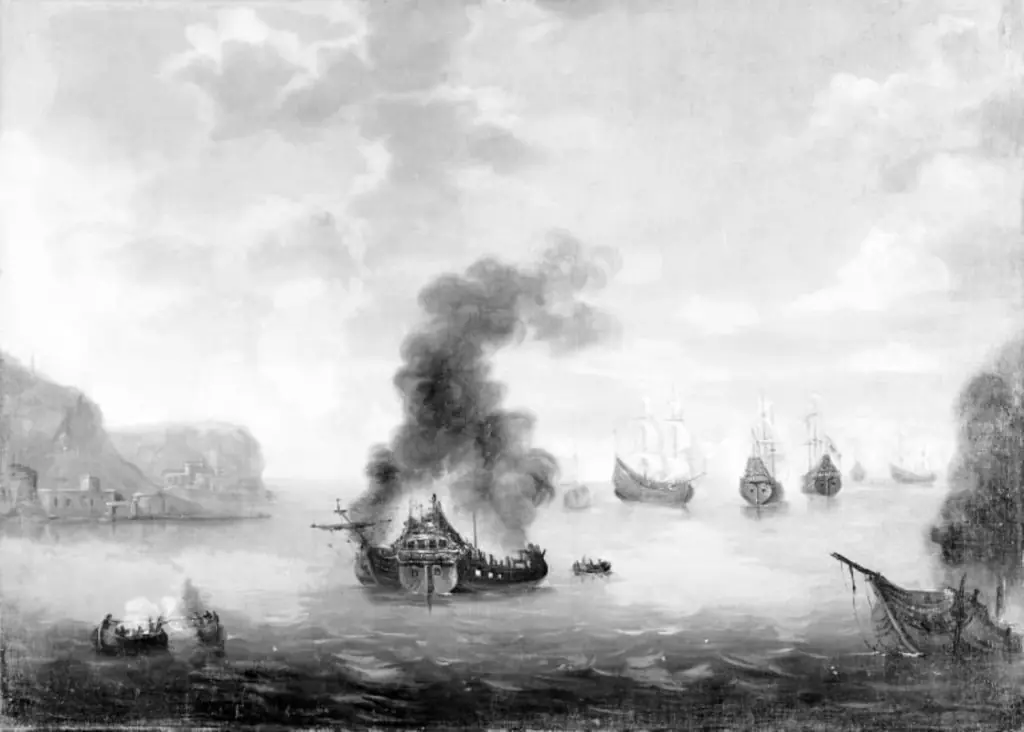
Sea Battle
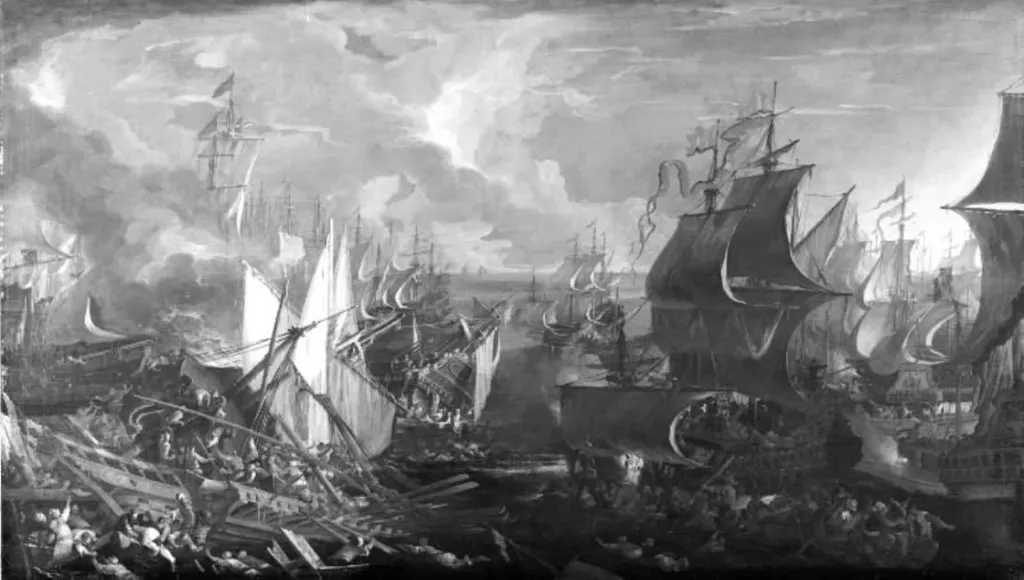
Sea Battle is a photography by Unknown. It dates from 1650 and is held in the collection of the Statens Museum for Kunst.
About this work
Overview
The work is part of the collection at the Museum of Ethnography, where it is preserved as an example of early modern maritime imagery.
Created around 1650, Sea Battle is a historical naval scene attributed to 936_person. It captures the violence and disorder of maritime combat during the mid-seventeenth century. The work is part of the collection at the Museum of Ethnography, where it is preserved as an example of early modern maritime imagery. Its scale and detail reflect the period’s interest in documenting naval conflict through visual art.
Subject & Meaning
The painting portrays a chaotic engagement between multiple vessels, emphasizing the chaos of war at sea. Ships are shown in various states of damage—sails torn, hulls breached, and flames rising—while debris litters the water. The scene conveys no clear victor, suggesting a focus on the universal destruction of battle rather than political or national triumph. The atmosphere underscores the vulnerability of human endeavor against nature and conflict.
Technique & Style
The artist employs dense composition and dynamic brushwork to convey motion and disorder. Light filters through overcast skies, casting uneven illumination across the ships and waves, heightening the sense of drama. Details such as splintered wood, billowing smoke, and scattered wreckage are rendered with observational precision. The style aligns with contemporary Dutch maritime painting, prioritizing realism over idealization.
History & Provenance
The painting has been held by the Museum of Ethnography since at least the late nineteenth century, though its earlier ownership remains undocumented. It was likely acquired during a period of expanded European collecting of naval imagery. No records confirm its commission or original patron, and its journey from creation to museum collection is largely untraced.
Context
Produced during a time of intense naval rivalry among European powers, the painting reflects a broader cultural fascination with maritime warfare. While not tied to a specific historical event, its imagery resonates with the frequent conflicts of the Dutch Golden Age, when control of sea routes was vital to trade and empire. Such scenes served both as documentation and as moral reflections on the cost of conflict.
Legacy
Sea Battle contributes to a genre of maritime art that emphasized realism and the unpredictability of naval combat. Though not widely reproduced or studied, it remains a representative example of how artists of the period interpreted the chaos of war without glorification. Its presence in an ethnographic museum underscores its value as a cultural artifact of seafaring life and conflict.
Artist & collection

 Domestic Scene
 Giacomo and Cardinal Marco, investing Andrea, Abbot of San Zeno, with his Benefice
 The Nymph of Fontainebleau
 Portrait of a Woman
 Madonna and Child with Saints in the Enclosed Garden
 Venus and Minerva
 Family Group of Four on Sofa
 Wall painting from Room H of the Villa of P. Fannius Synistor at Boscoreale
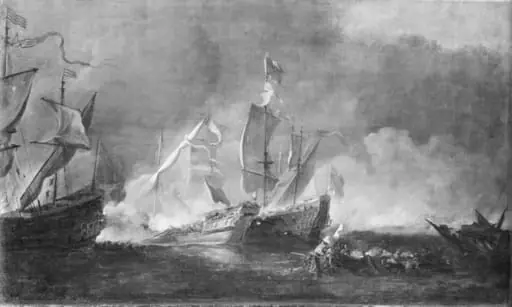 A Turkish Galley in an Encounter with two British Warships
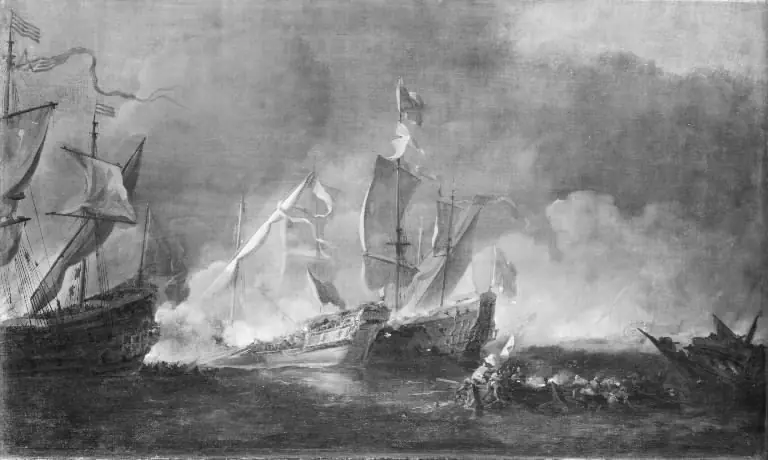 A Turkish Galley in an Encounter with two British Warships
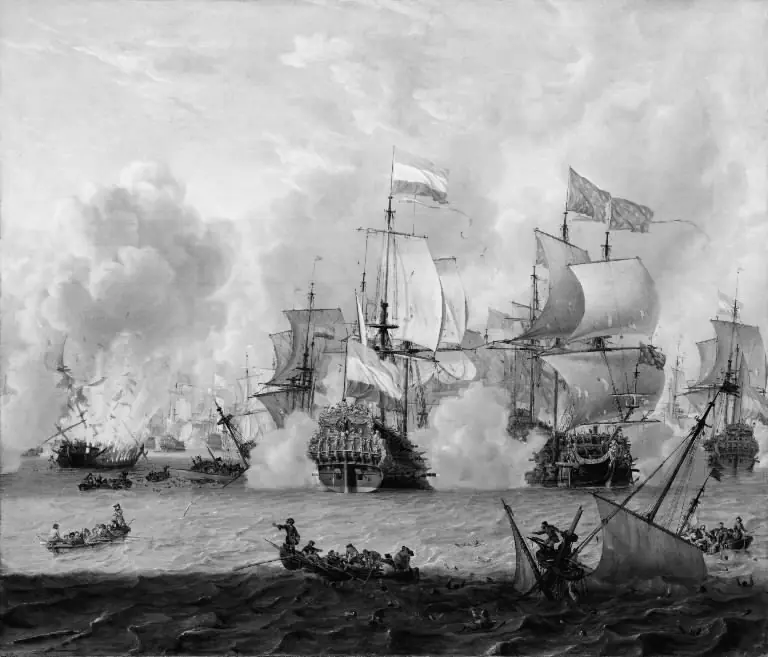 Encounter between the English and the Dutch Fleets at La Hogue 29th May 1692
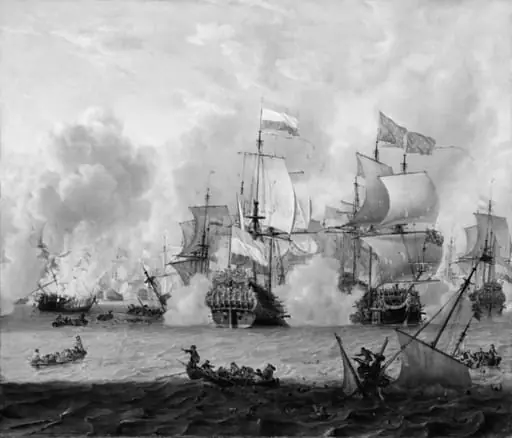 Encounter between the English and the Dutch Fleets at La Hogue 29th May 1692
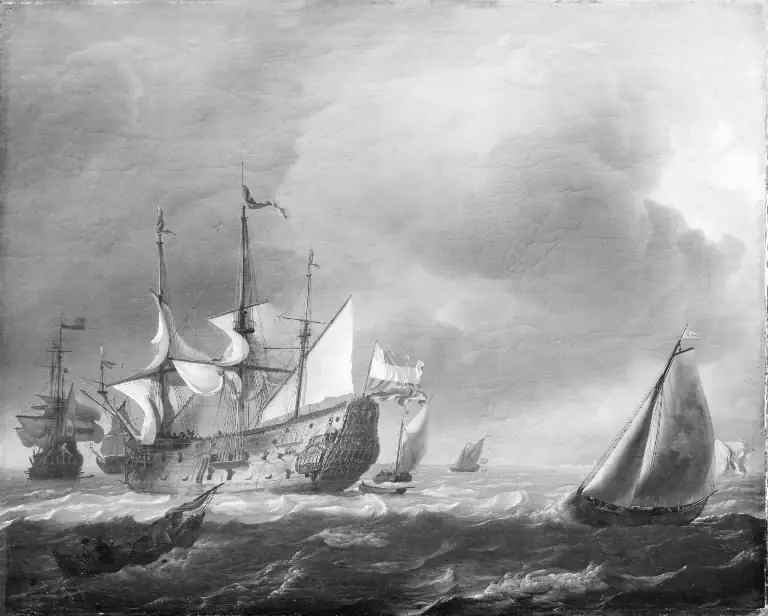 Seascape with Dutch Men-of-War and Fishing Boats
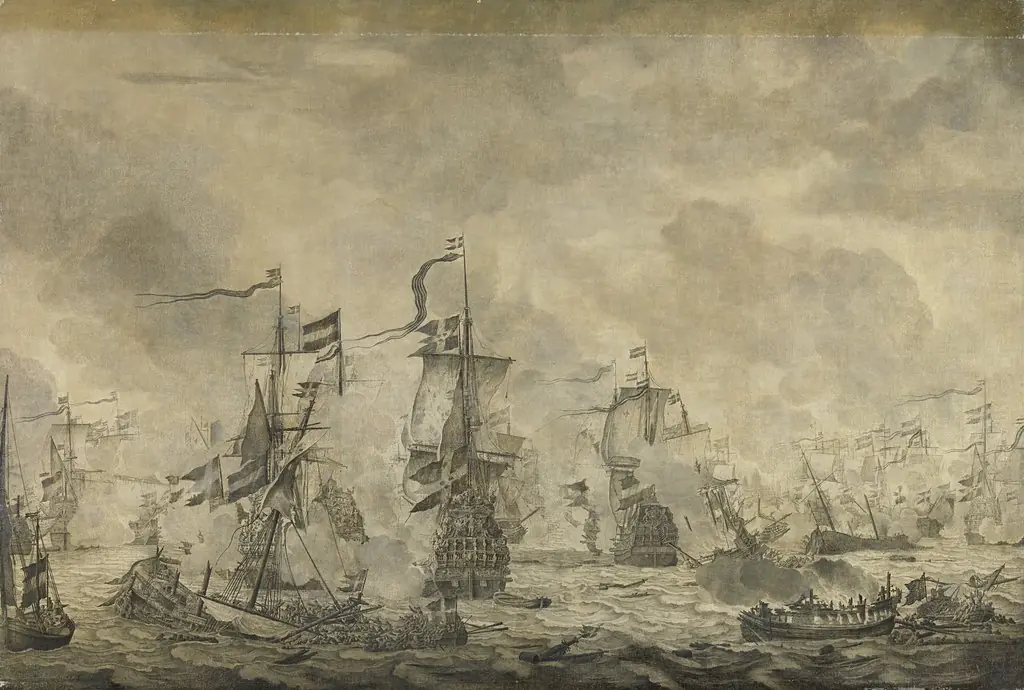 Episode from the Battle of the Sound between the Dutch and the Swedish fleets, 8 November 1658
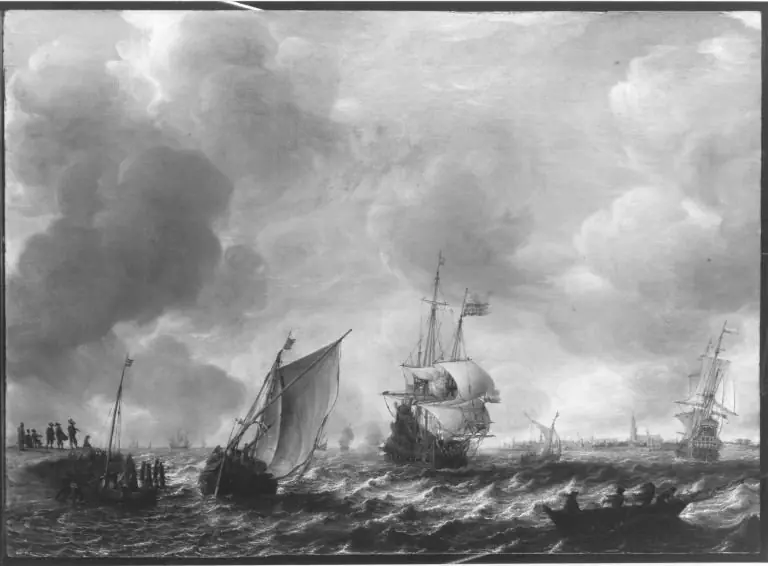 Marine bei Vlissingen
 Et skib som springer i luften