Artwork
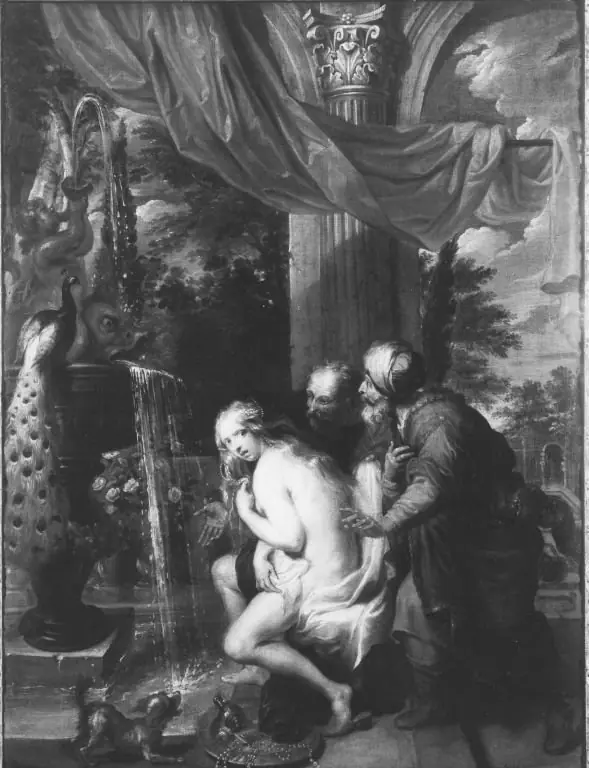
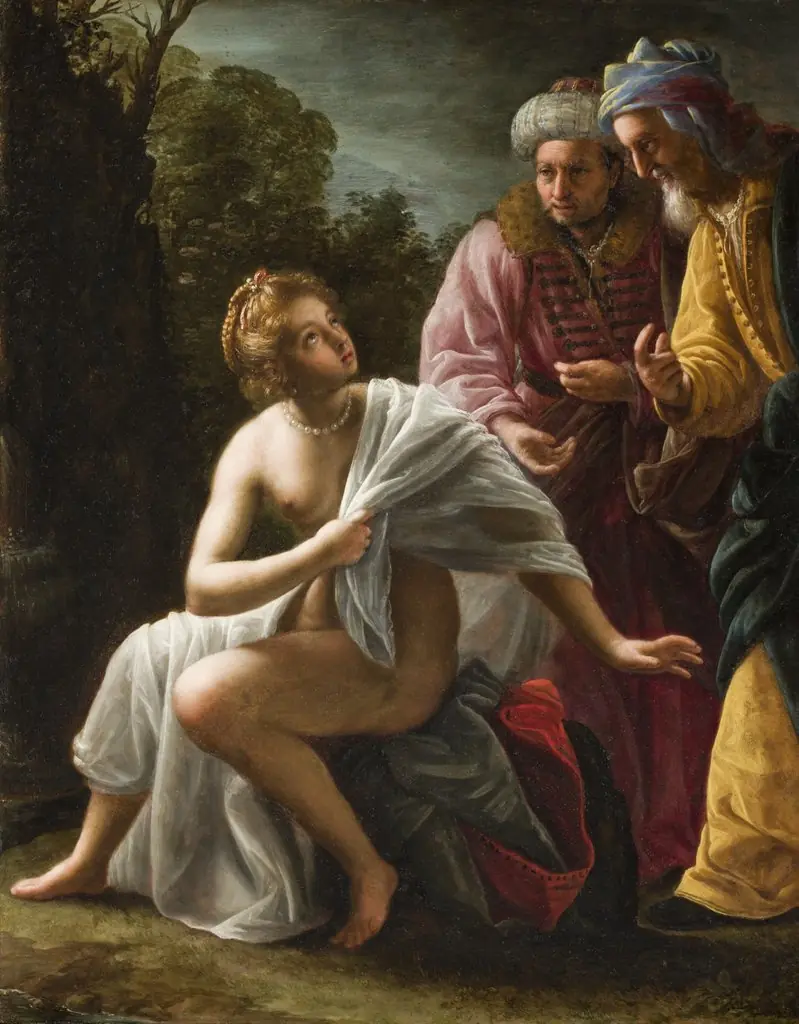
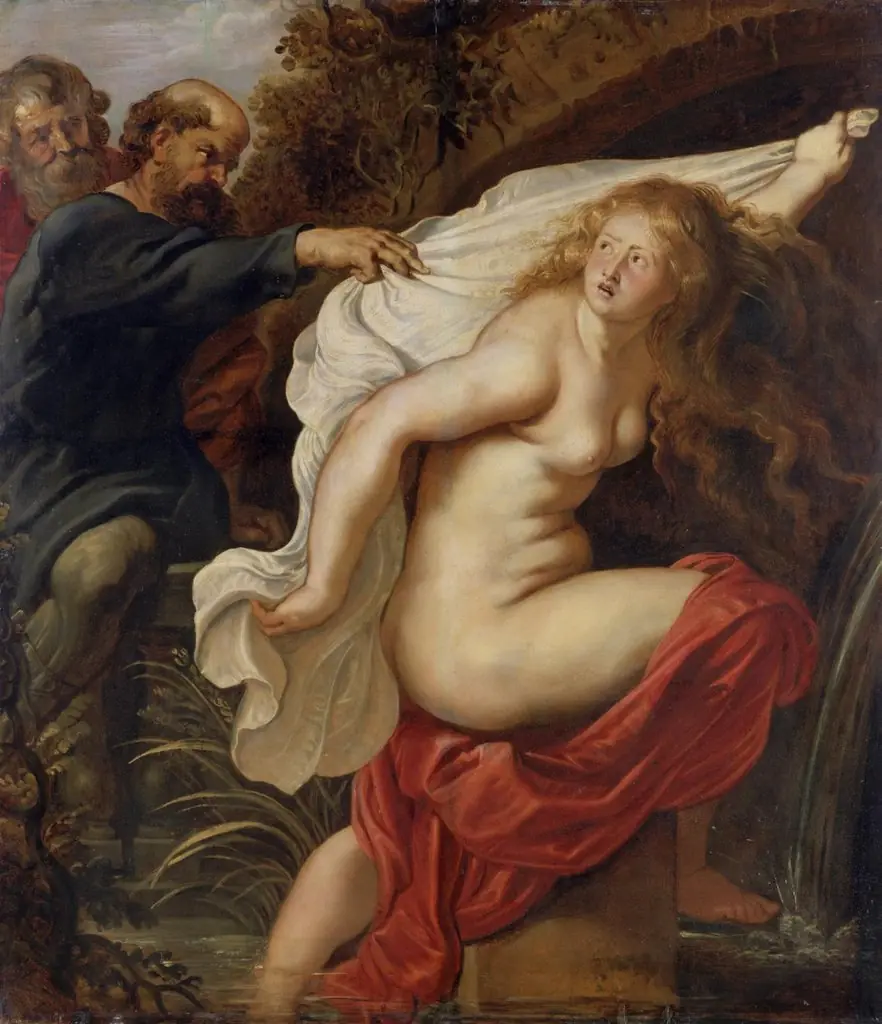
Susanna and the Elders
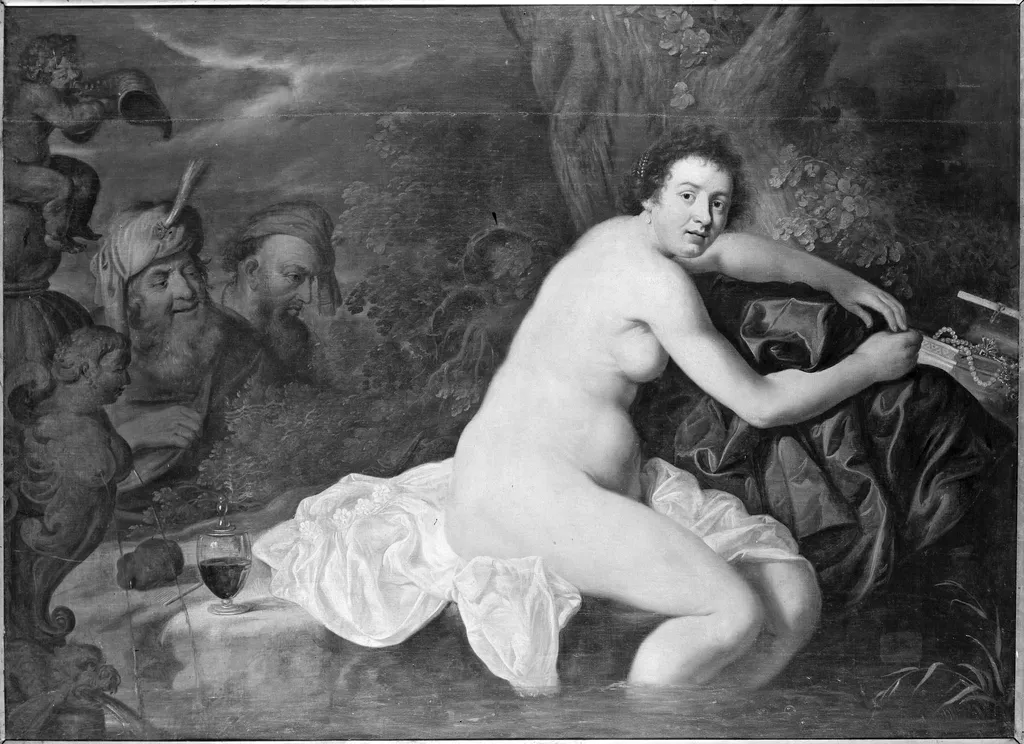
Susanna and the Elders is a photography by Unknown. It dates from 1750 and is held in the collection of the Statens Museum for Kunst.
About this work
Overview
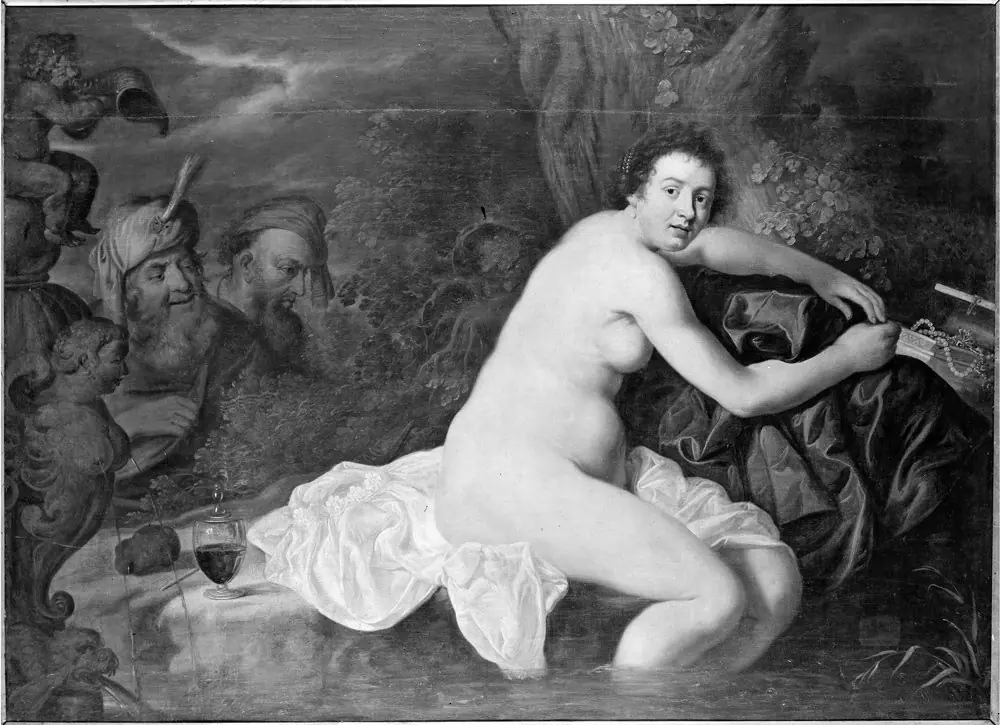
The composition centers on Susanna’s vulnerable posture, framed by the looming figures of the elders and a still life element that hints at their indulgence.
Painted around 1750, this work depicts the biblical story of Susanna and the Elders. It is part of the collection at the Museum of Ethnography. The scene captures a private moment disrupted by unseen observers, rendered with attention to spatial tension and psychological unease. The composition centers on Susanna’s vulnerable posture, framed by the looming figures of the elders and a still life element that hints at their indulgence.
Subject & Meaning
The narrative draws from the Book of Daniel, where Susanna, a virtuous woman, is harassed by two elders who spy on her while she bathes. Here, the moment is not one of overt assault but of looming threat—her relaxed pose contrasts with the elders’ concealed surveillance. The half-empty wine glass suggests their prior indulgence, framing their actions as calculated and morally compromised, not impulsive.
Technique & Style
The artist employs chiaroscuro to heighten emotional tension, casting Susanna’s skin in sharp highlights against deep shadows that envelop the elders and surrounding foliage. The lighting isolates her body, making her the focal point while obscuring the men’s expressions, amplifying their anonymity and menace. Brushwork is restrained, favoring atmospheric effect over ornate detail, reinforcing the scene’s quiet unease.
History & Provenance
The painting entered the Museum of Ethnography’s holdings in the late 19th century, though its earlier ownership remains undocumented. Its attribution to the artist remains tentative due to limited archival records from the mid-18th century. The work’s survival suggests it was valued for its narrative clarity and technical restraint, even if its authorship was not widely celebrated at the time.
Context
In the mid-18th century, biblical scenes featuring female vulnerability were common in European art, often used to explore themes of morality and voyeurism. This painting aligns with a trend that emphasized psychological nuance over theatricality. Unlike more overtly dramatic versions, it avoids spectacle, instead inviting contemplation of power, privacy, and moral complicity.
Legacy
The work contributes to a broader visual tradition of Susanna’s story, distinguished by its understated tension and avoidance of sensationalism. It reflects a shift toward interiorized drama in 18th-century painting, where psychological realism supersedes moral didacticism. Though not widely reproduced, it remains a quiet reference point in studies of gender, surveillance, and narrative ambiguity in art.
Artist & collection

 Domestic Scene
 Giacomo and Cardinal Marco, investing Andrea, Abbot of San Zeno, with his Benefice
 The Nymph of Fontainebleau
 Portrait of a Woman
 Madonna and Child with Saints in the Enclosed Garden
 Venus and Minerva
 Family Group of Four on Sofa
 Wall painting from Room H of the Villa of P. Fannius Synistor at Boscoreale