Artwork
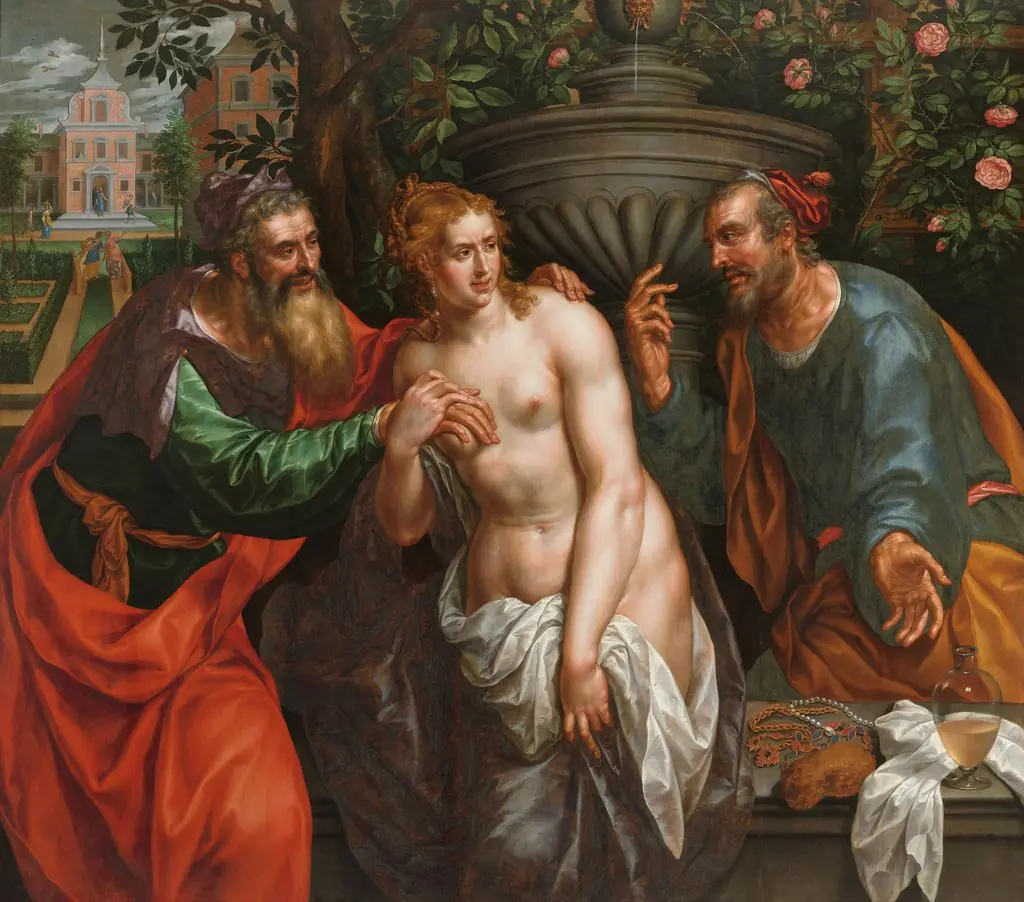
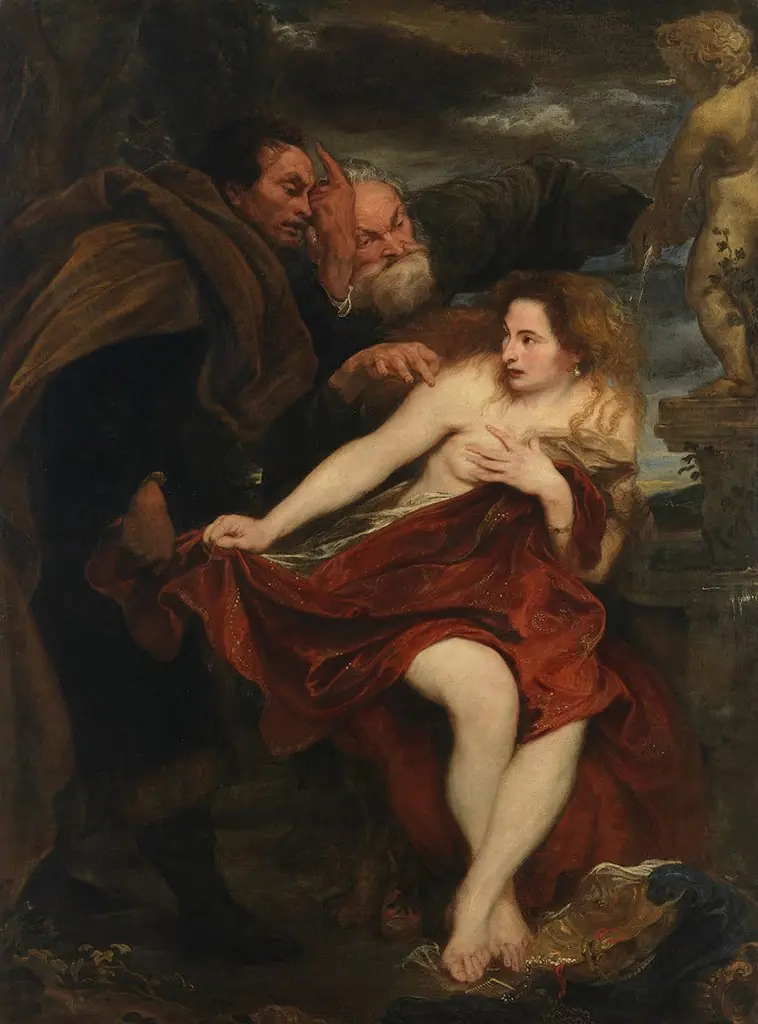
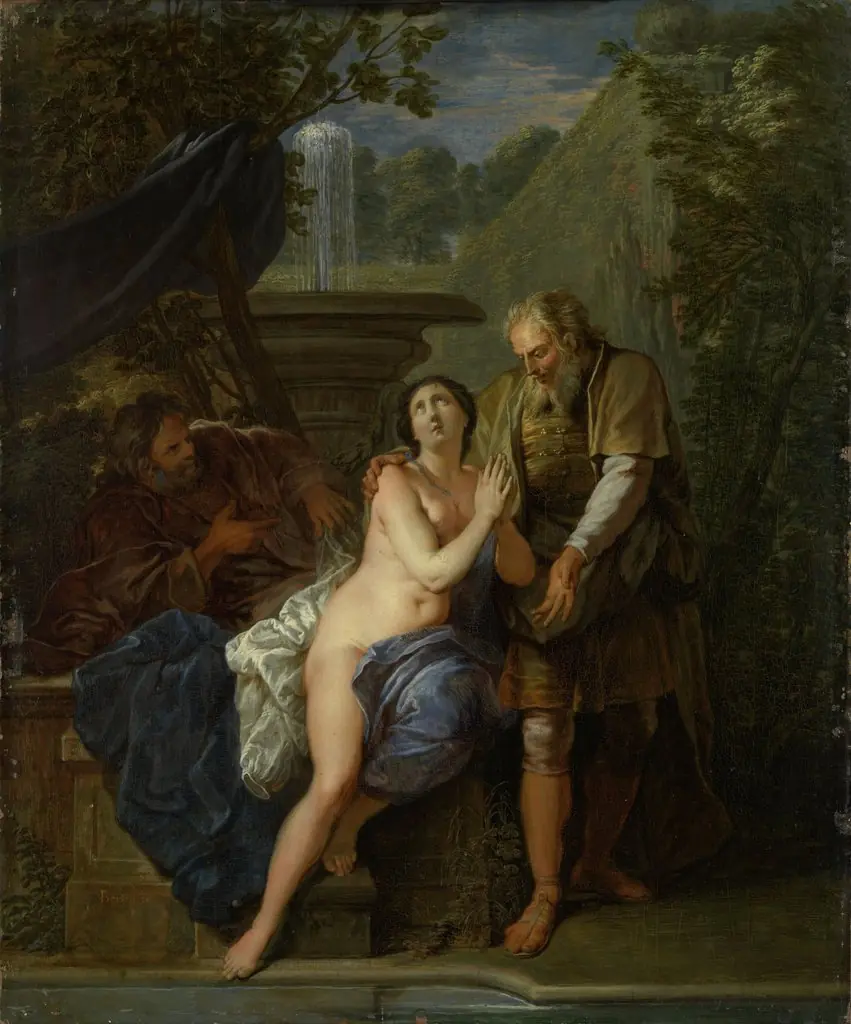
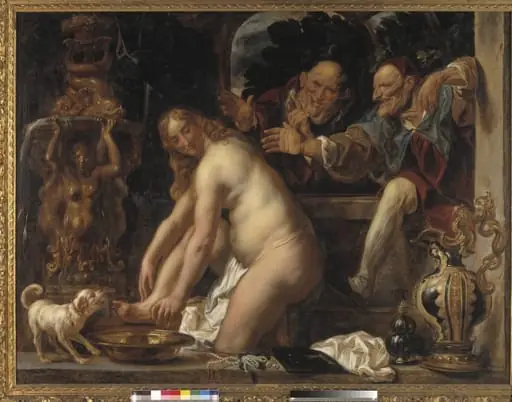
Susanna and the Elders
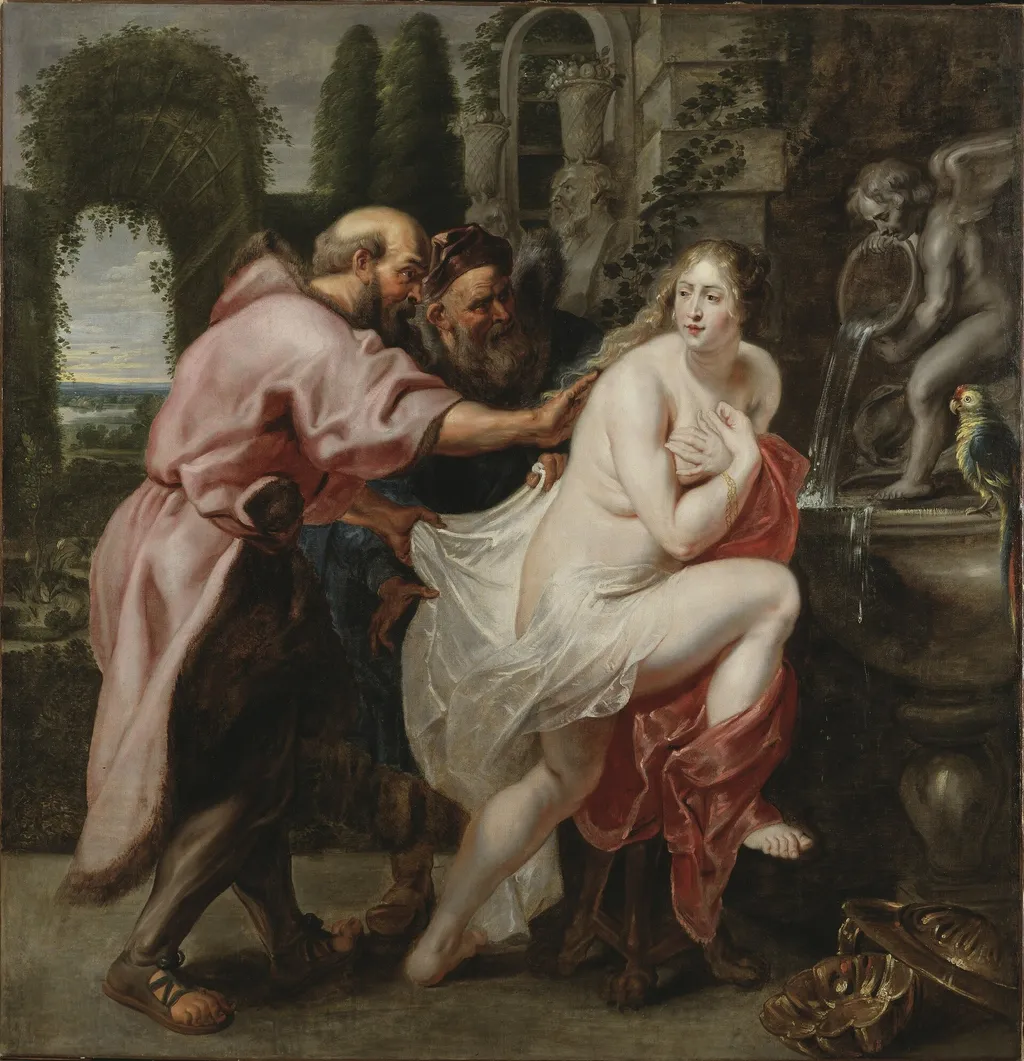
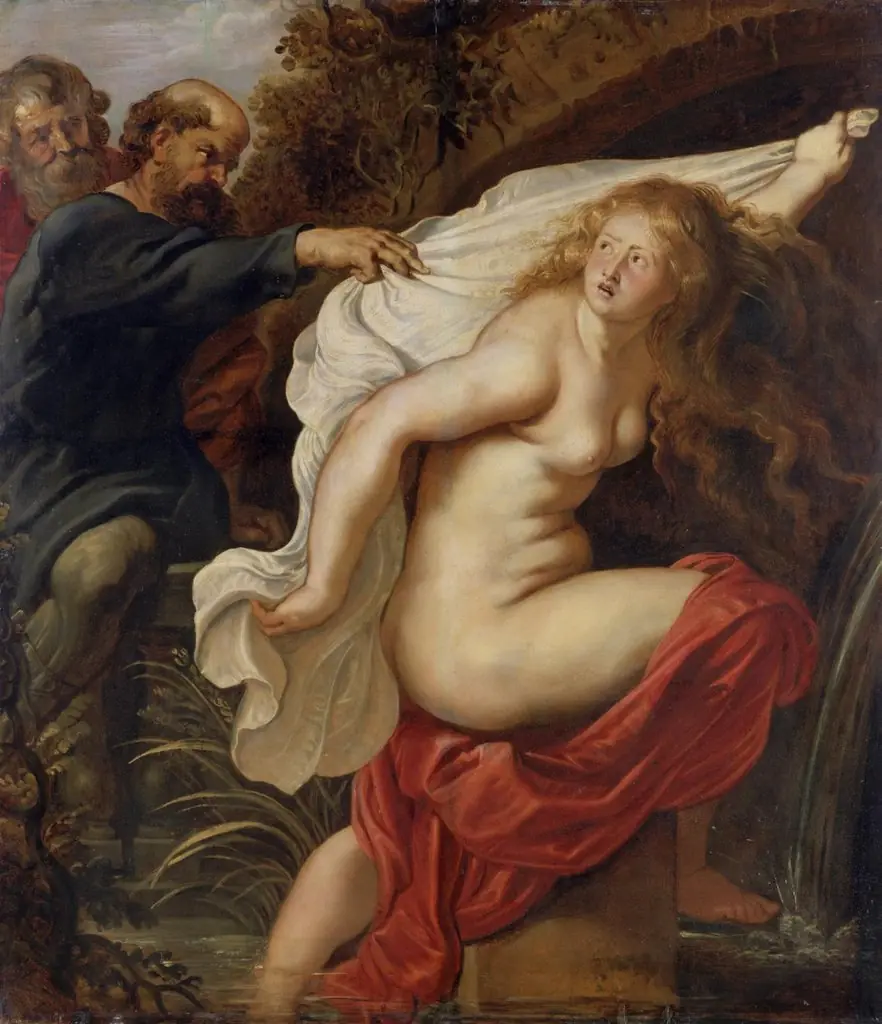
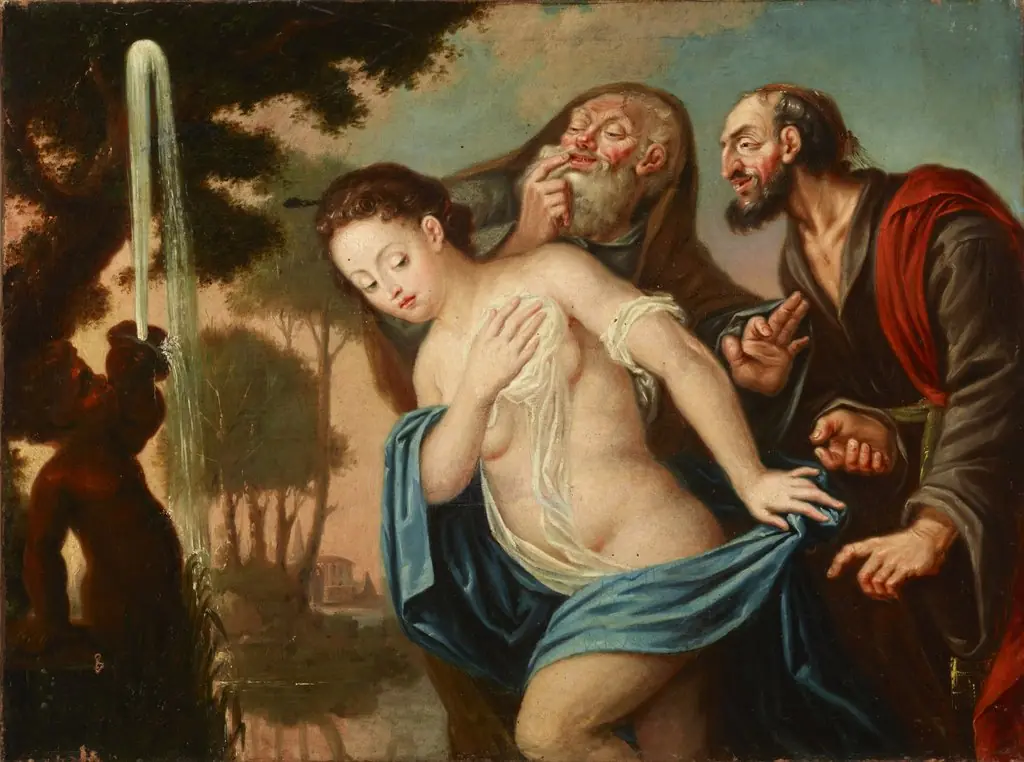
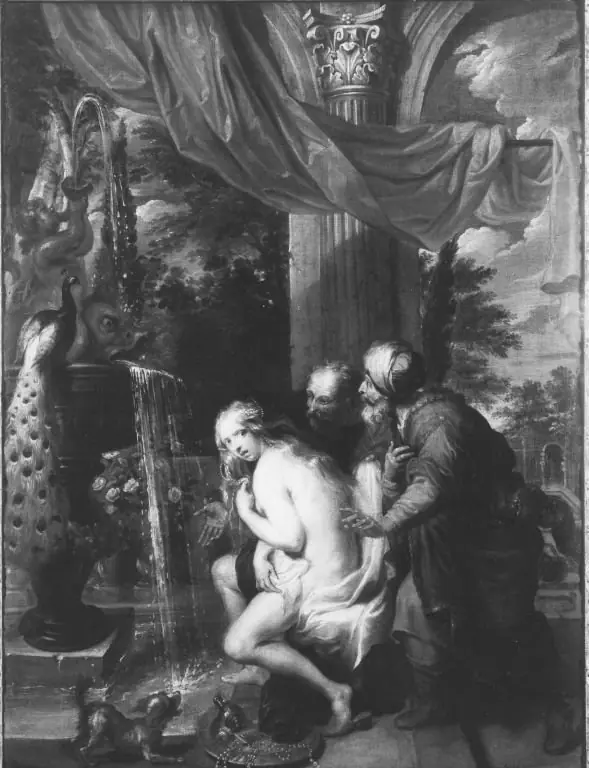
Susanna and the Elders is an oil painting by the Dutch Golden Age artist Unknown. It dates from 1661 and is held in the collection of the Nationalmuseum.
About this work
Overview
The composition emphasizes psychological unease over physical beauty, distinguishing it from more idealized treatments of the subject.
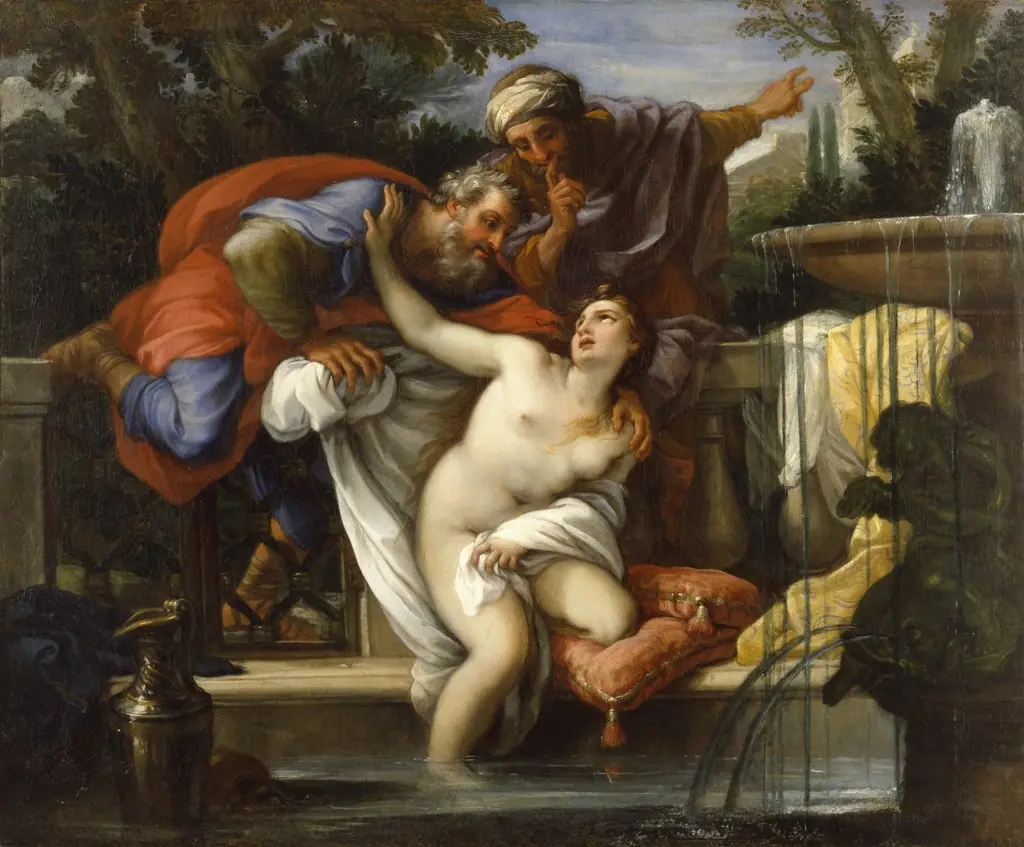
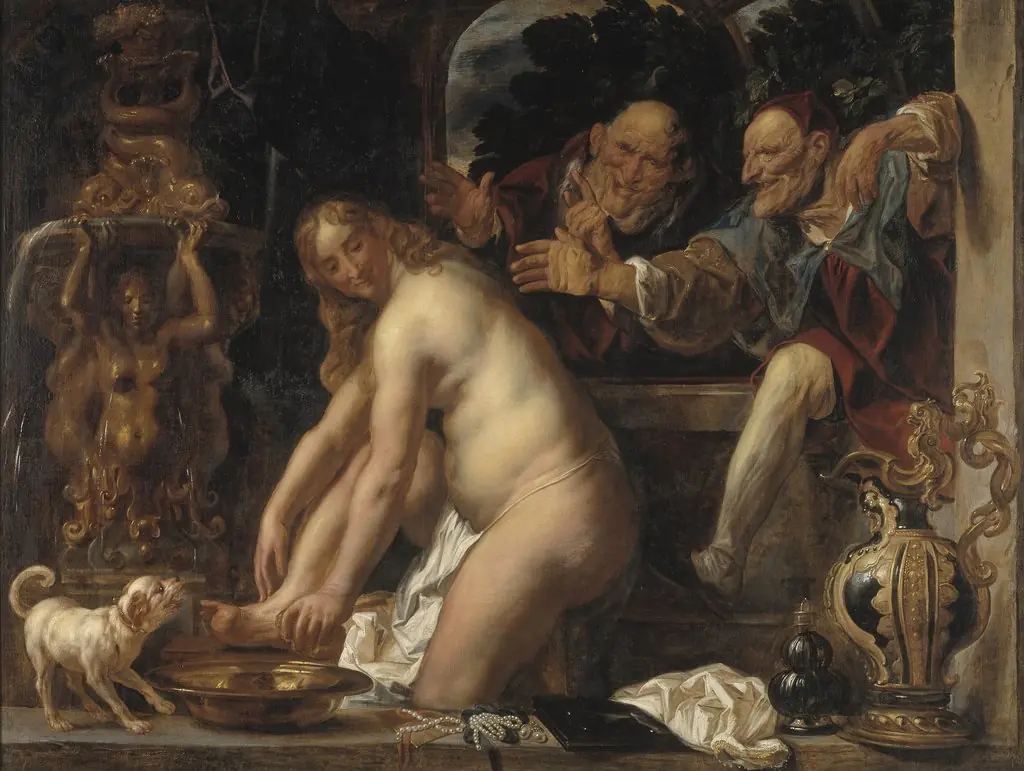
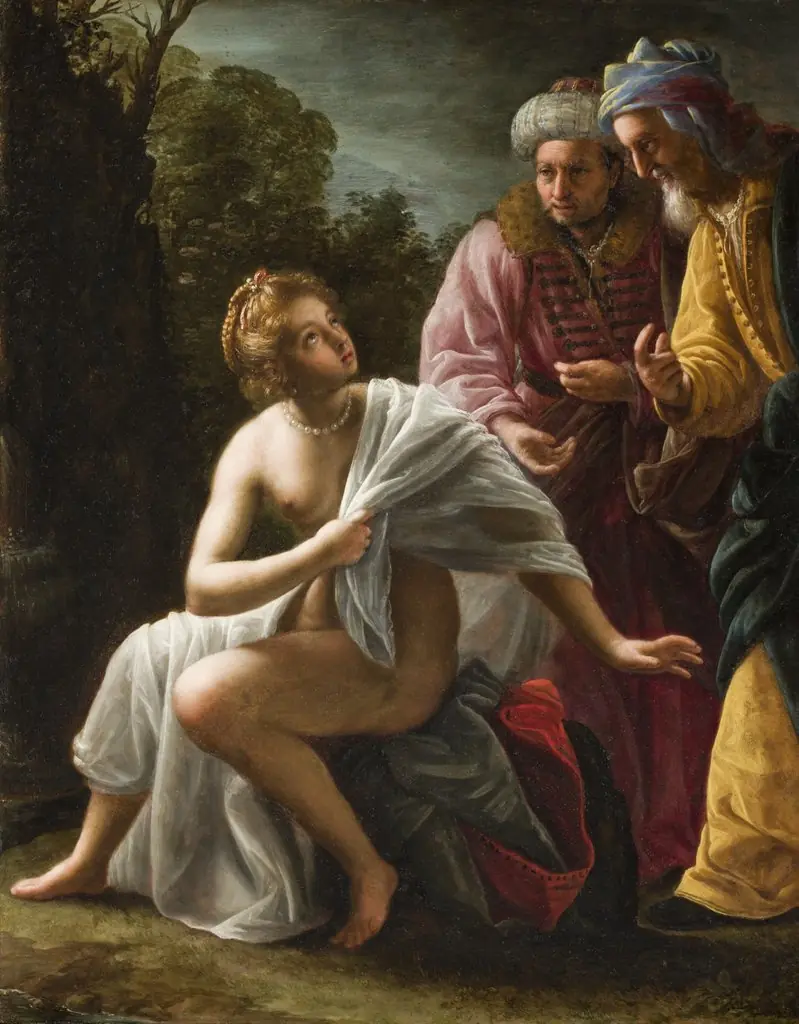
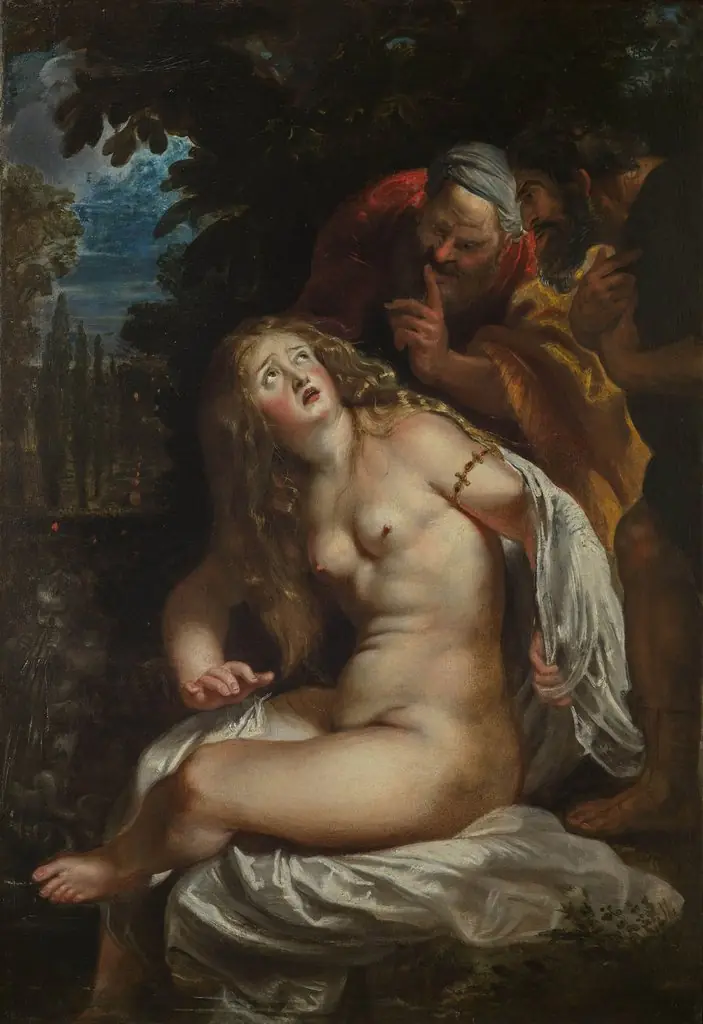
This oil painting portrays the biblical story of Susanna and the Elders, rendered with heightened emotional tension. A nude woman sits on a stone ledge, shielded by her arms, while two older men encircle her, their gestures suggesting coercion. A classical architectural backdrop and a small fountain with a child statue provide contextual detail. The composition emphasizes psychological unease over physical beauty, distinguishing it from more idealized treatments of the subject.
Subject & Meaning
The scene draws from the Book of Daniel, in which Susanna, a virtuous woman, is falsely accused by two elders after she refuses their advances. The painting captures the moment of her resistance, her turned gaze and defensive posture underscoring her vulnerability and moral integrity. The elders’ proximity and reaching hands imply threat, transforming a private moment into a public spectacle of injustice.
Technique & Style
The artist employs chiaroscuro to heighten the drama, with light falling sharply on Susanna’s form and the elders’ faces, while shadows deepen the sense of enclosure. Brushwork is precise in rendering textures—fabric, stone, water—yet restrained in emotional expression. The figures are arranged in a tight, almost claustrophobic grouping, reinforcing the psychological pressure of the moment without overt theatricality.
History & Provenance
The painting entered the collection of the Nationalmuseum in Stockholm, where it remains today. Its origins trace to the early 17th century, likely created in Italy or the Netherlands during a period when biblical narratives involving female virtue and male predation were frequently depicted. Its attribution and exact date remain subjects of scholarly discussion, though stylistic elements align with regional Baroque traditions.
Context
During the 17th century, the story of Susanna was a popular subject among artists, often used to explore themes of modesty, power, and moral conflict. While many versions emphasized sensuality, this painting diverges by focusing on the woman’s distress and the elders’ moral ambiguity. The inclusion of classical architecture and a child statue may allude to innocence under threat, reinforcing the narrative’s ethical gravity.
Legacy
This work contributes to a broader artistic dialogue about gender, agency, and authority in early modern visual culture. Unlike later interpretations that romanticized the scene, this painting’s restrained drama and psychological realism anticipate a more critical engagement with the subject. It remains a significant example of how religious narratives were adapted to reflect contemporary social tensions.
Artist & collection

 Domestic Scene
 Giacomo and Cardinal Marco, investing Andrea, Abbot of San Zeno, with his Benefice
 The Nymph of Fontainebleau
 Portrait of a Woman
 Madonna and Child with Saints in the Enclosed Garden
 Venus and Minerva
 Family Group of Four on Sofa
 Wall painting from Room H of the Villa of P. Fannius Synistor at Boscoreale