Artwork
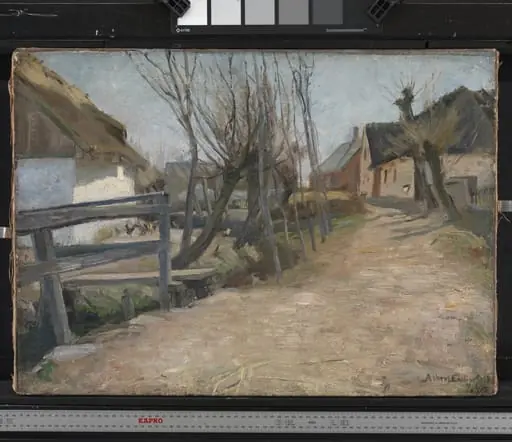
Country Lane with Trees. Kastrup
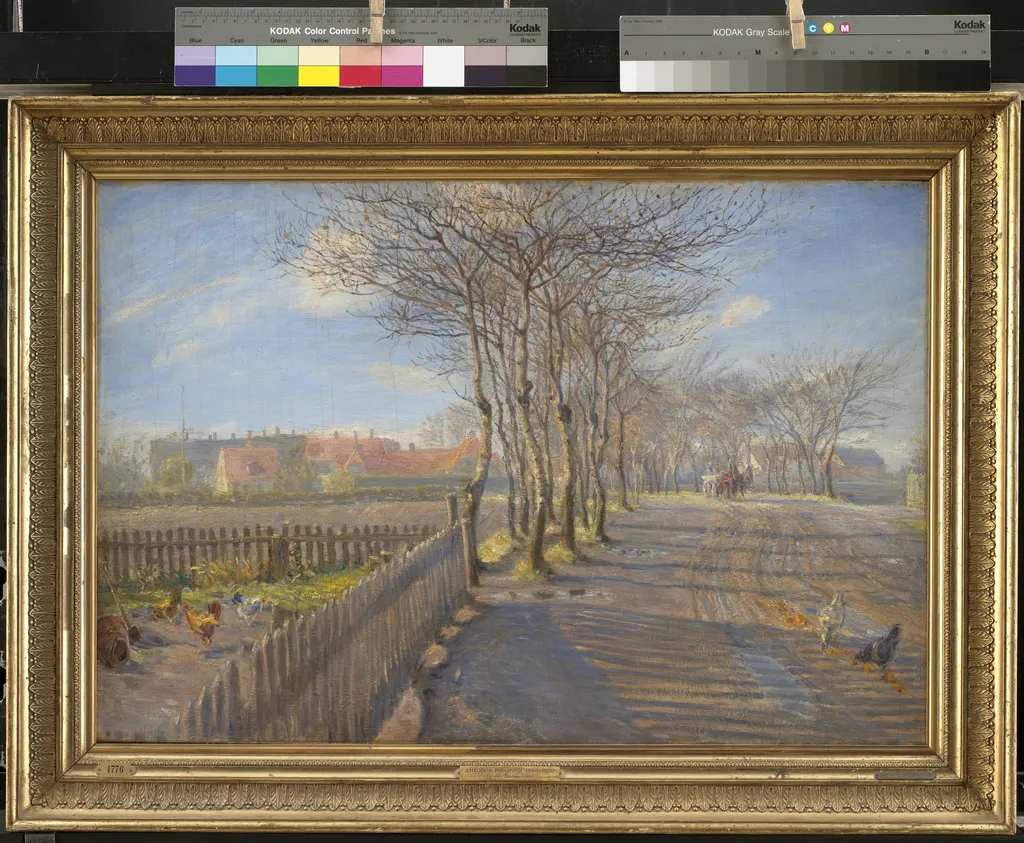
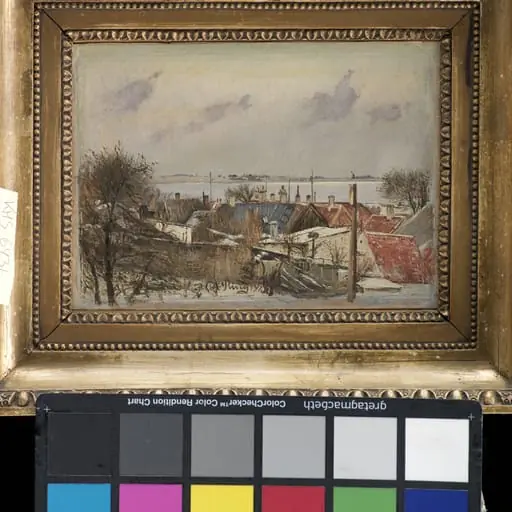
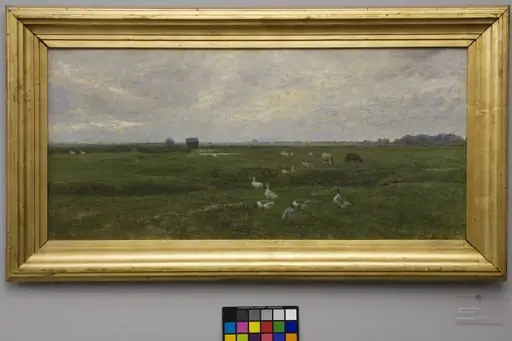
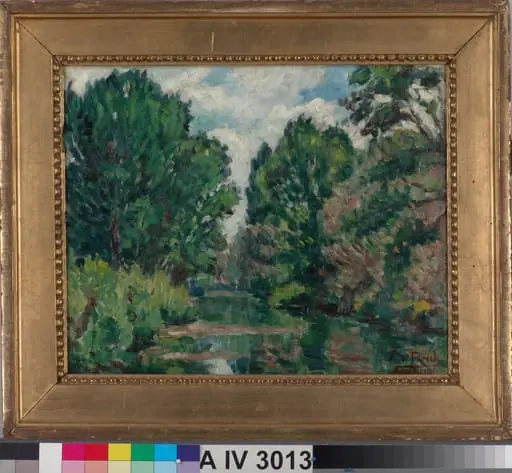
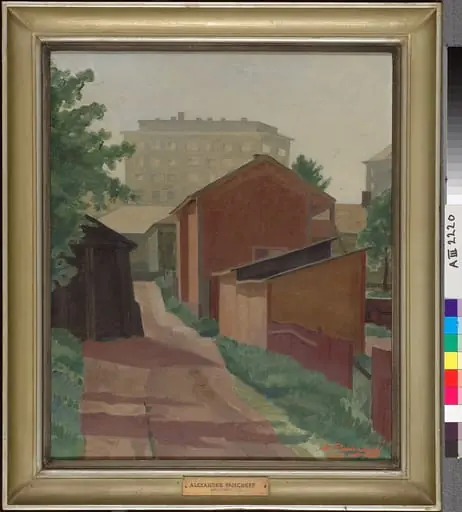
Country Lane with Trees. Kastrup is a photography by the Impressionist artist Unknown. It dates from 1891 and is held in the collection of the Statens Museum for Kunst. Painted in 1891, Country Lane with Trees.
About this work
Overview
Painted in 1891, Country Lane with Trees. Kastrup is a quiet landscape by 987_person, capturing a rural Danish path lined with trees and a low wooden fence. Chickens wander near the roadside, while modest dwellings appear in the distance. The composition emphasizes stillness and everyday rural life, rendered without dramatic emphasis or idealization.
Subject & Meaning
The scene presents an unadorned view of a country lane, free from human figures yet alive with subtle activity. The chickens, fence, and distant buildings suggest domestic life just beyond the frame. The painting conveys no narrative, instead inviting contemplation of ordinary rural rhythms and the quiet dignity of the landscape.
Technique & Style
Brushwork is loose but deliberate, with soft transitions between sky, foliage, and earth. Colors are subdued—pale blues, muted greens, and earth tones—creating a calm tonal harmony. The handling of light suggests natural, diffused daylight, aligning with observational approaches common in late 19th-century Nordic landscape painting.
History & Provenance
The work entered the collection of the Museum of Ethnography shortly after its creation, likely through direct acquisition or donation. Its presence in an ethnographic institution, rather than a fine arts museum, reflects early 20th-century interest in documenting regional life as cultural record, not merely aesthetic object.
Context
Created during a period when Danish artists increasingly turned to rural subjects, the painting reflects a broader cultural shift toward valuing local scenes over grand historical or mythological themes. While not formally part of Impressionism, its attention to light and atmosphere shares affinities with contemporary Nordic naturalism.
Legacy
The painting remains a modest but representative example of late 19th-century Danish landscape observation. It contributes to understanding how everyday environments were documented with quiet reverence, influencing later regional art practices focused on authenticity over spectacle.
Artist & collection

 Domestic Scene
 Giacomo and Cardinal Marco, investing Andrea, Abbot of San Zeno, with his Benefice
 The Nymph of Fontainebleau
 Portrait of a Woman
 Madonna and Child with Saints in the Enclosed Garden
 Venus and Minerva
 Family Group of Four on Sofa
 Wall painting from Room H of the Villa of P. Fannius Synistor at Boscoreale