Artwork
Geese on the Island of Saltholm
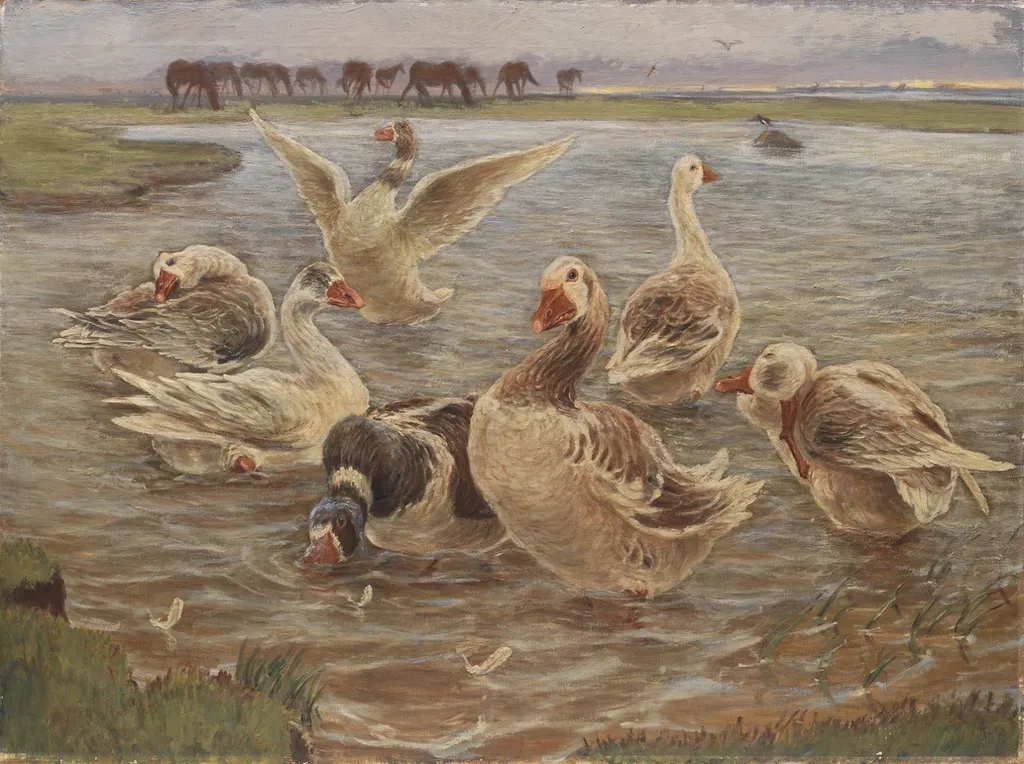
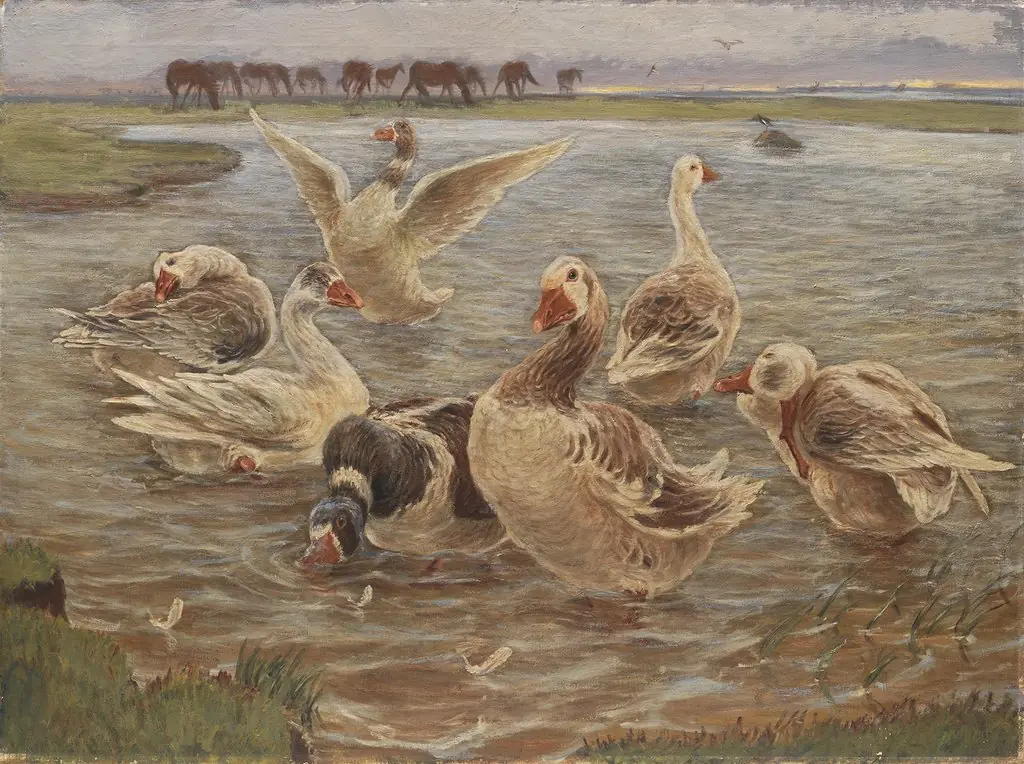
Geese on the Island of Saltholm is a photography by the Impressionist artist Unknown. It dates from 1897 and is held in the collection of the Statens Museum for Kunst. Painted in 1897, this work depicts a quiet coastal scene on the Danish island of Saltholm.
About this work
Overview
The painting resides in the Museum of Ethnography, where it is contextualized within broader studies of human and animal coexistence in Nordic landscapes.
Painted in 1897, this work depicts a quiet coastal scene on the Danish island of Saltholm. It portrays a flock of geese in shallow water, some standing, others swimming, with a distant herd of horses grazing on a low-lying field. The composition emphasizes stillness and natural harmony, avoiding dramatic narrative in favor of observed detail. The painting resides in the Museum of Ethnography, where it is contextualized within broader studies of human and animal coexistence in Nordic landscapes.
Subject & Meaning
The scene captures a moment of daily life in a remote wetland, where geese and horses share the same environment without human presence. The absence of people suggests a focus on wildlife as an autonomous force, reflecting late 19th-century interest in natural observation over anthropocentric storytelling. The geese, neither threatened nor domesticated, embody a sense of quiet autonomy within their habitat.
Technique & Style
The artist employed loose, deliberate brushwork to convey texture and motion—ripples in the water, the lift of feathers, the sway of grass. Colors are restrained: muted greens, soft browns, and pale grays create a subdued tonal harmony. Light is rendered subtly, with careful attention to how it catches the geese’s plumage, suggesting volume and life without overt realism. The approach aligns with observational practices common in Nordic naturalist painting of the period.
History & Provenance
Created in 1897, the painting entered the collection of the Museum of Ethnography shortly after its completion. Its acquisition reflects the institution’s early interest in documenting ecological relationships in Northern Europe. No record of public exhibition prior to its museum acquisition exists, suggesting it was likely a personal study or private commission, later recognized for its ethnographic value.
Context
In the late 1890s, Scandinavian artists increasingly turned to rural and coastal landscapes as subjects of quiet study, moving away from romanticized narratives. Saltholm, a protected island in the Øresund Strait, was known for its migratory bird populations and unspoiled terrain. This work aligns with a regional trend of documenting nature through direct observation, influenced by scientific illustration and emerging environmental awareness.
Legacy
Though not widely exhibited beyond its institutional home, the painting contributes to a body of Nordic works that prioritize ecological presence over human drama. It remains a reference in studies of late 19th-century naturalist art in Denmark, valued for its restrained aesthetic and faithful rendering of animal behavior in a specific, unaltered habitat.
Artist & collection

 Domestic Scene
 Giacomo and Cardinal Marco, investing Andrea, Abbot of San Zeno, with his Benefice
 The Nymph of Fontainebleau
 Portrait of a Woman
 Madonna and Child with Saints in the Enclosed Garden
 Venus and Minerva
 Family Group of Four on Sofa
 Wall painting from Room H of the Villa of P. Fannius Synistor at Boscoreale