Artwork
Pink-footed Geese
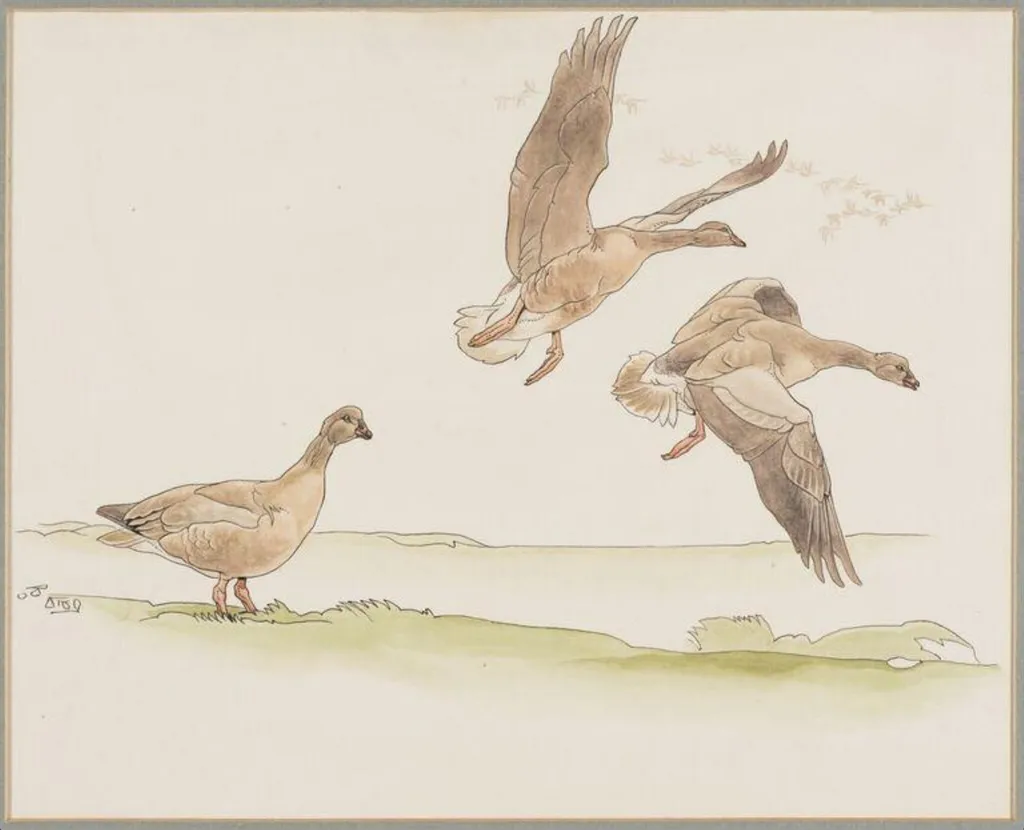
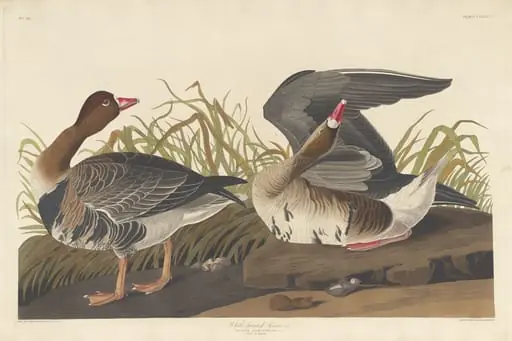
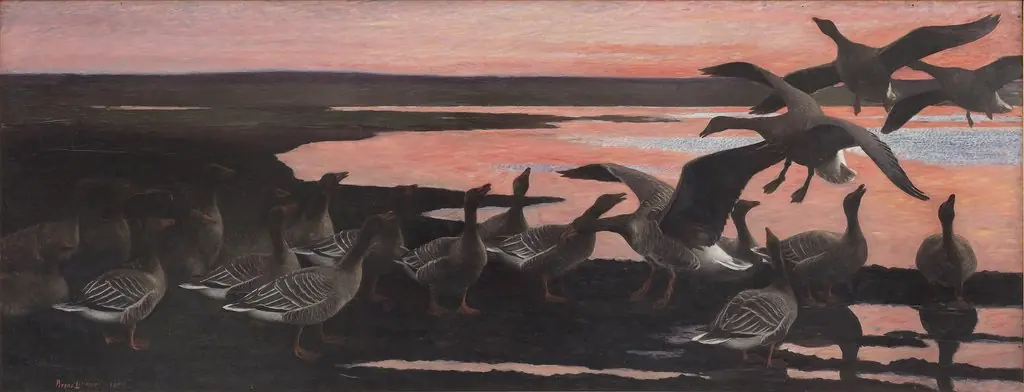
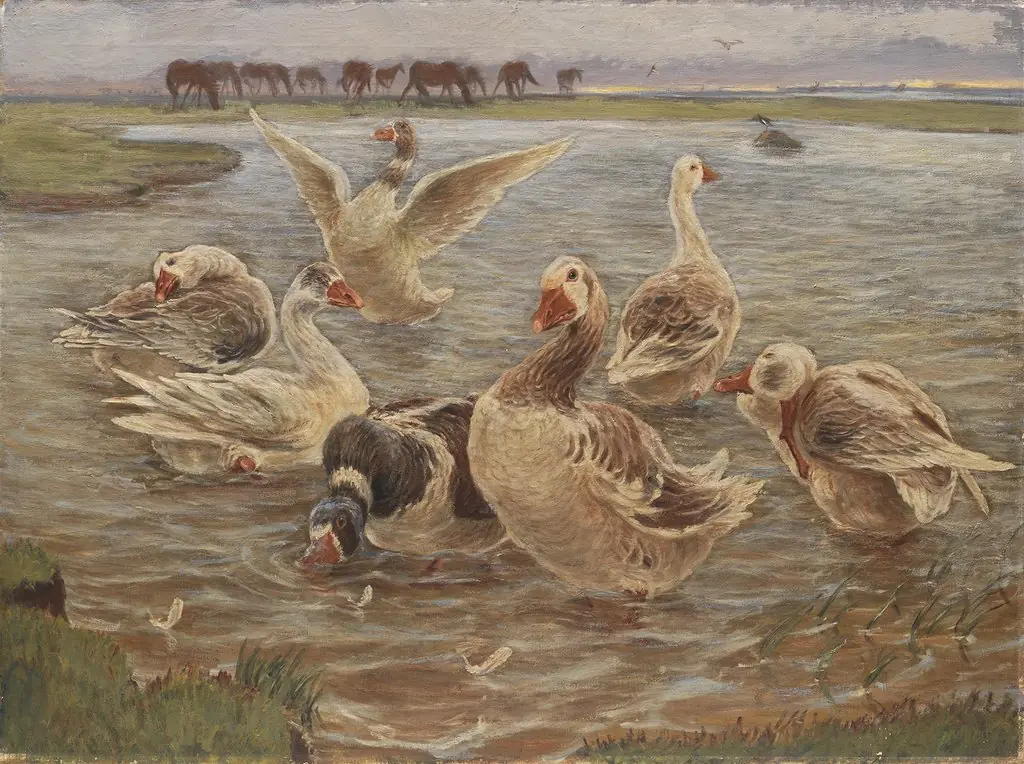
Pink-footed Geese is a watercolor work on paper by Talbot Kelly. It is held in the collection of the Victoria and Albert Museum.
About this work
Overview
Pink-footed Geese is a watercolour painting by Talbot Kelly, created as a study of avian form and natural motion. It is part of the Victoria and Albert Museum’s collection, where it is preserved as an example of early 20th-century British wildlife observation in watercolour. The work reflects a quiet, observational approach to nature, emphasizing stillness within movement.
Subject & Meaning
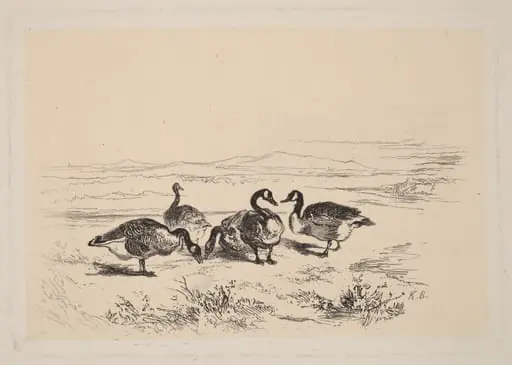
The painting portrays three pink-footed geese in a moment of transitional stillness: two in flight, one grounded and looking upward. The composition suggests a pause in migration, evoking themes of connection and solitude within natural cycles. The absence of a detailed landscape focuses attention on the birds’ posture and relationship, inviting quiet reflection rather than narrative.
Technique & Style
Kelly employed delicate washes and restrained tonal variations to render the geese, avoiding sharp outlines in favor of soft transitions. The creamy white paper serves as both background and light source, enhancing the subtlety of the birds’ plumage. Shading is minimal but precise, suggesting volume through gentle gradations rather than dramatic contrast.
History & Provenance
The painting entered the Victoria and Albert Museum’s collection as part of its broader effort to document British watercolour traditions. While little is documented about its early ownership, its inclusion in the museum’s holdings indicates recognition of its technical restraint and fidelity to natural observation during the early 1900s.
Context
Created during a period when British artists increasingly turned to natural subjects with scientific precision, the work aligns with a tradition of wildlife study that valued accuracy over ornamentation. Kelly’s focus on geese reflects a broader interest in migratory patterns and the quiet rhythms of the natural world, distinct from more romanticized depictions of wildlife.
Legacy
Though not widely exhibited, Pink-footed Geese remains a quiet example of early 20th-century British watercolour practice. Its enduring presence in the V&A underscores its value as a specimen of observational artistry, appreciated for its restraint and sensitivity rather than dramatic impact.
Artist & collection
Artist
This British painter was the kind of guy who’d rather be outside watching birds than inside painting them—but he did both.

![Geese; Girls in Bonnets, Geese [recto], by Paul Gauguin](https://artifactworldgallery.com/img/paul-gauguin--geese-girls-in-bonnets-geese-recto--8a9024cb5f19eb3f-w320.webp)