Artwork
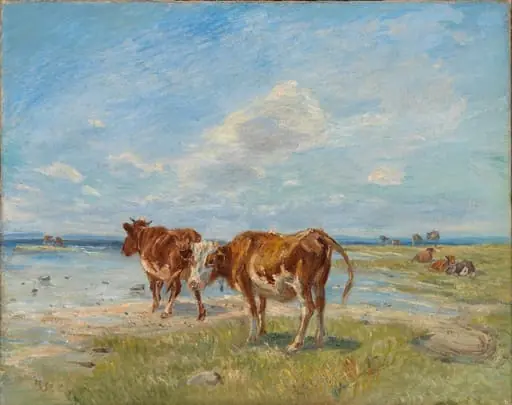
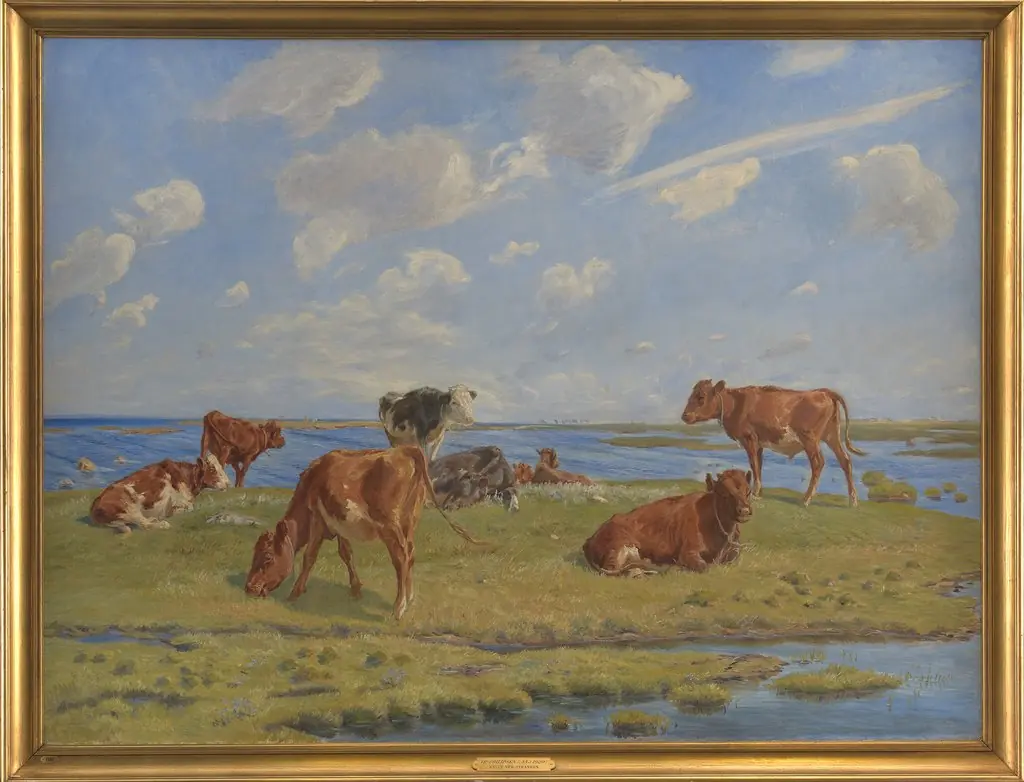
Kalve ved stranden
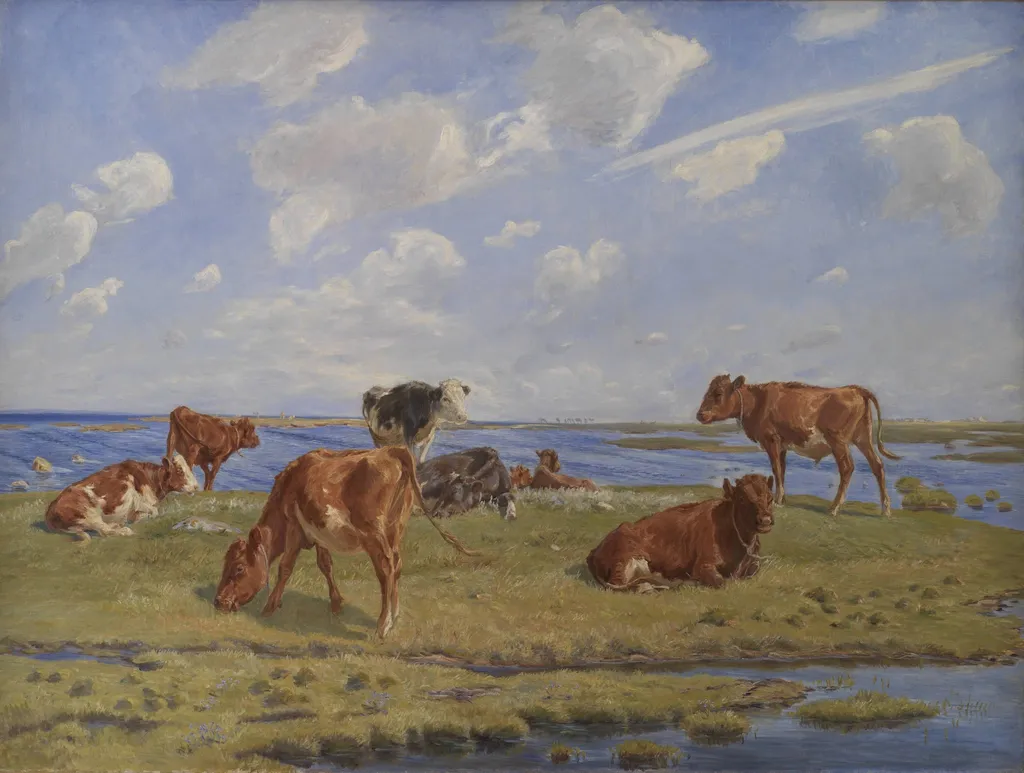
Kalve ved stranden is a photography by the Impressionist artist Unknown. It dates from 1896 and is held in the collection of the Statens Museum for Kunst.
About this work
Overview
Created in 1896, Kalve ved stranden is a painted depiction of cattle near a shoreline, attributed to the Danish artist P.S. Krøyer. The work resides in the collection of the Museum of Ethnography in Copenhagen. It captures a quiet rural moment with attention to natural light and atmospheric conditions, reflecting the artist’s interest in everyday Scandinavian life during the late 19th century.
Subject & Meaning
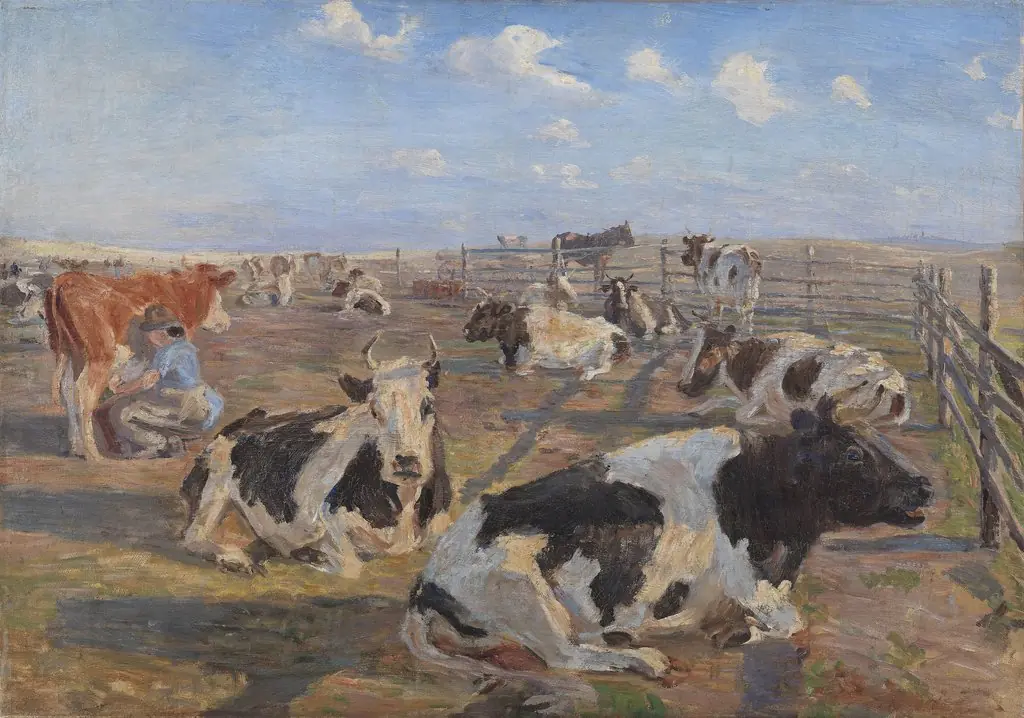
The painting portrays a group of calves and cows in a pasture adjacent to calm water, some grazing, others resting or gazing toward the viewer.
The painting portrays a group of calves and cows in a pasture adjacent to calm water, some grazing, others resting or gazing toward the viewer. The scene conveys a sense of stillness and harmony between animals and their environment. Rather than dramatizing rural labor, it emphasizes the quiet dignity of livestock in a familiar coastal landscape, suggesting an appreciation for ordinary, unidealized nature.
Technique & Style
Krøyer employed loose, fluid brushwork to render the textures of grass, fur, and water, with soft transitions between light and shadow. The palette is muted yet nuanced, featuring earthy browns, greens, and whites, harmonized by the bright sky. Light is rendered diffusely, enhancing the sense of a warm, overcast afternoon. The composition avoids sharp detail, favoring an impressionistic sensitivity to ambient conditions.
History & Provenance
The painting entered the Museum of Ethnography’s collection shortly after its creation, likely through acquisition or donation tied to Krøyer’s association with Danish cultural institutions. Its placement in an ethnographic museum, rather than a fine arts venue, reflects early 20th-century curatorial practices that valued depictions of rural life as cultural documentation.
Context
In the 1890s, Danish artists increasingly turned to domestic landscapes and peasant life as subjects, moving away from historical or mythological themes. Krøyer, influenced by French Impressionism, adapted its techniques to Nordic light and scenery. Kalve ved stranden aligns with this national trend, capturing the quiet rhythm of coastal agriculture during a period of industrial change.
Legacy
Though not among Krøyer’s most widely exhibited works, Kalve ved stranden remains a representative example of his commitment to naturalistic observation. It contributes to the broader understanding of how Danish painters reinterpreted Impressionist methods to express local identity. The painting continues to be studied for its subtle interplay of light, animal form, and environmental tone.
Artist & collection

 Domestic Scene
 Giacomo and Cardinal Marco, investing Andrea, Abbot of San Zeno, with his Benefice
 The Nymph of Fontainebleau
 Portrait of a Woman
 Madonna and Child with Saints in the Enclosed Garden
 Venus and Minerva
 Family Group of Four on Sofa
 Wall painting from Room H of the Villa of P. Fannius Synistor at Boscoreale
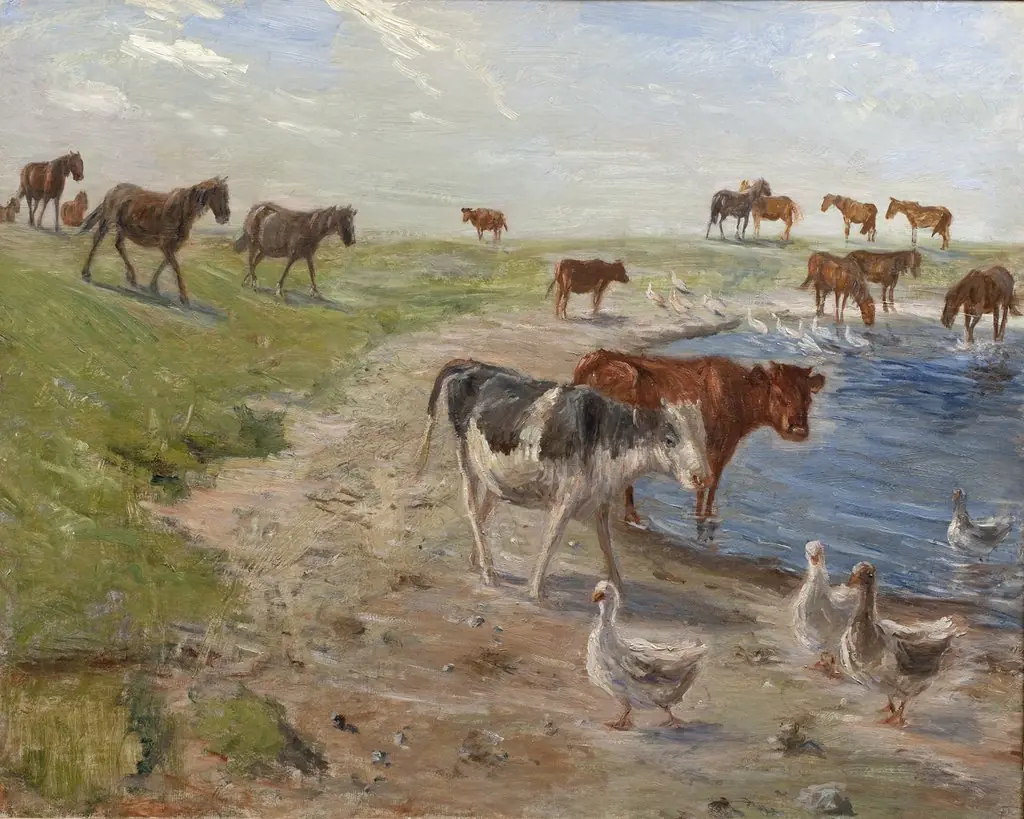 Calves and Geese at a Wateringhole on the Island of Saltholm
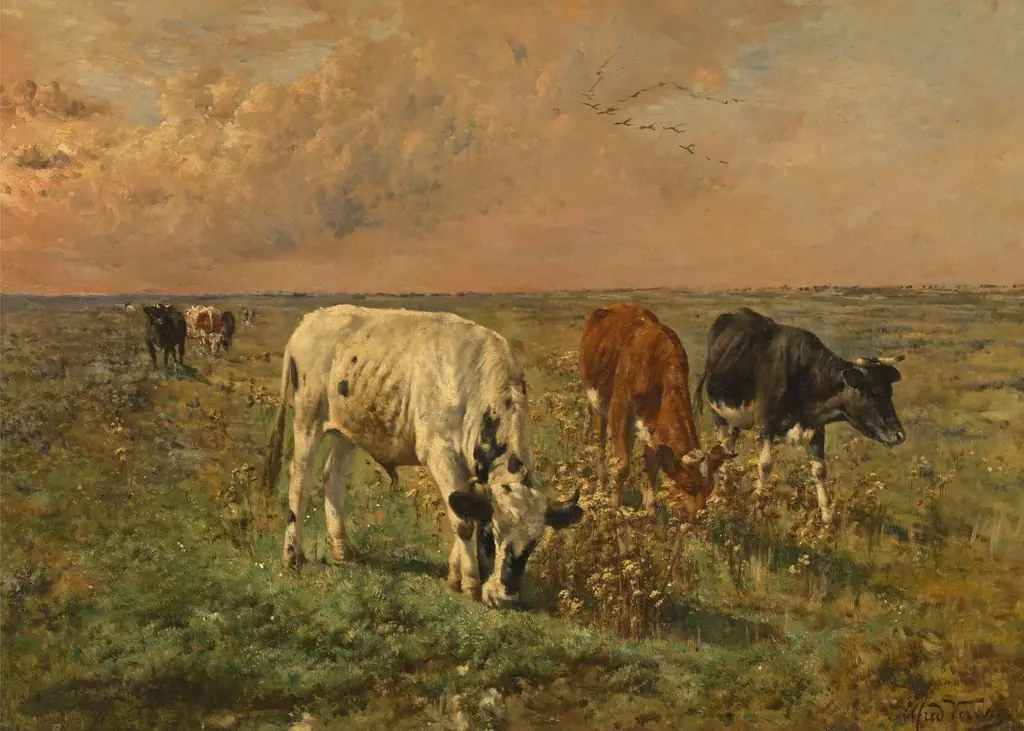 Cows in a Pasture
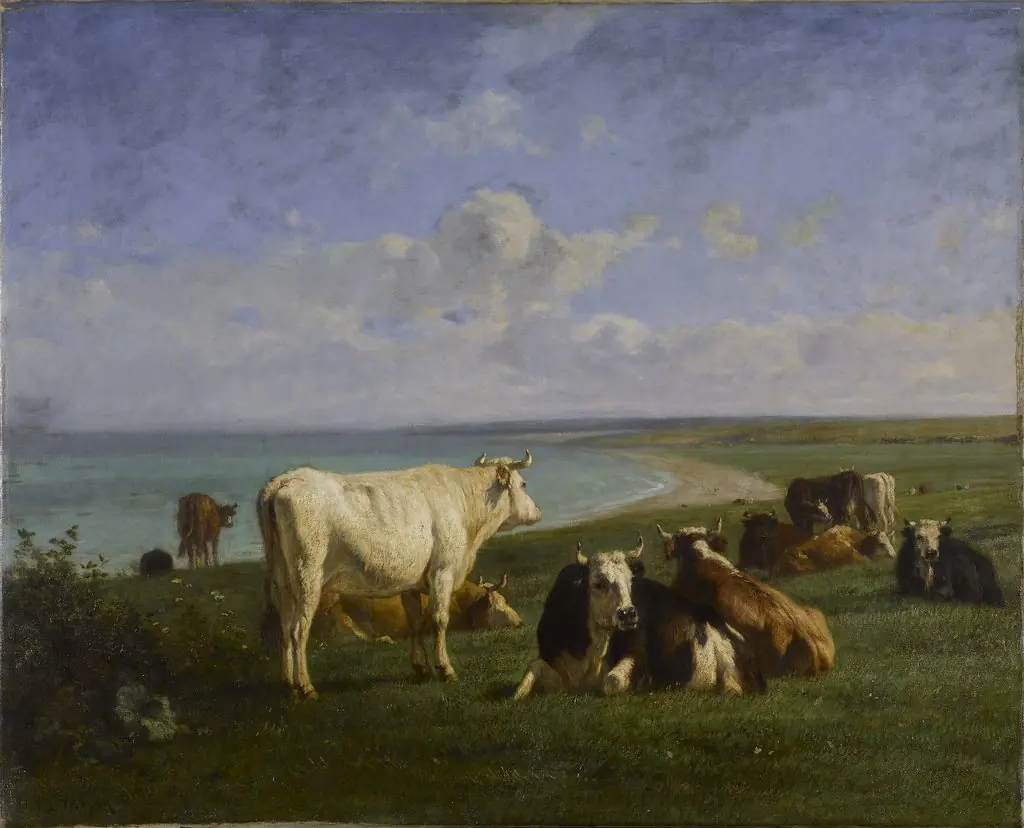 Repose
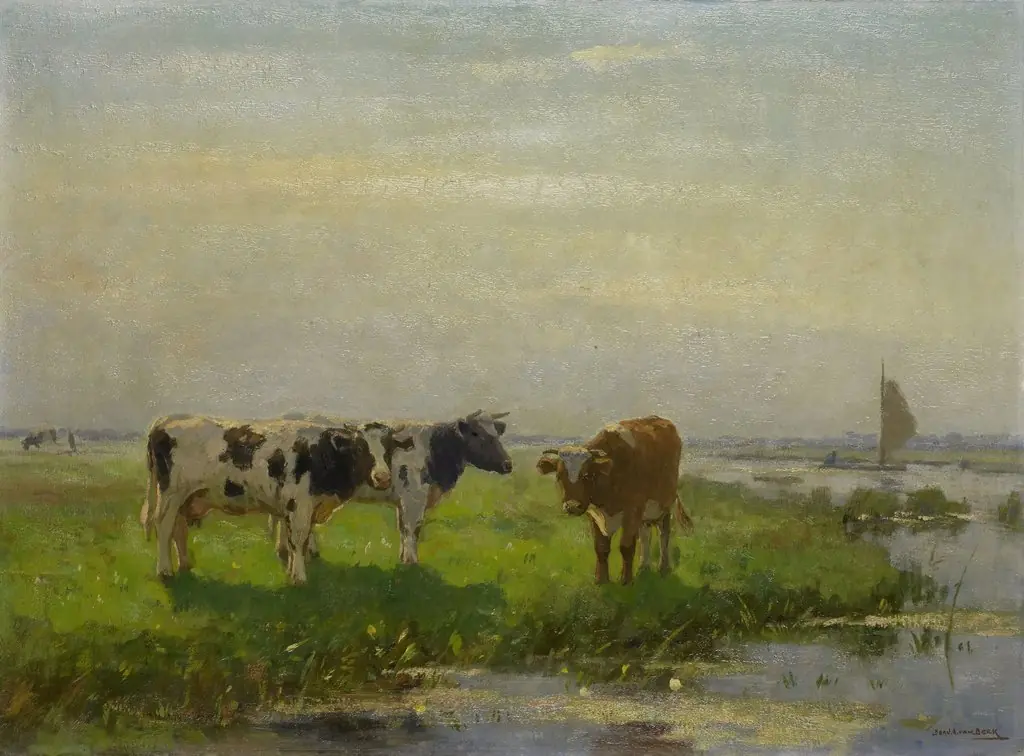 Cows in the Meadow
 Lehmiä rannalla, luonnos
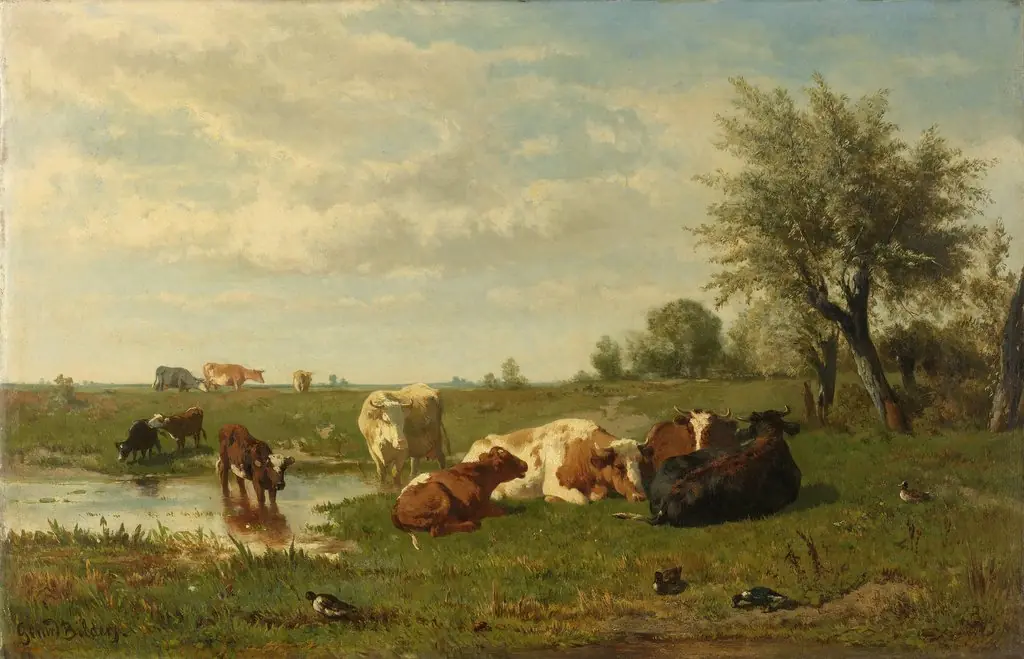 Cows in the meadow
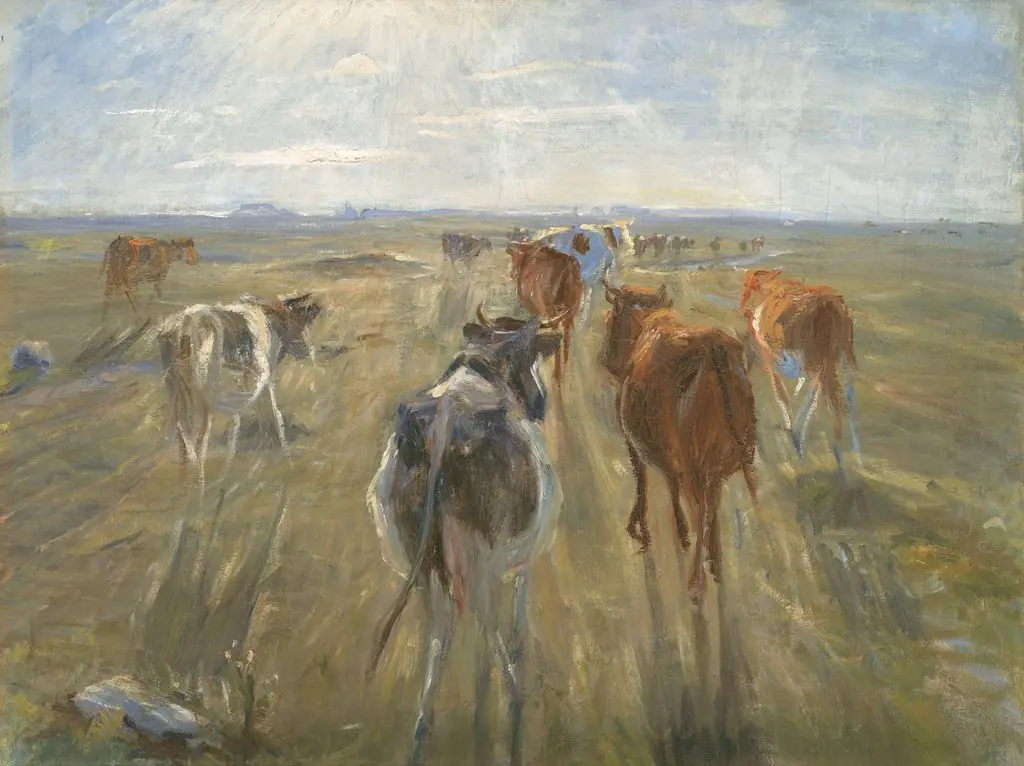 Long Shadows. Cattle on the Island of Saltholm
 The Milking Place at Meilgård
 The Milking Place at Meilgård
 Long Shadows. Cattle on the Island of Saltholm
 A Milking Place near Vognserup Manor, Zealand
 Kalve ved stranden