Artwork
The River Liri. Italy
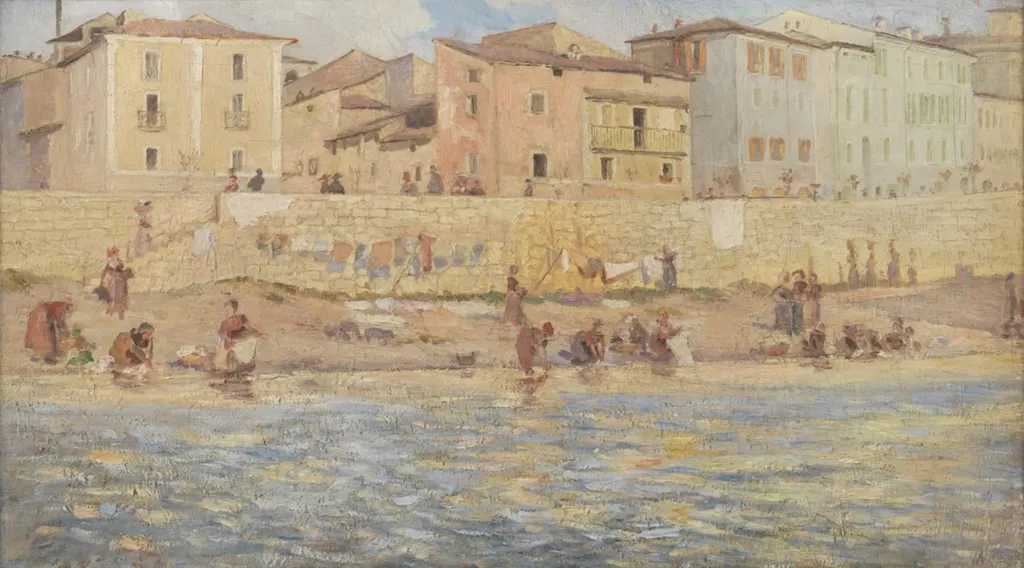
The River Liri. Italy is a photography by the Impressionist artist Unknown. It dates from 1883 and is held in the collection of the Statens Museum for Kunst. Painted in 1883, The River Liri.
About this work
Overview
Italy depicts a quiet stretch of the Liri River in central Italy, with a modest townscape rising gently behind it.
Painted in 1883, The River Liri. Italy depicts a quiet stretch of the Liri River in central Italy, with a modest townscape rising gently behind it. The work is rendered in a restrained, observational manner, avoiding idealization. It is part of the collection at the Museum of Ethnography, where it is preserved as a record of regional landscape and settlement patterns rather than as a decorative piece.
Subject & Meaning
The painting presents the Liri River as a quiet, everyday feature of rural Italian life. The town visible in the distance, with buildings clustered near the water’s edge, suggests human habitation shaped by the river’s presence. There is no dramatic narrative or symbolic gesture—instead, the scene conveys a sense of routine existence, where nature and settlement coexist without grandeur.
Technique & Style
The artist employed a subdued palette of earth tones and soft grays, avoiding bright contrasts or theatrical lighting. Brushwork is deliberate but unembellished, favoring clarity over flourish. The composition positions the river prominently in the foreground, drawing attention to its stillness and the subtle play of light on water, reinforcing the painting’s documentary intent.
History & Provenance
Created in 1883, the painting entered the Museum of Ethnography’s collection as part of a broader effort to document regional environments and cultural landscapes. Its acquisition reflects institutional interest in vernacular scenes during the late 19th century, when ethnographic museums began collecting visual records of everyday life beyond urban centers.
Context
In the late 19th century, European artists and institutions increasingly turned to unidealized depictions of rural life as part of a growing interest in social and geographic realism. This work aligns with that trend, offering a quiet counterpoint to Romanticized landscapes, and serving as a visual archive of a specific place at a specific time.
Legacy
The painting remains a modest but significant example of regional documentation within an ethnographic context. It contributes to a historical record of Italian rural geography and settlement, valued not for artistic innovation but for its fidelity to observed reality. Its continued presence in the Museum of Ethnography underscores its role as a cultural artifact.
Artist & collection

 Domestic Scene
 Giacomo and Cardinal Marco, investing Andrea, Abbot of San Zeno, with his Benefice
 The Nymph of Fontainebleau
 Portrait of a Woman
 Madonna and Child with Saints in the Enclosed Garden
 Venus and Minerva
 Family Group of Four on Sofa
 Wall painting from Room H of the Villa of P. Fannius Synistor at Boscoreale
 Peisaj venețian
 Piger på vej til brønden efter vand ved middagstid. Cività d'Antino
 El Naviglio de Milán
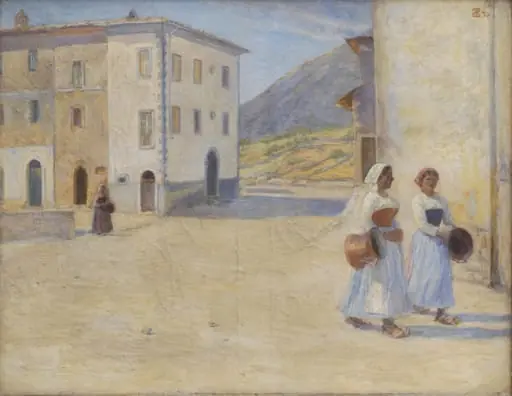 Piger på vej til brønden efter vand ved middagstid. Cività d'Antino
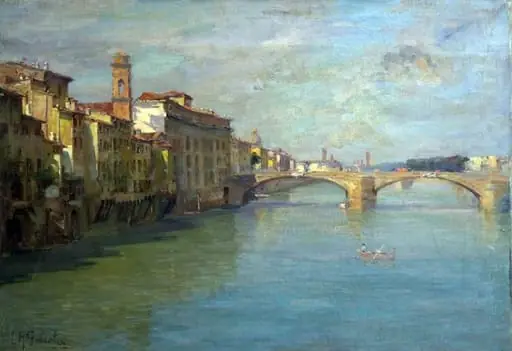 Ponte della Santa Trinita din Florența
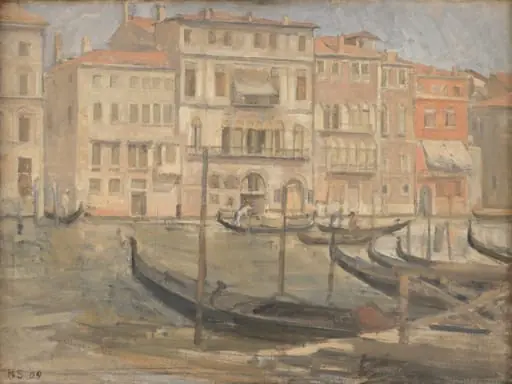 Ved Canal Grande i Venedig
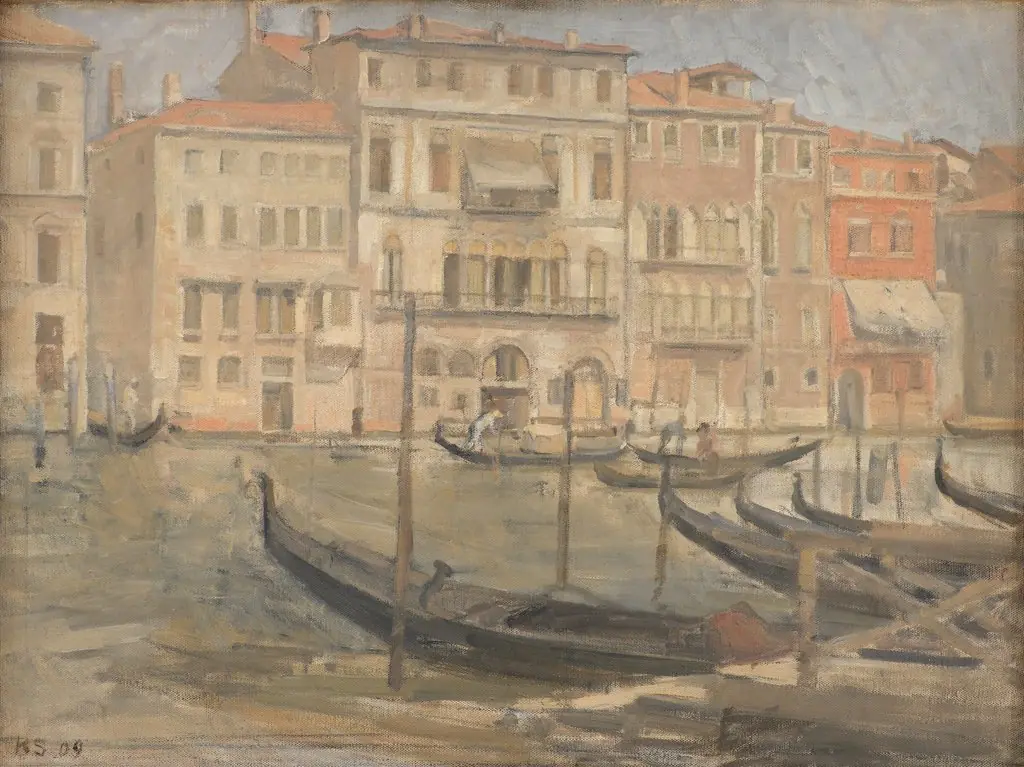 Ved Canal Grande i Venedig
 Port of Cassis
 Peisaj
 Women on a Galway Quayside