Artwork
Naissance de Vénus
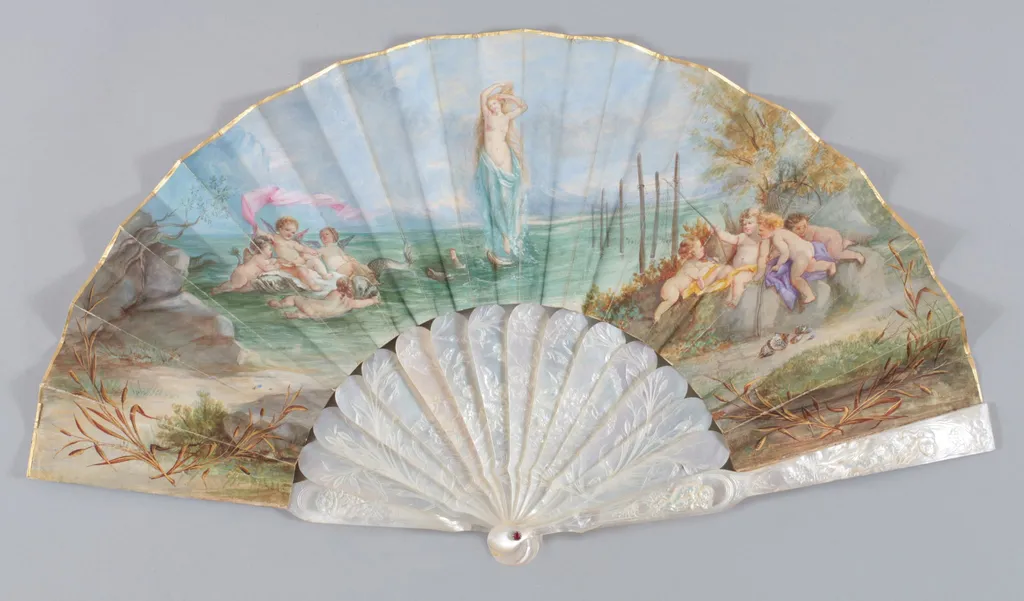
Naissance de Vénus is an unspecified work on paper by A. Rodien. It dates from 1850 and is held in the collection of the Palais Galliera - Musée de la Mode de la Ville de Paris. Created around 1850 by A.
About this work
Overview
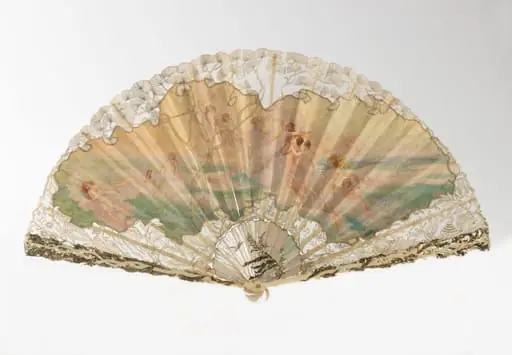
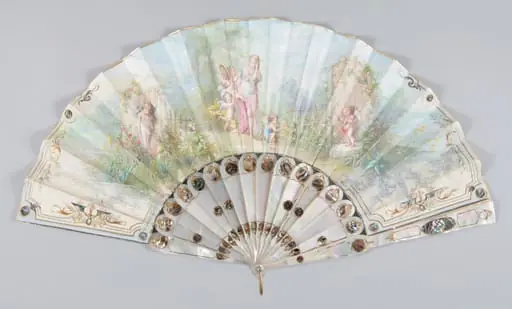
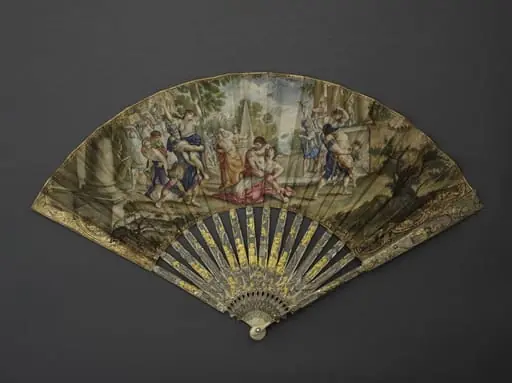
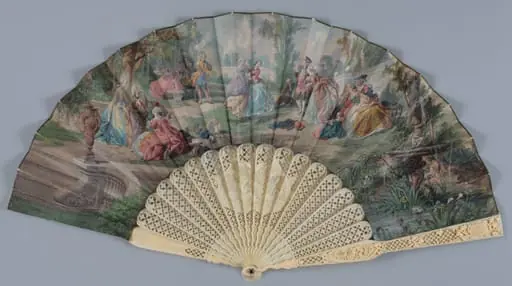
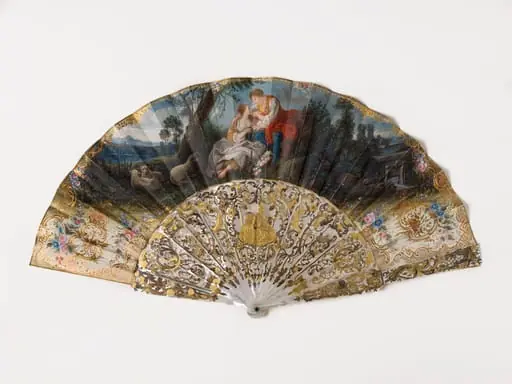
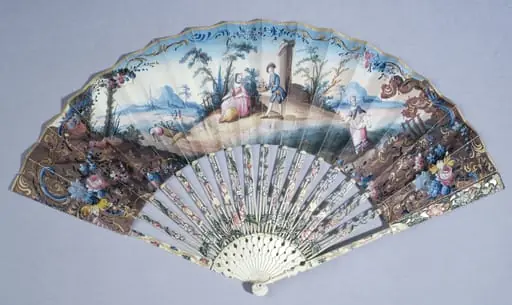
Created around 1850 by A. Rodien, this painted fan depicts a mythological scene on a portable object designed for personal use. The work is part of the Museum of Ethnography’s collection, where it is preserved as an example of 19th-century decorative art. Its combination of fine painting and natural materials reflects a blend of artistic intention and craft tradition.
Subject & Meaning
The central figure, standing on a seashell amid ocean waves, evokes classical associations with Venus’s birth from the sea. Surrounding children, likely putti or sea nymphs, engage playfully in the water, suggesting a narrative of divine emergence. The scene draws from Greco-Roman mythology but is rendered in a gentle, intimate scale suited to the fan’s domestic function.
Technique & Style
The scene is executed in translucent watercolor washes, creating soft gradients of blue, green, and pink that mimic the luminosity of sea and sky. Delicate brushwork defines the figures and foliage, while the fan’s edges are adorned with preserved botanical elements. The handle, carved from bone or ivory, adds tactile contrast and reinforces the object’s artisanal character.
History & Provenance
The fan was likely produced in France during the mid-19th century, a period when exoticized mythological themes were popular in decorative arts. It entered the Museum of Ethnography’s holdings through collecting practices common in that era, where everyday objects with artistic merit were preserved as cultural artifacts rather than fine art.
Context
This fan reflects a broader trend in European material culture, where classical themes were adapted for private, feminine use. Similar objects were produced as souvenirs or luxury items, often combining painted imagery with natural materials. Its ethnographic classification highlights how 19th-century institutions categorized art that blurred boundaries between utility and aesthetics.
Legacy
Though not widely known outside museum collections, the fan exemplifies how mythological subjects were democratized through decorative arts. It remains a quiet testament to the skill of anonymous artisans who translated grand narratives into intimate, handheld forms, influencing later interest in the artistic value of everyday objects.
Artist & collection
Artist
This artist painted delicate watercolors on fan leaves and biblical scenes. Look at their folding fans: Eventail brisé and Eventail plié show soft washes of color and fine linework. They also illustrated L'Histoire de…

Museum
Palais Galliera - Musée de la Mode de la Ville de Paris
Continue through works from the same source collection.