Artwork
Eventail plié
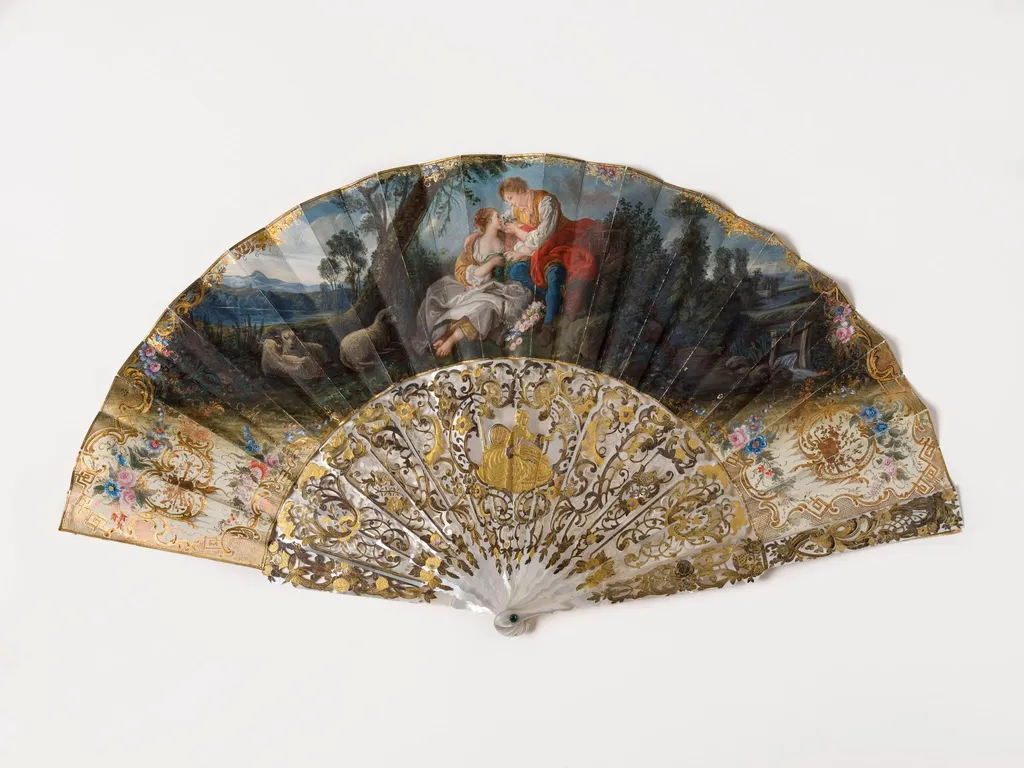
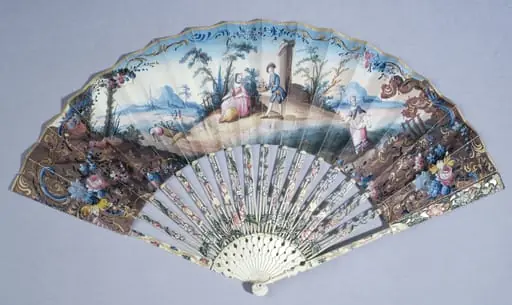
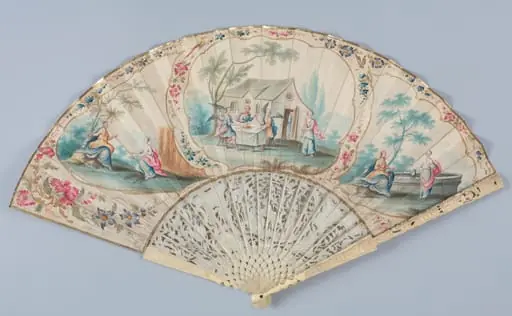
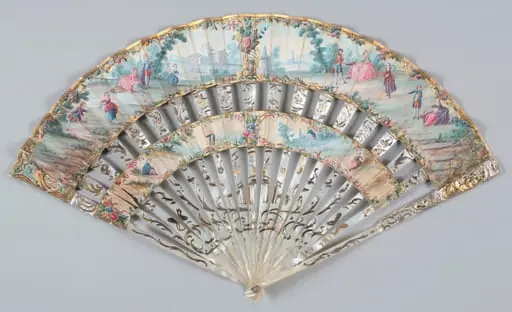
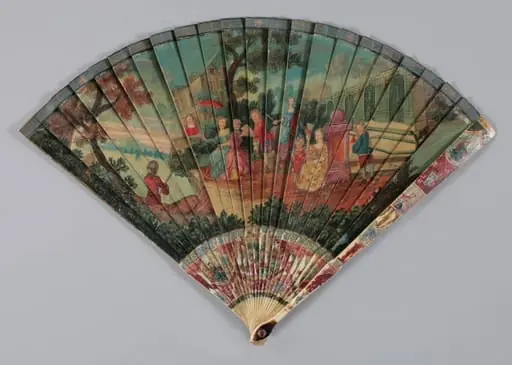
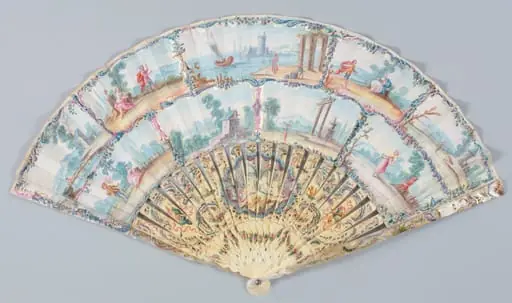
Eventail plié is an unspecified work on paper by the Impressionist artist Unknown. It dates from 1858 and is held in the collection of the Palais Galliera - Musée de la Mode de la Ville de Paris. The object is a painted hand‑fan from the nineteenth century, its surface filled with a romantic tableau.
About this work
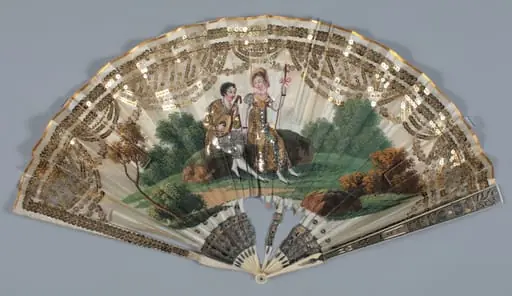
The fan's artwork is detailed, with the couple in the center and the landscape around them.
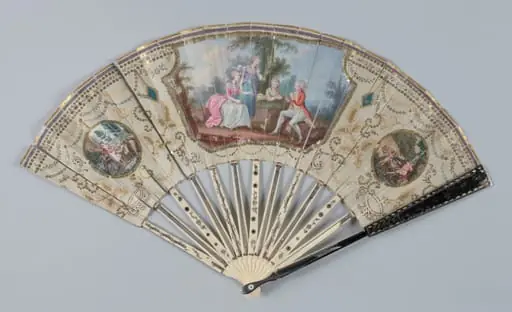
This painting shows a hand fan with a romantic scene. A man and woman sit together under a tree, surrounded by flowers and trees. The fan is decorated with gold designs and flowers.
The fan's artwork is detailed, with the couple in the center and the landscape around them. The gold designs add a touch of luxury to the fan.
The painting is a beautiful example of a hand fan from the 19th century. To learn more about similar artwork, look into the movement of Impressionism.
Overview
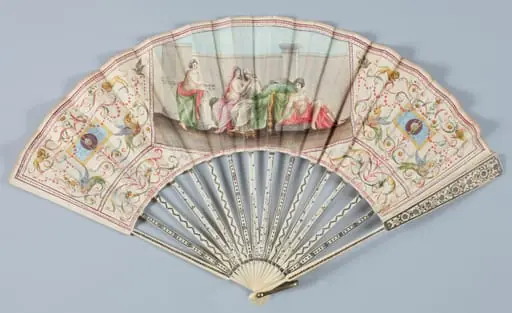
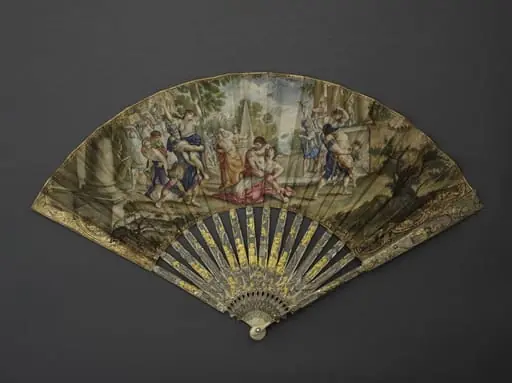
The object is a painted hand‑fan from the nineteenth century, its surface filled with a romantic tableau. Central to the design are a seated couple beneath a tree, encircled by a lush arrangement of flowers and foliage, all framed by ornamental gold motifs that accentuate the fan’s decorative purpose.
Subject & Meaning
The central figures—a man and a woman—are portrayed in an intimate pose, suggesting a private, leisurely encounter within a natural setting. The surrounding blossoms and trees reinforce themes of affection and idyllic leisure, common in decorative arts that aimed to evoke sentimentality for the viewer.
Technique & Style
The fan’s imagery is rendered with fine brushwork and a delicate palette, characteristic of the period’s decorative painting. Gold leaf or pigment outlines highlight ornamental patterns, while the landscape elements display a soft, atmospheric quality reminiscent of early Impressionist sensibilities, though applied to a functional object.
History & Provenance
Created in the 1800s, the fan reflects the era’s fascination with portable, ornamental accessories that combined utility with artistic expression. Its survival suggests it was valued as a personal or decorative item, likely owned by someone appreciative of fashionable, handcrafted objects of the time.
Context
During the nineteenth century, hand‑fans served both practical and aesthetic roles, often featuring scenes drawn from contemporary artistic movements. The inclusion of a romantic outdoor setting aligns with the broader cultural interest in nature and sentiment that informed many Impressionist works, even when applied to decorative formats.
Artist & collection

Museum
Palais Galliera - Musée de la Mode de la Ville de Paris
Continue through works from the same source collection.
 Domestic Scene
 Giacomo and Cardinal Marco, investing Andrea, Abbot of San Zeno, with his Benefice
 The Nymph of Fontainebleau
 Portrait of a Woman
 Madonna and Child with Saints in the Enclosed Garden
 Venus and Minerva
 Family Group of Four on Sofa
 Wall painting from Room H of the Villa of P. Fannius Synistor at Boscoreale