Artwork
Polycycles
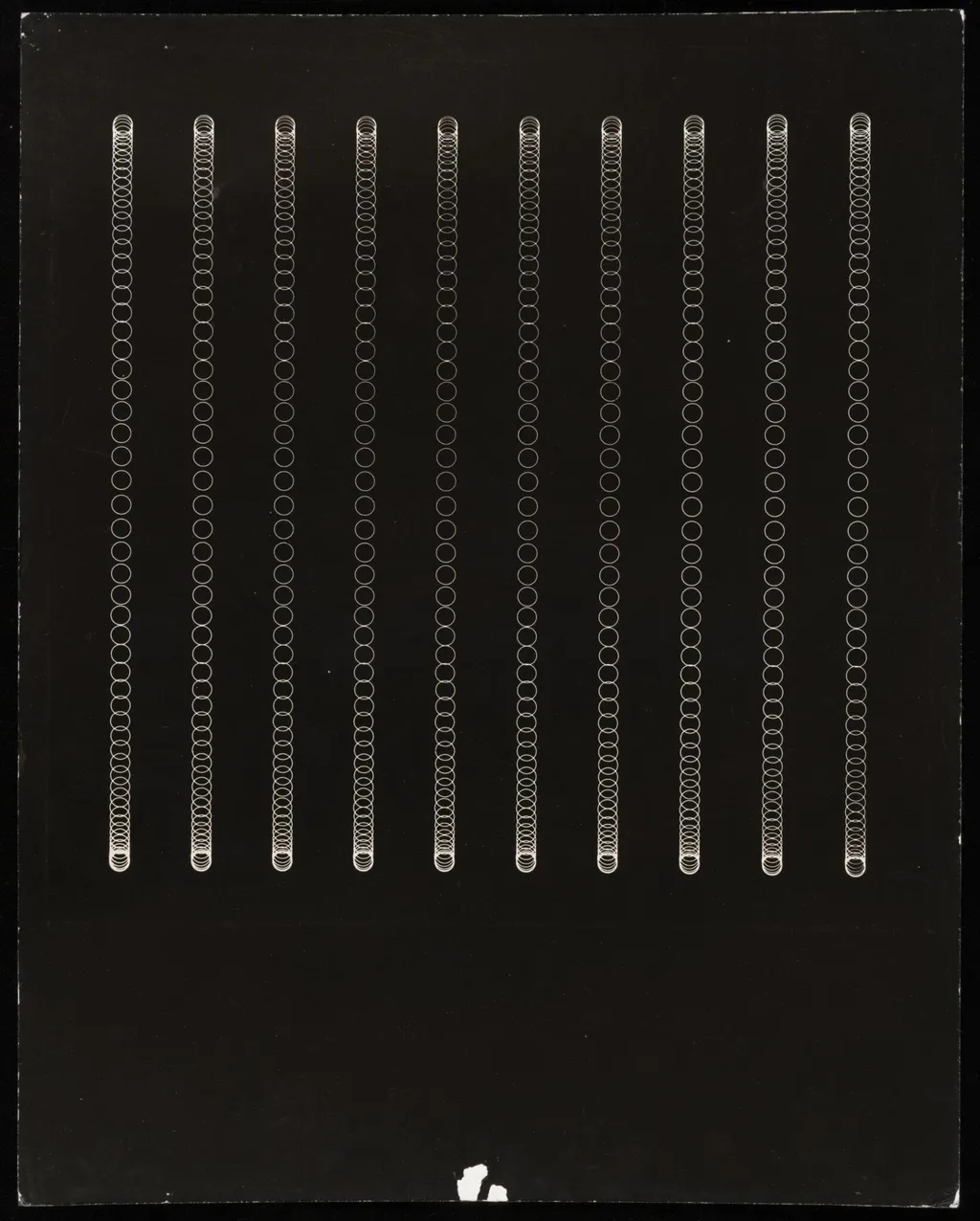
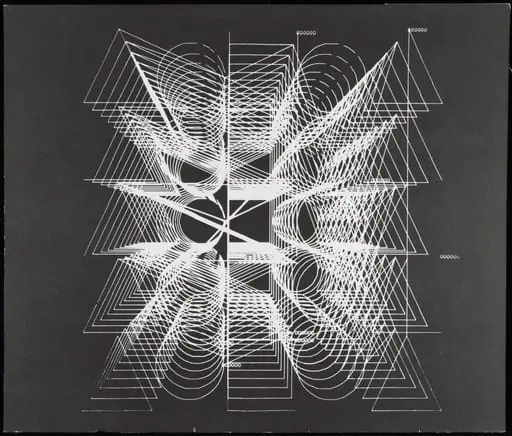
Polycycles is a print by Aaron Marcus. It dates from 1972 and is held in the collection of the Victoria and Albert Museum.
About this work
Overview
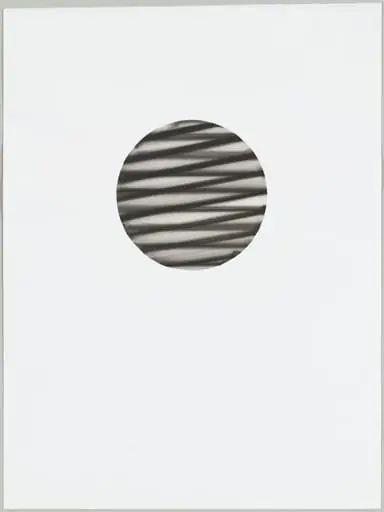
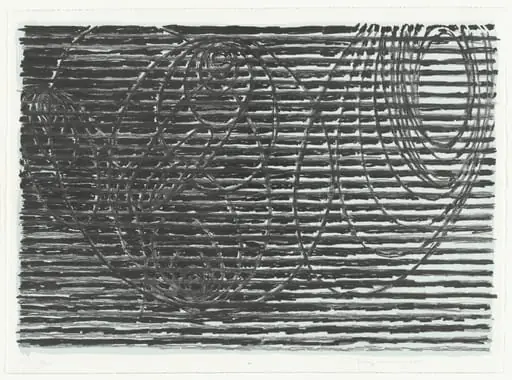
Each form is composed of evenly spaced, continuous loops that rise from a rounded base, suggesting a coiled structure.
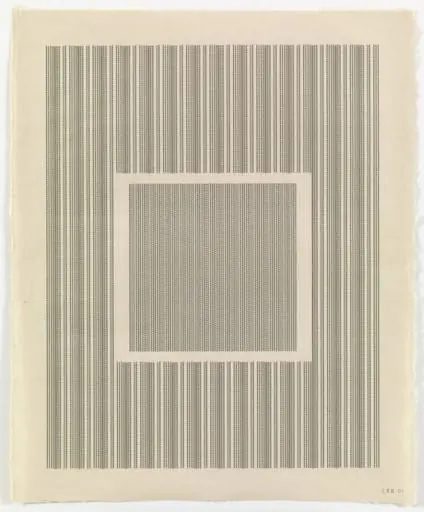
Created in 1972, Polycycles is a computer-generated print by Aaron Marcus. It features nine vertical, repetitive forms rendered in white against a solid black field. Each form is composed of evenly spaced, continuous loops that rise from a rounded base, suggesting a coiled structure. The work was produced using early digital tools, reflecting Marcus’s interest in algorithmic composition and machine-assisted design during the formative years of computer art.
Subject & Meaning
The forms in Polycycles evoke mechanical or biological spirals—reminiscent of springs, DNA strands, or upward-growing vines—but remain abstract. Their repetition suggests rhythm and order, while their uniformity implies systematic generation rather than hand-drawn expression. The work invites contemplation of pattern, repetition, and the intersection of natural forms with computational logic, without assigning explicit symbolic meaning.
Technique & Style
Marcus used a computer to generate precise, identical shapes with consistent line weight and spacing. The clean, unvarying contours and sharp contrast against the black background emphasize the digital origin of the work. The absence of texture or variation reinforces a sense of mechanical precision, distinguishing it from traditional printmaking and aligning it with early explorations in algorithmic aesthetics.
History & Provenance
Polycycles was produced during Marcus’s early engagement with computer graphics at the intersection of art and technology in the early 1970s. It emerged from his experiments with programming visual patterns using limited computational resources. The print was likely created using a plotter or similar output device connected to a mainframe, reflecting the nascent state of digital art production at the time.
Context
In the early 1970s, artists began exploring computers as tools for visual creation, often in academic or research settings. Marcus’s work aligned with broader efforts to translate mathematical logic into aesthetic form. Polycycles reflects this era’s fascination with systems, automation, and the potential for machines to generate visual structures previously unattainable by hand.
Legacy
Polycycles stands as an early example of computer-generated art that prioritizes formal clarity over narrative. Its influence lies in demonstrating how algorithmic processes could produce visually compelling, non-representational compositions. While not widely exhibited, it contributes to the foundational record of digital art’s emergence, illustrating how simplicity and repetition could yield complex perceptual effects.
Artist & collection
Artist
Aaron Marcus never met a grid he didn’t want to bend. The Brooklyn-born designer spent his days in front of a drafting table, erasing the straight line between math and magic. His 1972 print Polycycles is basically a…