Artwork
Untitled
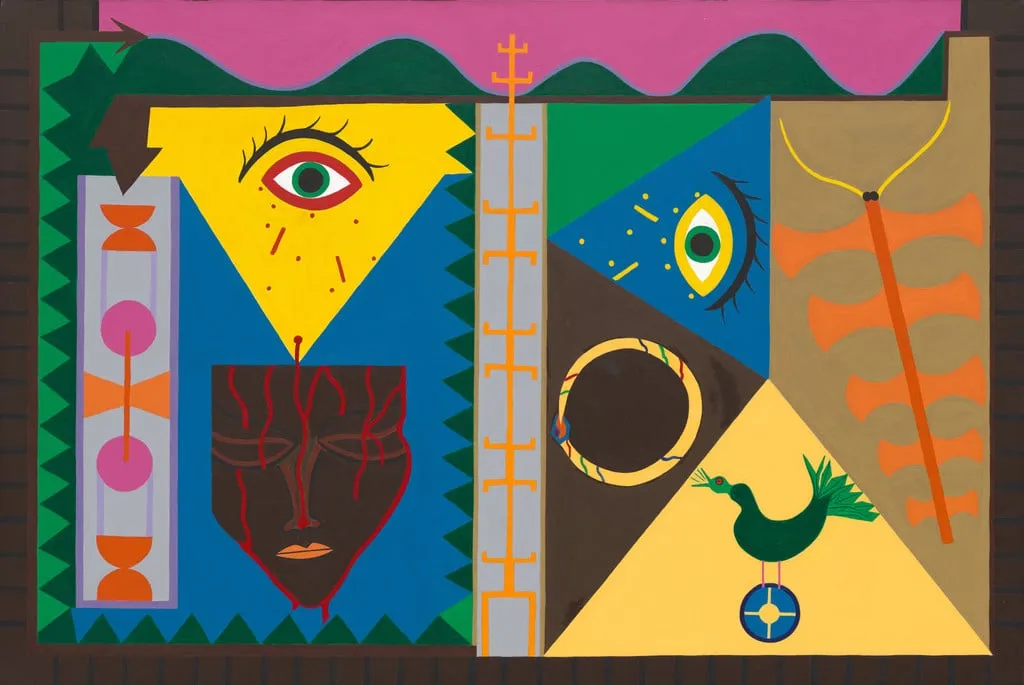
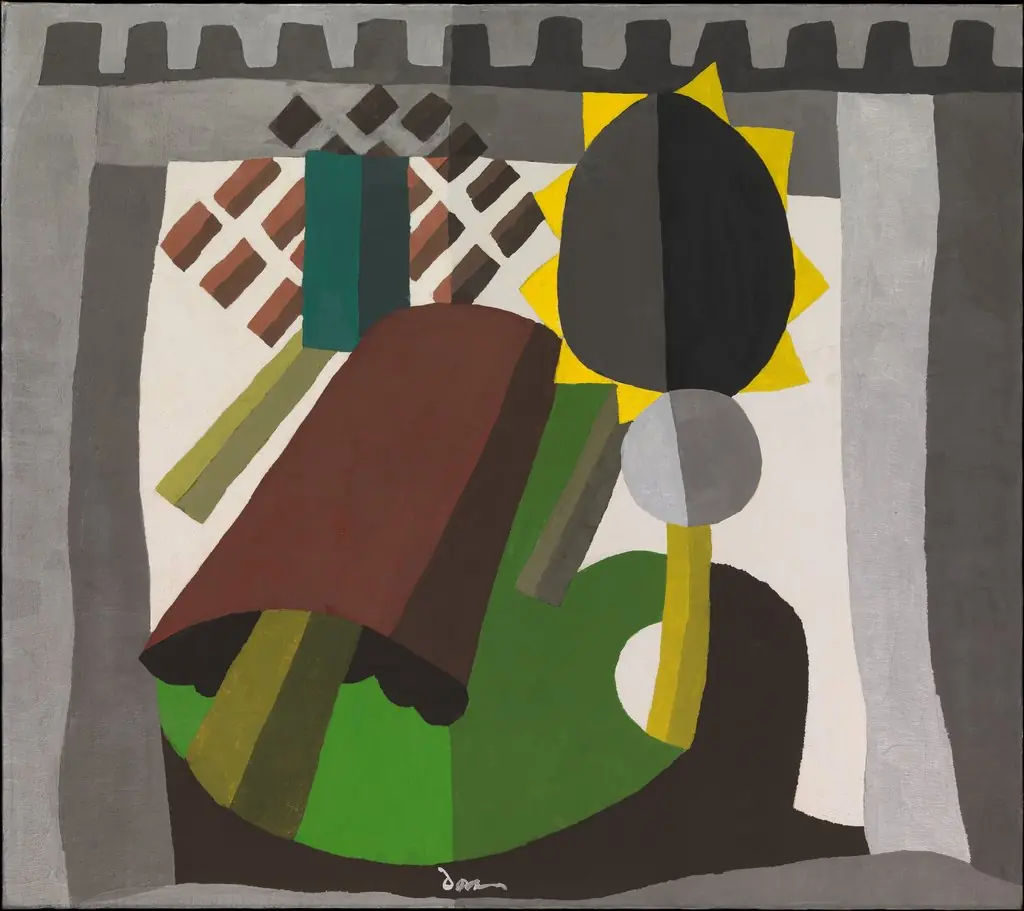
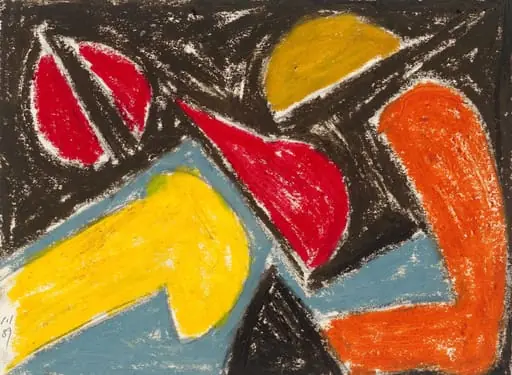
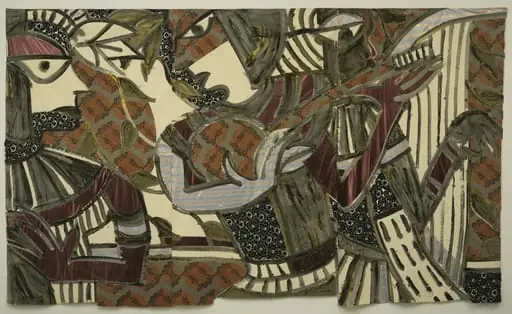
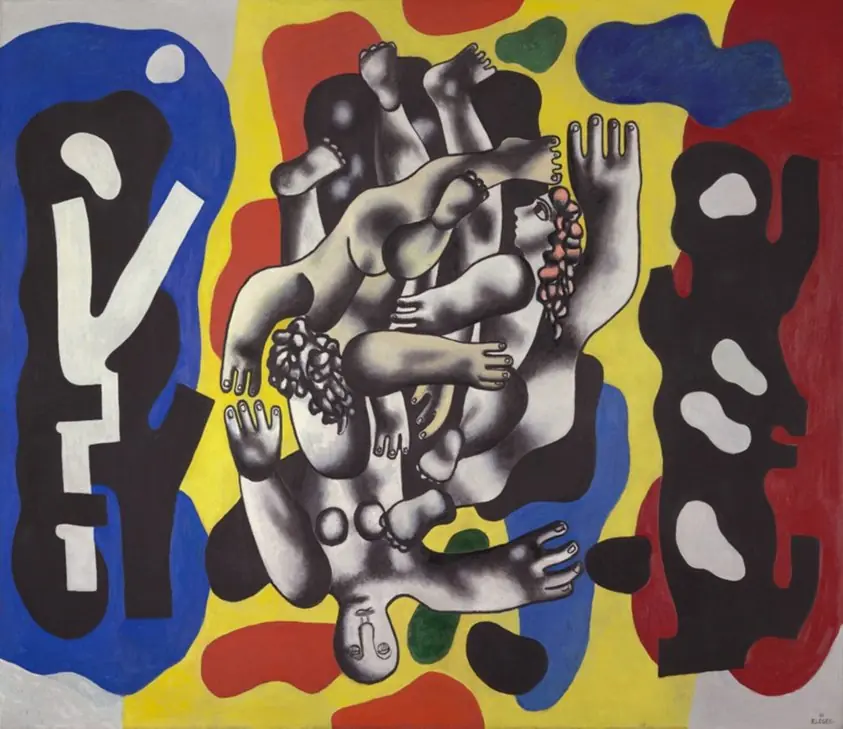
Untitled is an acrylic painting by the Contemporary Abstract artist Abdias Nascimento. It dates from 1972 and is held in the collection of the Museum of Modern Art.
About this work
Overview
Created in 1972, this acrylic on canvas work by Abdias Nascimento is part of The Museum of Modern Art’s collection. It presents a non-representational composition that merges symbolic forms with vivid, unmodulated color. The painting avoids naturalistic rendering, instead constructing meaning through geometric shapes and stylized figures arranged in dynamic tension across the surface.
Subject & Meaning
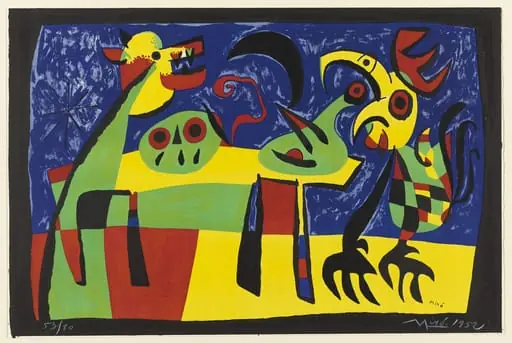
The painting incorporates recurring motifs—eyes, faces, birds, and angular forms—that suggest spiritual or cultural references rather than literal scenes.
The painting incorporates recurring motifs—eyes, faces, birds, and angular forms—that suggest spiritual or cultural references rather than literal scenes. The yellow triangle with an eye and the dark face with red lines may allude to ancestral presence or vigilance. The green bird and stick-like figures hint at movement or transformation, possibly reflecting Afro-Brazilian cosmologies or resistance symbolism embedded in Nascimento’s broader activism.
Technique & Style
Nascimento applied acrylic paint in flat, unblended layers, creating sharp contrasts between hues like yellow, blue, green, and black. Edges are crisp, with no gradation or texture to soften forms. Patterns are rhythmic but irregular, combining geometric precision with chaotic overlays. The style rejects realism, favoring symbolic abstraction that prioritizes emotional and cultural resonance over visual fidelity.
History & Provenance
Painted during a period of intense political repression in Brazil, the work emerged from Nascimento’s dual role as artist and activist. It entered The Museum of Modern Art’s collection following his growing international recognition in the 1970s. The painting’s acquisition reflects institutional interest in non-Western modernisms and the expanding scope of abstract expression beyond Euro-American traditions.
Context
Nascimento created this piece amid his leadership in Brazil’s Black movement and his efforts to reclaim African-derived cultural identities. His visual language drew from Afro-Brazilian religious iconography, indigenous symbolism, and modernist abstraction. This work resists colonial aesthetics by centering marginalized visual vocabularies, positioning art as a tool for cultural reclamation during a time of state-enforced silence.
Legacy
The painting contributes to a broader recognition of Afro-Brazilian artists in global modern art narratives. It exemplifies how abstraction can carry political and spiritual weight outside Western frameworks. Nascimento’s integration of symbolic forms into non-representational composition has influenced subsequent generations of artists seeking to embed cultural memory into abstract practice.
Artist & collection