Artwork
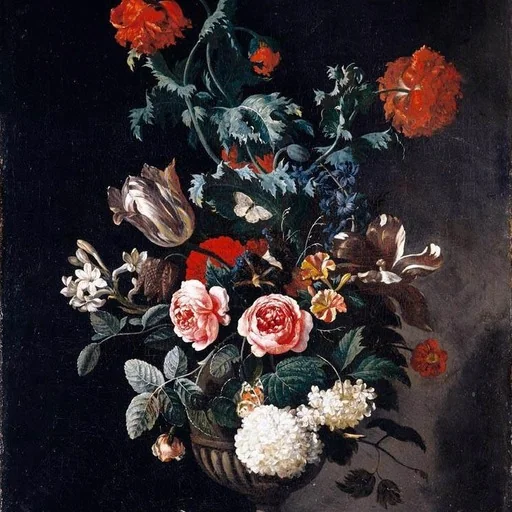
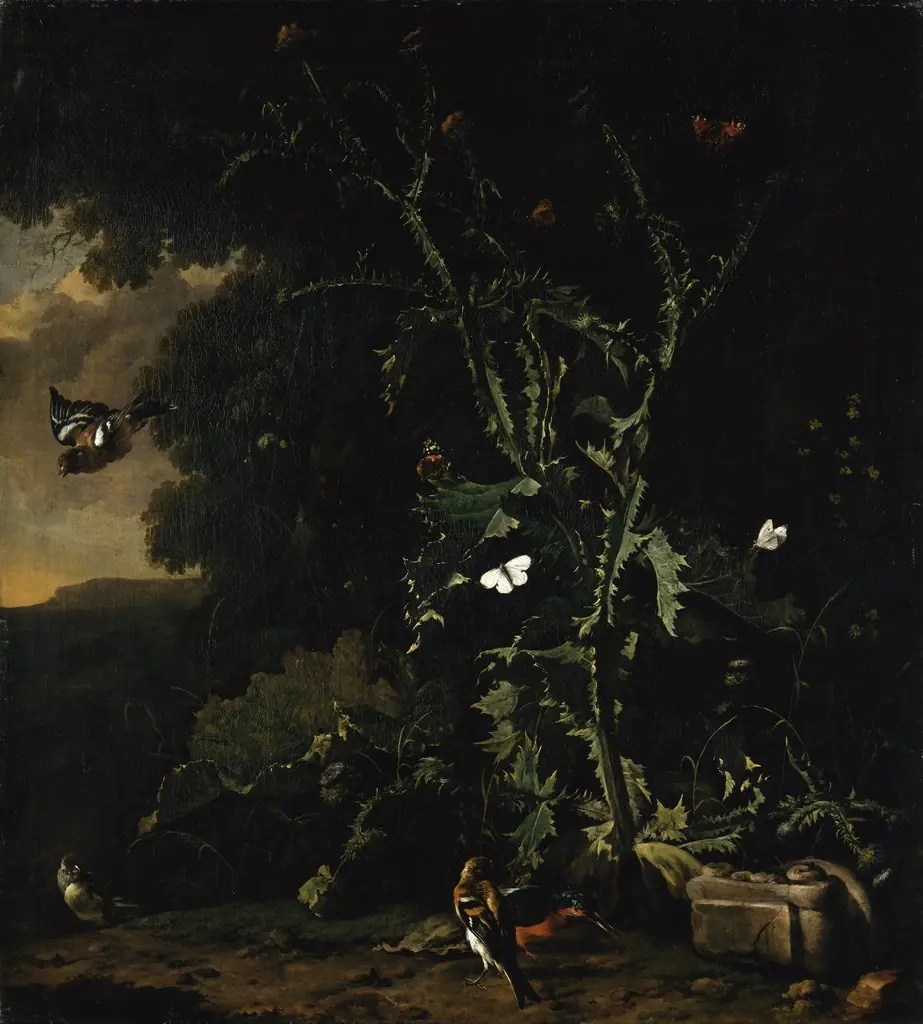
Still life with thistles and butterflies
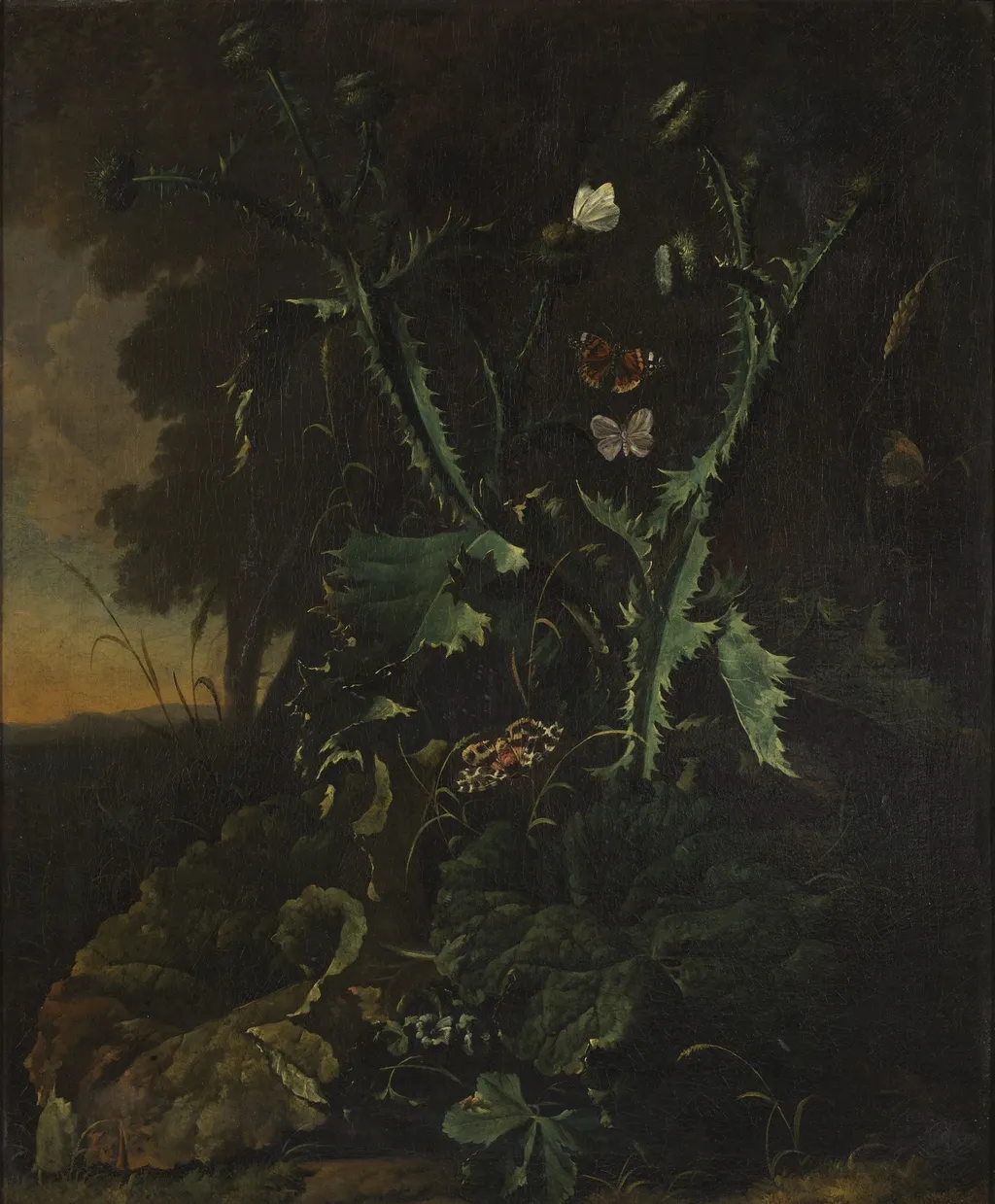
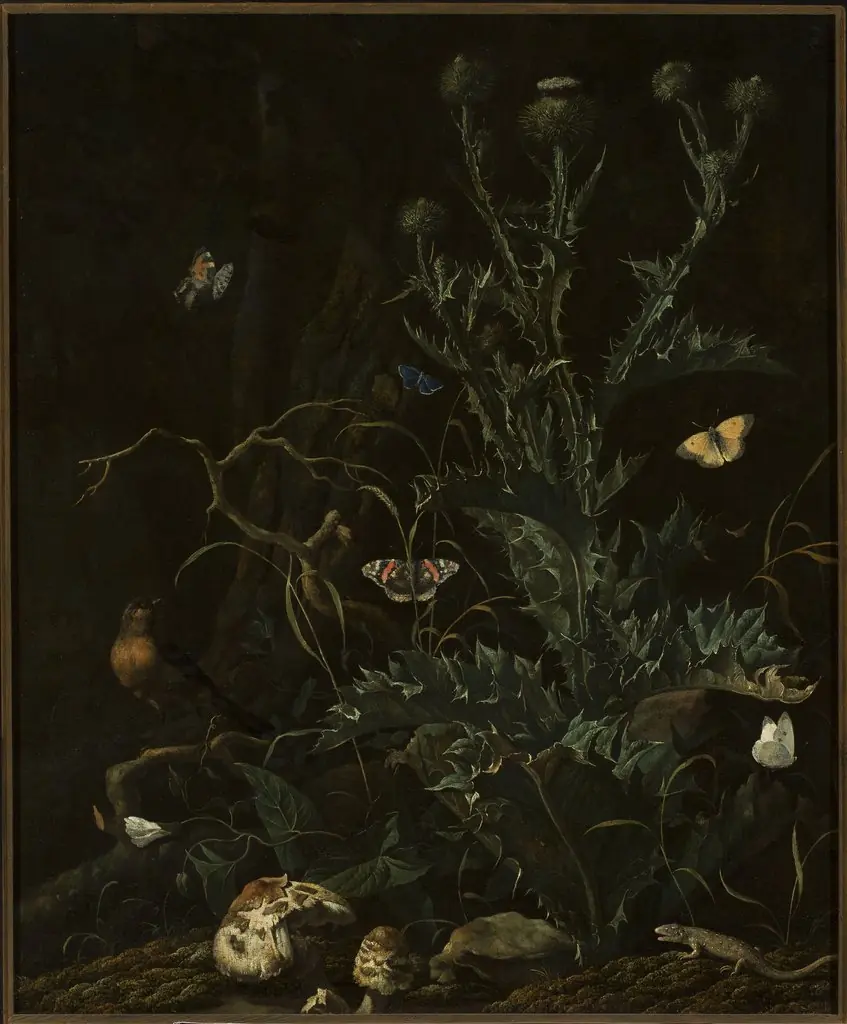
Still life with thistles and butterflies is an oil painting by the Dutch Golden Age artist Abraham Begeyn. It dates from 1677 and is held in the collection of the Nationalmuseum.
About this work
Overview
The work reflects the Dutch tradition of detailed botanical and insect studies, rendered with quiet precision rather than theatrical flourish.
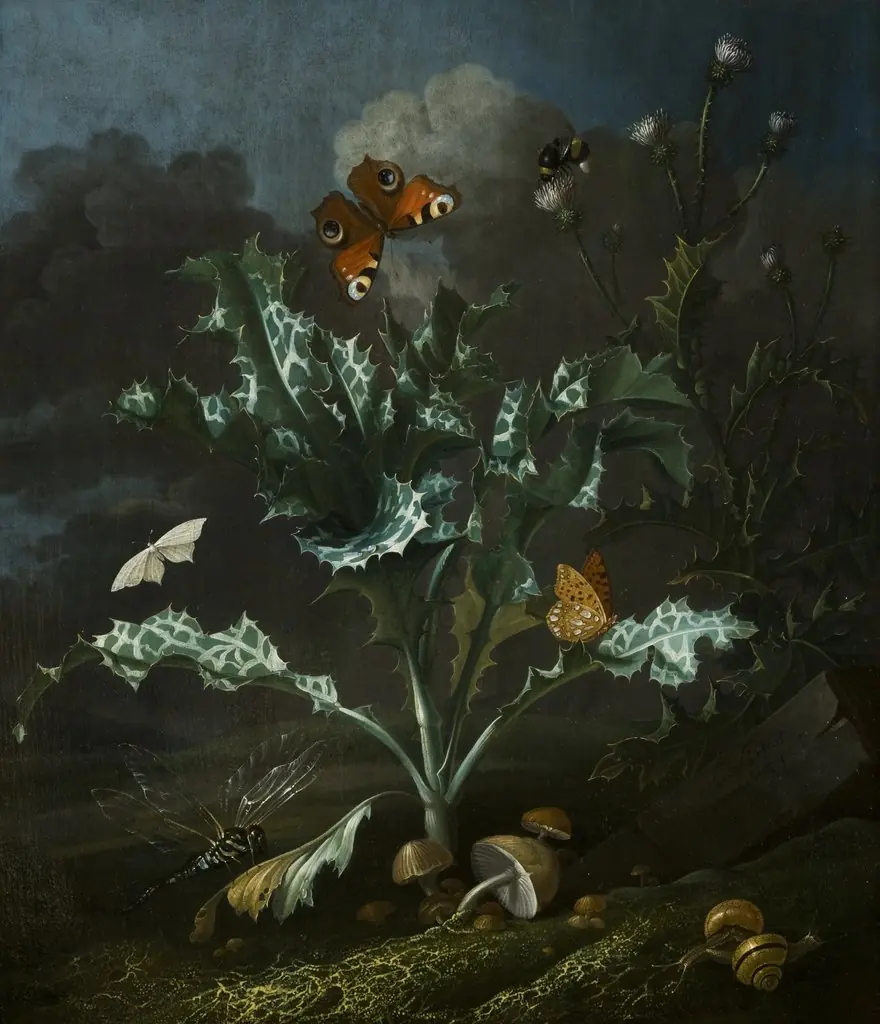
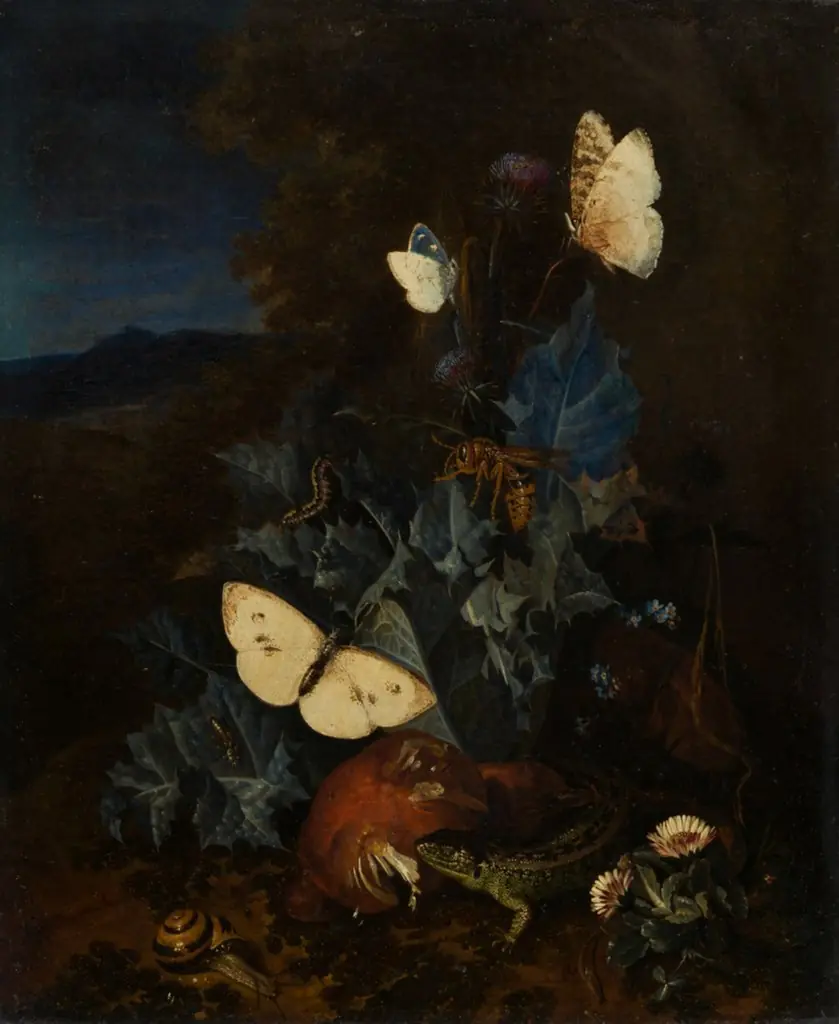
Painted around 1677, this oil-on-canvas still life by Abraham Begeyn presents a quiet arrangement of thistles and flying butterflies. The composition is modest in scale and restrained in color, with a dark, unobtrusive background that isolates the natural elements. The work reflects the Dutch tradition of detailed botanical and insect studies, rendered with quiet precision rather than theatrical flourish.
Subject & Meaning
Thistles, with their rugged spines and resilient growth, were often associated with endurance or the untamed natural world. Butterflies, delicate and short-lived, symbolized transience. Together, they form a muted meditation on life’s fragility and persistence. The absence of flowers or fruit distinguishes this work from more ornate still lifes, suggesting a focus on the humble and overlooked aspects of nature.
Technique & Style
Begeyn employed fine brushwork to capture the texture of thistle leaves and the translucent wings of butterflies. The palette is subdued, with muted greens and earth tones, and the dark background enhances the luminosity of the subjects without artificial contrast. Light falls evenly, avoiding dramatic chiaroscuro, reinforcing the painting’s contemplative tone and observational intent.
History & Provenance
The painting has been in the collection of the Nationalmuseum in Stockholm since at least the 19th century. Its early ownership is undocumented, but its style aligns with Dutch still-life traditions of the late 17th century. It was likely acquired during a period of increased interest in Northern European genre and naturalist works by Swedish collectors.
Context
In the late 1600s, Dutch and Flemish artists frequently turned to botanical and entomological subjects as expressions of scientific curiosity and moral reflection. Begeyn, active in the Netherlands and later in Poland, contributed to this trend with works that emphasized accuracy over ornamentation. This painting fits within a broader cultural moment that valued close observation of the natural world.
Legacy
Though not widely known today, Begeyn’s work exemplifies a quieter strain of Dutch still life—one that prioritized quiet observation over spectacle. This painting remains a testament to the artistic interest in ordinary natural forms during the Baroque period, influencing later naturalist traditions in European painting without seeking to dominate the canon.
Own this work as a print
Artist & collection