Artwork
A Swan Enraged by Dogs
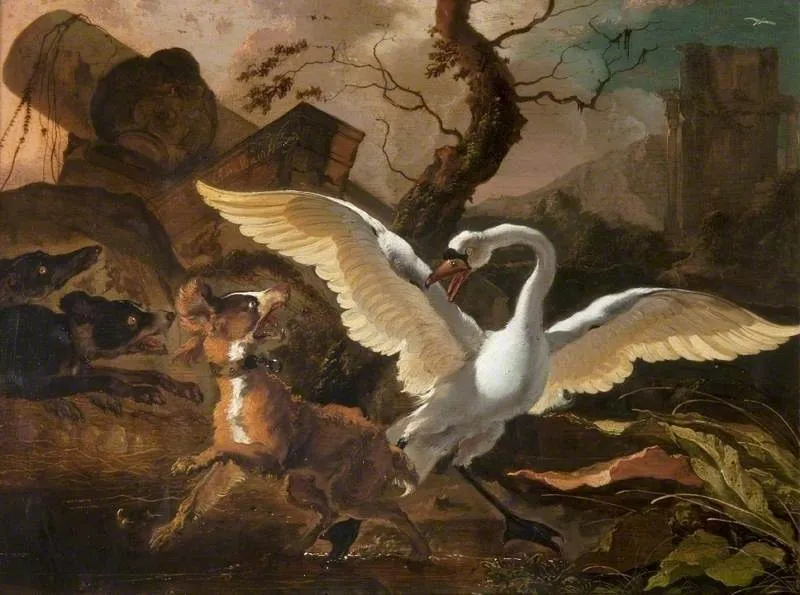
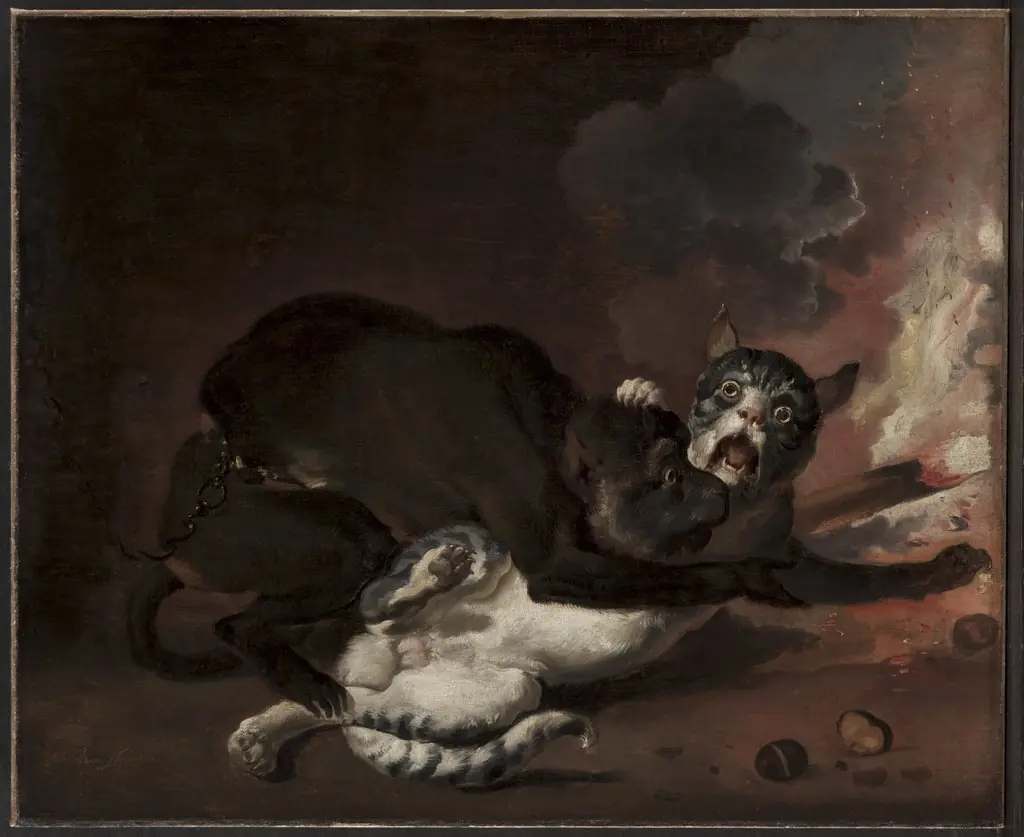
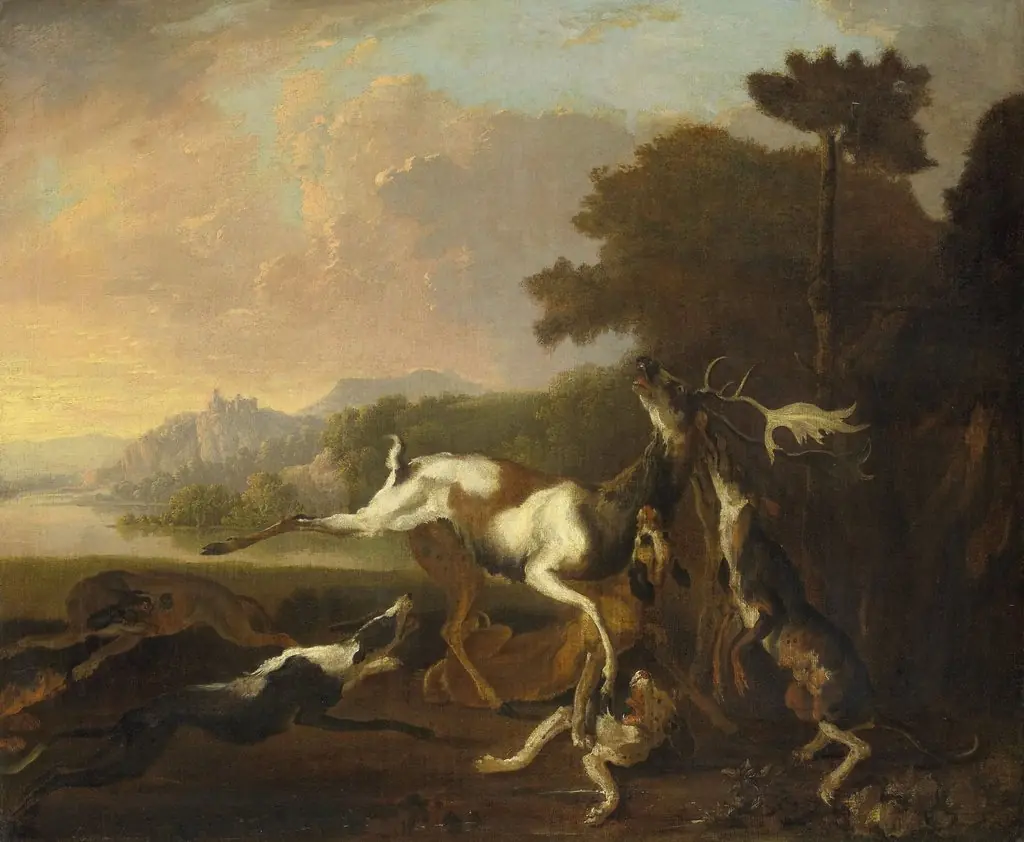
A Swan Enraged by Dogs is an oil painting by the Dutch Golden Age artist Abraham Hondius. It dates from 1671 and is held in the collection of the Kelvingrove Art Gallery and Museum.
About this work
Overview
The scene unfolds in a quiet, natural setting, rendered with restrained tones and careful attention to atmospheric depth.
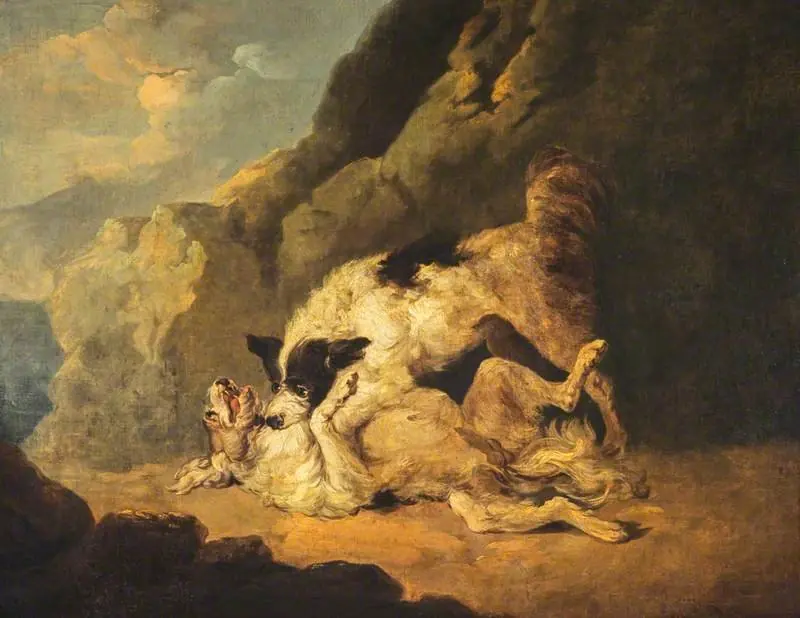
Painted around 1671 by Abraham Hondius, this oil work depicts a moment of tension between a swan and two pursuing dogs. The painting is part of the collection at the Kelvingrove Art Gallery and Museum in Glasgow. Its composition captures motion and instinct, focusing on the swan’s defensive posture against an aggressive threat. The scene unfolds in a quiet, natural setting, rendered with restrained tones and careful attention to atmospheric depth.
Subject & Meaning
The swan, typically a symbol of grace, is portrayed in a state of alarm, wings outstretched and beak open as if vocalizing a warning. The two dogs, one brown and one black, charge forward with open maws, suggesting an unprovoked attack. The scene evokes vulnerability and resistance, possibly reflecting broader themes of nature’s unpredictability or the fragility of peace in the wild, without overt moralizing.
Technique & Style
Hondius employs chiaroscuro to heighten the drama, using sharp contrasts between shadow and light to model the swan’s form and the dogs’ muscular movement. The palette is subdued, dominated by earthy browns and muted greens, reinforcing the naturalistic setting. Brushwork is precise yet unobtrusive, favoring clarity of form over ornamental detail, aligning with Dutch naturalist traditions of the period.
History & Provenance
The painting was created in the Netherlands during the late 17th century, a time when animal subjects were increasingly valued for their realism and emotional resonance. It entered the Kelvingrove collection in the 19th century, likely through private acquisition or donation. Its survival and preservation reflect its appeal to collectors interested in genre scenes and natural observation rather than mythological or religious themes.
Context
In Dutch art of the 1600s, animals were often depicted with psychological nuance, moving beyond mere decoration. Hondius, trained in the tradition of animal painters like Paulus Potter, focused on moments of raw interaction. This work fits within a broader trend of observing wildlife with empathy and attention to behavioral truth, even when portraying conflict.
Legacy
Though not widely reproduced or celebrated in mainstream art history, the painting remains a quiet example of Dutch naturalism’s depth. It contributes to the understanding of how 17th-century artists rendered animal behavior with psychological weight. Its continued presence in a public museum underscores its value as a document of observational skill and emotional restraint.
Artist & collection
Artist
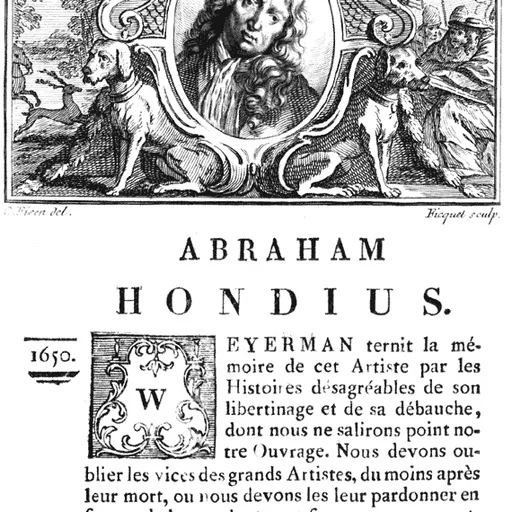
Abraham Danielsz. Hondius was a Dutch Golden Age painter known for his depictions of animals.