Artwork
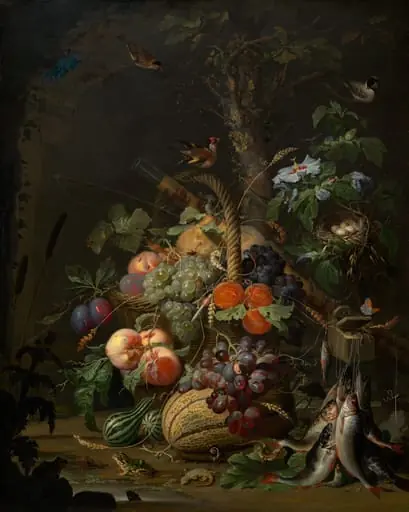
Still life with fruit and a finch drawing water
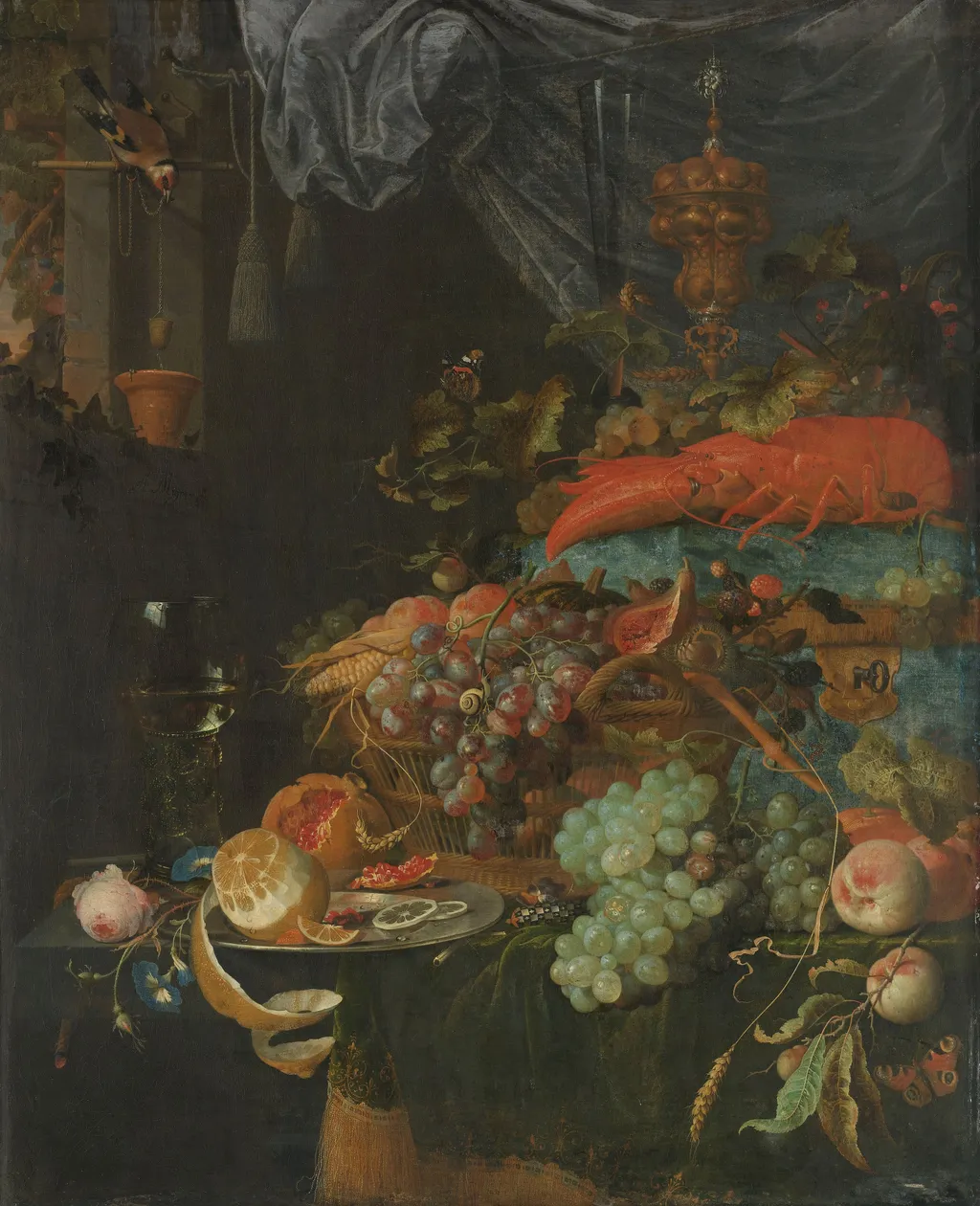
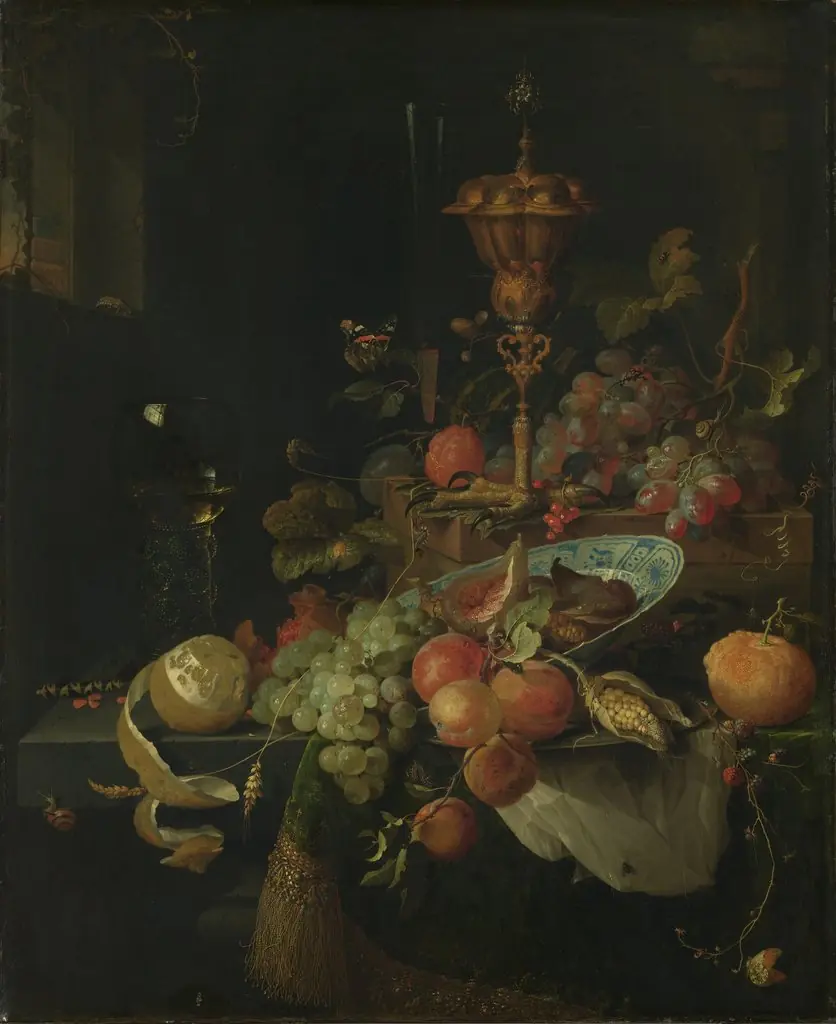
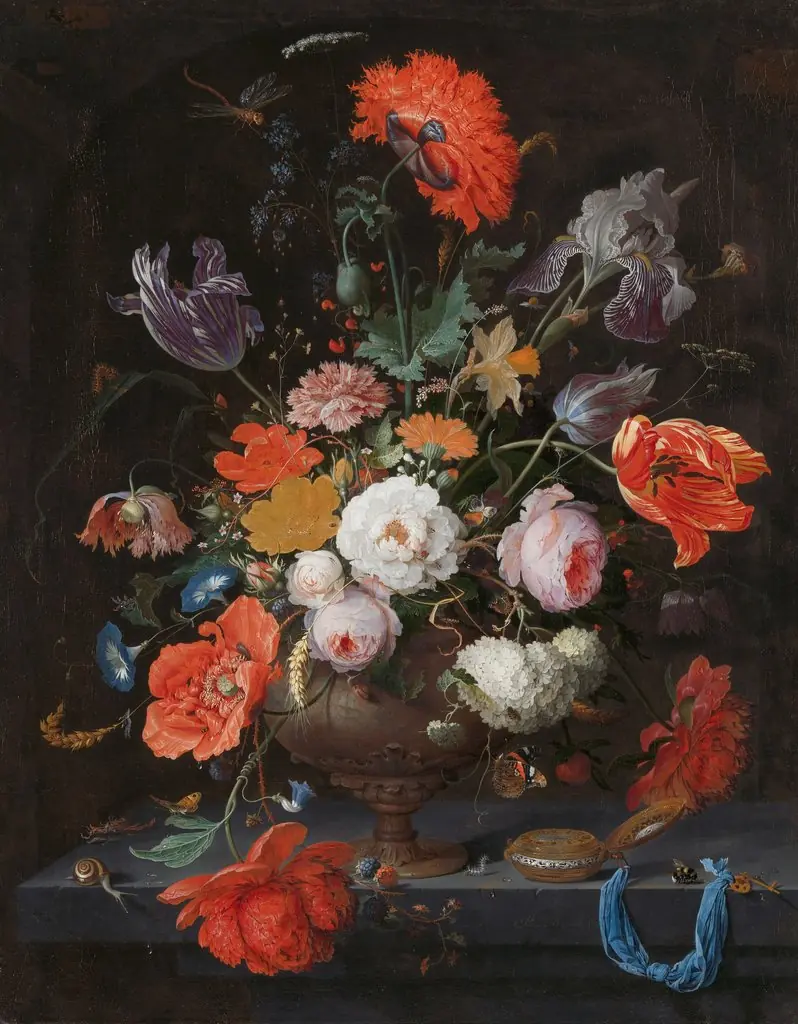
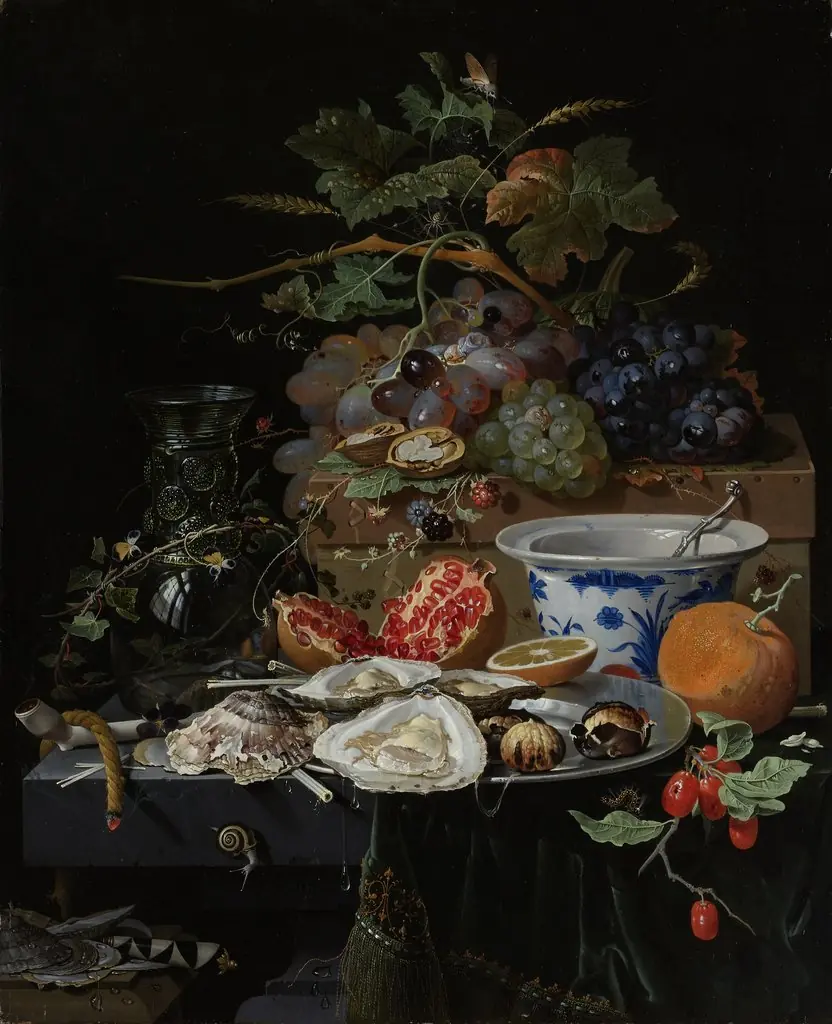
Still life with fruit and a finch drawing water is an oil painting by the Dutch Golden Age artist Abraham Mignon. It dates from 1660 and is held in the collection of the Rijksmuseum.
About this work
Overview
The composition is set against a dark background, allowing the vivid colors of the objects to dominate the visual field.
Abraham Mignon, a mid‑17th‑century Dutch painter based in Utrecht, executed this oil on canvas in 1660. The work exemplifies the Dutch Golden Age’s fascination with still‑life subjects, presenting a carefully arranged banquet scene that includes fruit, a lobster, and a small bird. The composition is set against a dark background, allowing the vivid colors of the objects to dominate the visual field.
Subject & Meaning
The tableau gathers a variety of foods—grapes, peaches, a halved lemon, and a lobster—alongside a finch that dips its beak into a shallow dish of water. The juxtaposition of fresh produce and a living creature underscores themes of abundance, transience, and the sensory pleasures of the table, common motifs in Dutch still‑life symbolism.
Technique & Style
Mignon renders the surfaces with meticulous attention to light, employing a chiaroscuro effect that highlights the glossy sheen of the lobster’s shell and the translucency of the lemon’s flesh. The bird’s reflection in the water functions as a miniature mirror, while soft brushwork conveys the delicate texture of the fruit skins and petals.
History & Provenance
Created during Mignon’s productive period in Utrecht, the painting reflects the influence of earlier still‑life masters such as Jan Davidszoon de Heem and Jacob Marrel. Although specific ownership records are sparse, the work has been documented in collections of Dutch Golden Age art and continues to be cited in scholarly surveys of 17th‑century still‑life painting.
Own this work as a print
Artist & collection

Artist
Abraham Mignon or Minjon (21 June 1640 – 27 March 1679) was a Dutch still life painter.