Artwork
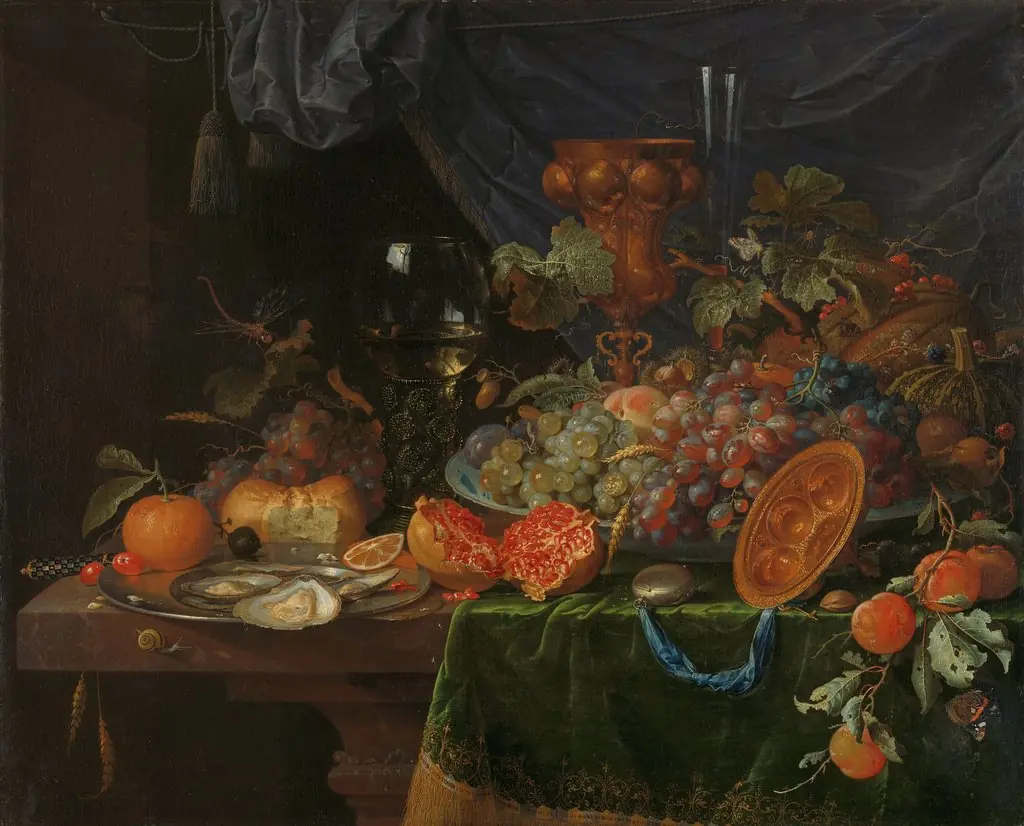
Still Life with Fruit, Oysters and a Porcelain Bowl
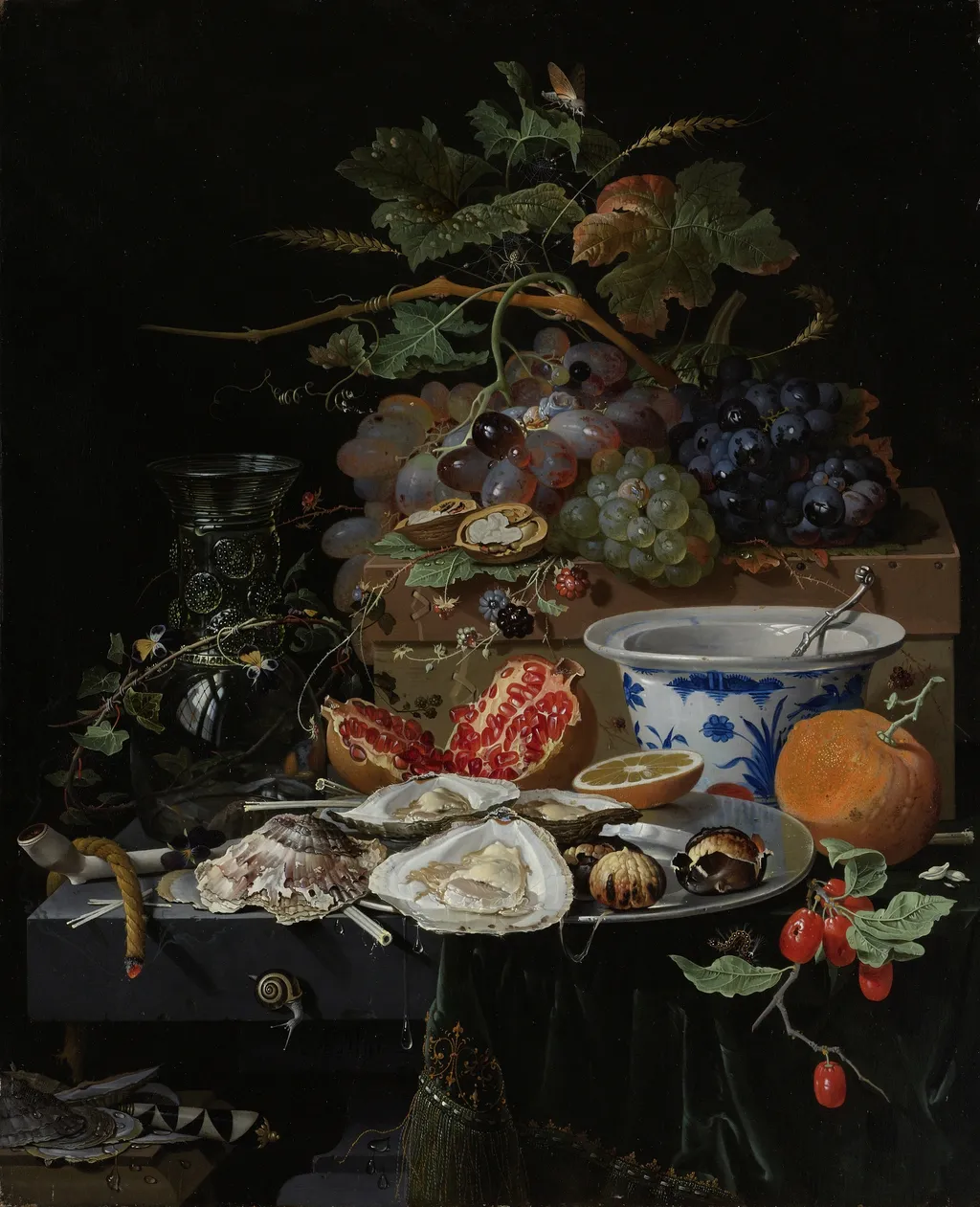
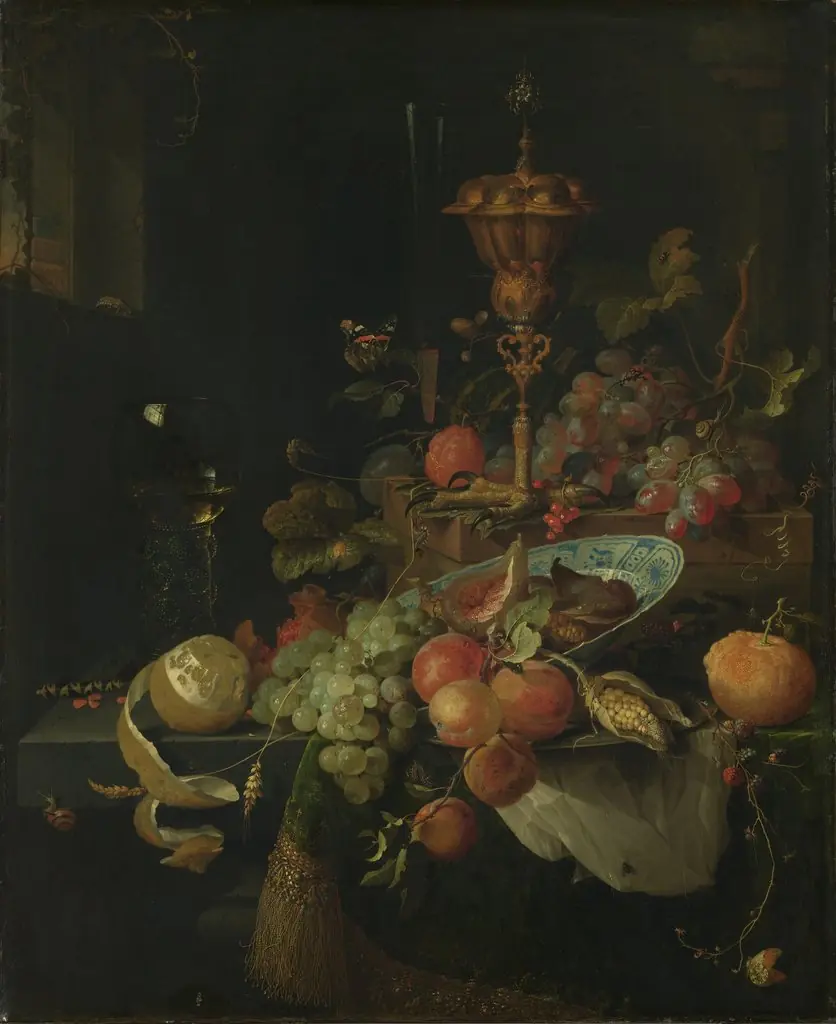
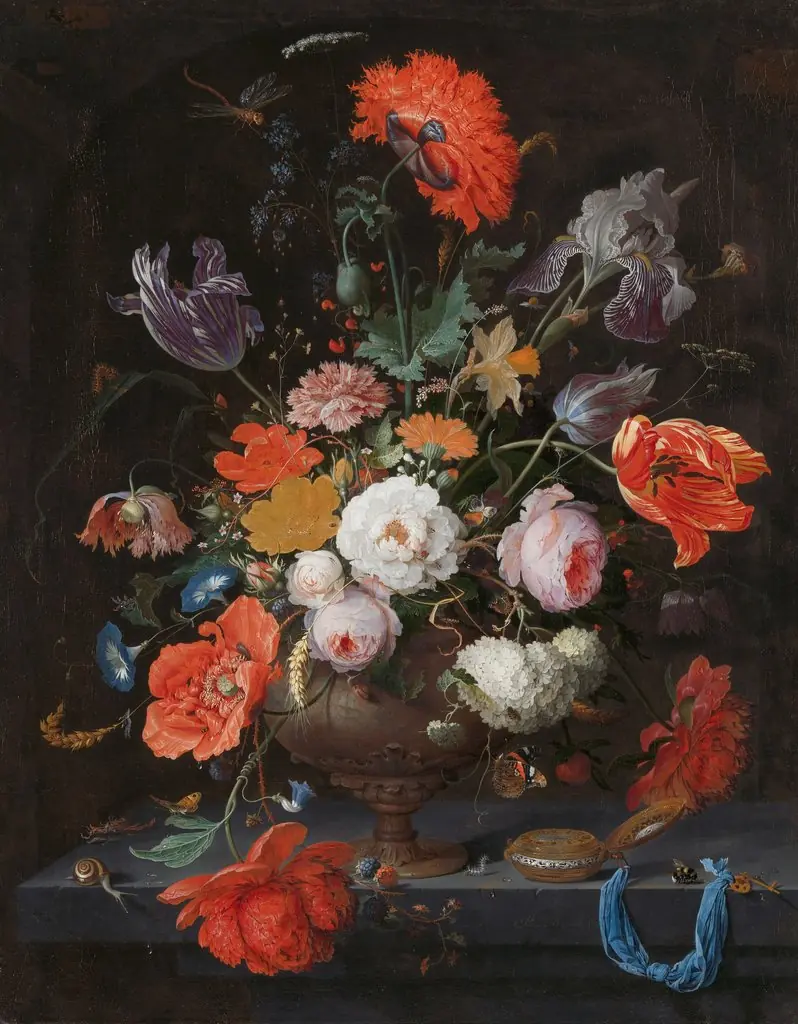
Still Life with Fruit, Oysters and a Porcelain Bowl is an oil painting by the Dutch Golden Age artist Abraham Mignon. It dates from 1669 and is held in the collection of the Rijksmuseum.
About this work
Overview
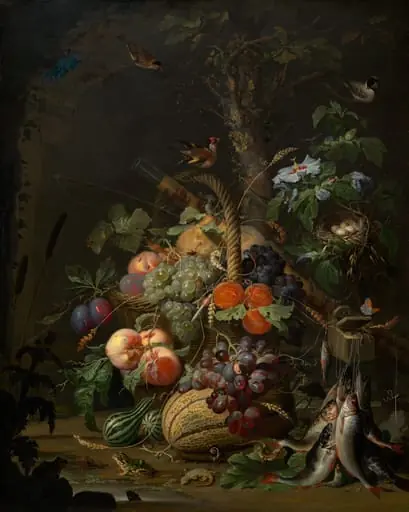
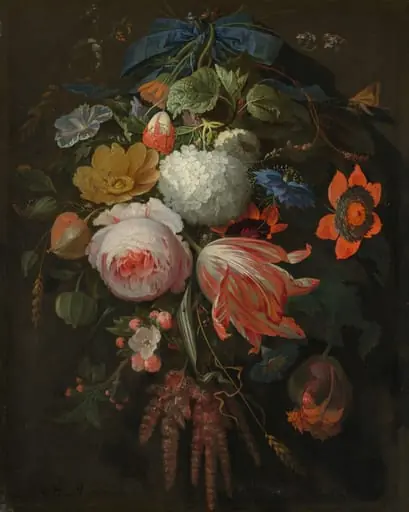
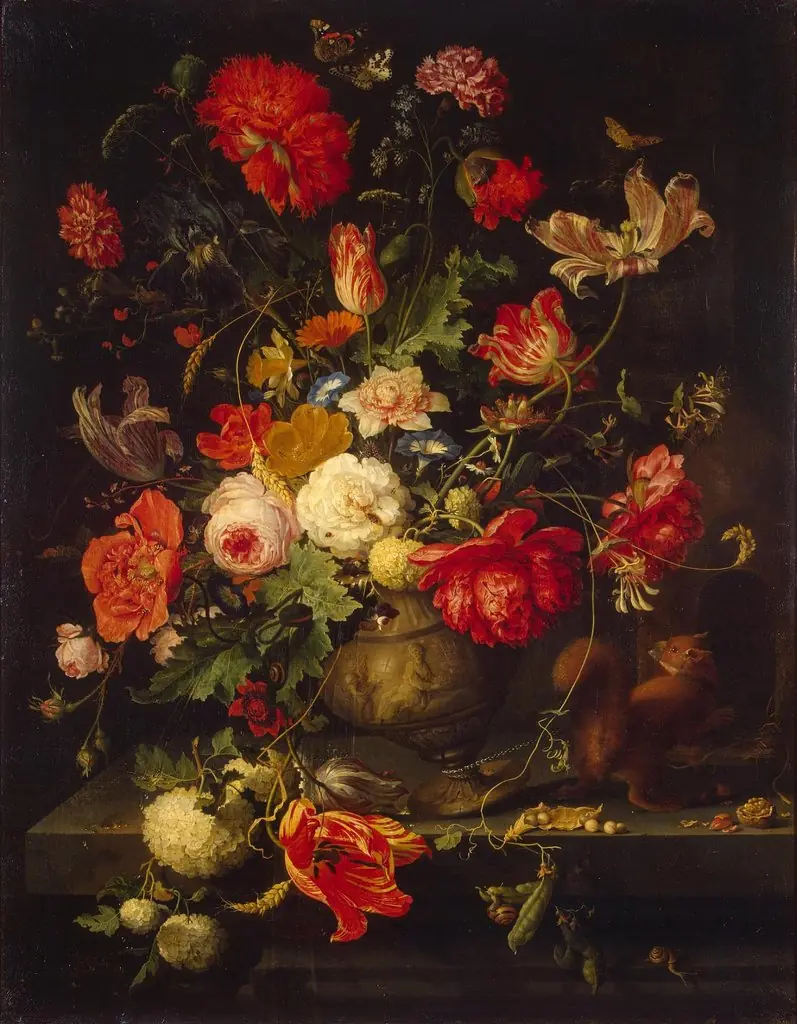
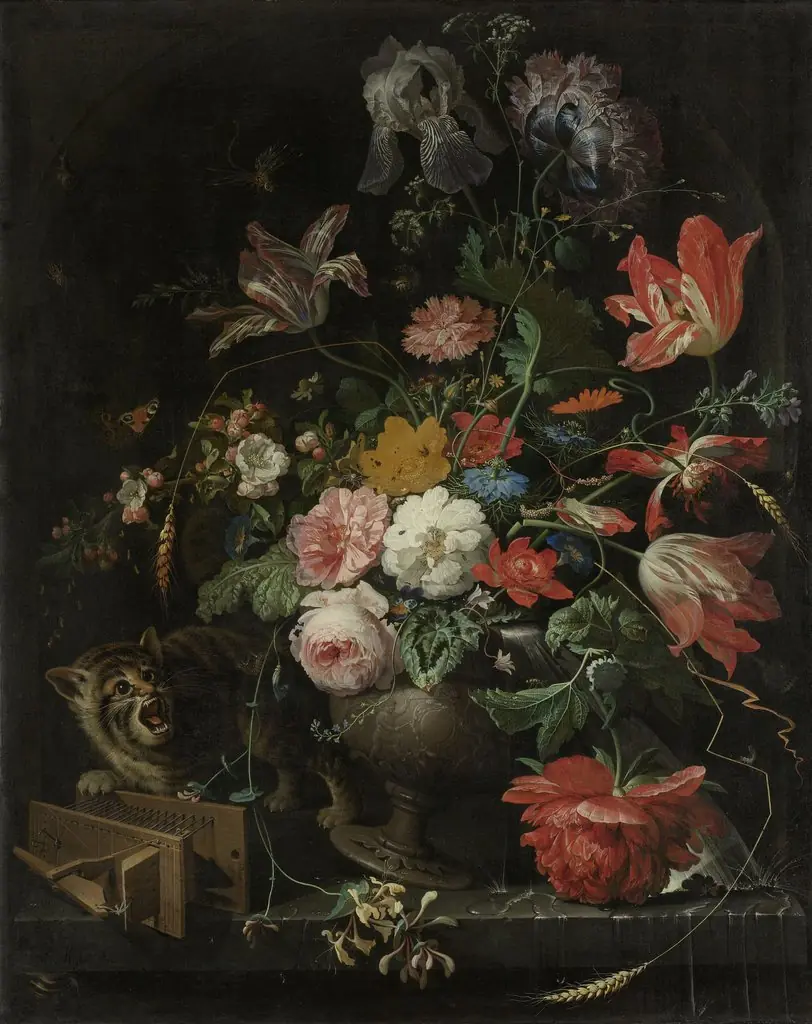
Abraham Mignon’s *Still Life with Fruit, Oysters and a Porcelain Bowl* (1669) presents a densely arranged banquet on a darkened tabletop.
Abraham Mignon’s *Still Life with Fruit, Oysters and a Porcelain Bowl* (1669) presents a densely arranged banquet on a darkened tabletop. A half‑opened pomegranate releases ruby seeds, a shallow dish holds a cluster of oysters, and a blue‑white porcelain bowl sits beside grapes, plums, cherries, a cut orange and a glass jar. The composition balances abundant produce with luxurious tableware, typical of Dutch still‑life conventions.
Subject & Meaning
The painting juxtaposes perishable delicacies—fruit and shellfish—with fine ceramics, inviting contemplation of abundance, transience, and the sensory pleasures of the table. The inclusion of exotic items such as the pomegranate and imported porcelain hints at the global trade networks of the Dutch Republic, while the careful placement of each object underscores a moral undertone common to the genre: the fleeting nature of earthly wealth.
Technique & Style
Mignon employs a restrained chiaroscuro, allowing light to strike the glossy surfaces of fruit skins, oyster shells, and the porcelain, while deeper shadows recede into the table’s darkness. The palette remains rich yet muted, emphasizing texture through fine brushwork that renders the translucency of orange flesh and the delicate sheen of shells. This meticulous handling reflects the influence of Jan Davidszoon de Heem and Jacob Marrel, whose detailed realism he admired.
History & Provenance
Executed in Utrecht during the height of the Dutch Golden Age, the work entered the Rijksmuseum’s collection in the 20th century, where it remains on public display. Its provenance traces back to private Dutch collections, reflecting the continued appreciation of Mignon’s refined still‑life compositions among connoisseurs of 17th‑century art.
Context
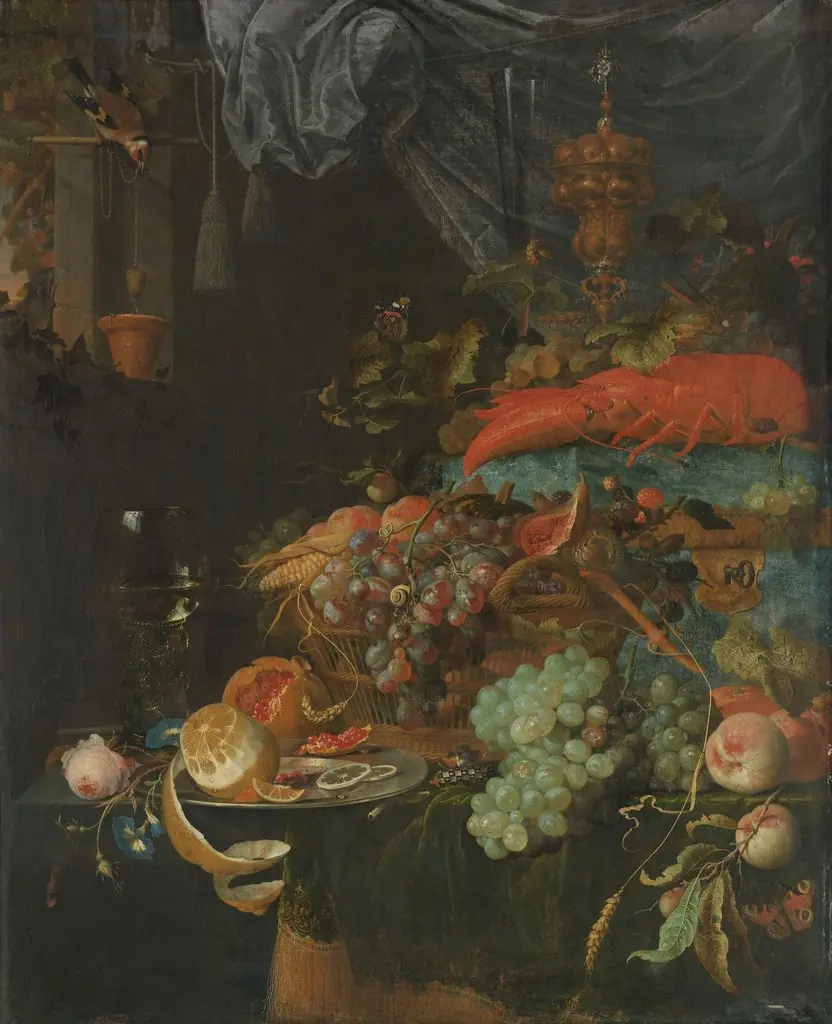
Mignon’s still lifes belong to a broader Dutch tradition that celebrated domestic prosperity through meticulous depictions of food and objects. By 1669, such paintings served both decorative and didactic purposes, illustrating the skill of the artist and the moral lesson of vanitas. The inclusion of imported porcelain also signals the era’s fascination with Eastern ceramics, a hallmark of the period’s material culture.
Own this work as a print
Artist & collection

Artist
Abraham Mignon or Minjon (21 June 1640 – 27 March 1679) was a Dutch still life painter.