Artwork
Still life
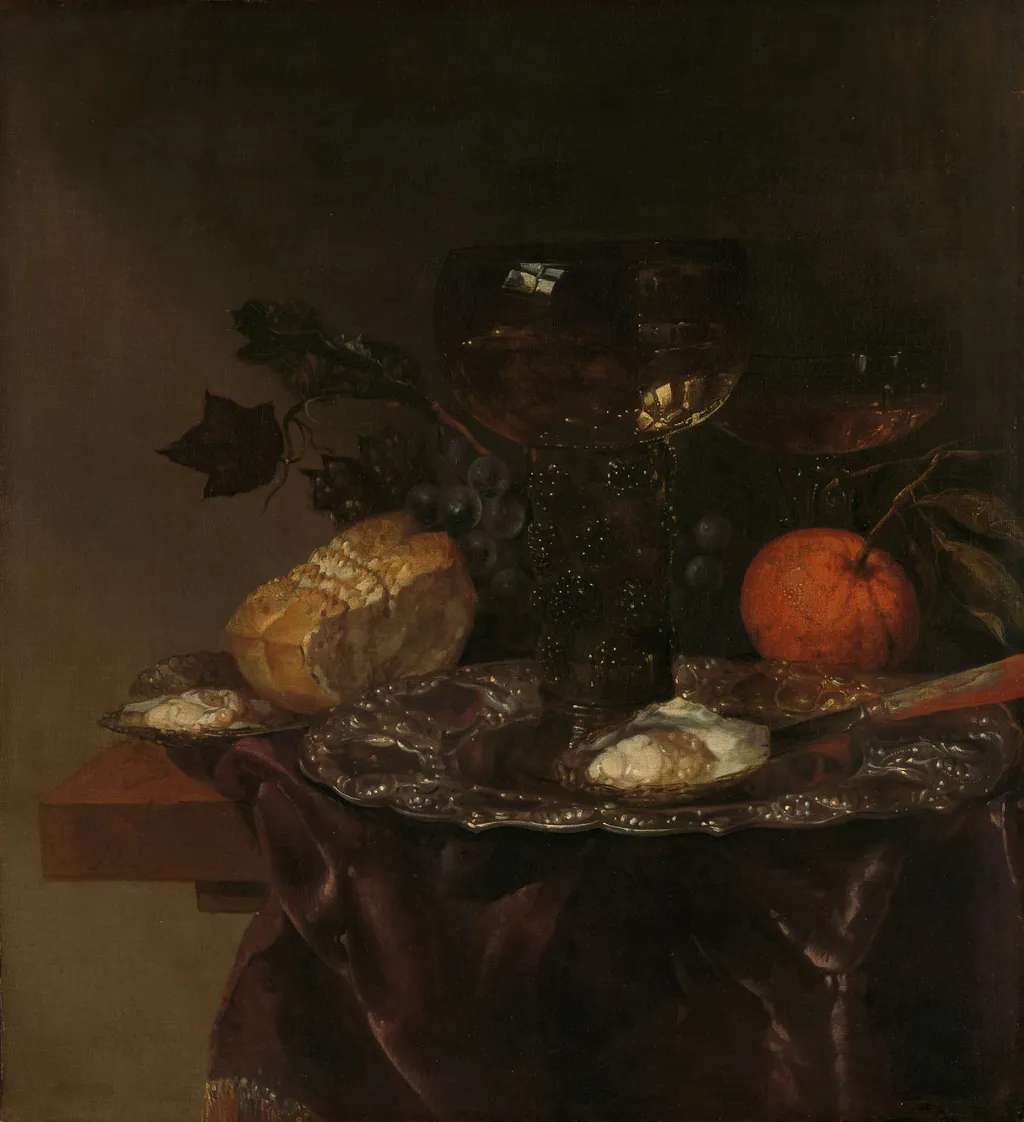
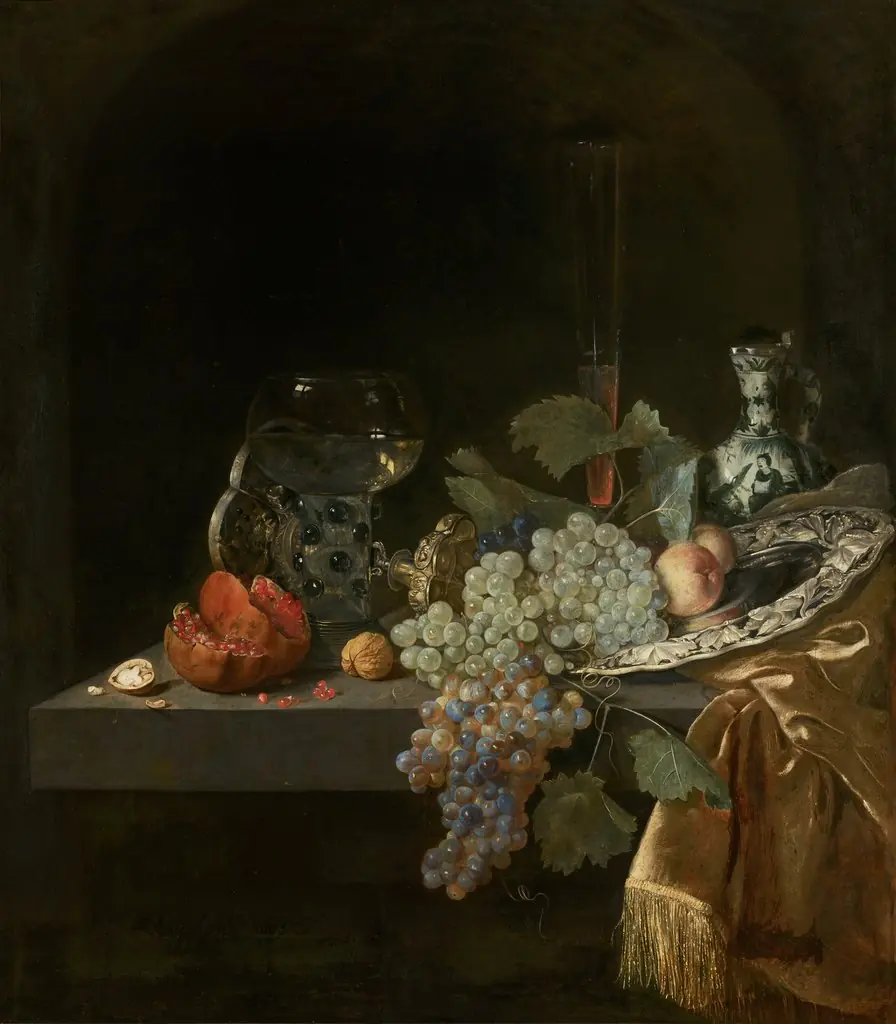
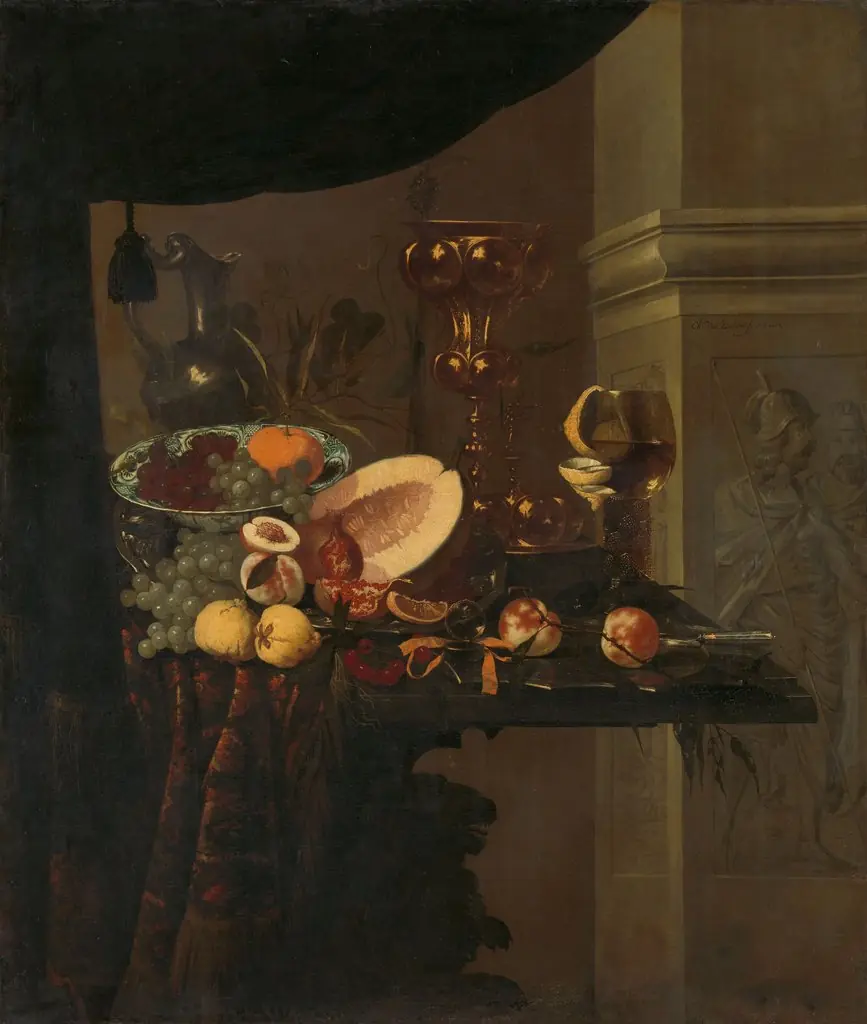
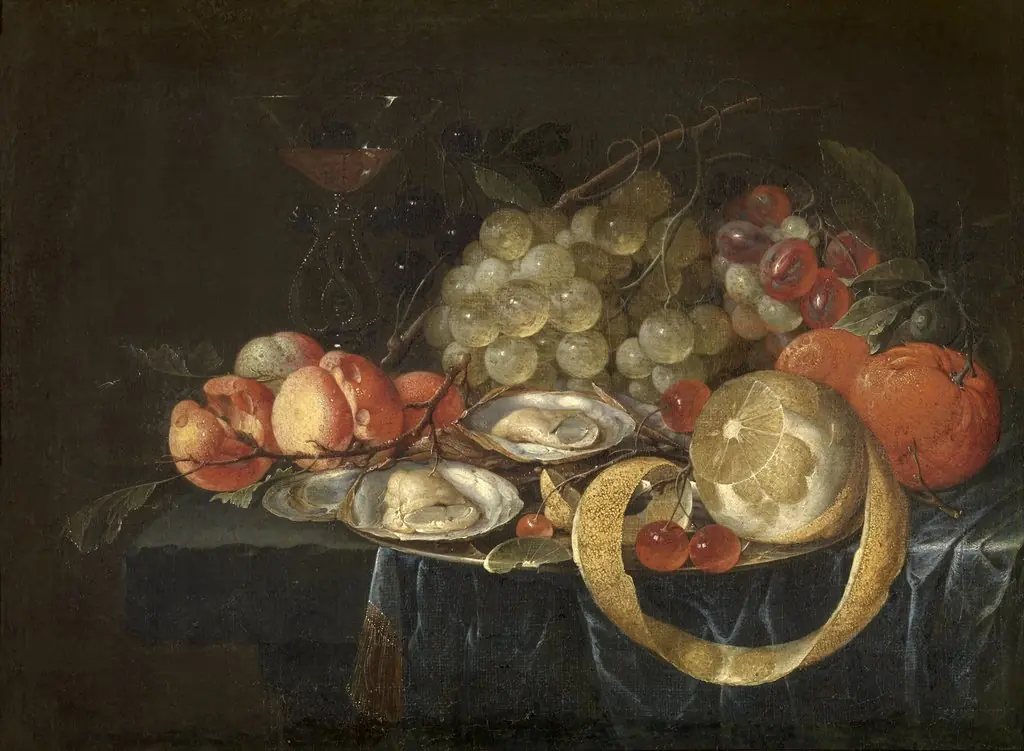
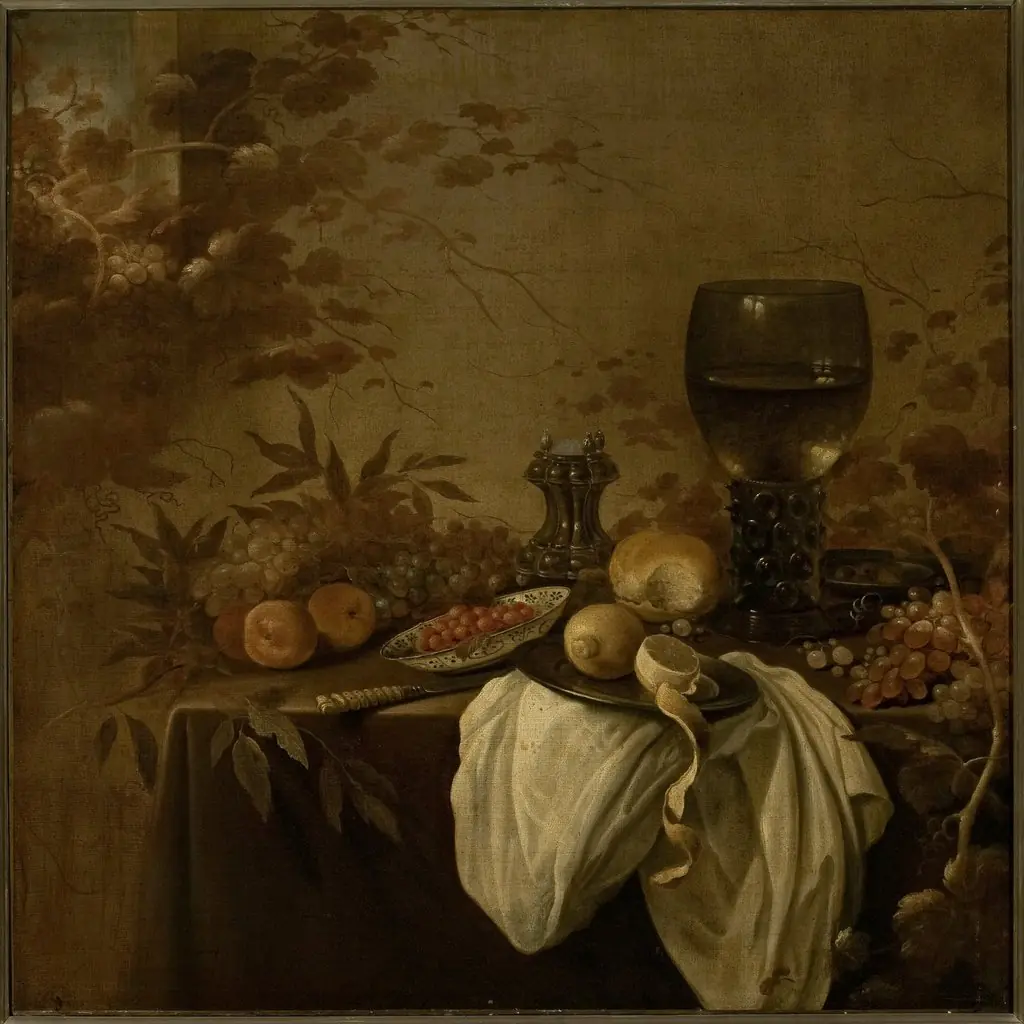
Still life is an oil painting by the Dutch Golden Age artist Abraham van Beijeren. It dates from 1650 and is held in the collection of the Rijksmuseum.
About this work
Overview
Still life, an oil painting created by Abraham van Beijeren around 1650, exemplifies the Dutch Baroque style during the Netherlands' Golden Age. The composition features a sparse, elegantly arranged tabletop still life.
Subject & Meaning
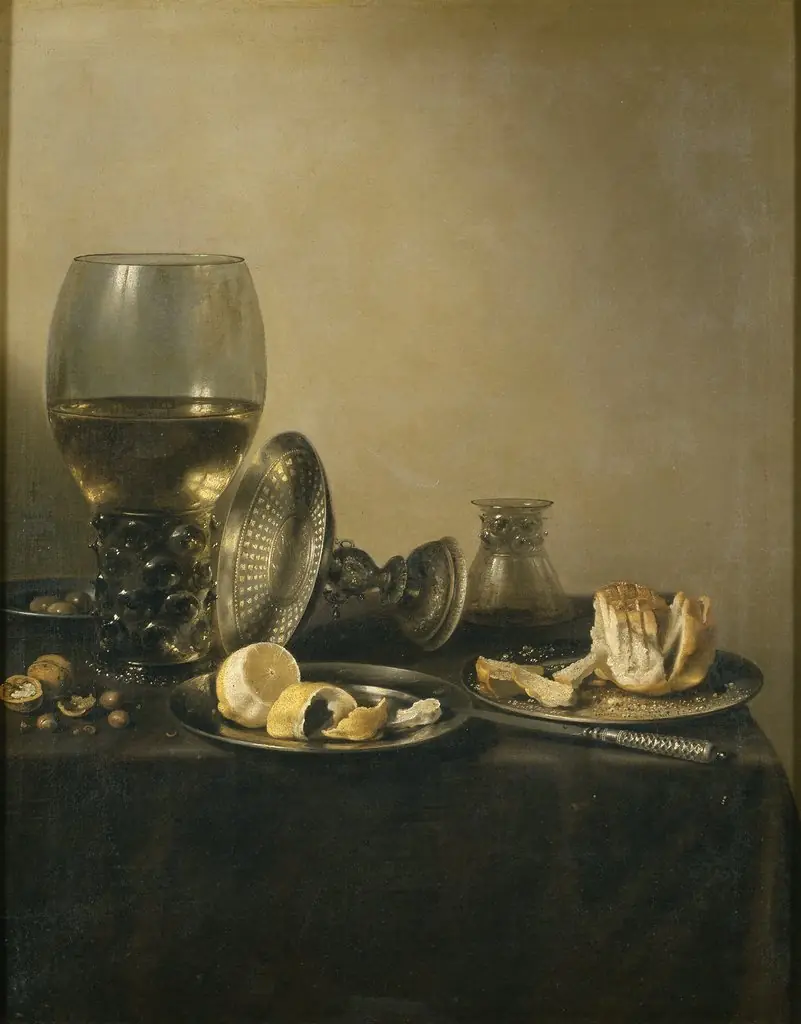
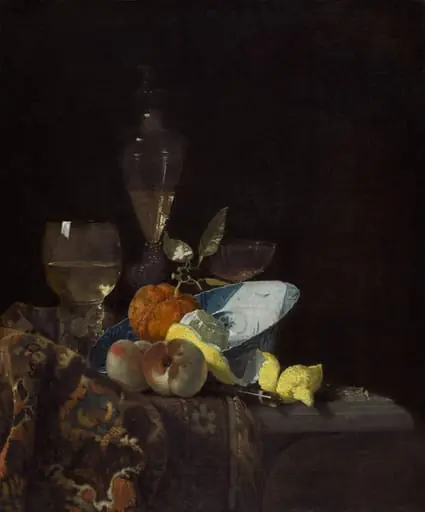
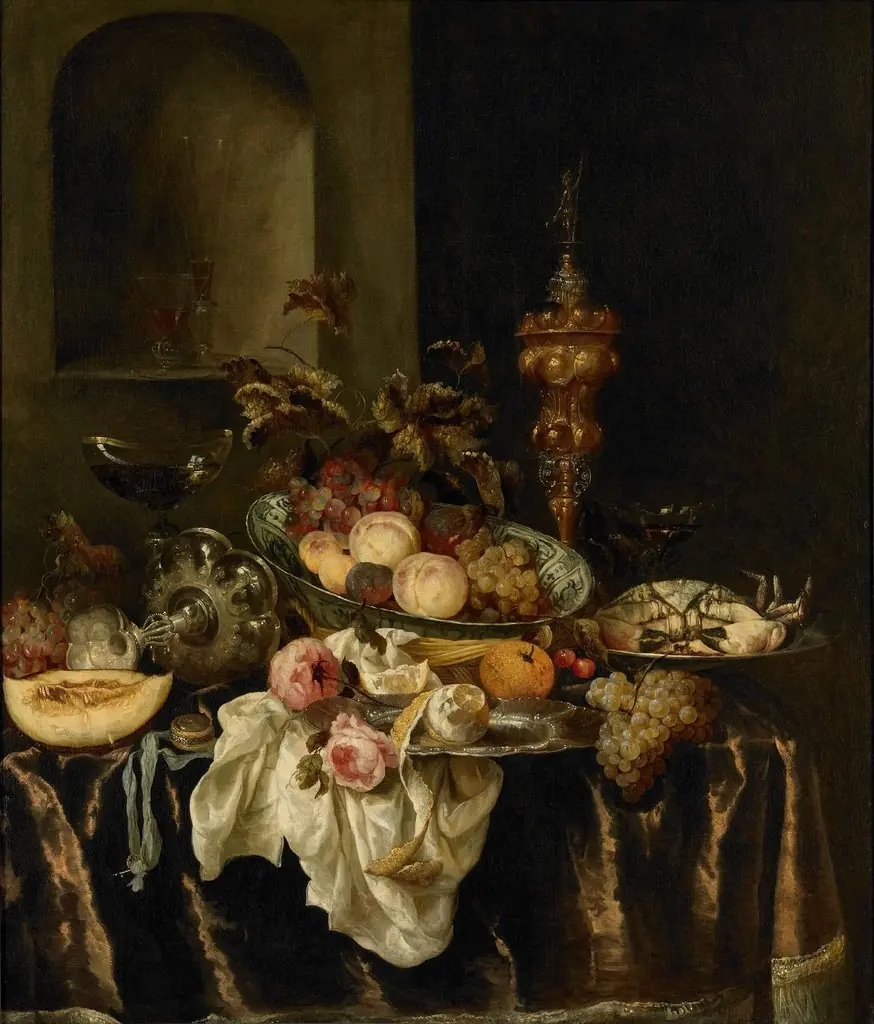
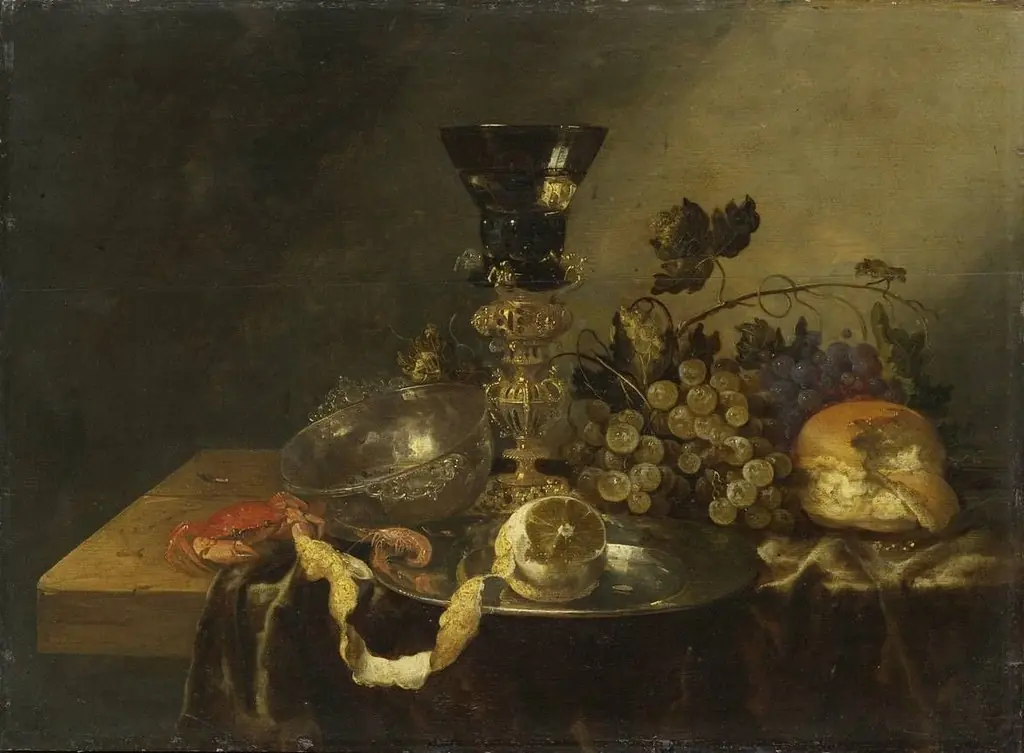
The painting depicts a simple, yet refined, assortment of food and vessels on a table: oysters, bread, a red apple, grapes, and a glass pitcher with lemon-infused water. The selection may allude to themes of abundance, sobriety, or the fleeting nature of luxury, common in Dutch still-life symbolism.
Technique & Style
Van Beijeren employed chiaroscuro to dramatic effect, leveraging strong contrasts between light and dark to accentuate the textures of each object—the glistening oysters, crusty bread, and reflective glass pitcher. This technique, characteristic of Baroque painting, enhances the overall sense of depth and visual tension.
History & Provenance
Originally known for maritime scenes, Van Beijeren gained acclaim for his still lifes in the latter part of his career. This work is now part of the Rijksmuseum's collection, a testament to its significance within the Dutch Golden Age's rich artistic heritage.
Context
Created during the Dutch Golden Age, a period of unparalleled cultural and artistic flourishing in the Netherlands, this still life reflects the era's emphasis on meticulous detail, everyday subjects, and the expressive use of light.
Own this work as a print
Artist & collection
Artist
Abraham Hendriksz van Beijeren or Abraham van Beyeren (c. 1620, The Hague – March 1690, Overschie (Rotterdam)) was a Dutch Baroque painter of still lifes. Little recognized in his day and initially active as a marine…

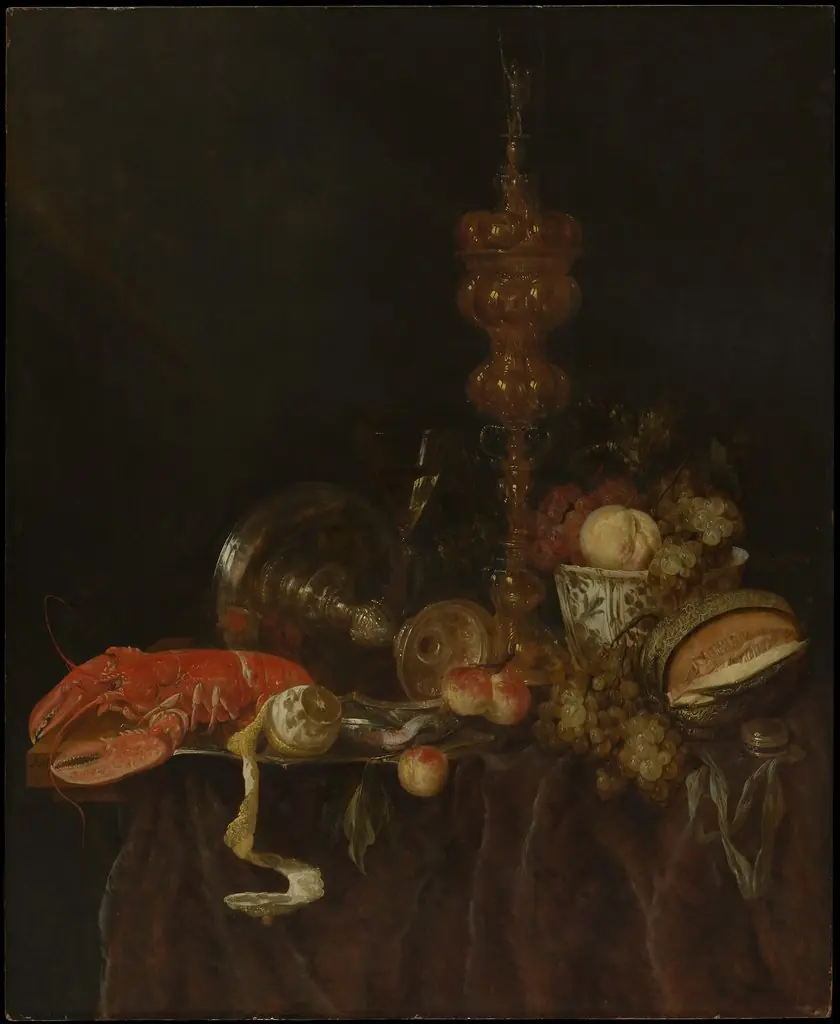 Still Life with Lobster and Fruit
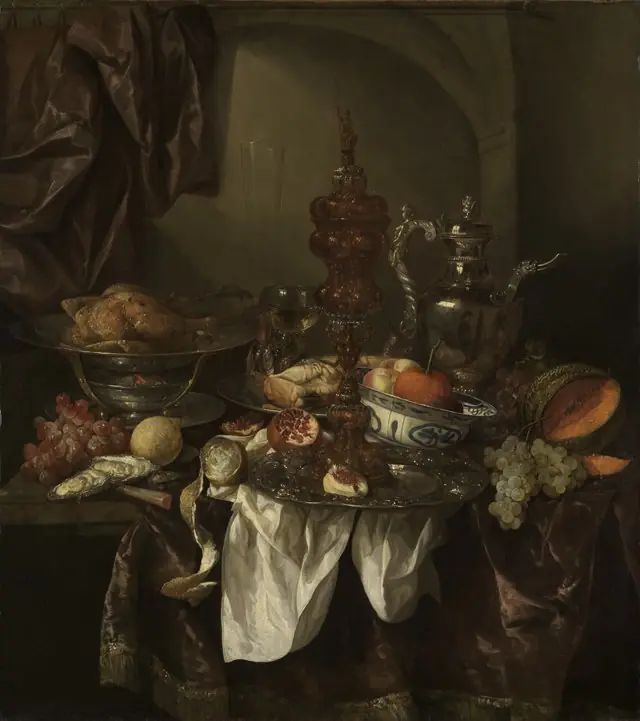 Still life with fruit, roast, silver- and glassware, porcelain and columbine cup on a dark tablecloth with white serviette
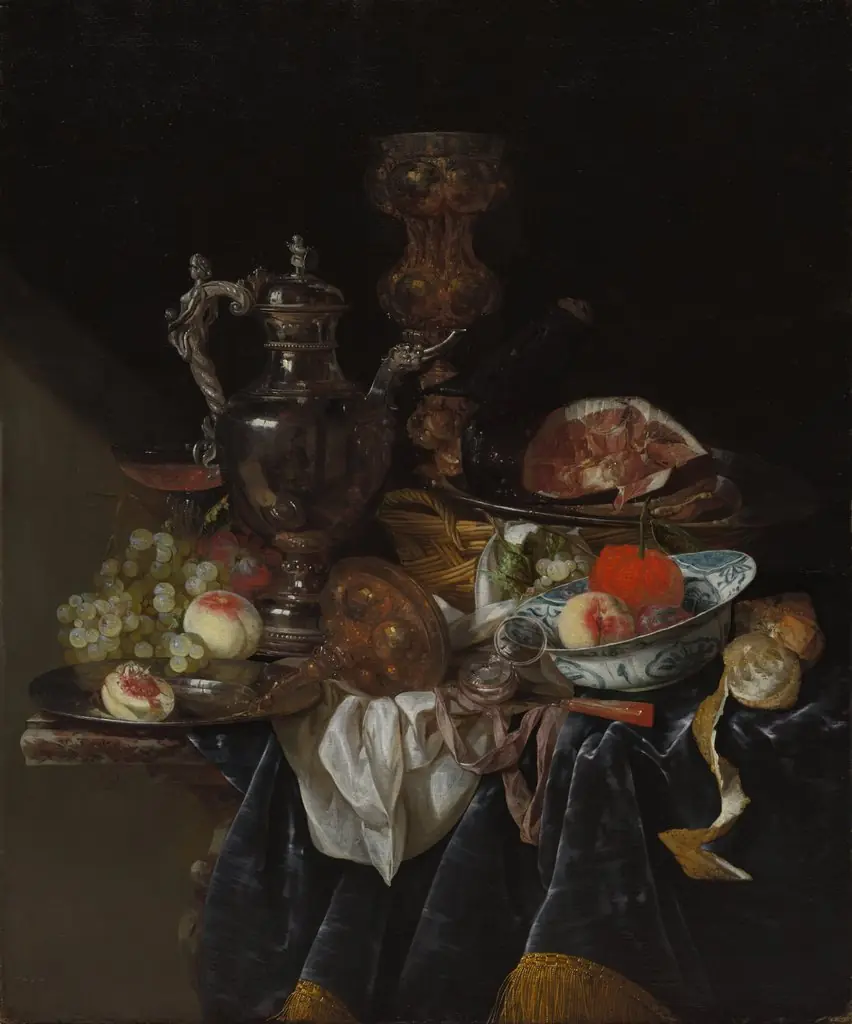 Silver Wine Jug, Ham, and Fruit
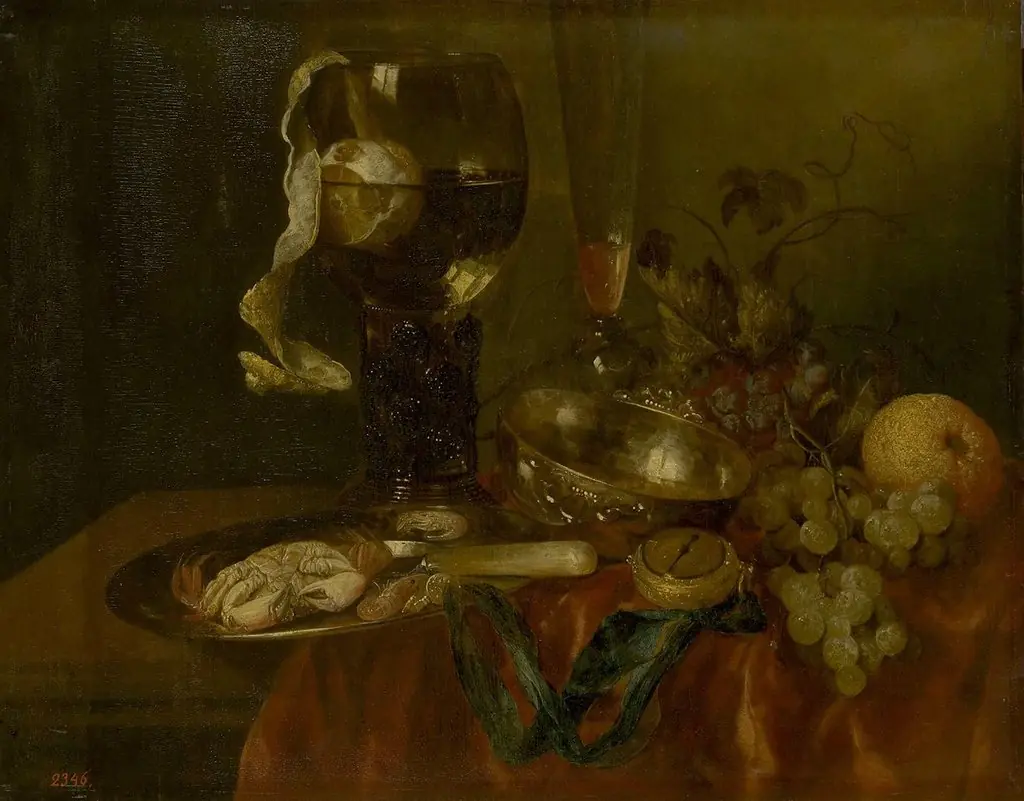 Snack (Still Life with Crab, Fruit and Clock)
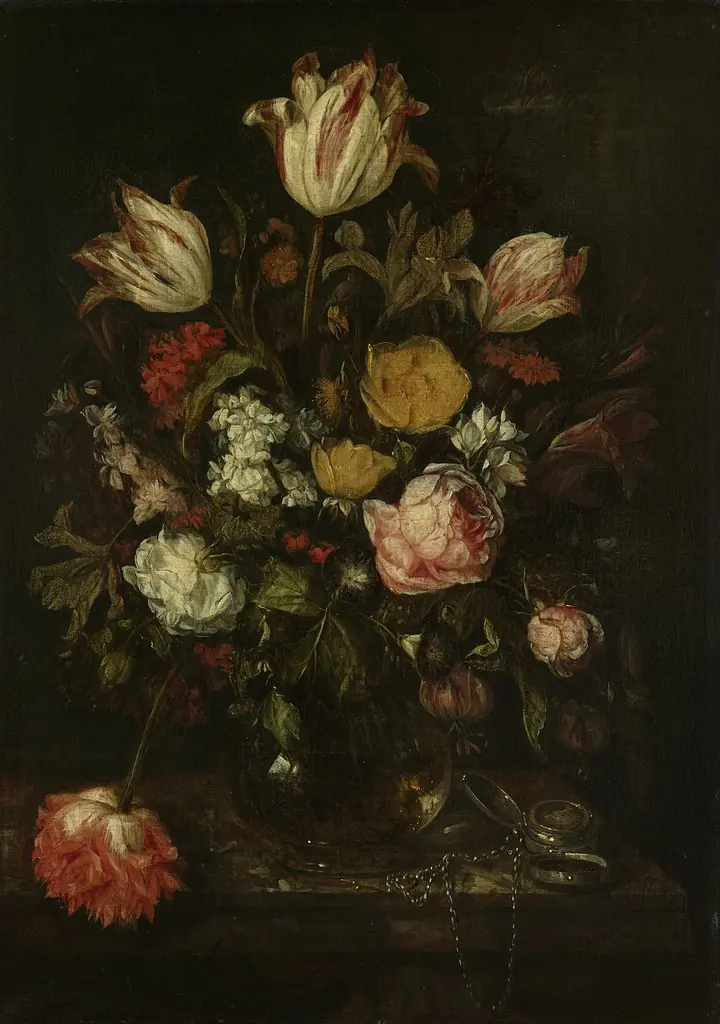 Still life with flowers
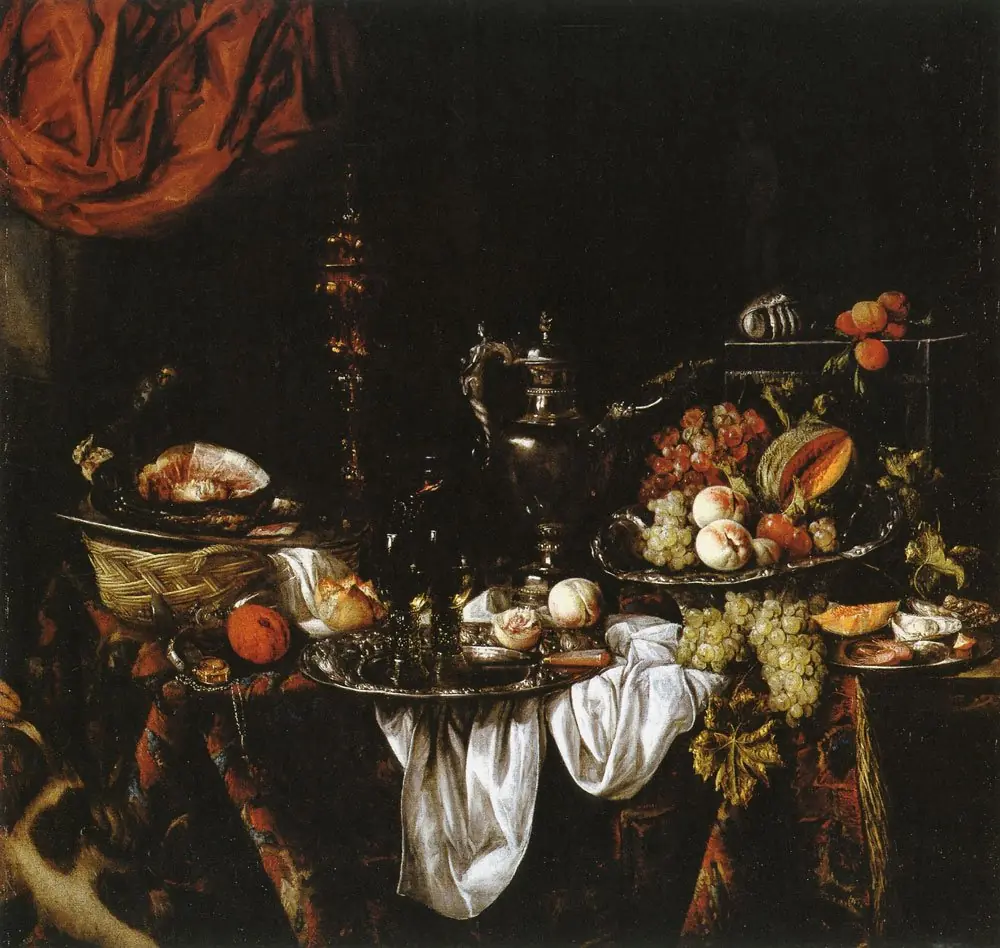 Still life on a draped table with a sculpture of Venus in a niche behind a curtain
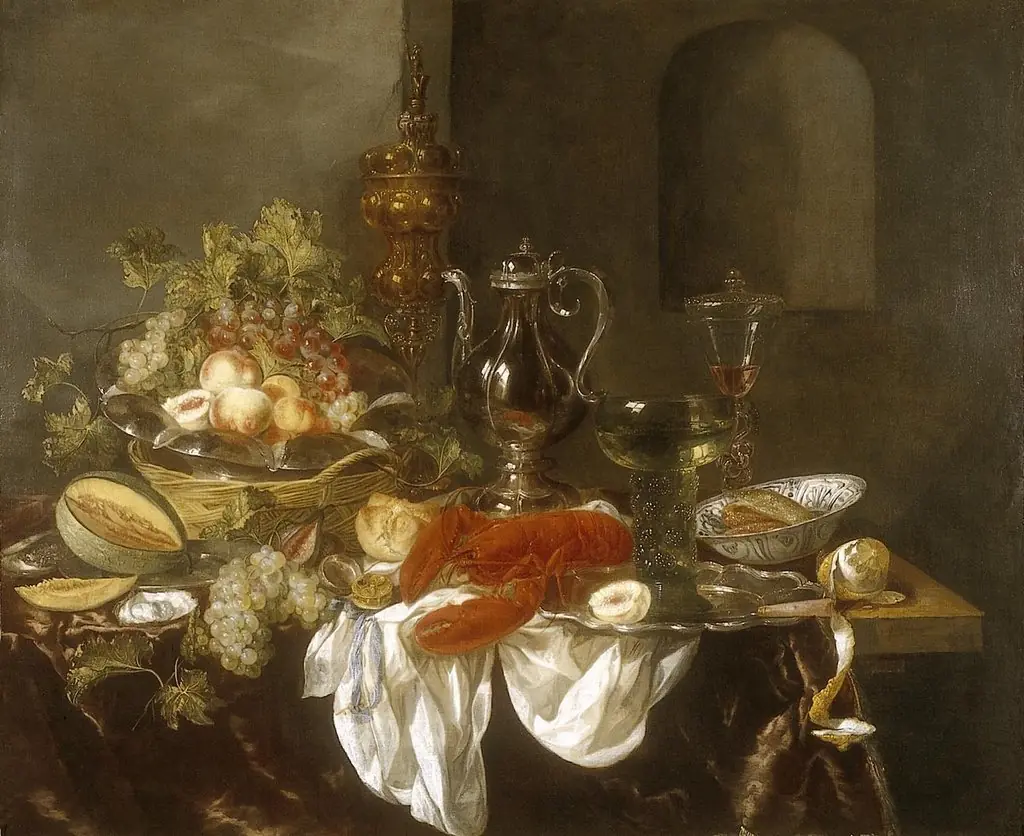 still-life
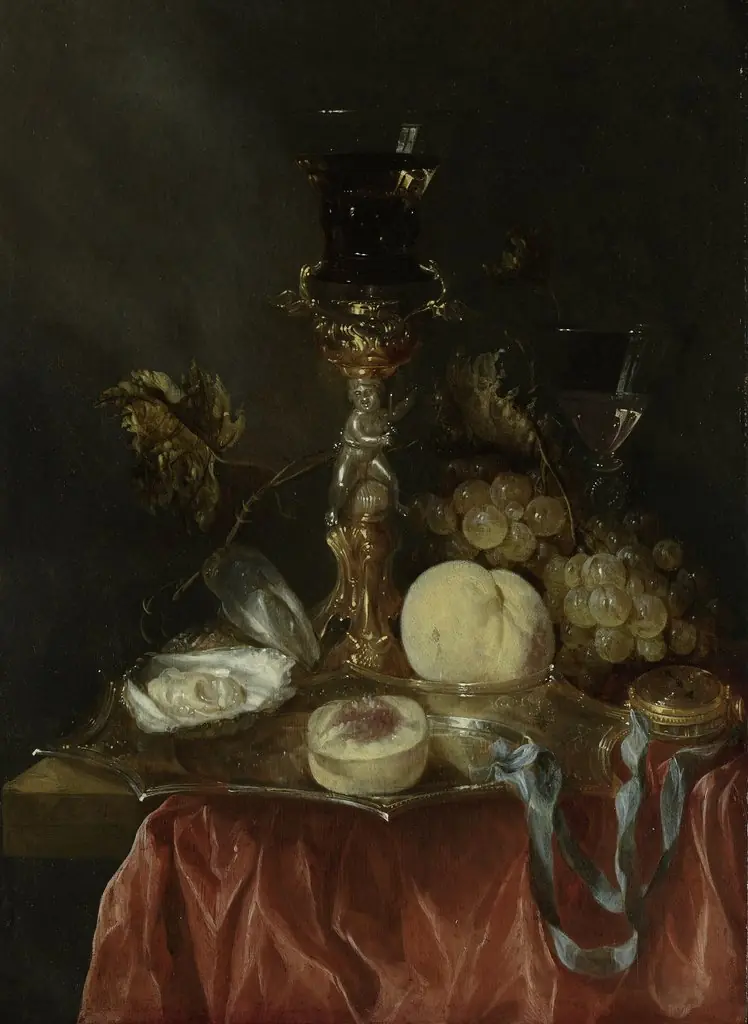 Still Life with Silver-gilt Bekerschroef with Roemer