Artwork
Still life on a draped table with a sculpture of Venus in a niche behind a curtain
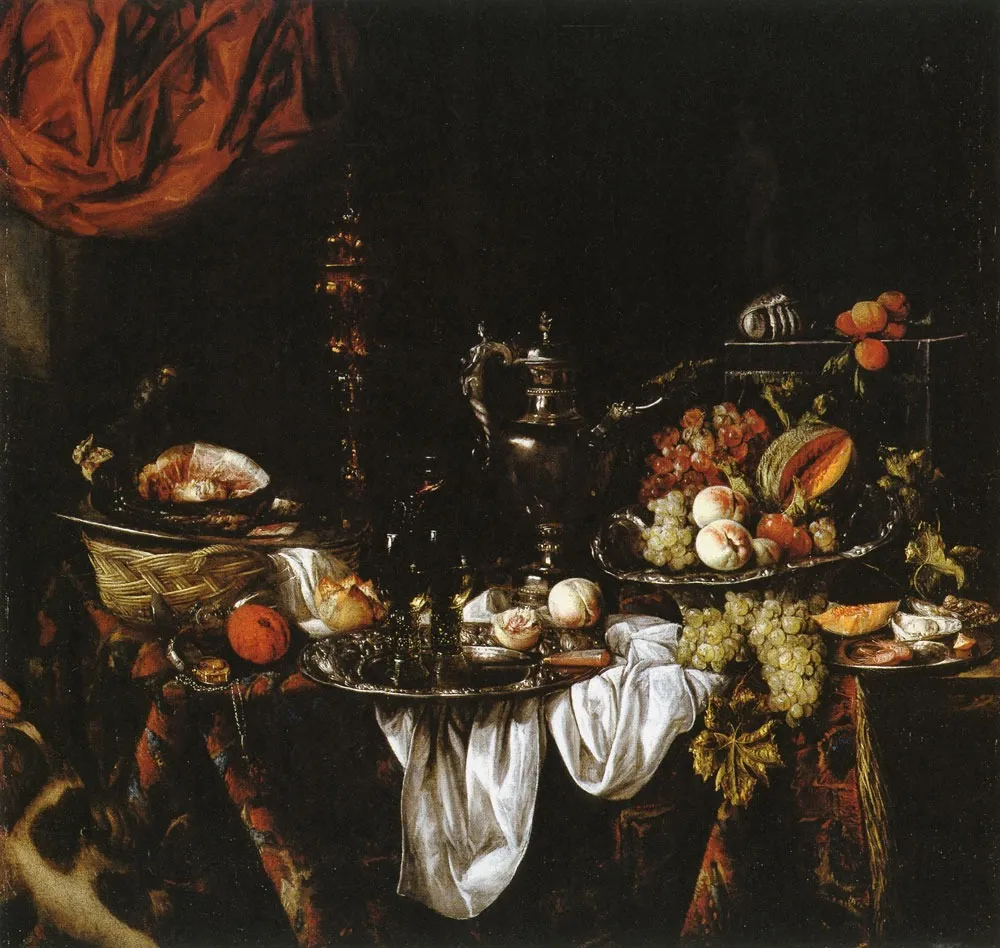
Still life on a draped table with a sculpture of Venus in a niche behind a curtain is an oil painting by the Dutch Golden Age artist Abraham van Beijeren. It dates from 1659 and is held in the collection of the Gemäldegalerie Berlin.
About this work
Overview
In the recessed space behind a curtain, a small classical sculpture of a female figure is partially concealed, adding depth to the scene.
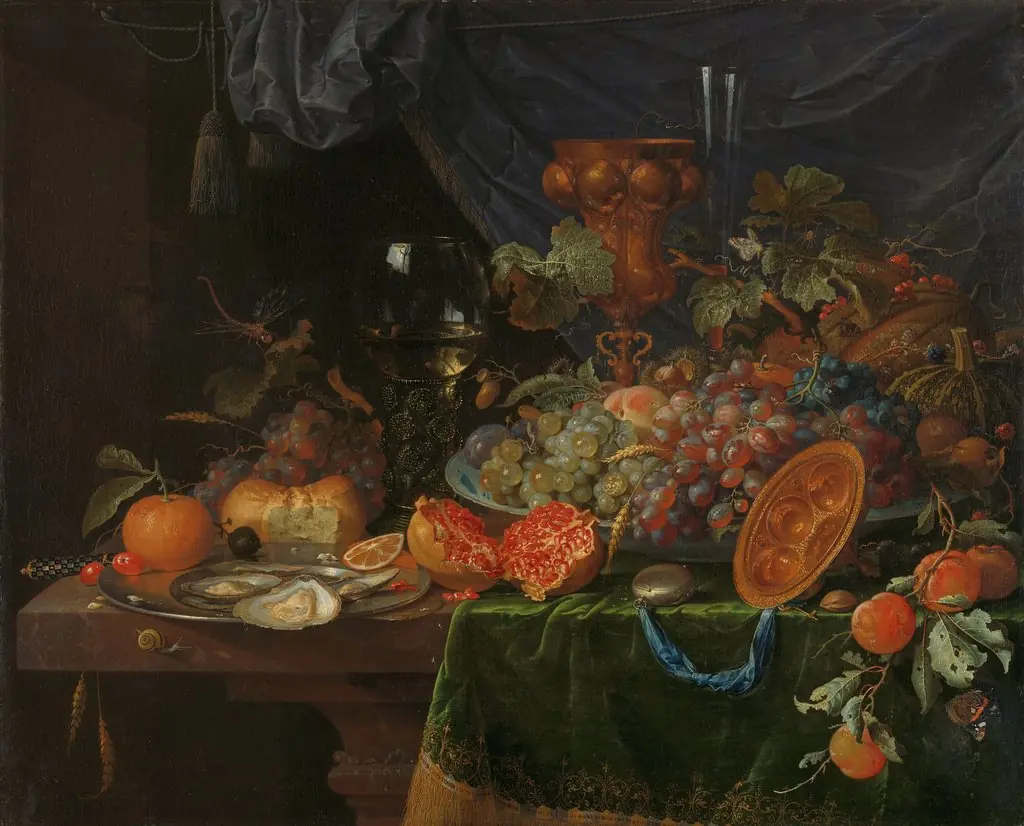
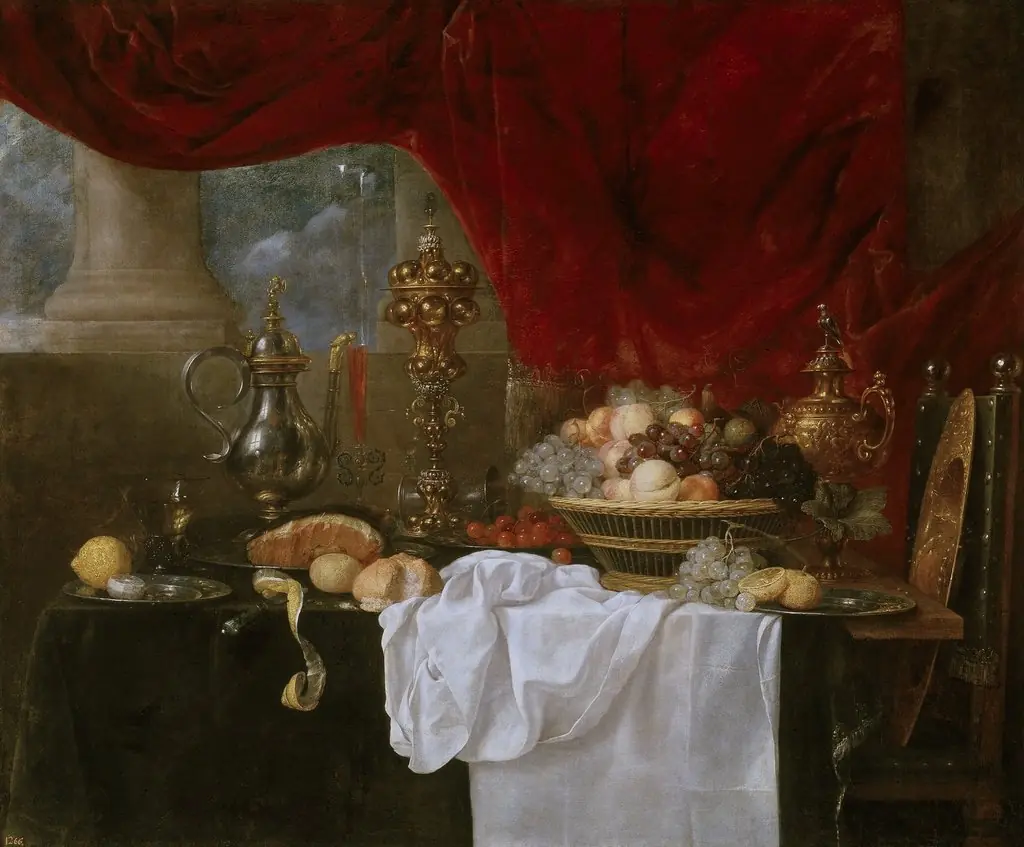
Abraham van Beijeren’s 1659 oil painting presents a richly arranged still life on a darkened table, its surface covered by a white drapery that folds over the edge. The composition includes a silver pitcher, a basket of bread, and a plate laden with grapes, peaches and a melon, all rendered with careful attention to texture and form. In the recessed space behind a curtain, a small classical sculpture of a female figure is partially concealed, adding depth to the scene.
Subject & Meaning
The work juxtaposes everyday abundance—fruit, bread, metalware—with a sculptural reference to classical antiquity, suggesting a dialogue between material wealth and cultural refinement. The veiled statue of a woman, likely representing Venus, introduces a mythological element that elevates the domestic tableau to a contemplation of beauty and desire.
Technique & Style
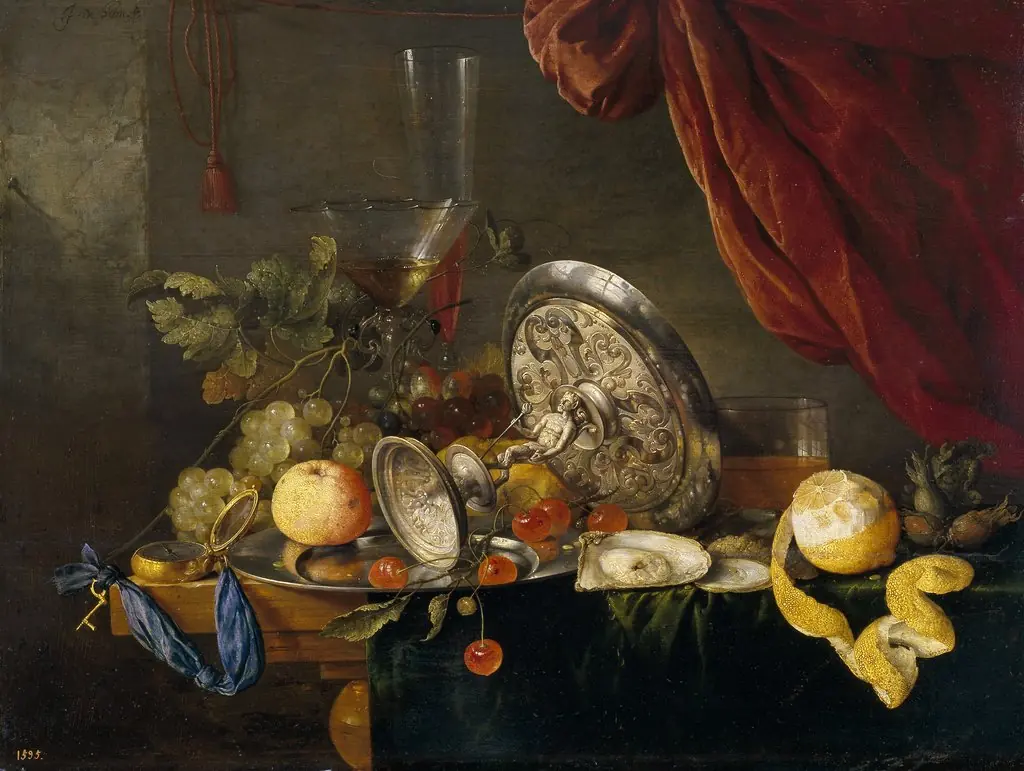
Van Beijeren employs a pronounced chiaroscuro, allowing light to strike the glossy surfaces of the pitcher and the flesh of the fruit while the surrounding space recedes into shadow. The meticulous rendering of textures—from the soft skin of the peaches to the reflective sheen of silver—demonstrates his mastery of Baroque realism and his background in detailed marine and still‑life painting.
History & Provenance
Originally trained as a marine painter, van Beijeren shifted to elaborate still lifes in the mid‑17th century, a transition reflected in this piece. The painting entered the collection of the Gemäldegalerie in Berlin, where it remains on display as part of the museum’s representation of Dutch Golden Age art.
Context
Created during the height of the Dutch Golden Age, the painting reflects contemporary tastes for opulent still‑life compositions that celebrated prosperity and the skill of the artist. The inclusion of a classical sculpture aligns with the period’s renewed interest in antiquity, while the sumptuous food items echo the era’s thriving trade networks.
Artist & collection
Artist
Abraham Hendriksz van Beijeren or Abraham van Beyeren (c. 1620, The Hague – March 1690, Overschie (Rotterdam)) was a Dutch Baroque painter of still lifes. Little recognized in his day and initially active as a marine…

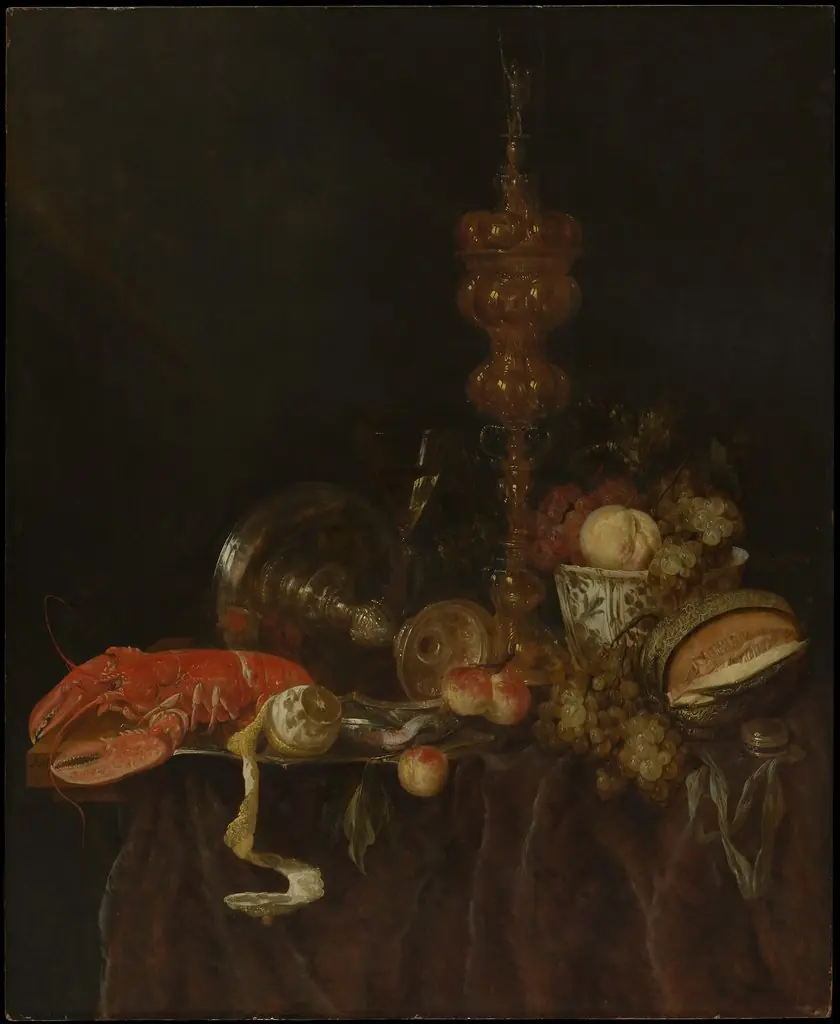 Still Life with Lobster and Fruit
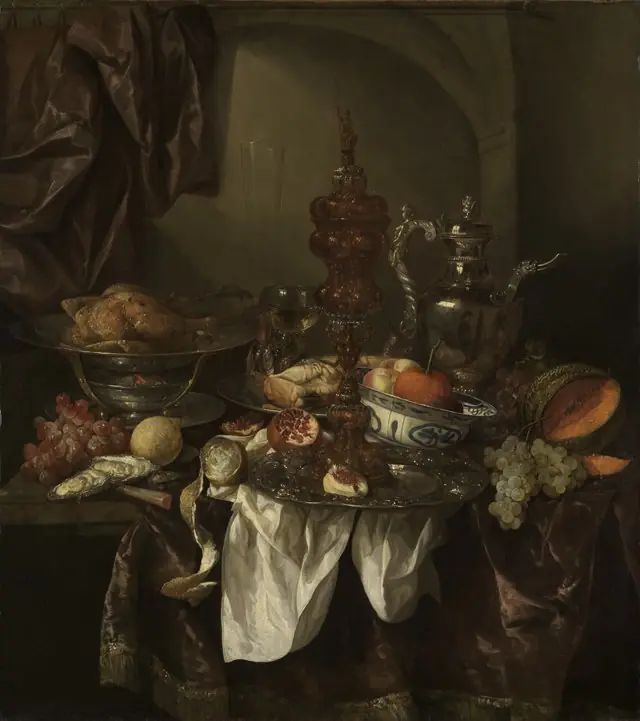 Still life with fruit, roast, silver- and glassware, porcelain and columbine cup on a dark tablecloth with white serviette
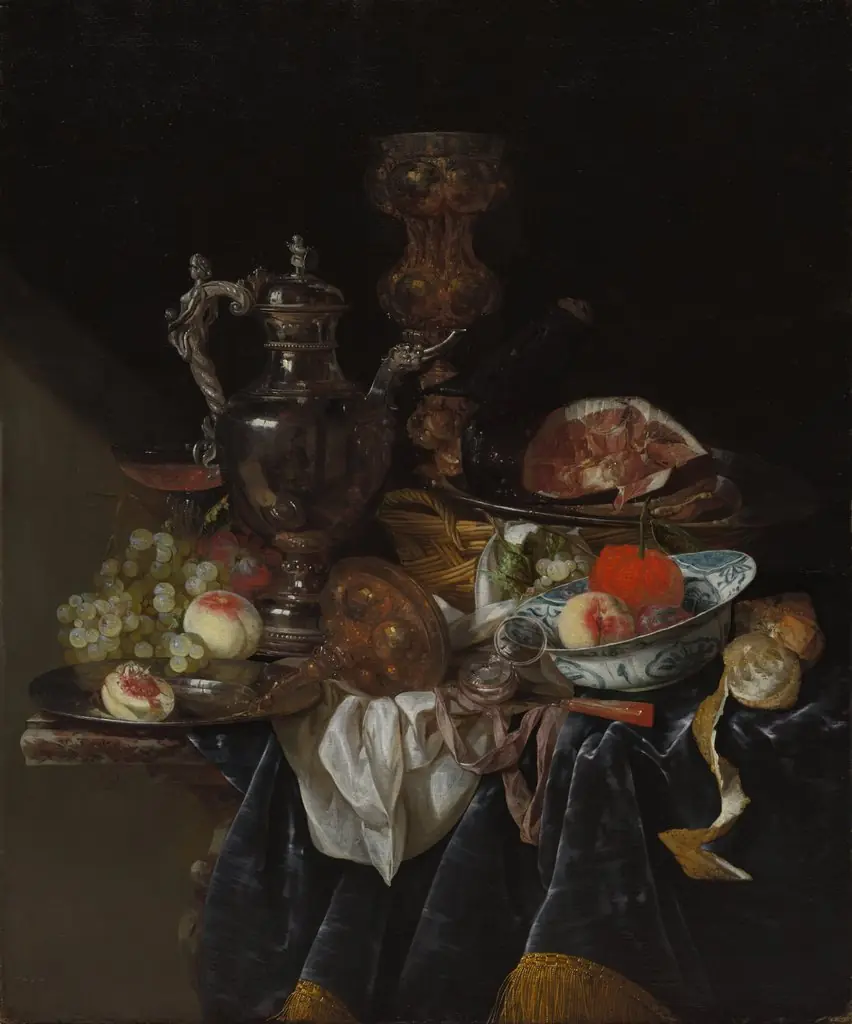 Silver Wine Jug, Ham, and Fruit
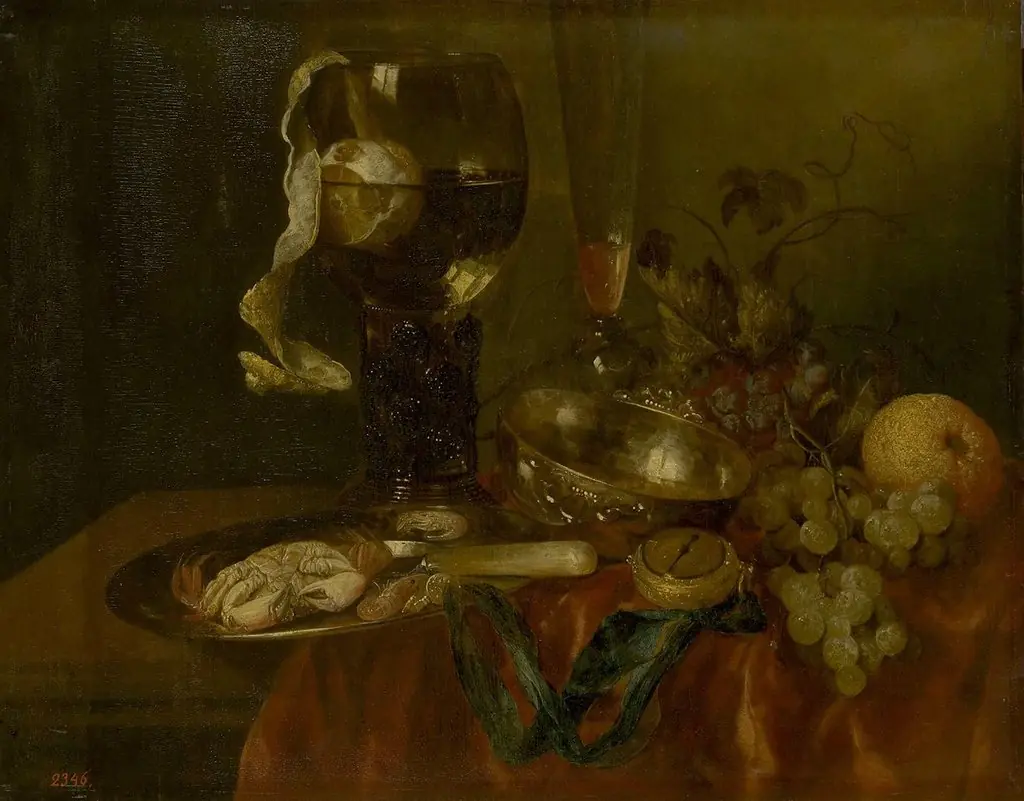 Snack (Still Life with Crab, Fruit and Clock)
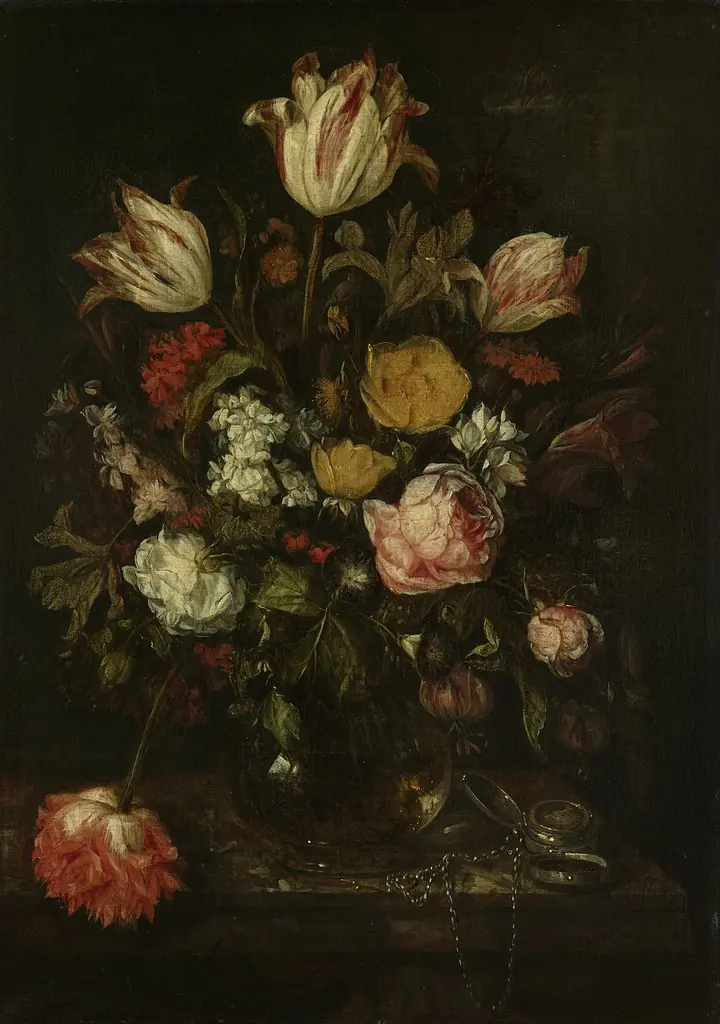 Still life with flowers
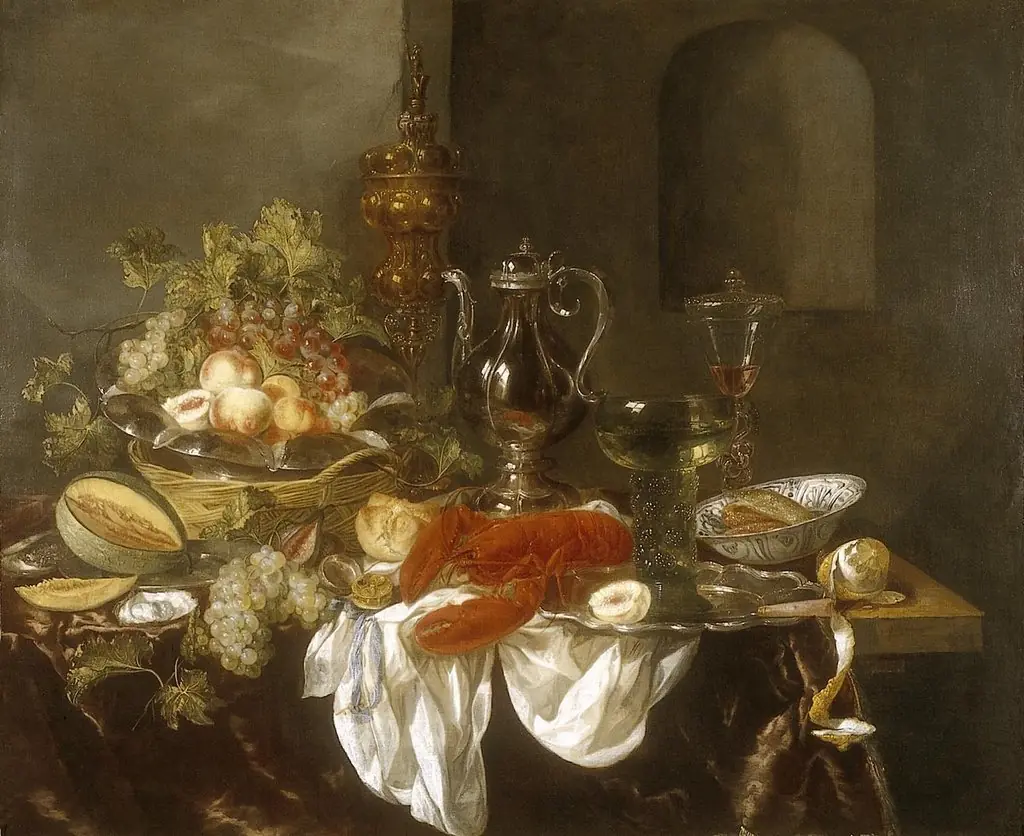 still-life
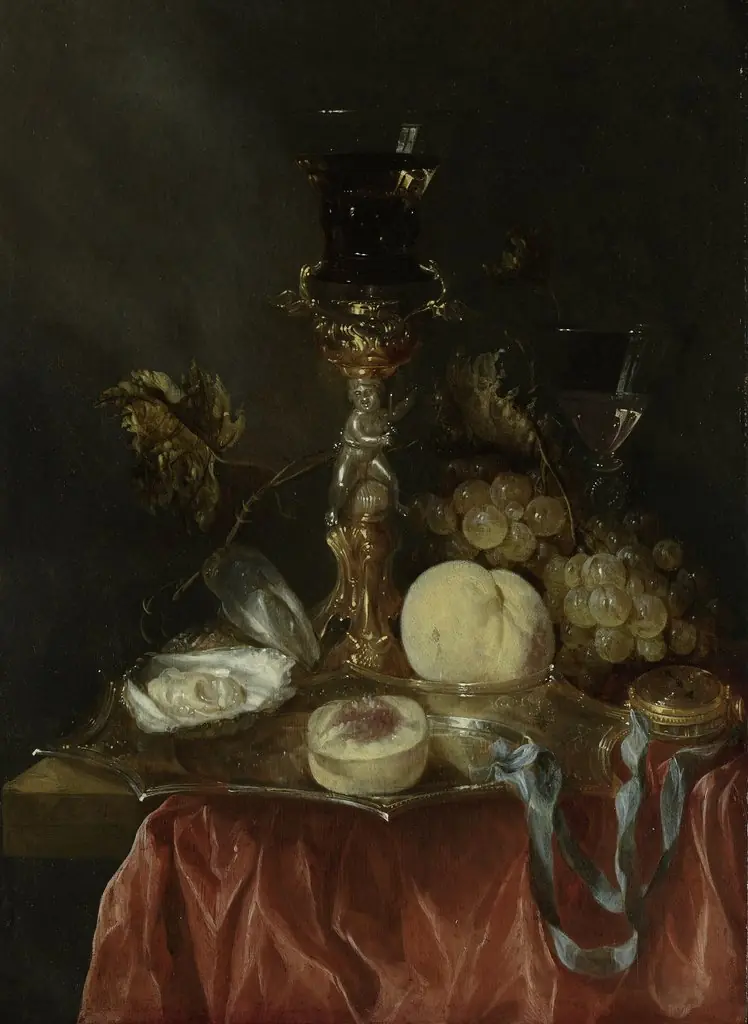 Still Life with Silver-gilt Bekerschroef with Roemer
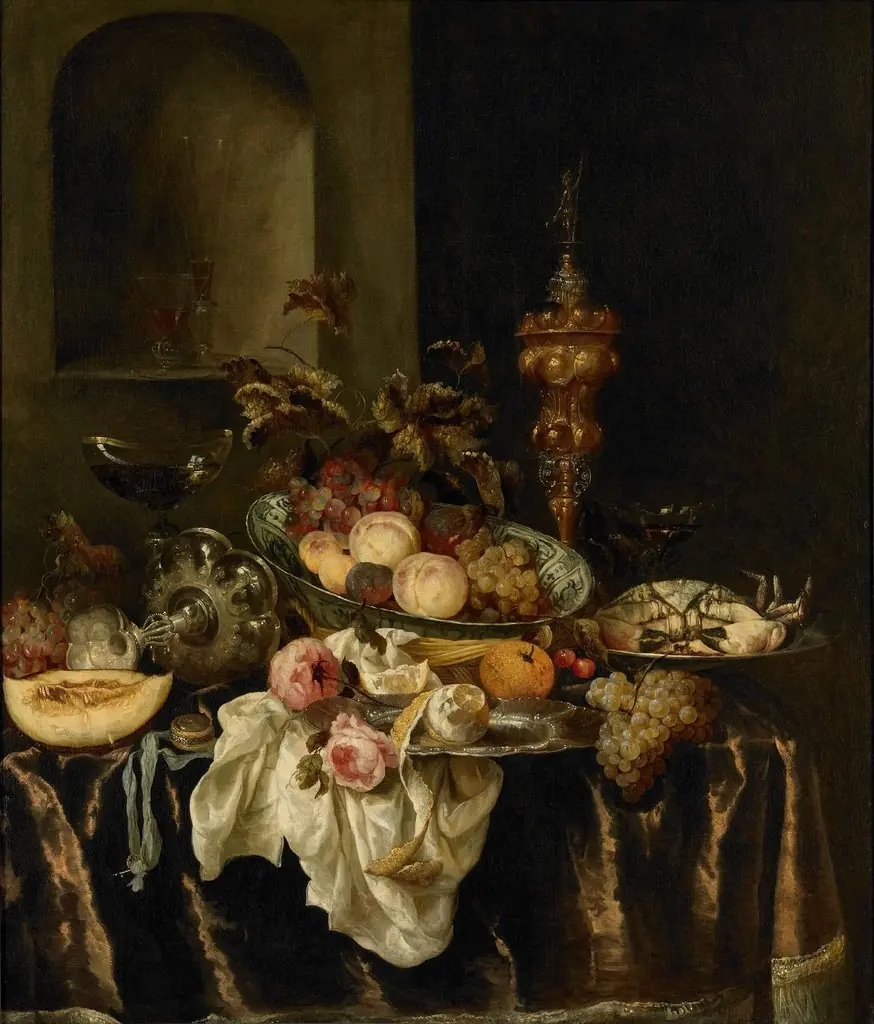 Stille life