Artwork
Still-life with Fishes
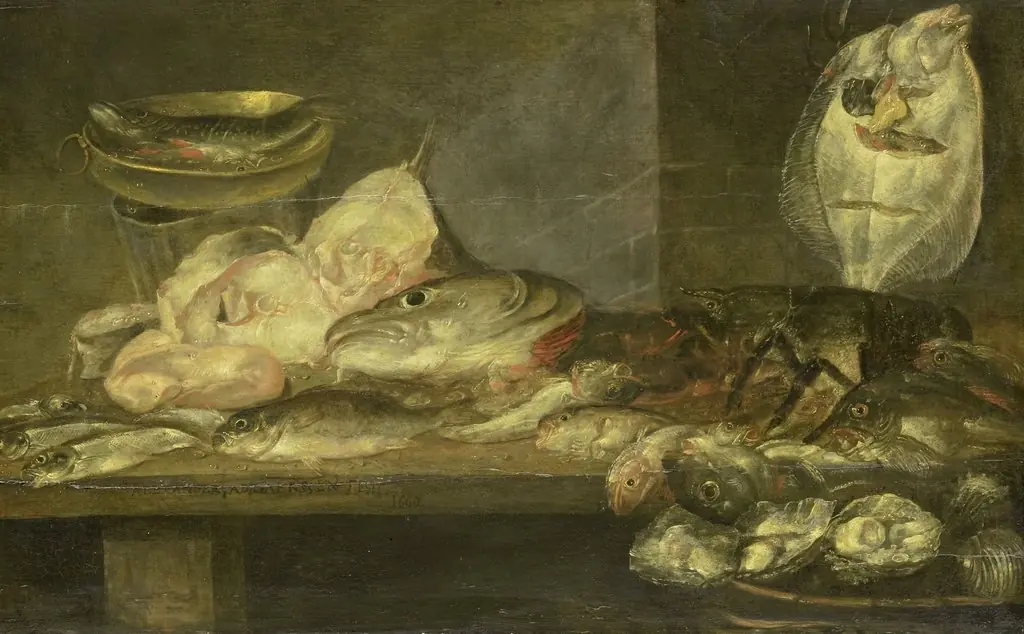
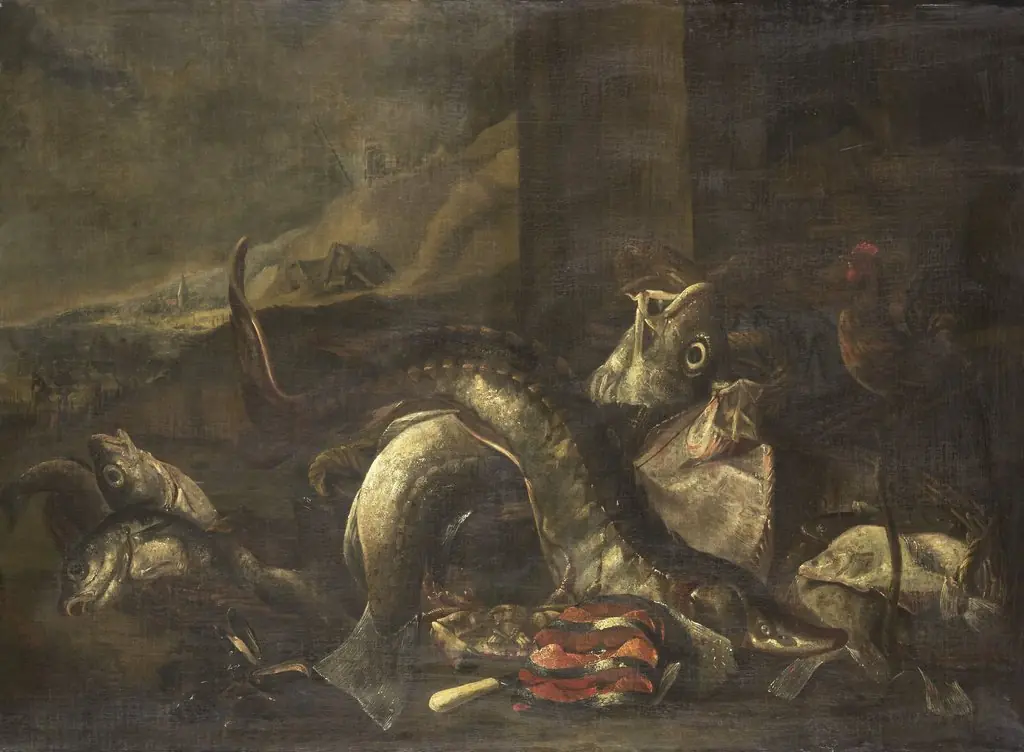
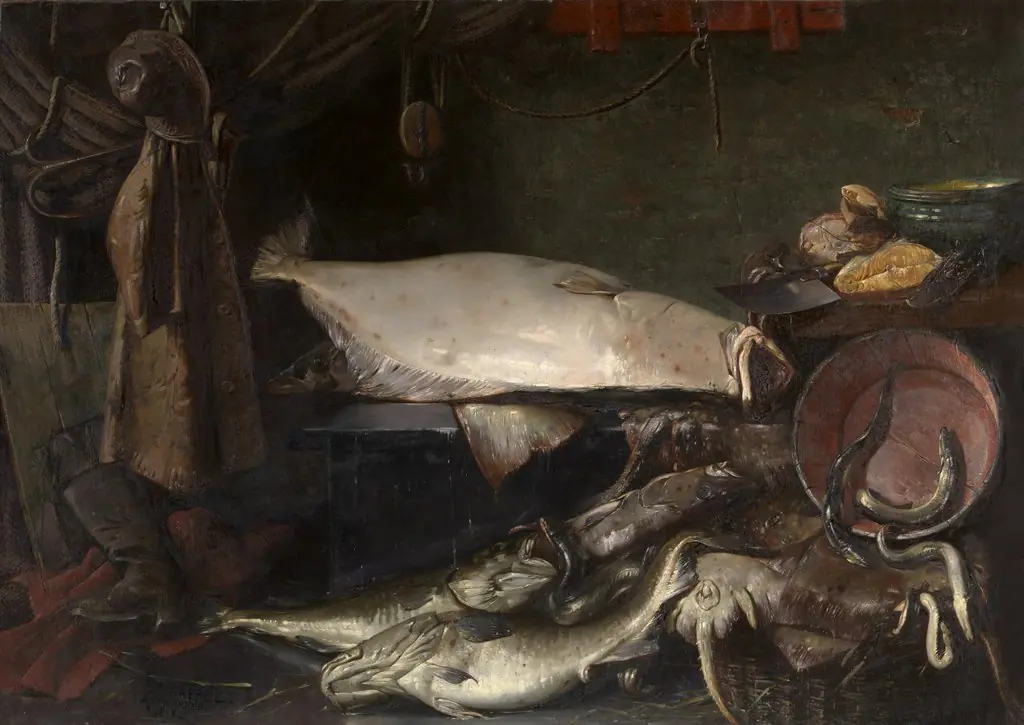
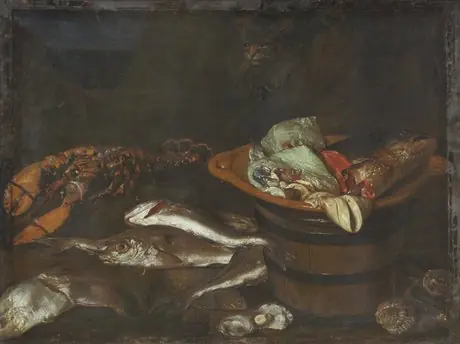
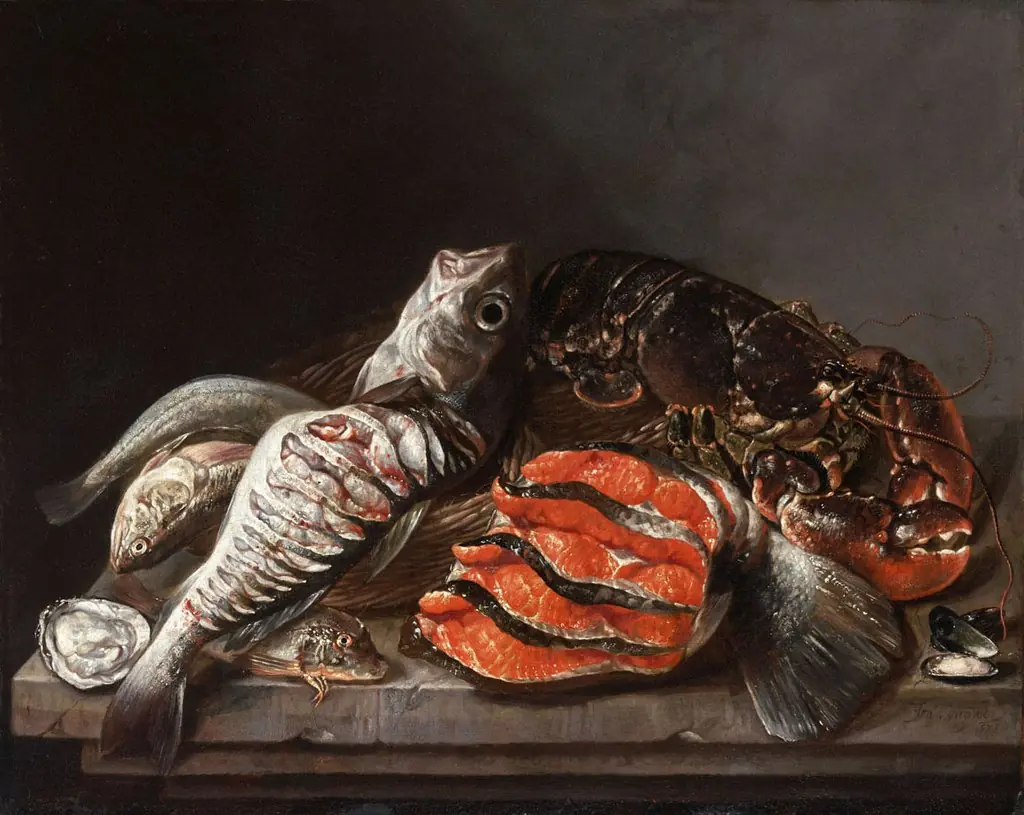
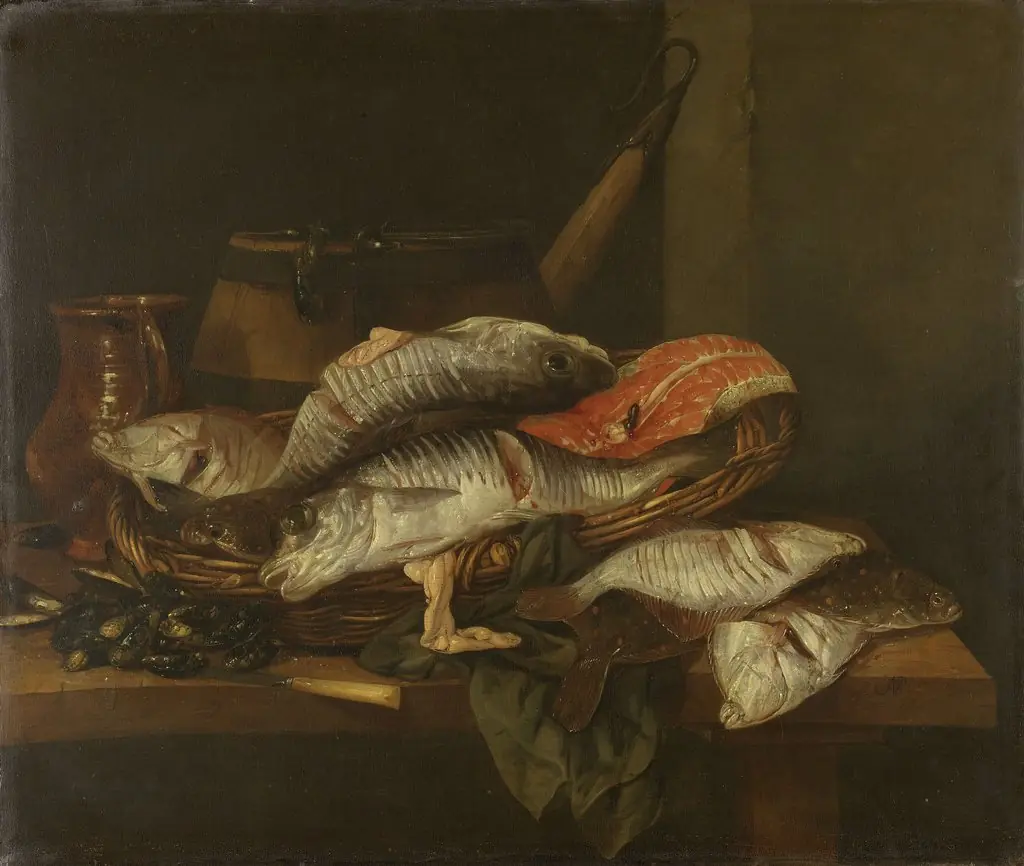
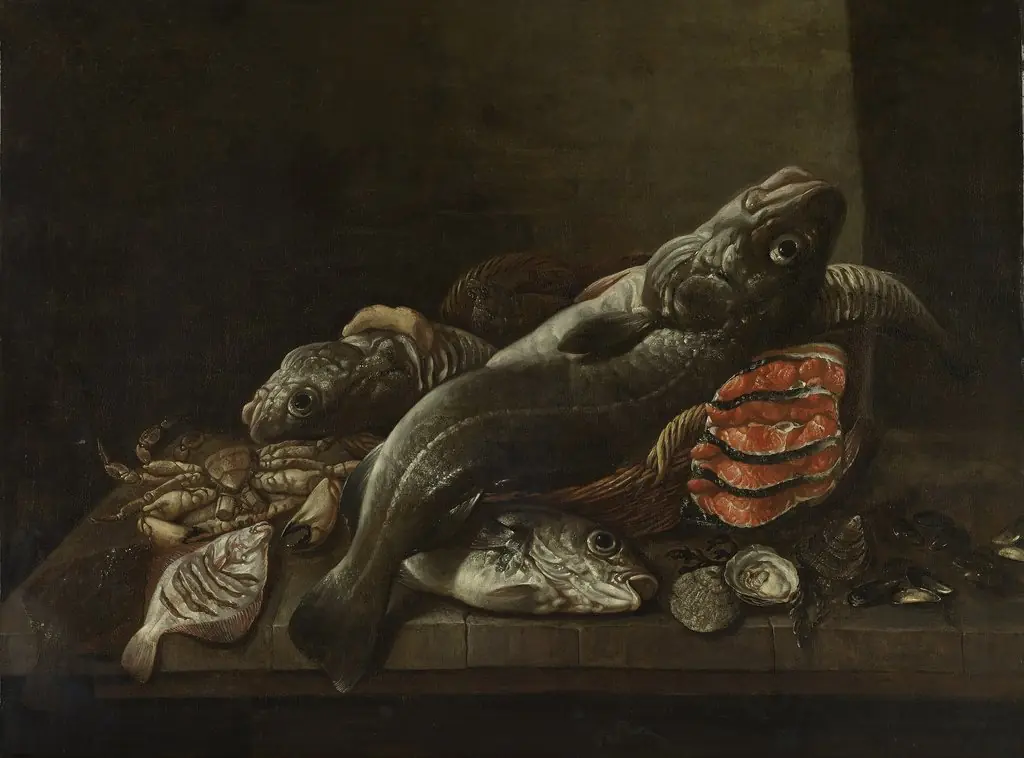
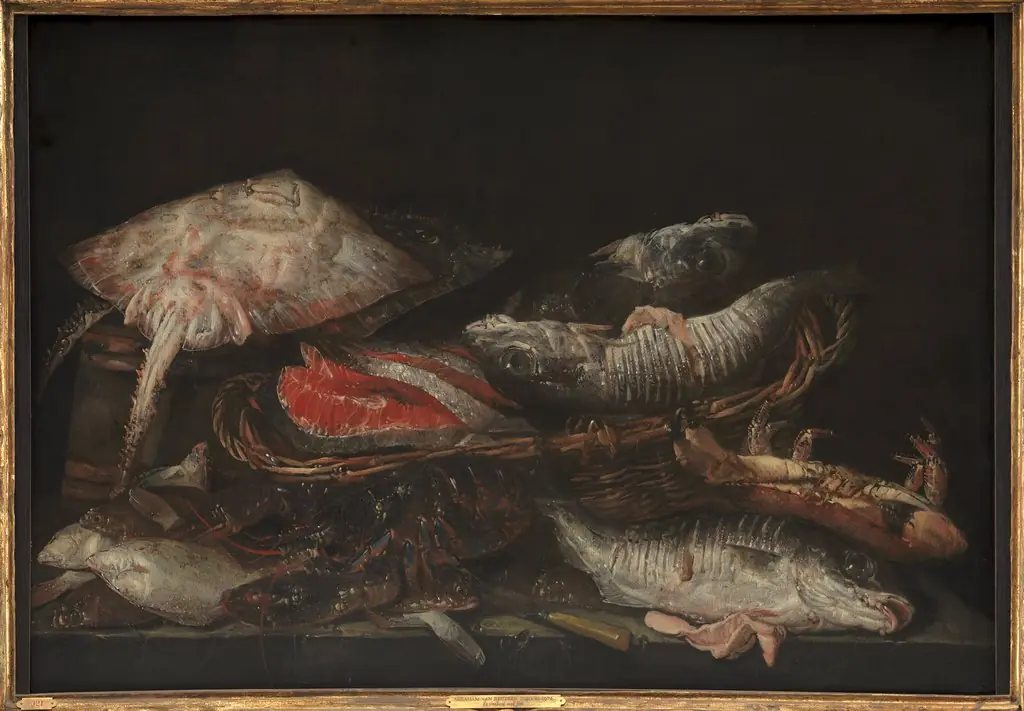
Still-life with Fishes is an oil painting by the Dutch Golden Age artist Abraham van Beijeren. It dates from 1650 and is held in the collection of the Gemäldegalerie Alte Meister.
About this work
Overview
The work is part of the Gemäldegalerie Alte Meister’s collection, where it contributes to the broader study of 17th-century Dutch material culture.
Painted around 1650 by Abraham van Beijeren, this oil-on-canvas still life presents a quiet arrangement of fish and seafood on a surface, likely a table or ledge. It reflects the artist’s shift from marine scenes to detailed domestic still lifes, a common trajectory among Dutch painters of the period. The work is part of the Gemäldegalerie Alte Meister’s collection, where it contributes to the broader study of 17th-century Dutch material culture.
Subject & Meaning
The composition centers on a modest haul of fish, some placed in a woven basket, others scattered across the surface. No overt symbolism is evident; the focus lies in the quiet observation of natural forms and the transient nature of perishable goods. The arrangement suggests a moment after market or catch, emphasizing the ordinary yet carefully observed details of daily life in the Dutch Republic.
Technique & Style
Van Beijeren employs subtle chiaroscuro to model the fish’s scales and flesh, using muted tones of gray, brown, and ochre to convey texture and weight. Light falls unevenly, enhancing the tactile quality of wet skin and gills. The brushwork is precise but unobtrusive, avoiding theatricality in favor of quiet realism. Overlapping forms and varied surface reflections create spatial depth without artificial perspective.
History & Provenance
The painting entered the Gemäldegalerie Alte Meister’s holdings in the 19th century, likely through state acquisitions or private donations from German collections. Its attribution to van Beijeren has remained consistent since its cataloging. While its exact early ownership is undocumented, its presence in a major European museum underscores its recognized place in the canon of Dutch still-life painting.
Context
Produced during the Dutch Golden Age, the work aligns with a broader cultural interest in domestic abundance and the aesthetics of the everyday. Still lifes featuring fish were common in coastal regions, reflecting both economic activity and the rising middle class’s appetite for art that celebrated material comfort. Van Beijeren’s focus on seafood distinguishes him from contemporaries who favored fruit or tableware.
Legacy
Van Beijeren’s fish still lifes influenced later Dutch painters by demonstrating how humble subjects could sustain visual interest through careful observation and tonal control. Though less celebrated than still-life specialists like Willem Kalf, his work remains a quiet example of how realism, without grandeur, could capture the textures and rhythms of ordinary life in 17th-century Holland.
Artist & collection
Artist
Abraham Hendriksz van Beijeren or Abraham van Beyeren (c. 1620, The Hague – March 1690, Overschie (Rotterdam)) was a Dutch Baroque painter of still lifes. Little recognized in his day and initially active as a marine…

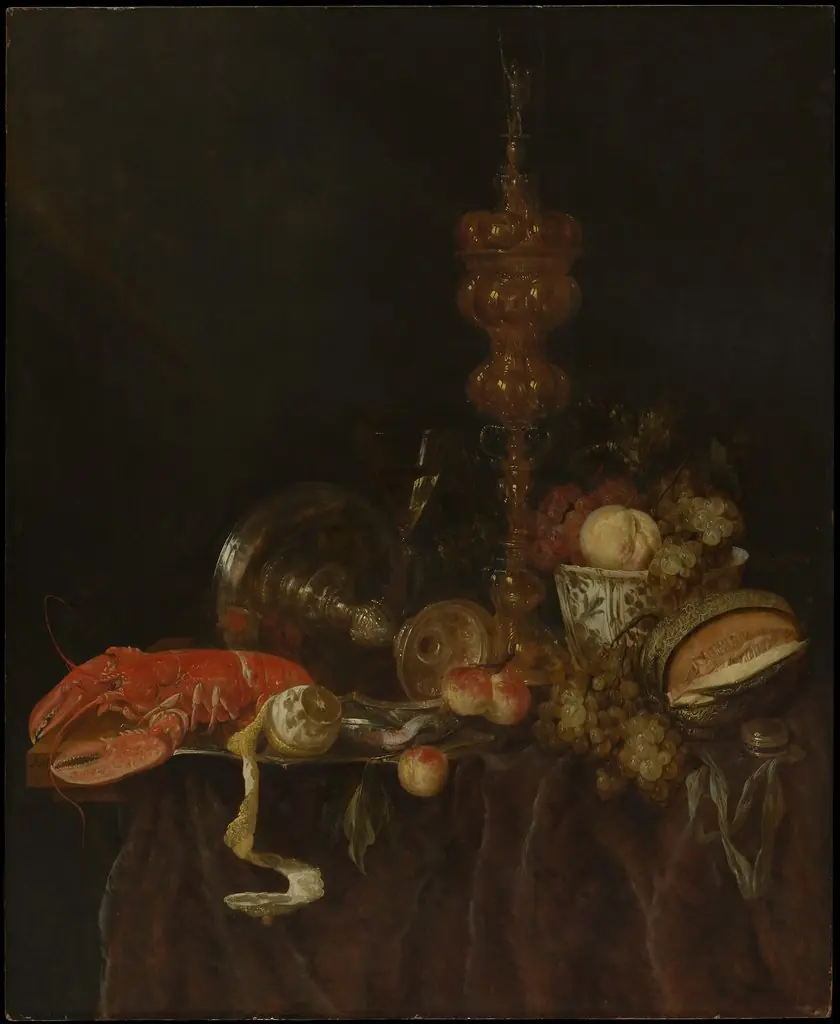 Still Life with Lobster and Fruit
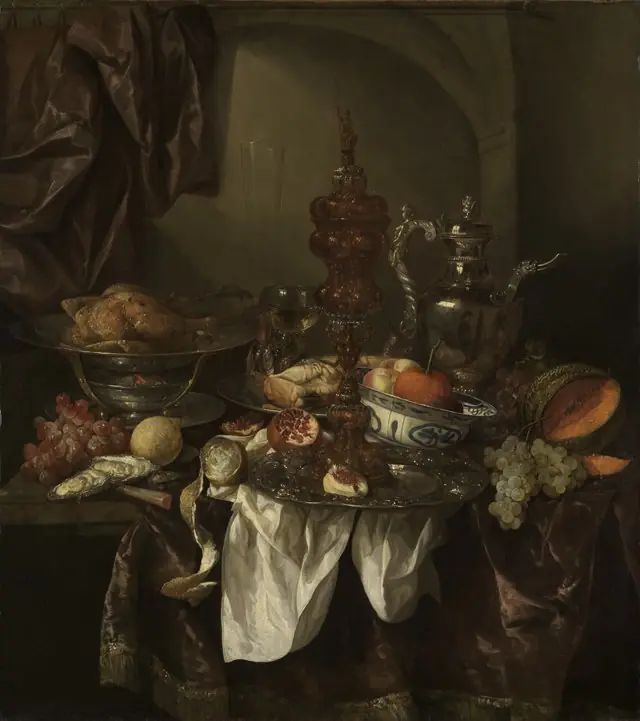 Still life with fruit, roast, silver- and glassware, porcelain and columbine cup on a dark tablecloth with white serviette
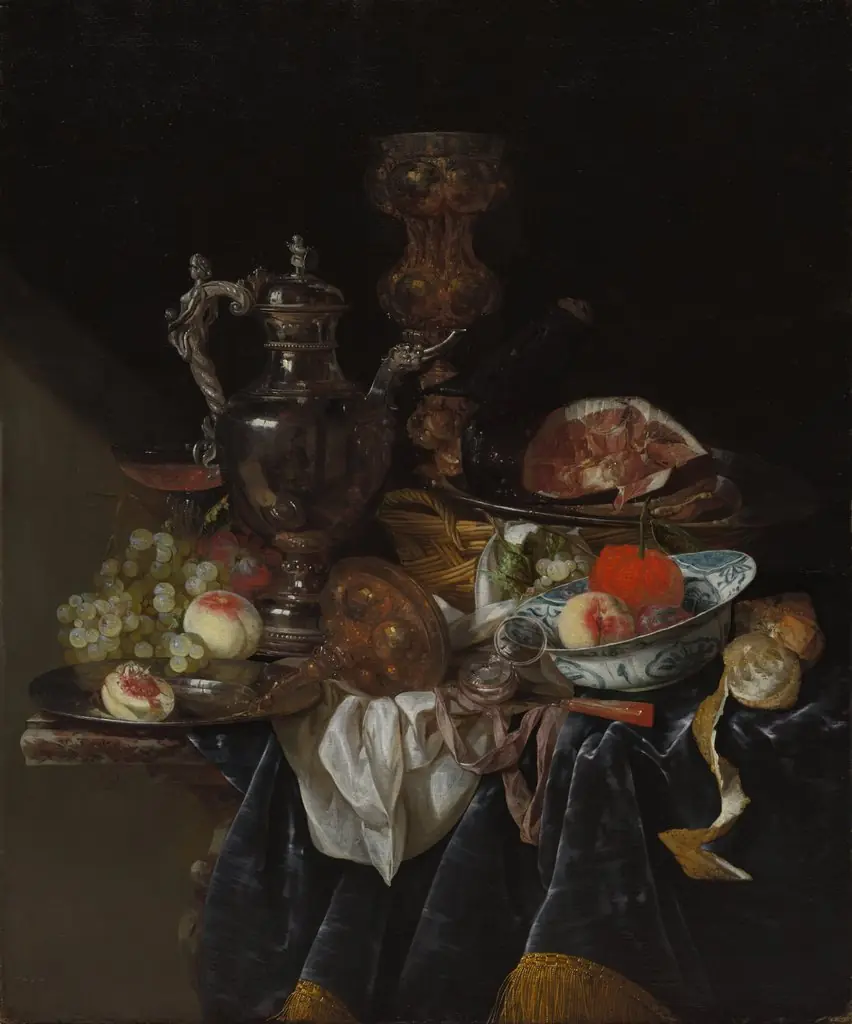 Silver Wine Jug, Ham, and Fruit
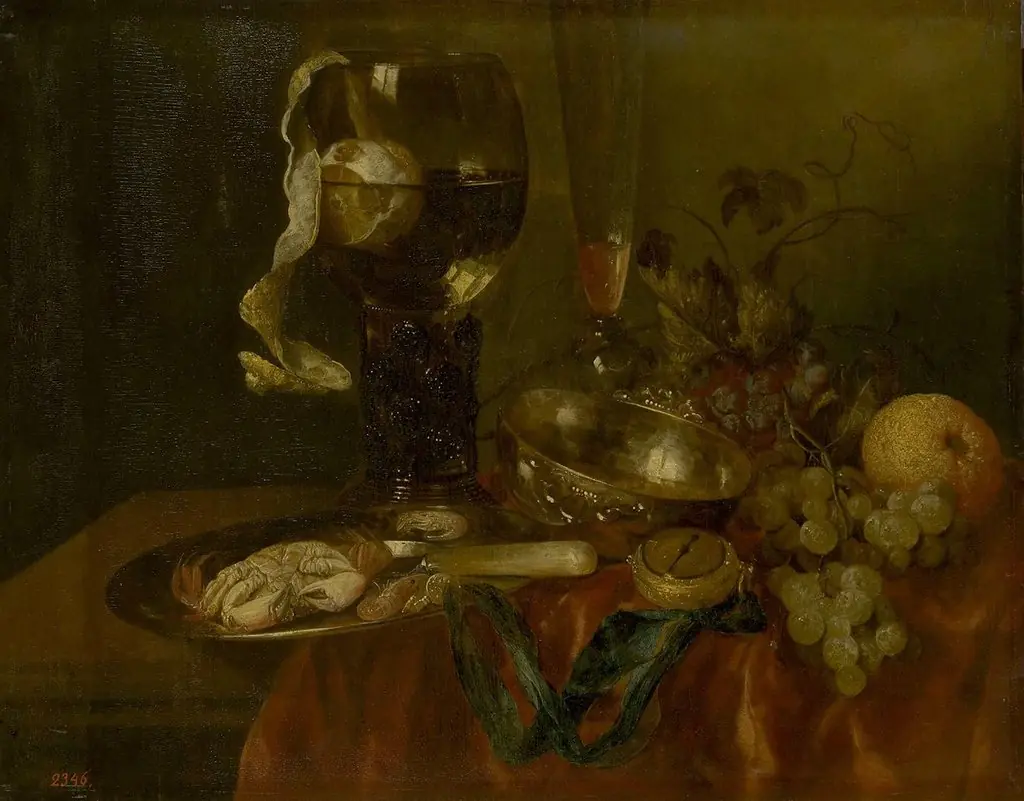 Snack (Still Life with Crab, Fruit and Clock)
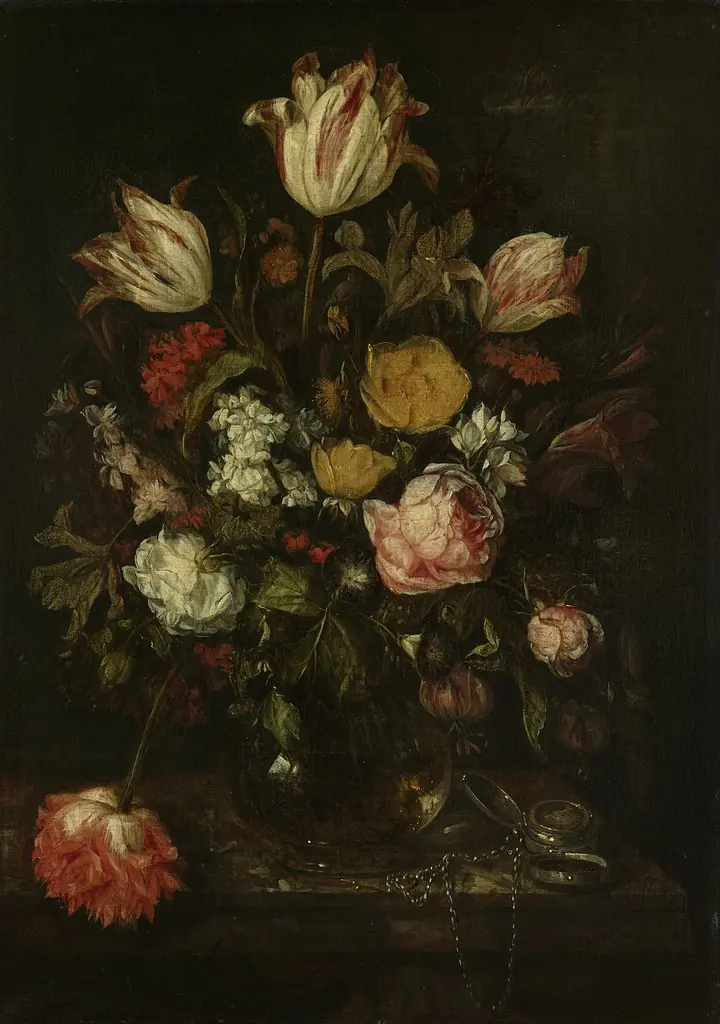 Still life with flowers
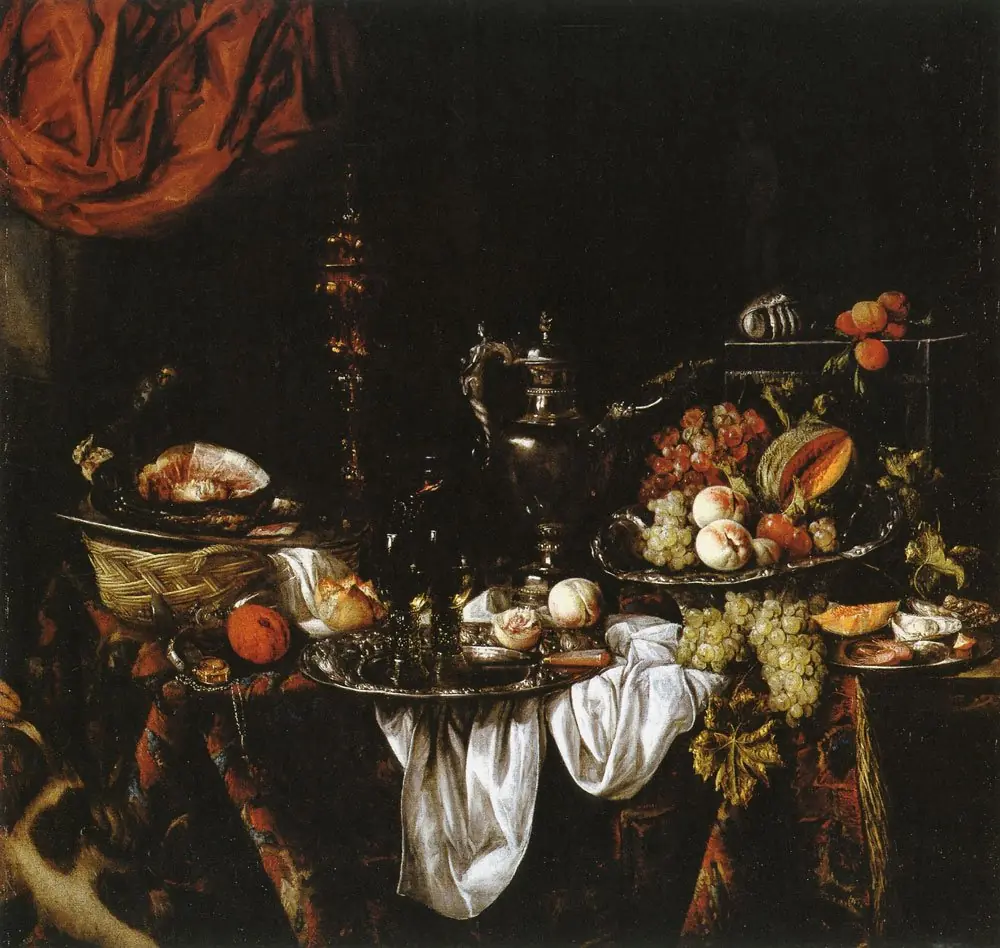 Still life on a draped table with a sculpture of Venus in a niche behind a curtain
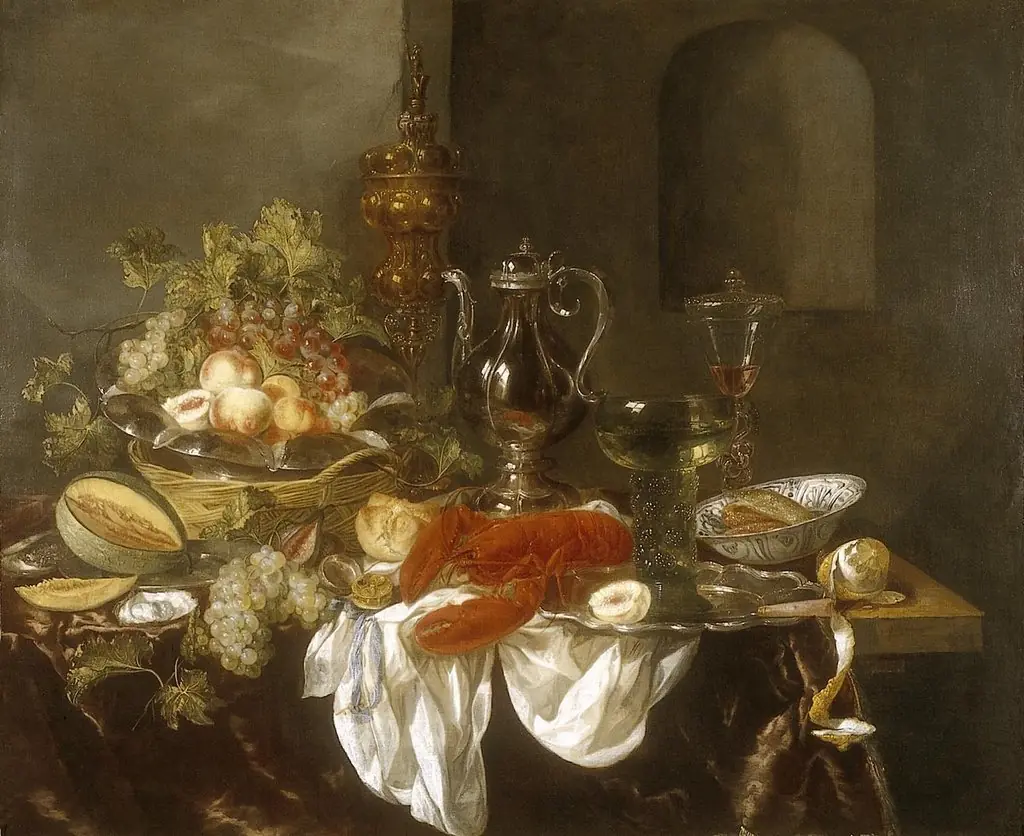 still-life
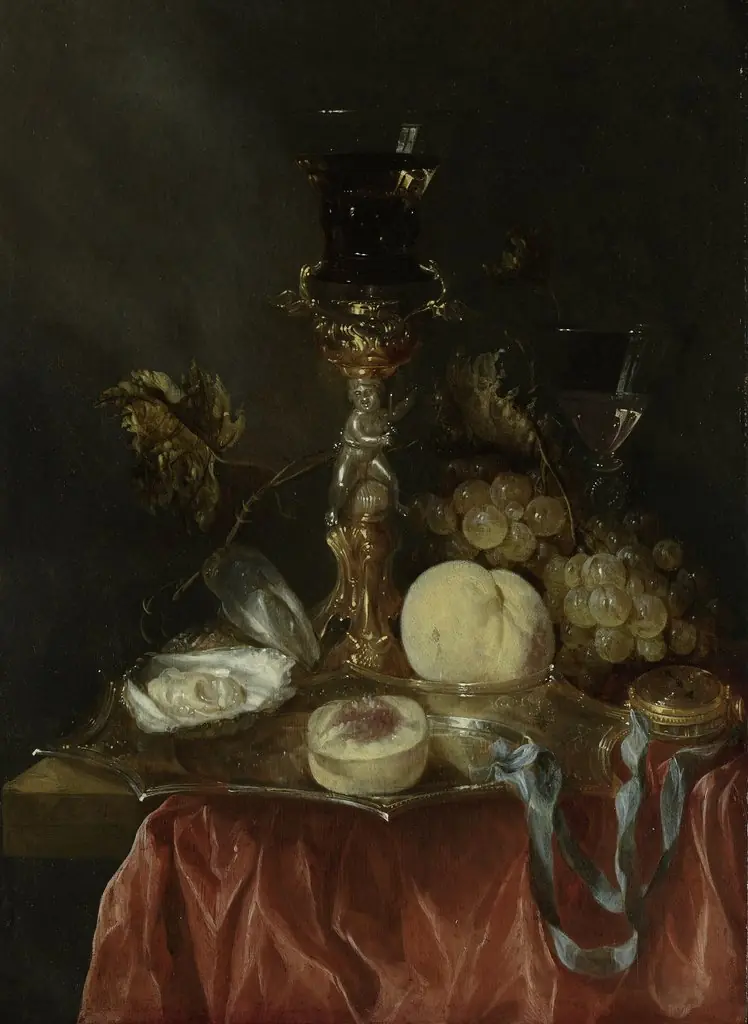 Still Life with Silver-gilt Bekerschroef with Roemer