Artwork
Still life with peaches and grapes
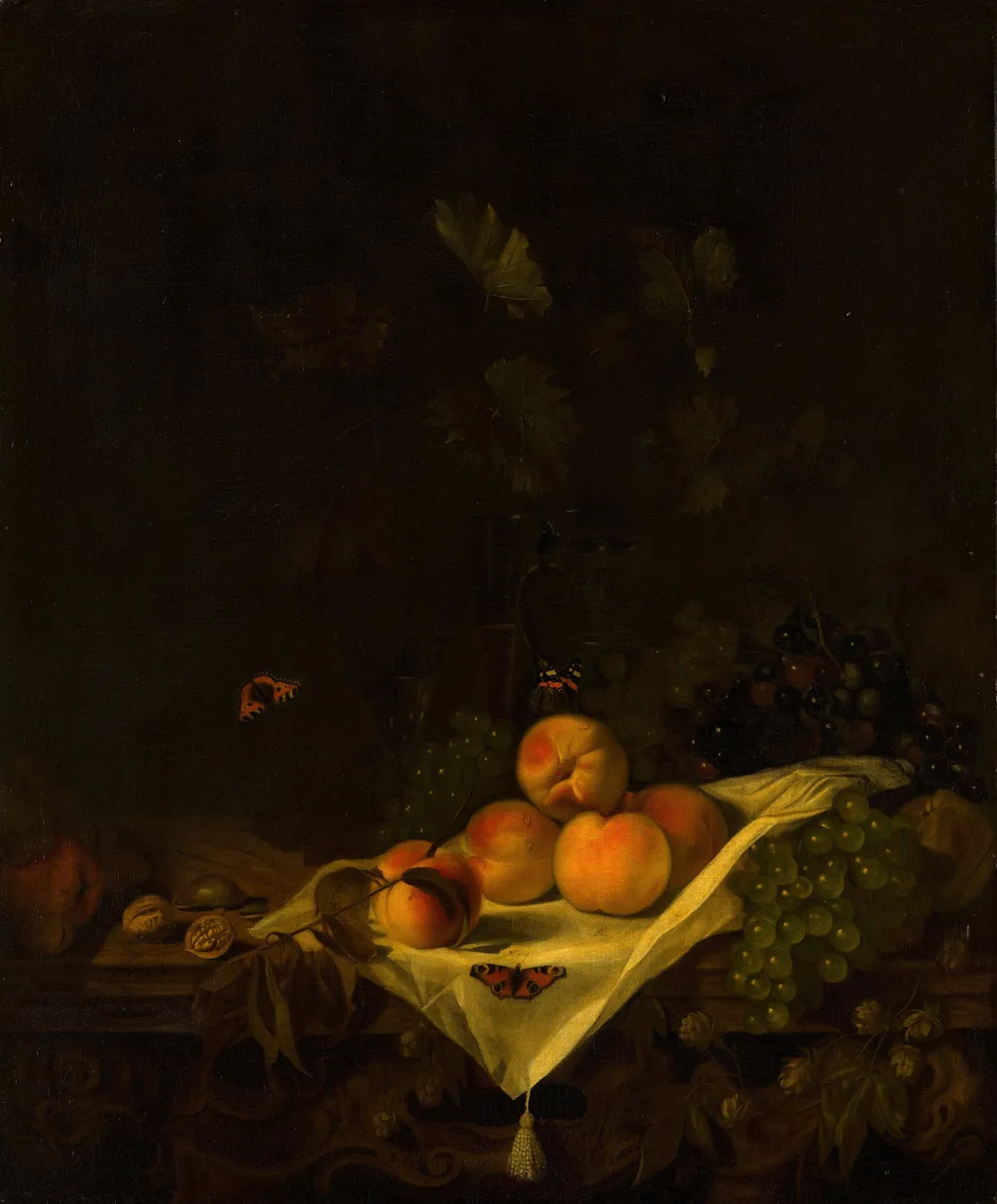
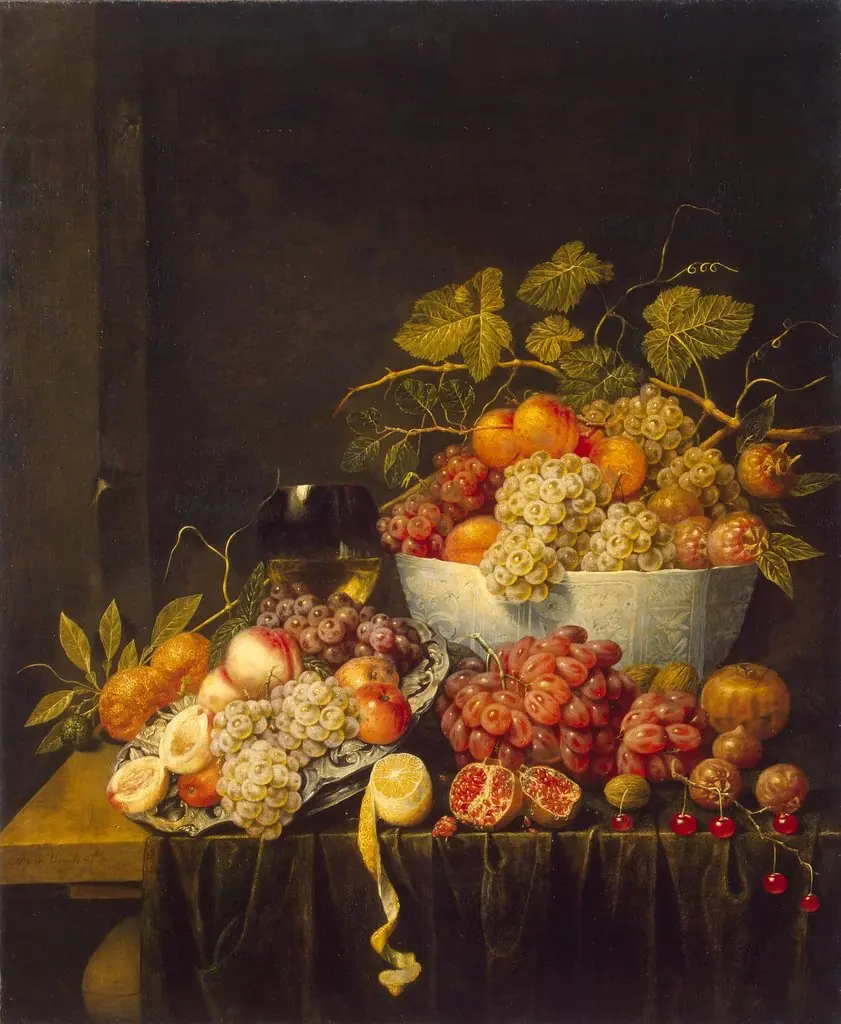
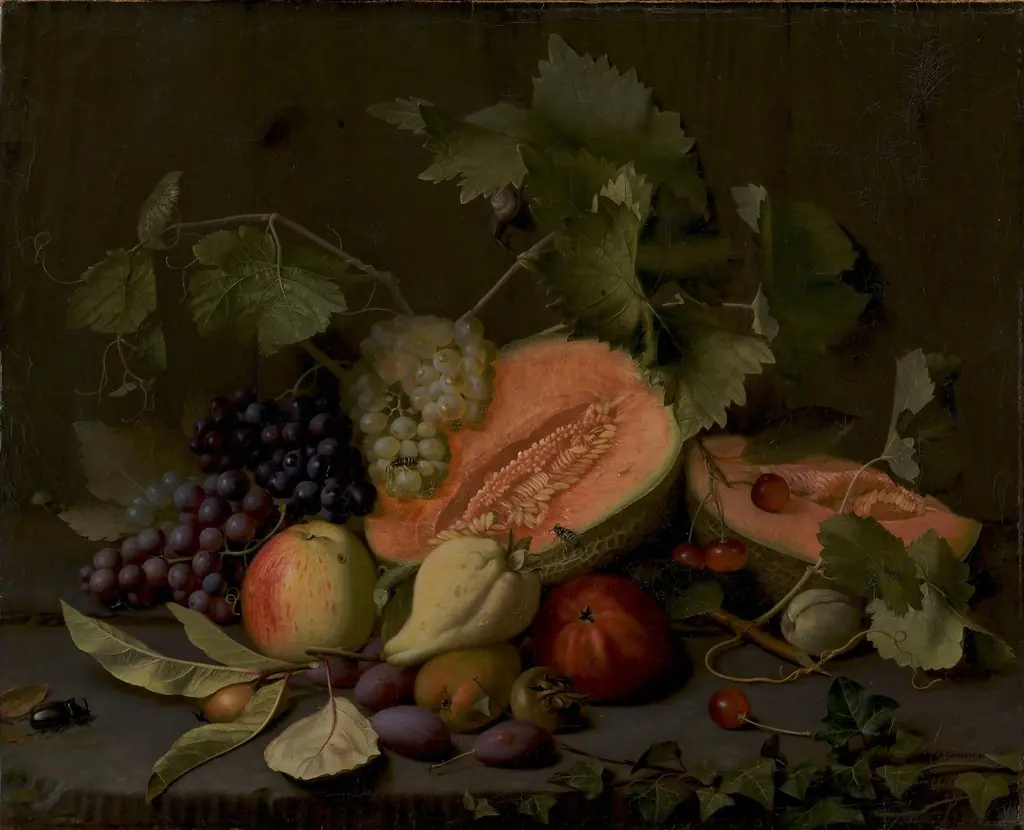
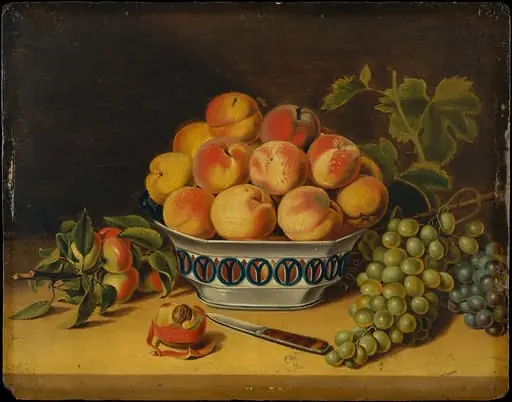
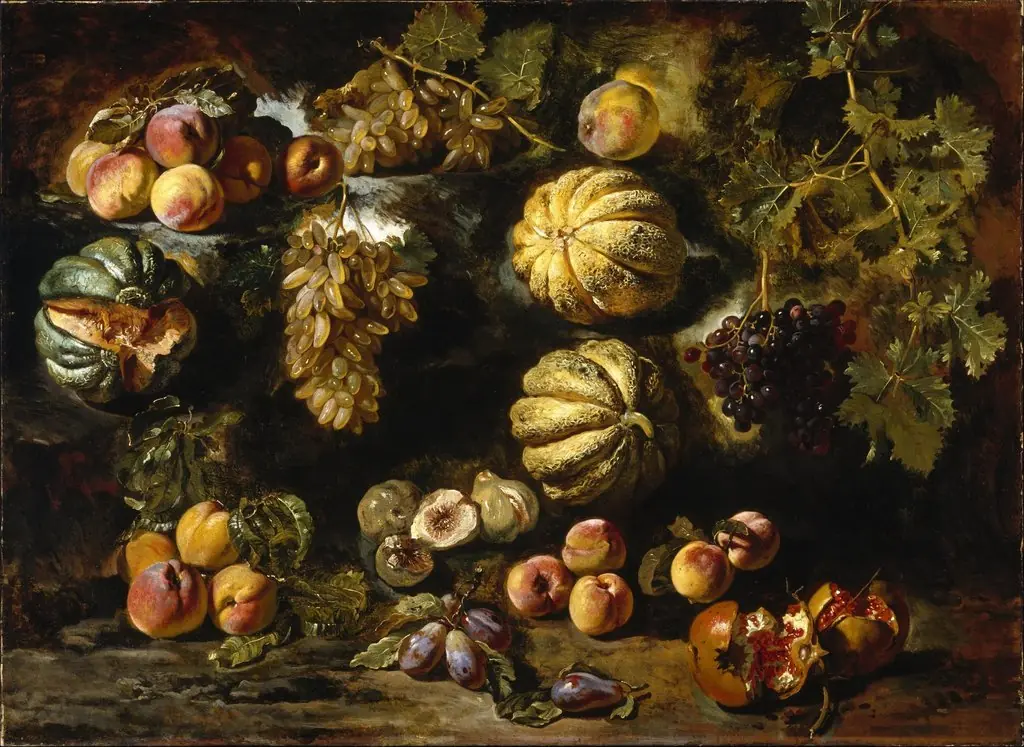
Still life with peaches and grapes is an oil painting by the Dutch Golden Age artist Abraham van Calraet. It dates from 1690 and is held in the collection of the Mauritshuis.
About this work
Overview
Still life with peaches and grapes is a 1690 oil painting by Abraham van Calraet, a Dutch Golden Age artist. The work features a composition of fruit and a butterfly on a table against a dark background, characteristic of the Dutch Golden Age style.
Subject & Meaning
The painting depicts a still life with ripe peaches (one cut open), green grapes, walnuts, and a European peacock butterfly on a light-draped table. The subject emphasizes the play of light on everyday luxury items, inviting contemplation on abundance and transience.
Technique & Style
Van Calraet employed chiaroscuro to dramatic effect, using a dark background to accentuate the vibrant colors of the fruit. The meticulous rendering of light and shadow on the peaches and grapes achieves a high degree of realism.
History & Provenance
Created in 1690, the painting is part of the Mauritshuis collection. While Van Calraet was also known for portraits and landscapes, this work showcases his skill in still-life painting, a popular genre during the Dutch Golden Age.
Context
The piece reflects the Dutch Golden Age's fascination with still-life paintings, which often symbolized wealth and the fleeting nature of life. The use of chiaroscuro links it to broader European artistic trends of the time.
Own this work as a print
Artist & collection
Artist
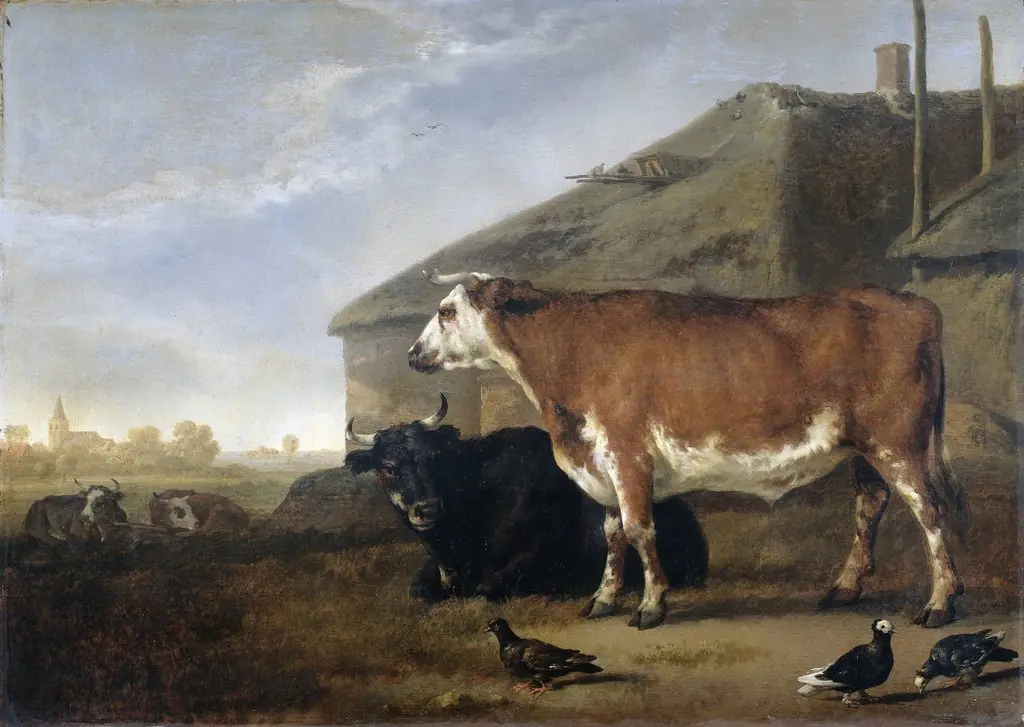
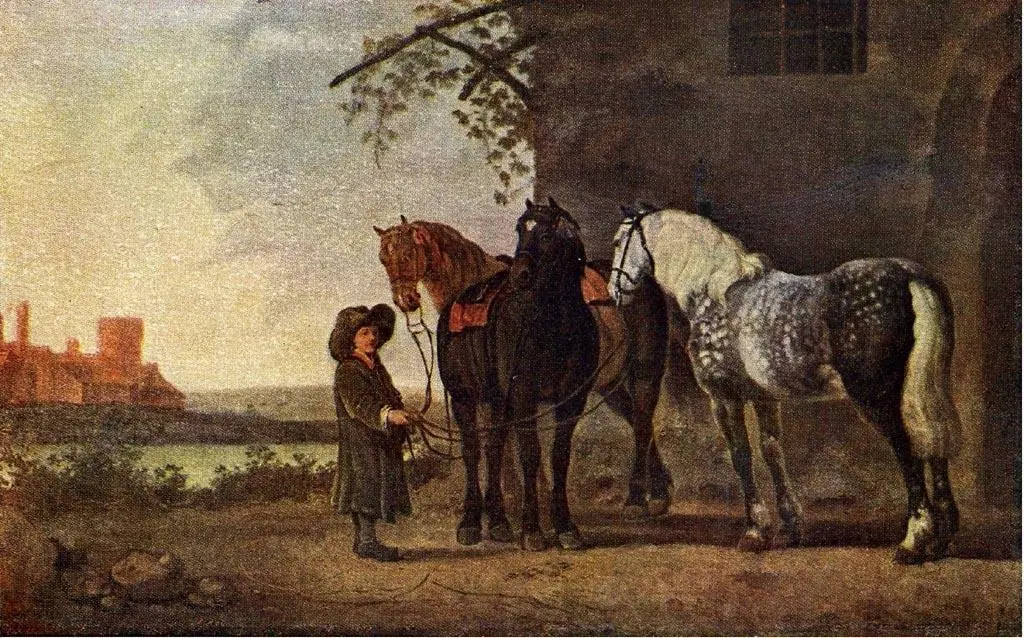
Abraham van Calraet, or Kalraat (7–12 October 1642, Dordrecht – 11 June 1722, Dordrecht) was a Dutch Golden Age still-life, portrait- and landscape painter.