Artwork
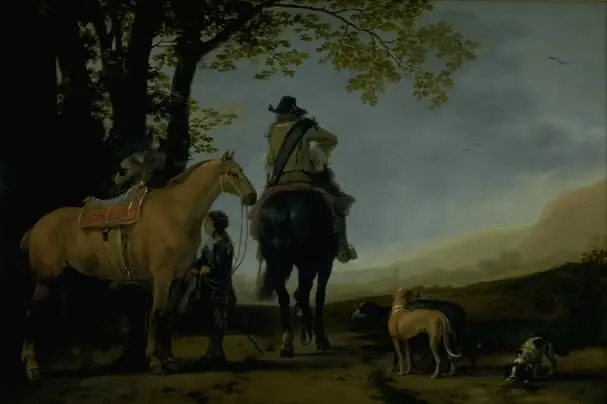
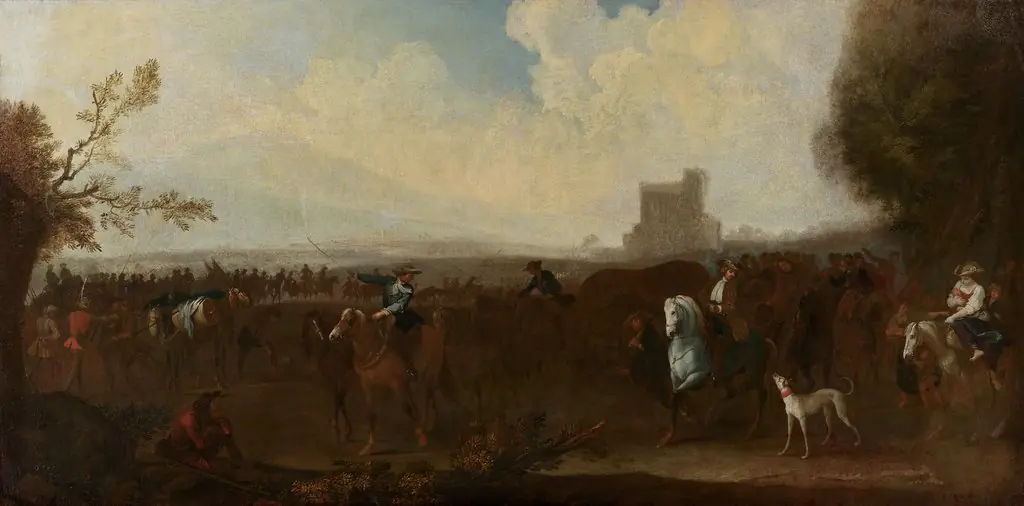
Stopping Place for Horsemen and Horses
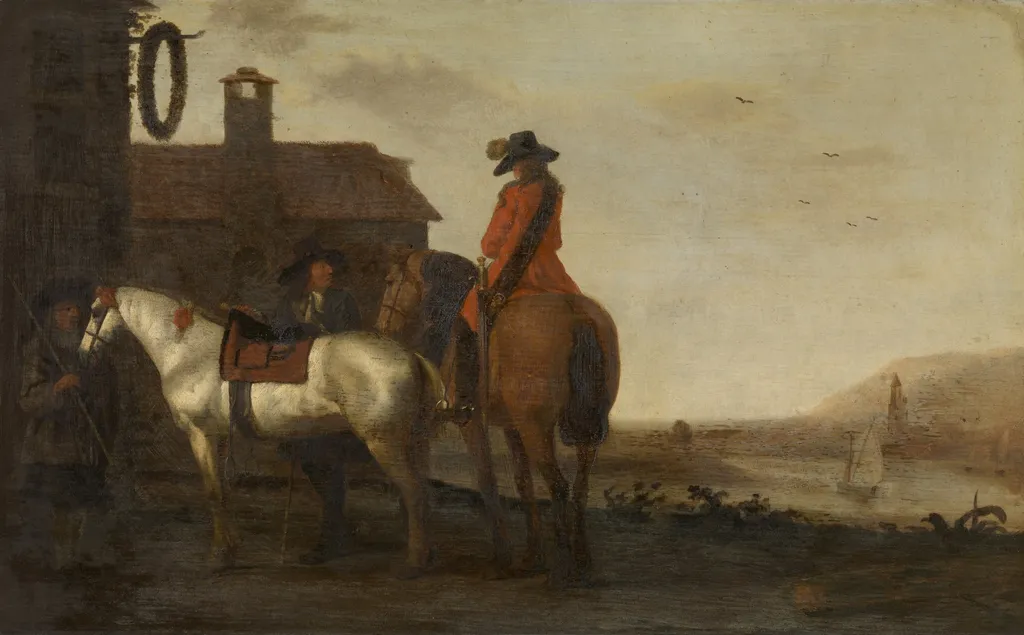
Stopping Place for Horsemen and Horses is an oil painting by the Dutch Golden Age artist Abraham van Calraet. It dates from 1692 and is held in the collection of the Royal Museum of Fine Arts Antwerp.
About this work
Overview
Painted around 1692 by Abraham van Calraet, this oil on canvas depicts a quiet moment of rest for travelers and their horses in a rural Dutch landscape.
Painted around 1692 by Abraham van Calraet, this oil on canvas depicts a quiet moment of rest for travelers and their horses in a rural Dutch landscape. Van Calraet, based in Dordrecht, was known for his versatility across still life, portraiture, and landscape genres. The scene captures a transient pause in daily travel, reflecting the Dutch Golden Age’s fascination with ordinary, unidealized moments of life.
Subject & Meaning
The painting shows three men and their horses at a roadside halt, one seated, one standing, and one on horseback. Their attire suggests varied social standing, with a vivid red coat contrasting against darker garments. A nearby building with a chimney and a distant boat on water imply a network of local travel and commerce. The scene conveys no drama or narrative climax, instead emphasizing stillness and the rhythm of rural life.
Technique & Style
Van Calraet employs subtle tonal contrasts to define forms without dramatic lighting, aligning with the restrained realism of Dutch landscape traditions. Brushwork is precise yet unobtrusive, rendering textures of fabric, animal hide, and foliage with quiet attention. The composition is balanced, with horizontal elements—horses, buildings, and water—anchoring the calm atmosphere, avoiding theatrical perspective or exaggerated depth.
History & Provenance
The painting has been part of the Royal Museum of Fine Arts Antwerp’s collection since at least the 19th century. Its early ownership history is undocumented, but its presence in a major Belgian institution suggests it was acquired during a period of renewed interest in Dutch 17th-century genre scenes. No significant alterations or restorations are publicly recorded.
Context
In late 17th-century Holland, landscape and genre scenes flourished as markers of civic pride and economic stability. Artists like van Calraet turned away from mythological grandeur to depict the quiet routines of travel, labor, and nature. This work fits within a broader trend of valuing the mundane, where horses, roads, and inns became subjects worthy of careful observation and artistic record.
Legacy
Though not among the most widely studied artists of his time, van Calraet’s work contributes to the understanding of regional Dutch painting beyond the major urban centers. His focus on understated, everyday moments helped sustain the tradition of observational realism. This painting remains a quiet example of how Dutch artists found dignity in the transient and the ordinary.
Own this work as a print
Artist & collection
Artist
Abraham van Calraet, or Kalraat (7–12 October 1642, Dordrecht – 11 June 1722, Dordrecht) was a Dutch Golden Age still-life, portrait- and landscape painter.

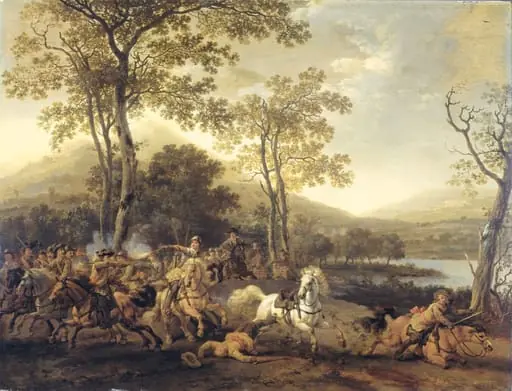
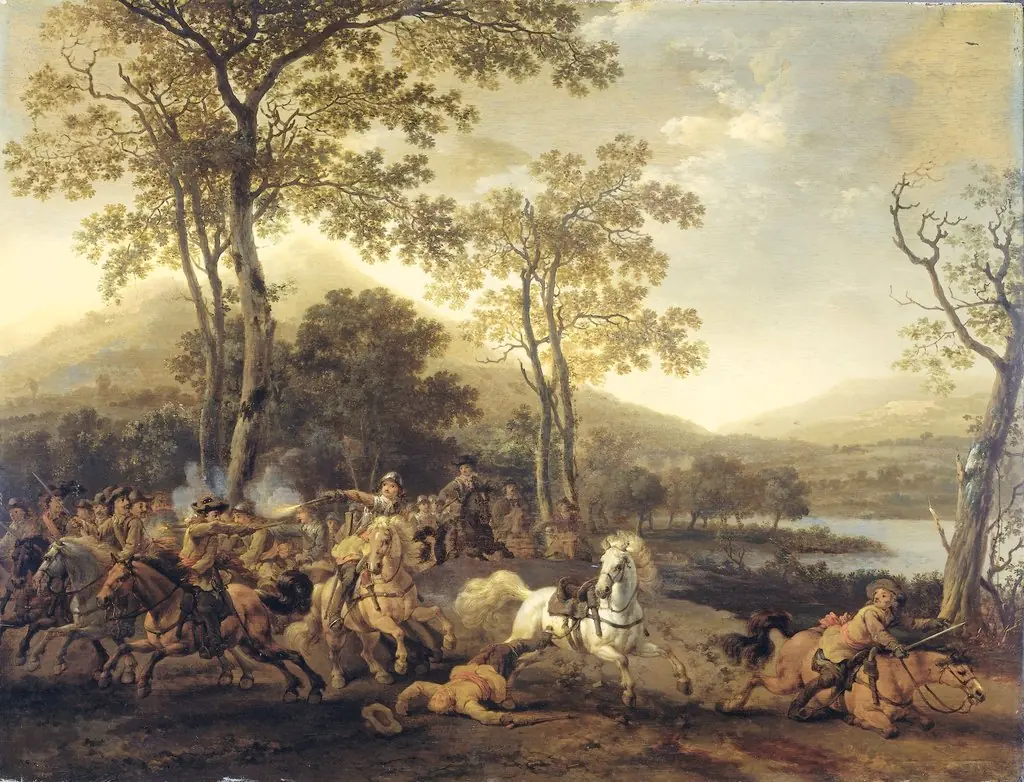
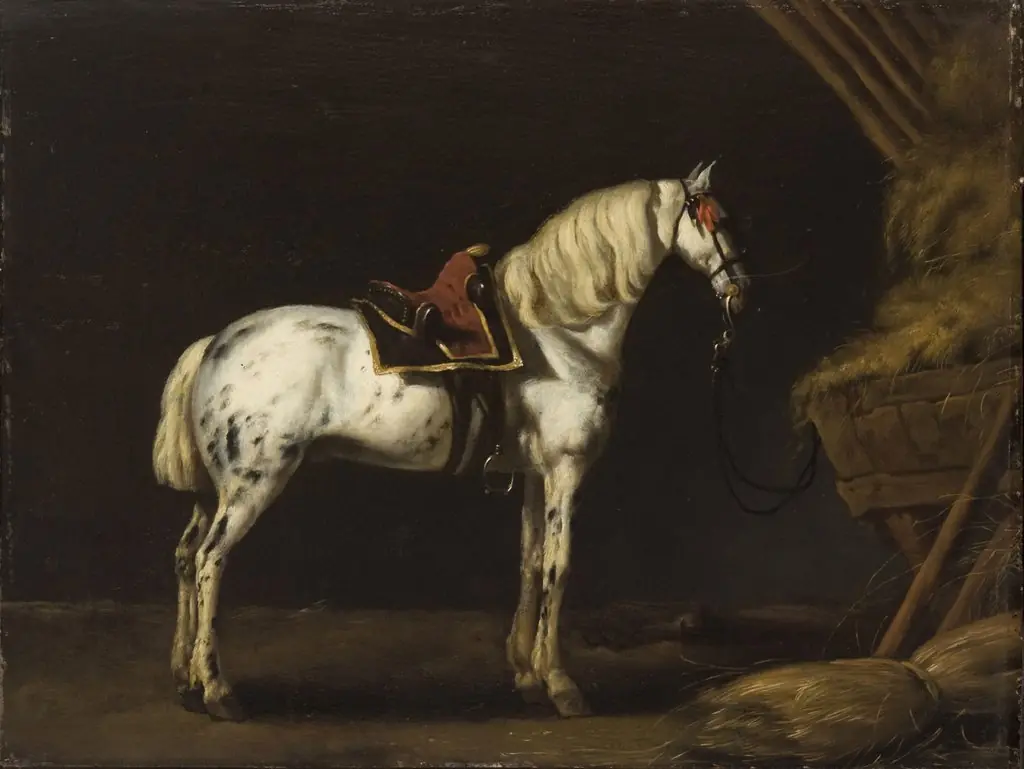
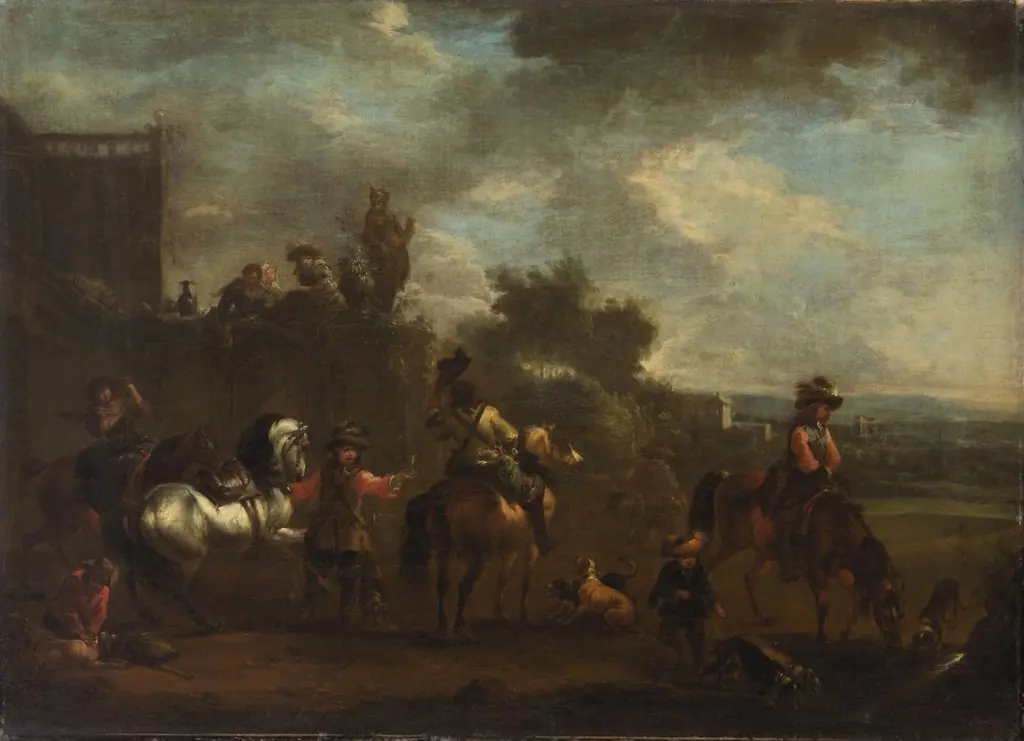 Ausritt zur Jagd
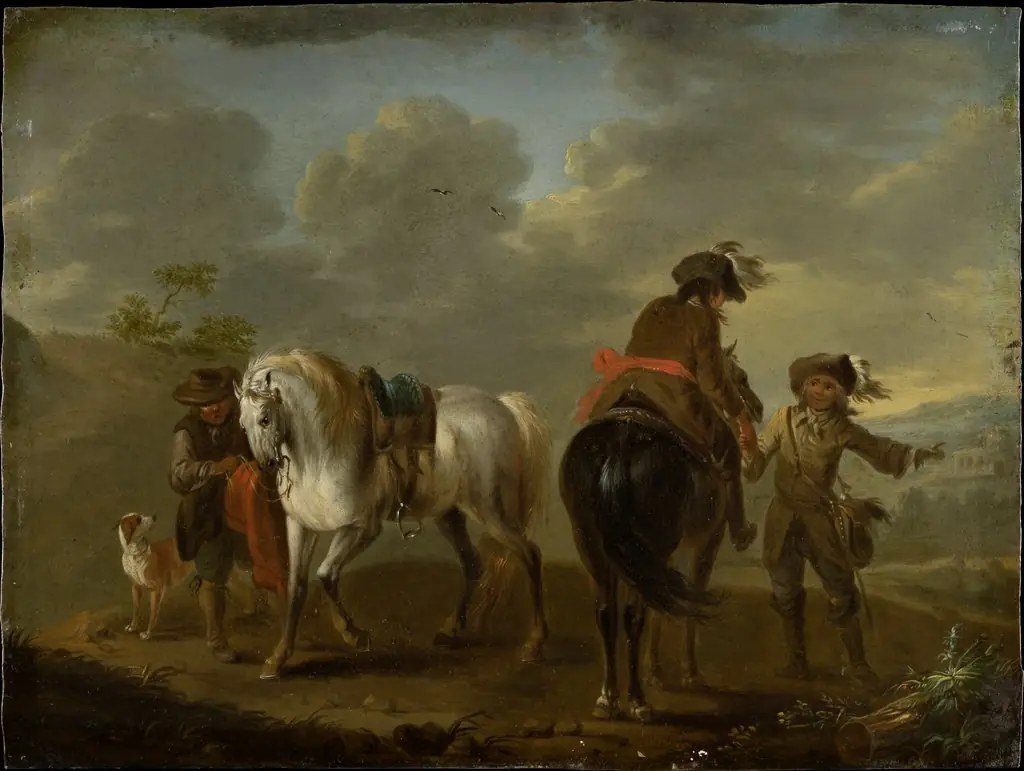 Landscape with Riders
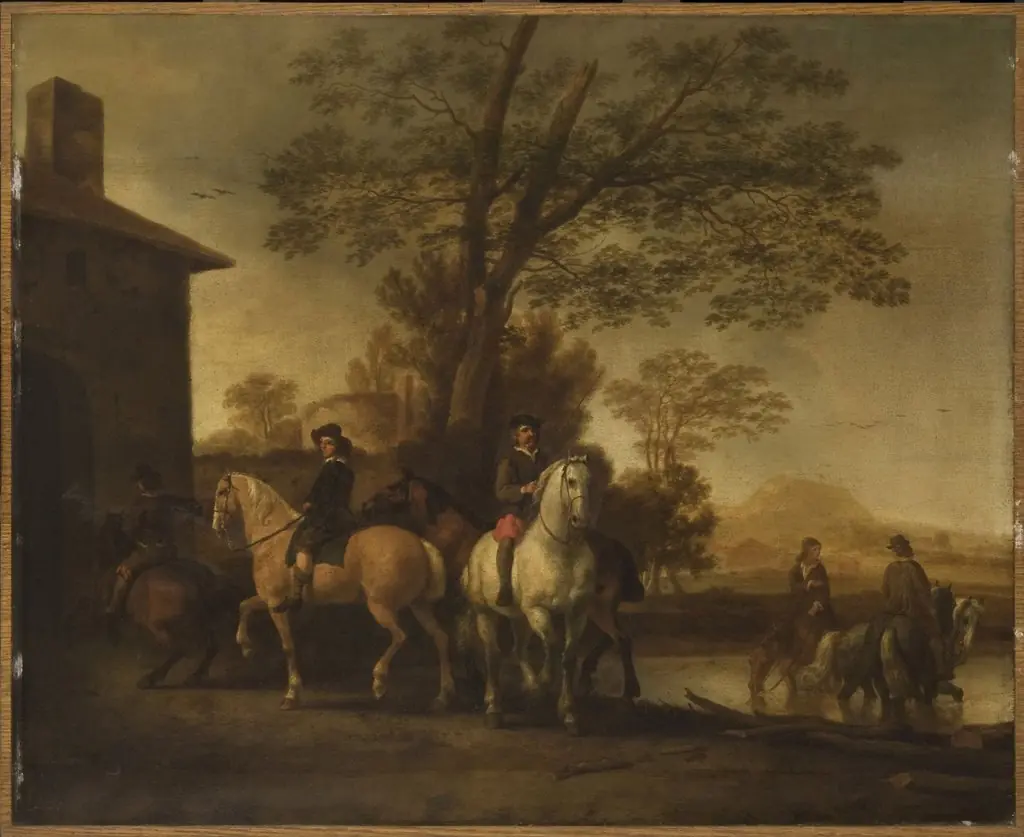 Horsemen Watering Their Horses
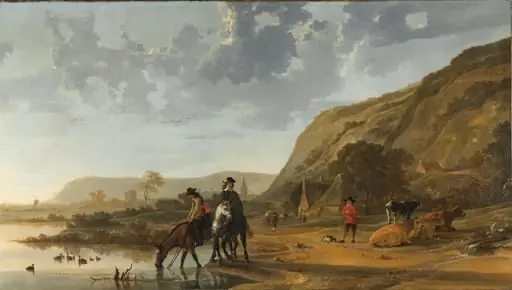 River Landscape with Riders
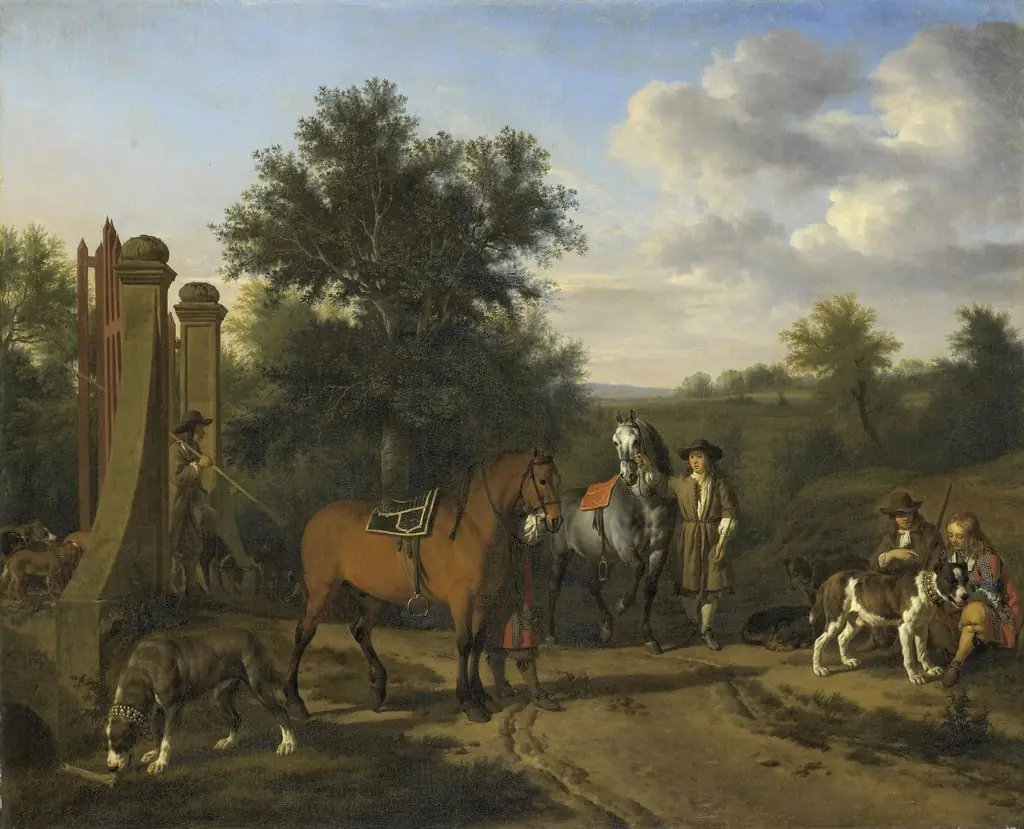 The hunting party
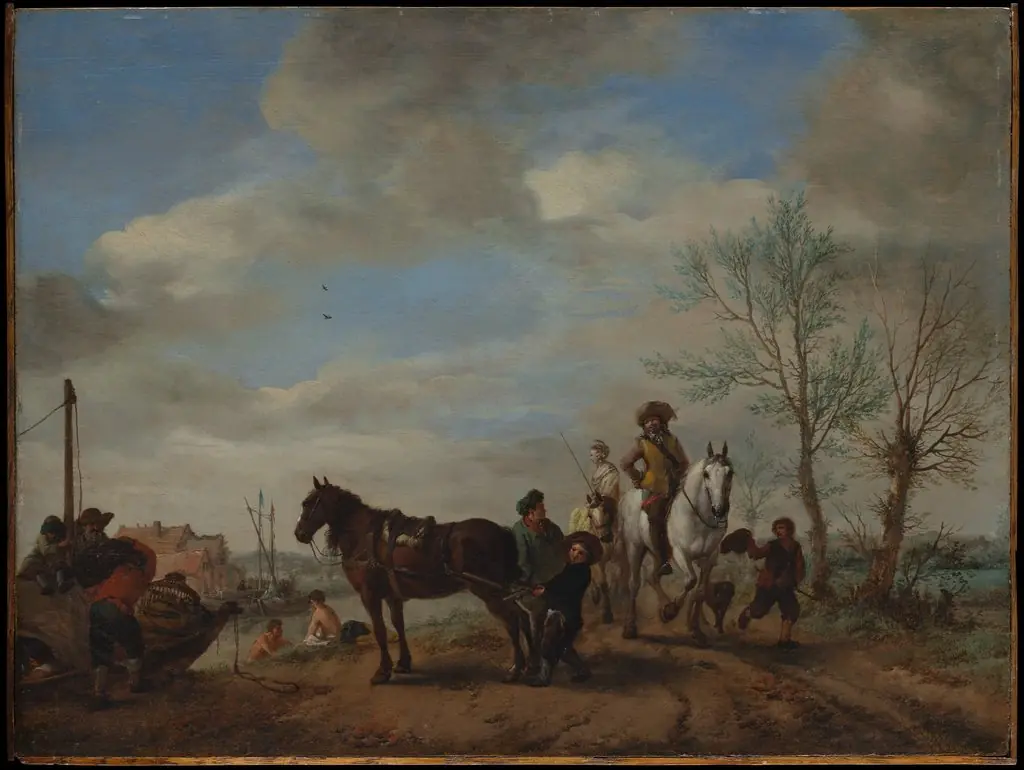 A Man and a Woman on Horseback
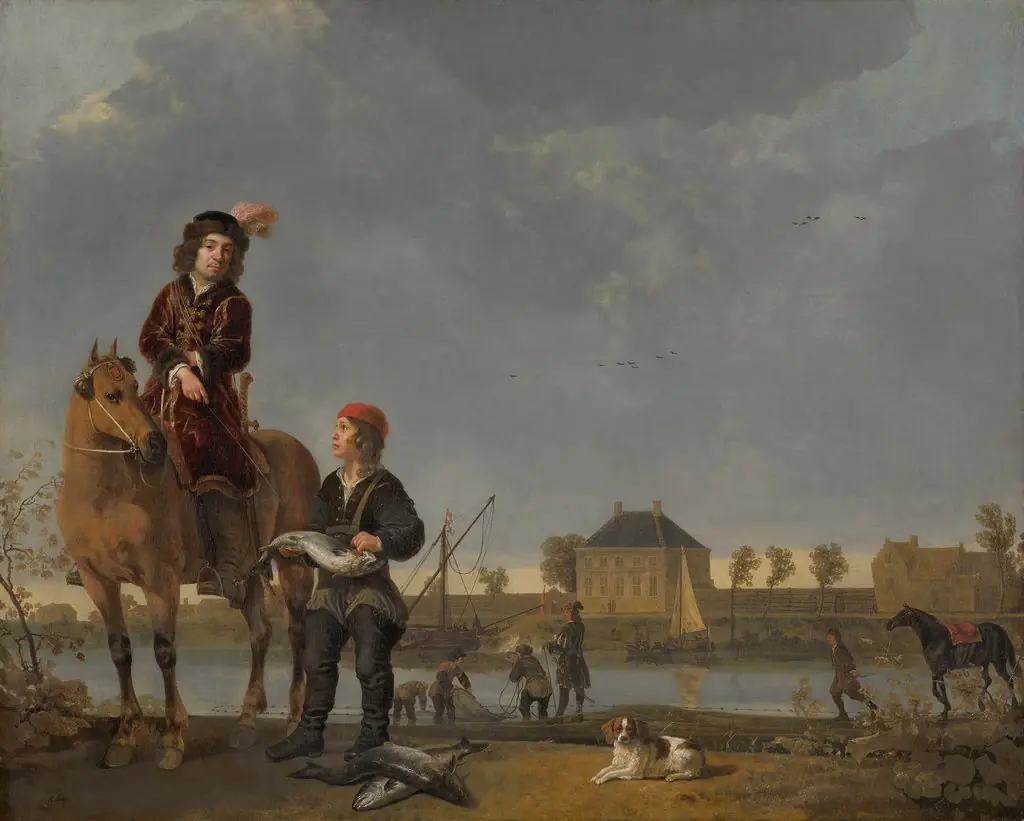 Equestrian Portrait of Pieter de Roovere
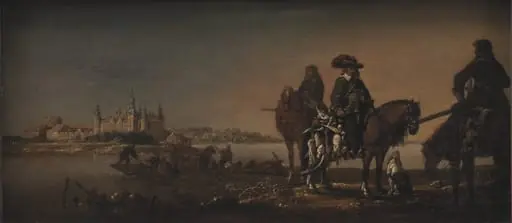 Prince Christian, the Heir Apparent, Hunting Ducks at Nykøbing Castle
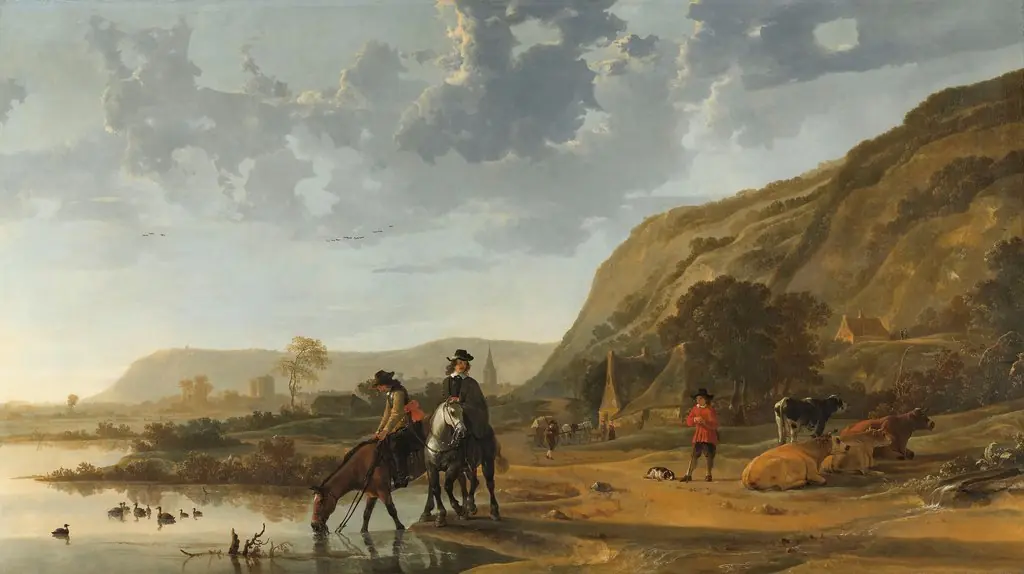 River Landscape with Riders
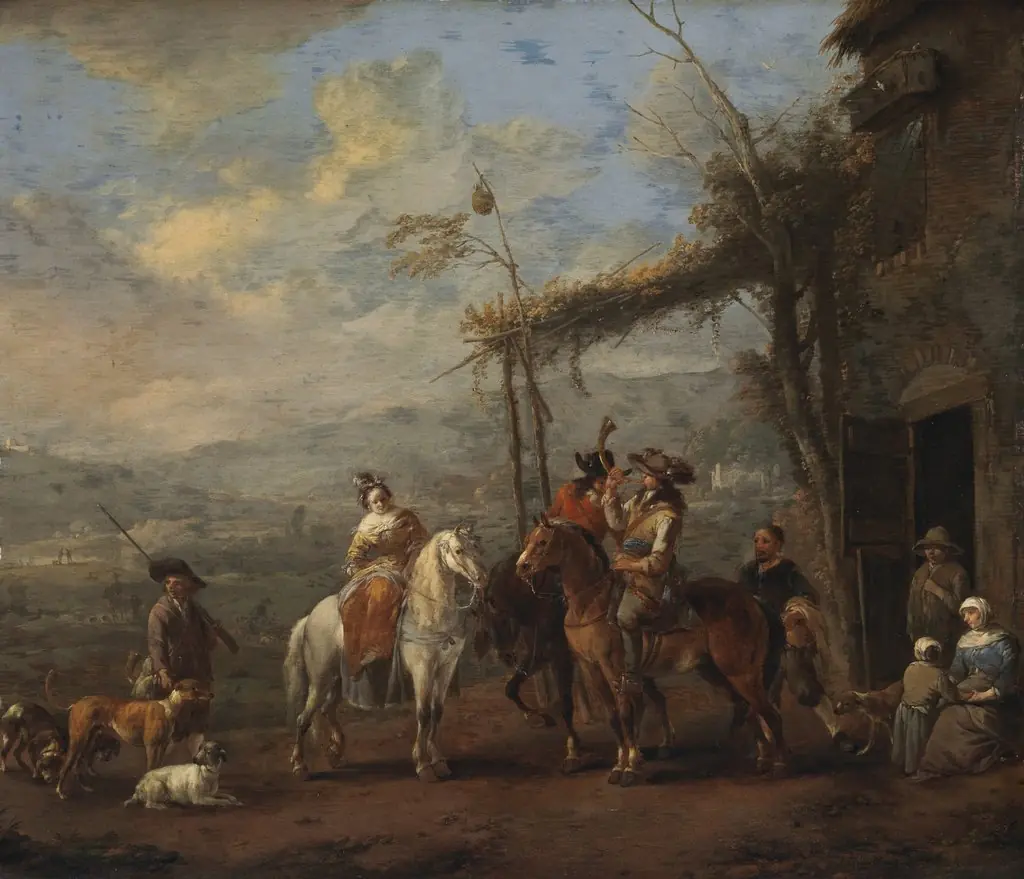 A Hunting Party
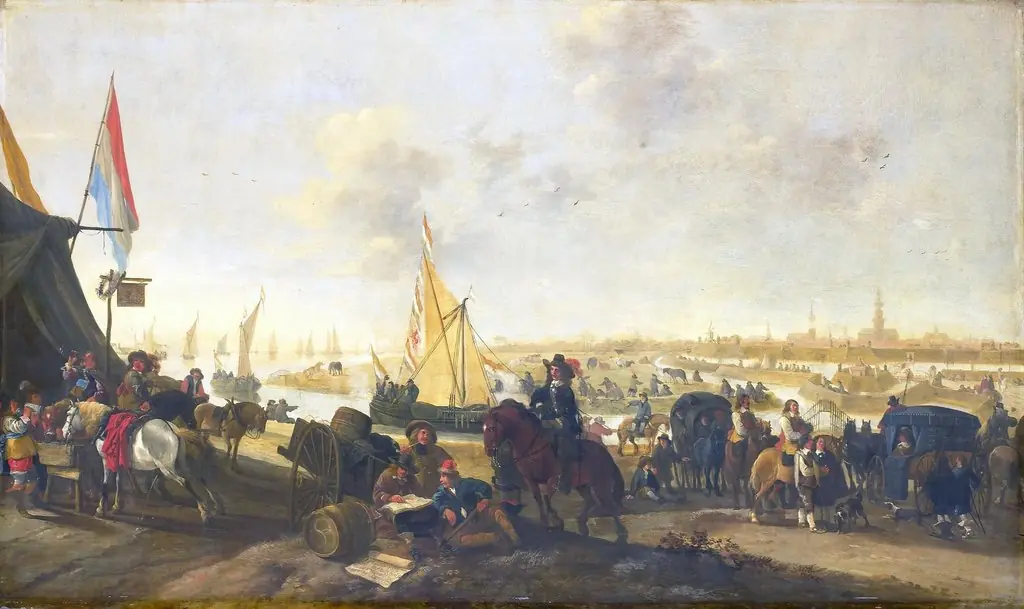 The Siege and Capture of the City of Hulst from the Spaniards, November 5, 1645
 Campaign with horses and riders