Artwork
Horsemen Watering Their Horses
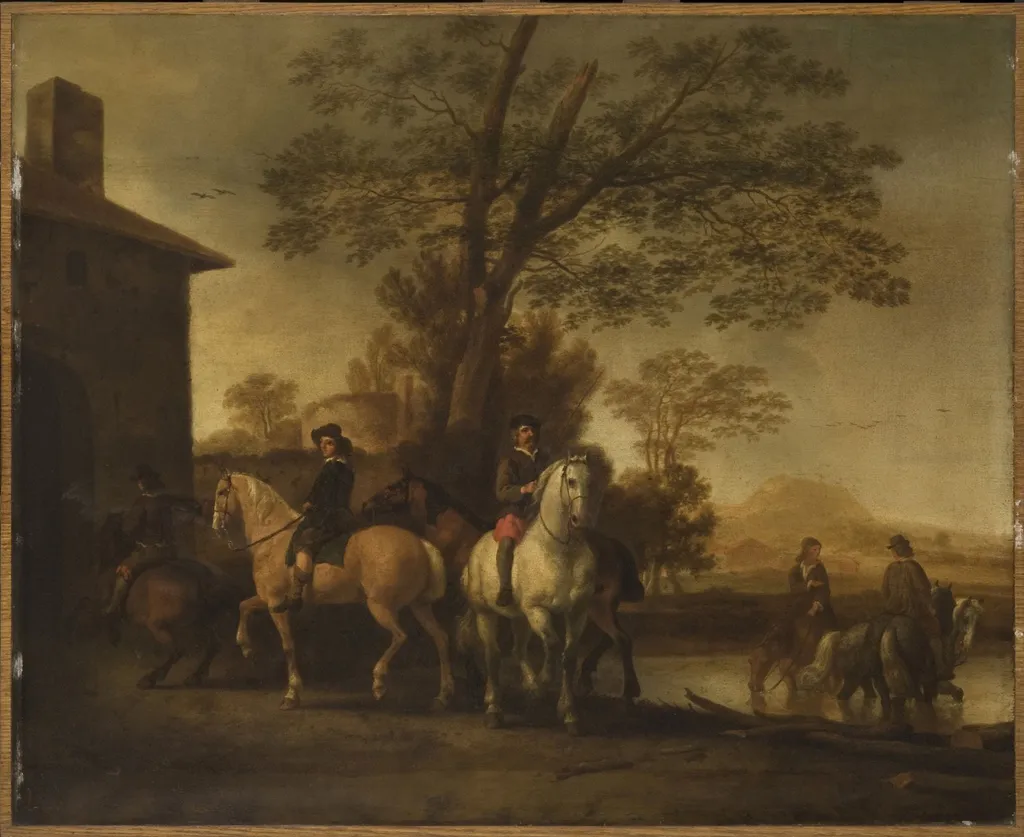
Horsemen Watering Their Horses is an oil painting by the Dutch Golden Age artist Aelbert Cuyp. It is held in the collection of the Philadelphia Museum of Art.
About this work
Overview
Painted around 1700, *Horsemen Watering Their Horses* is an oil on canvas work by Aelbert Cuyp, a central figure in Dutch Golden Age landscape painting.
Painted around 1700, *Horsemen Watering Their Horses* is an oil on canvas work by Aelbert Cuyp, a central figure in Dutch Golden Age landscape painting. Though often associated with serene river scenes, this piece captures a quiet rural moment: riders and their horses near a modest structure, engaged in the daily act of watering. The composition reflects Cuyp’s enduring interest in the Dutch countryside and its subtle interplay of light and atmosphere.
Subject & Meaning
The painting portrays four horsemen and their animals in a tranquil, unidealized setting. Two figures lead their mounts toward water, while two others pause nearby, suggesting a pause in travel rather than a dramatic event. The absence of narrative tension emphasizes routine rural life, aligning with Cuyp’s broader tendency to elevate ordinary moments through careful observation and atmospheric rendering rather than grandeur.
Technique & Style
Cuyp employs a restrained palette of earth tones—browns, ochres, and muted greens—to ground the scene in naturalism. His use of chiaroscuro defines the forms of horses and riders with soft transitions between light and shadow, enhancing volume without harsh contrast. The hazy sky and diffused illumination suggest late afternoon, a hallmark of his luminous style, which unites figures with their environment through atmospheric cohesion.
History & Provenance
Aelbert Cuyp, born in Dordrecht in 1620, trained under his father, Jacob Gerritszoon Cuyp, and became the most celebrated artist in a family of painters. This work, dated to the final decades of his career, reflects his mature approach to landscape. It entered the Philadelphia Museum of Art’s collection through documented acquisitions, preserving its place within the broader canon of Dutch 17th-century painting.
Context
In early 18th-century Holland, landscape painting remained a dominant genre, valued for its connection to national identity and daily life. Cuyp’s work stood apart for its poetic light and quiet dignity, contrasting with more bustling urban scenes. His depictions of rural activity resonated with a society increasingly aware of its agricultural roots, even as urban centers expanded.
Legacy
Cuyp’s influence extended beyond his lifetime, shaping how later artists approached light and landscape. *Horsemen Watering Their Horses* exemplifies his ability to convey stillness and presence without theatricality. Though less celebrated than some contemporaries, his quiet realism continues to inform interpretations of Dutch pastoral life, valued for its restraint and observational honesty.
Artist & collection
Artist
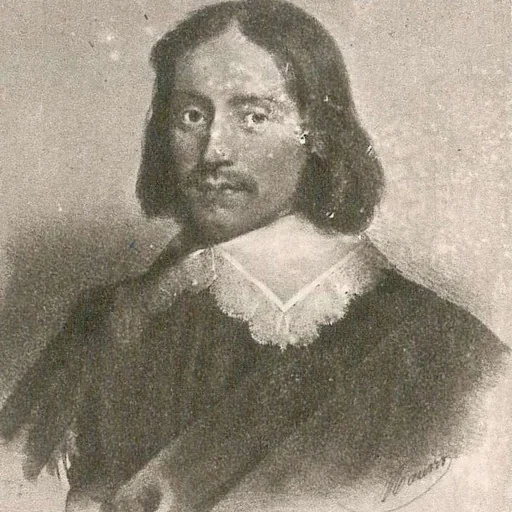
Aelbert Jacobszoon Cuyp or Cuijp (Dutch pronunciation: ; 20 October 1620 – 15 November 1691) was one of the leading Dutch Golden Age painters, producing mainly landscapes.

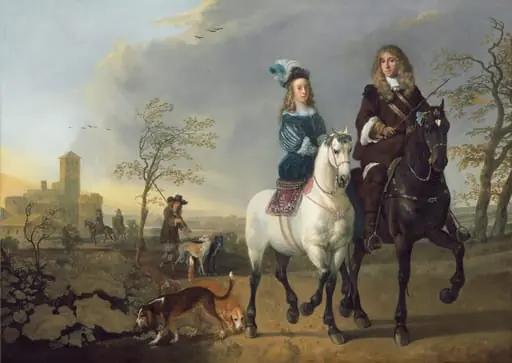 Lady and Gentleman on Horseback
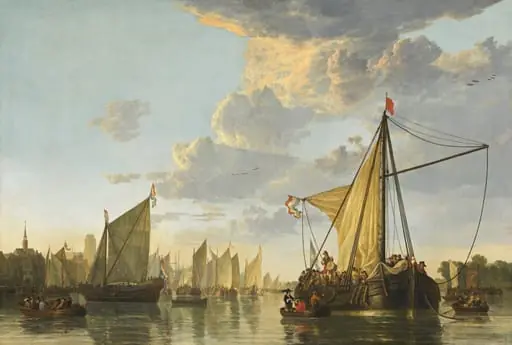 The Maas at Dordrecht
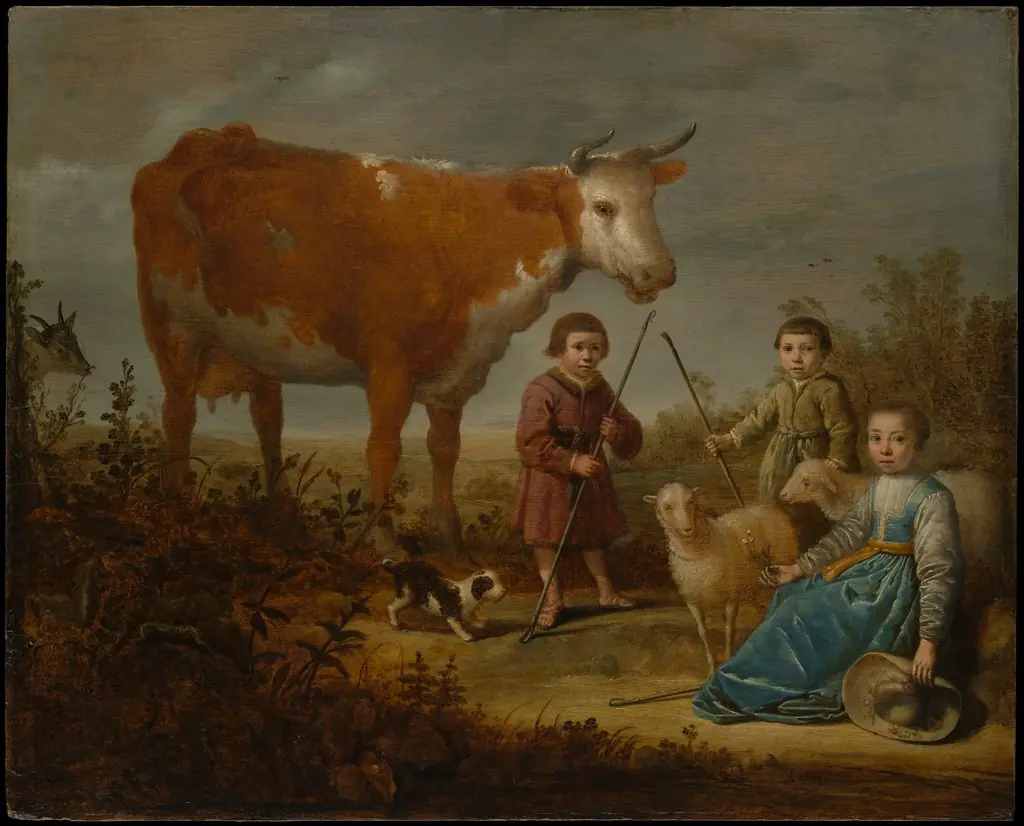 Children and a Cow
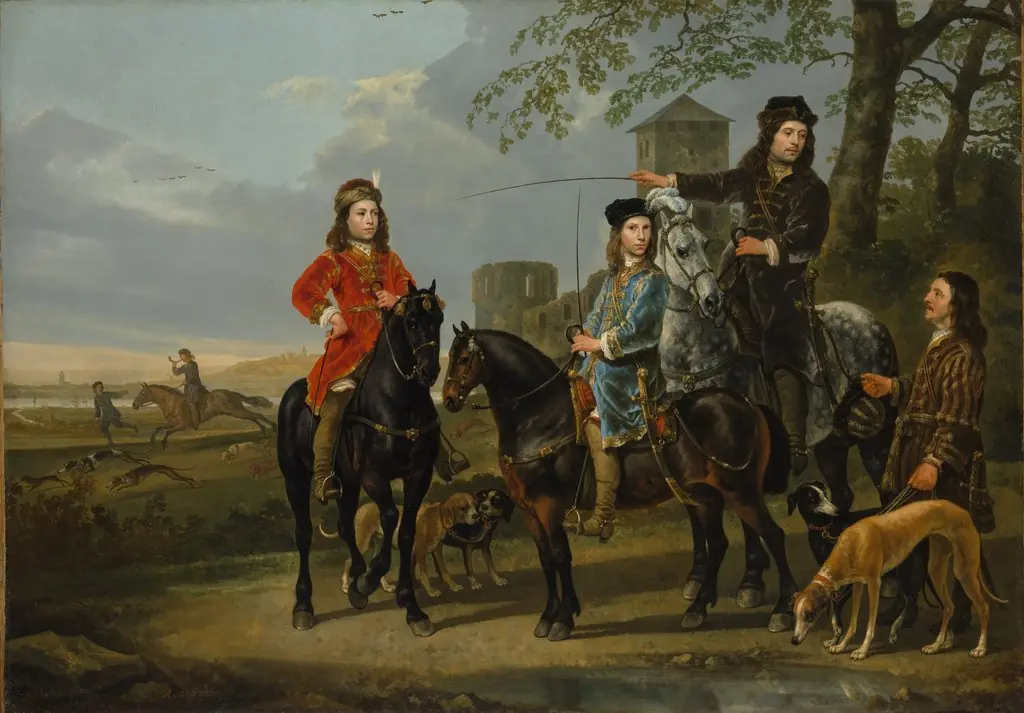 Equestrian Portrait of Cornelis (1639–1680) and Michiel Pompe van Meerdervoort (1638–1653) with Their Tutor and Coachman ("Starting for the Hunt")
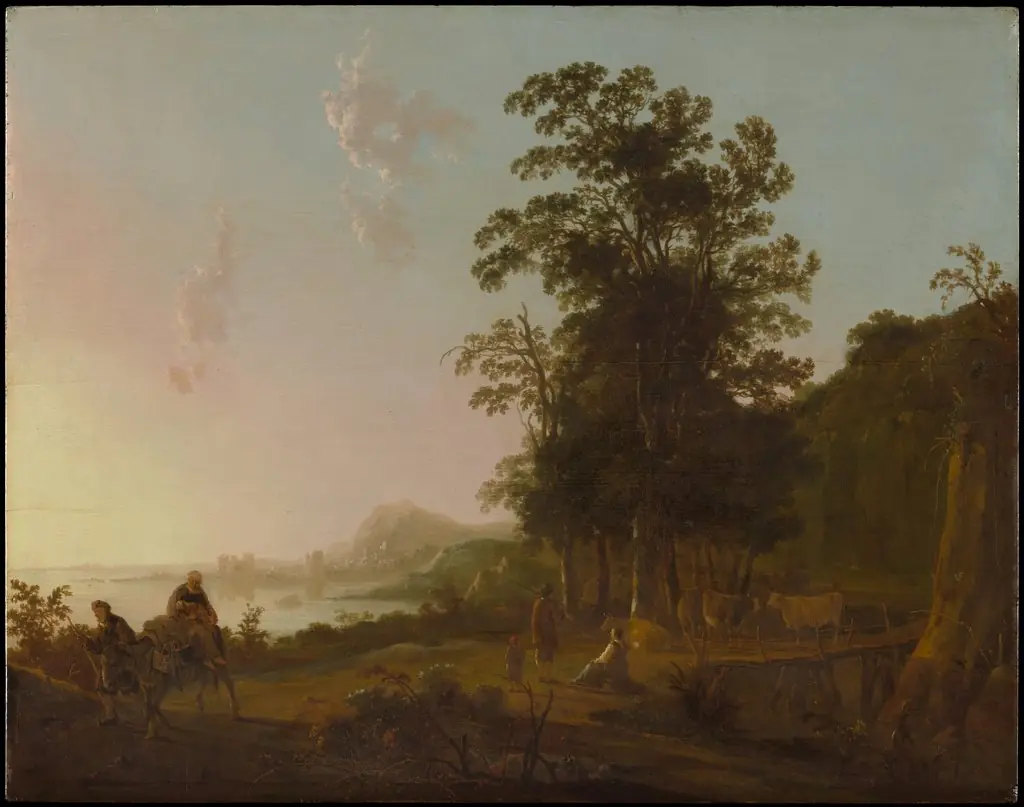 Landscape with the Flight into Egypt
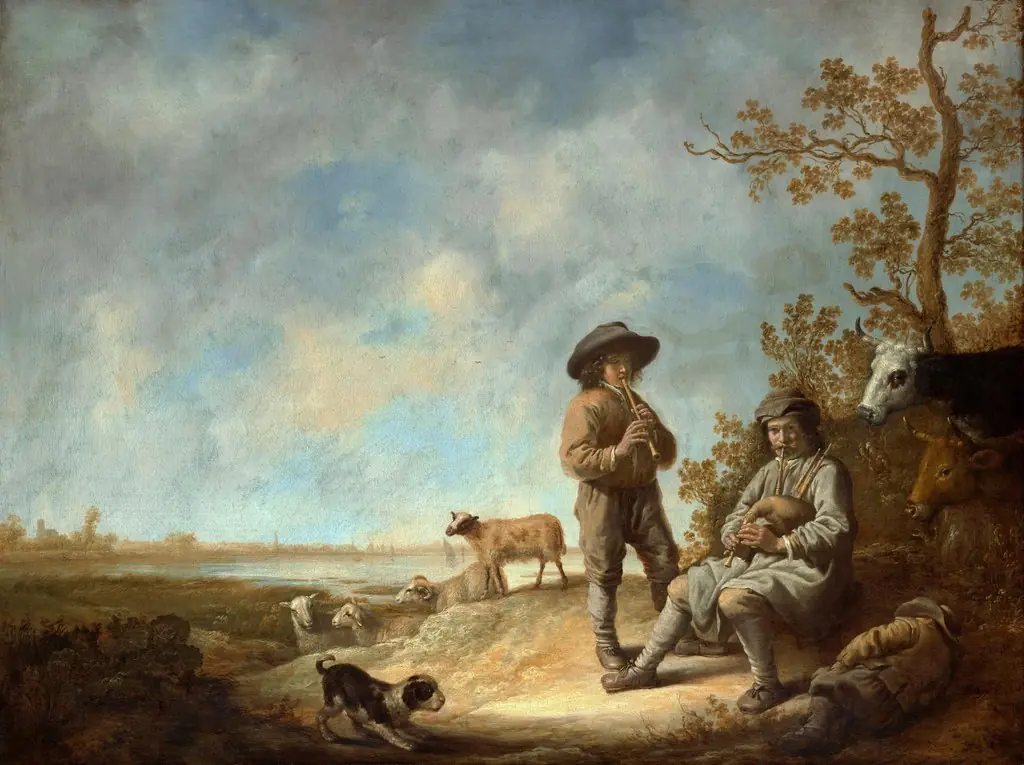 Piping Shepherds
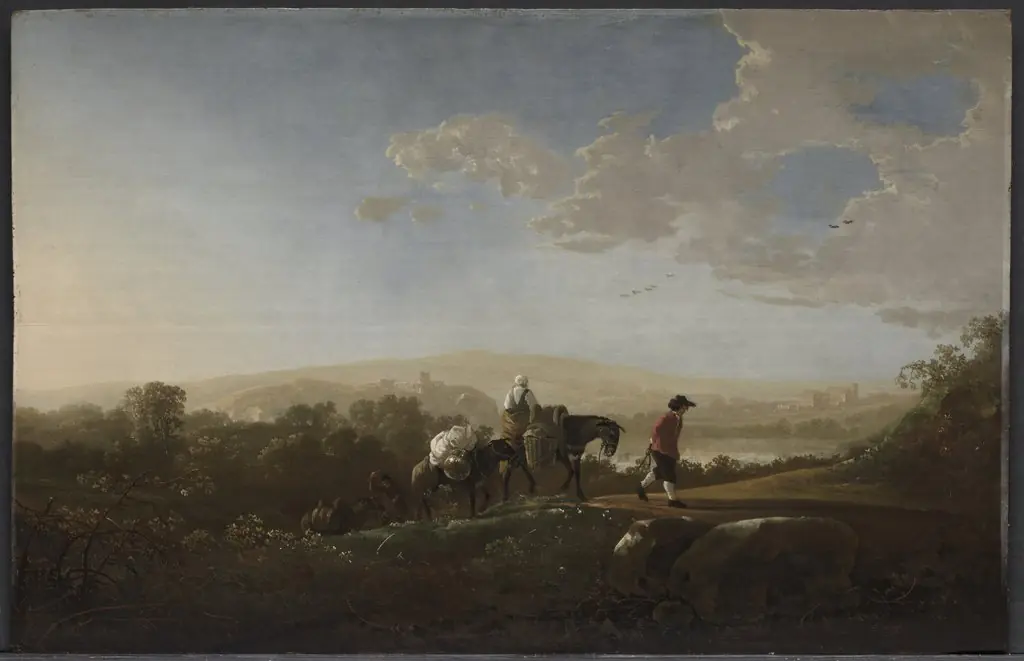 Travellers in Hilly Countryside
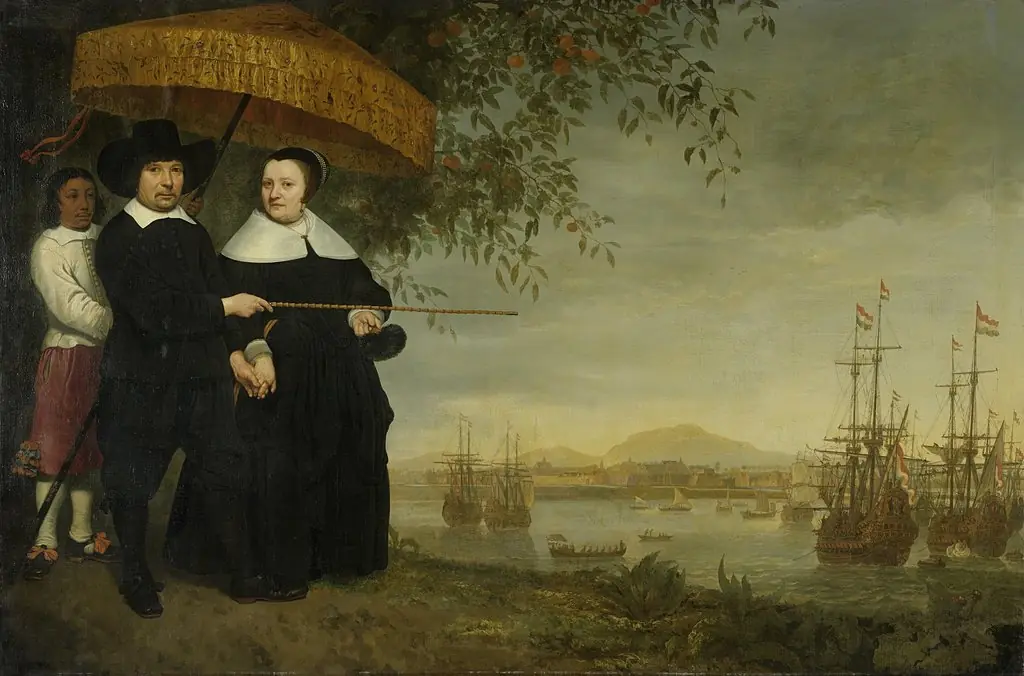 A Chief Merchant of the VOC with his Wife and an Enslaved Servant
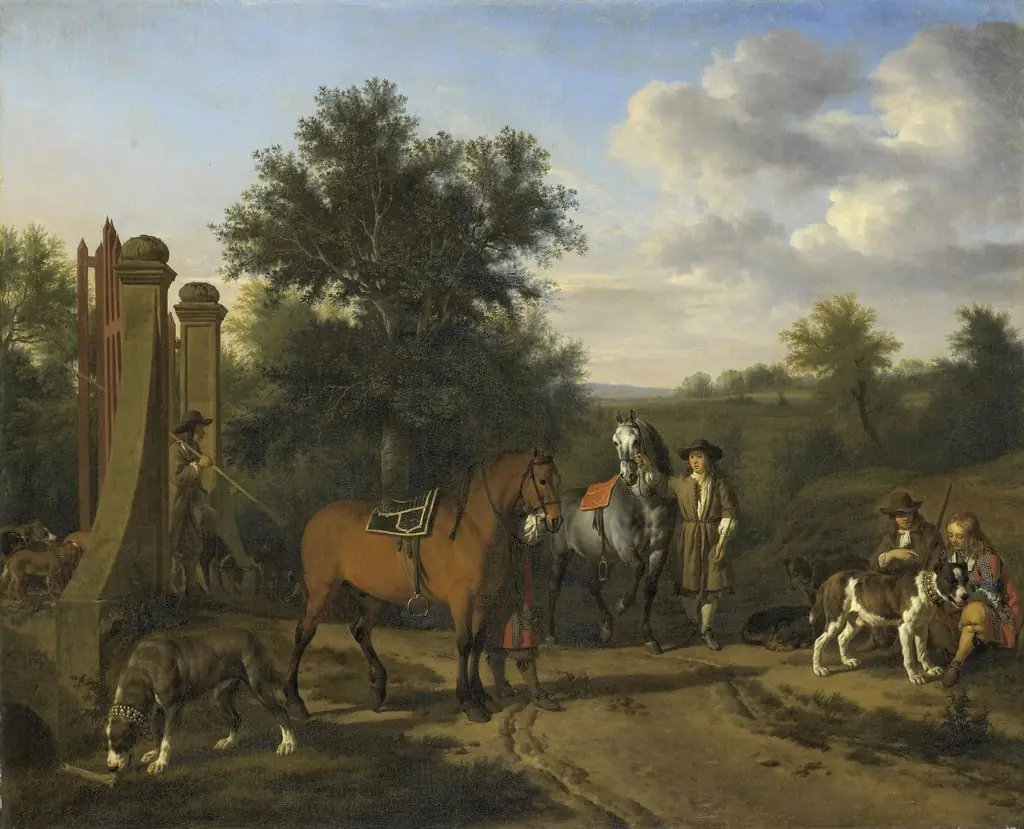 The hunting party
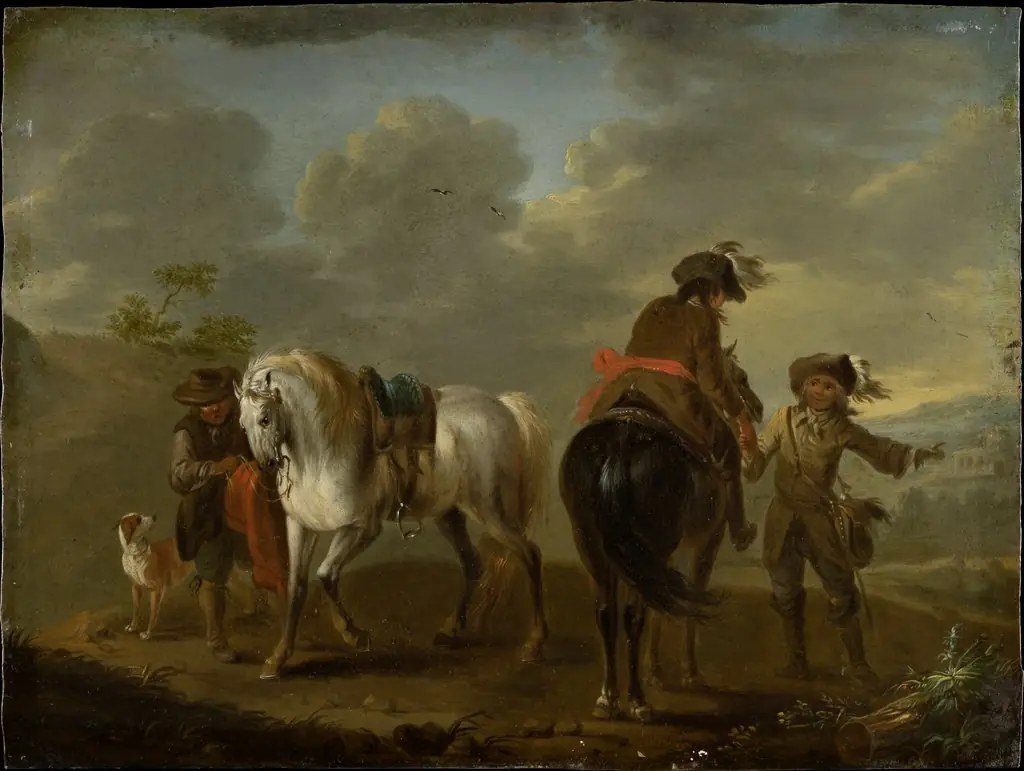 Landscape with Riders
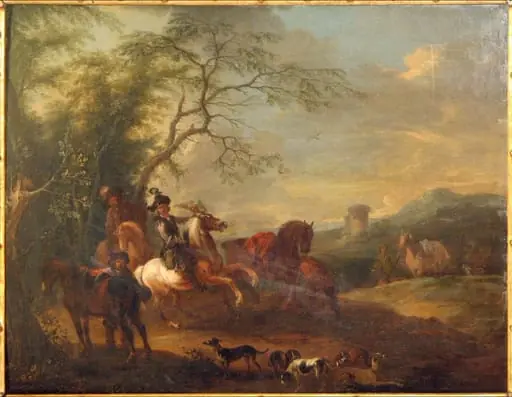 Plecarea la vânătoare; pandant: Întoarcerea de la vânătoare
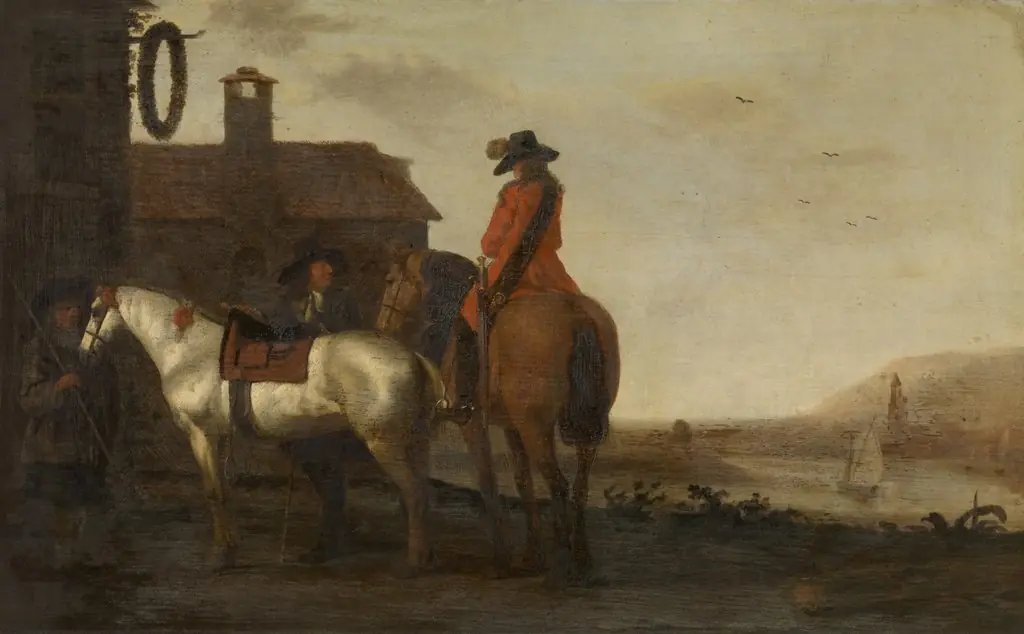 Stopping Place for Horsemen and Horses
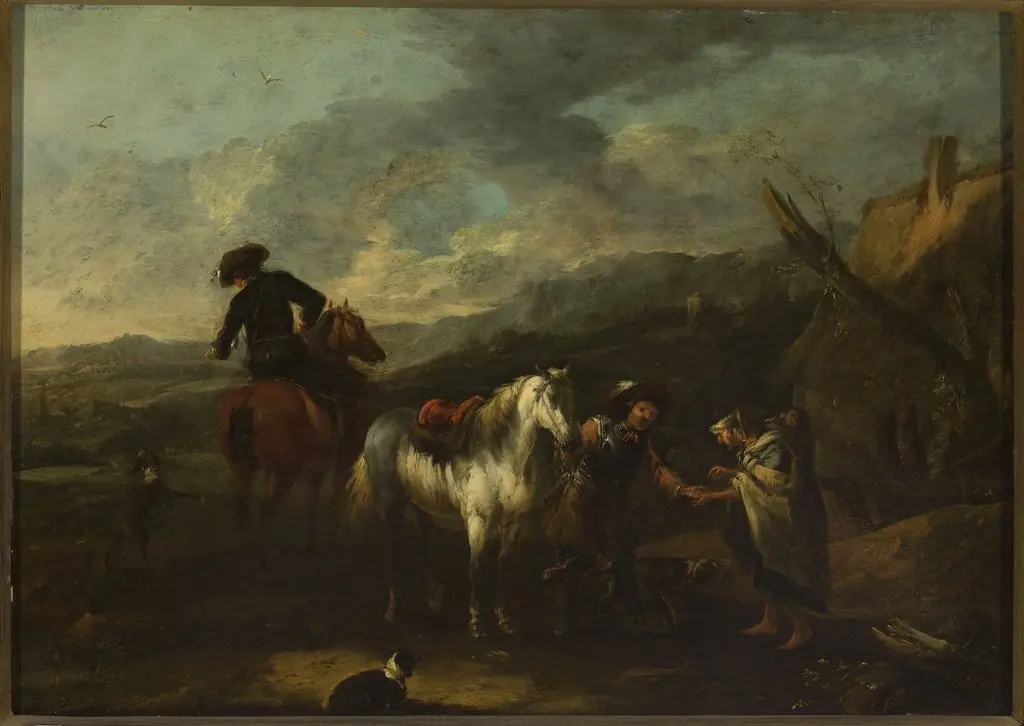 Horsemen and a beggar woman against landscape
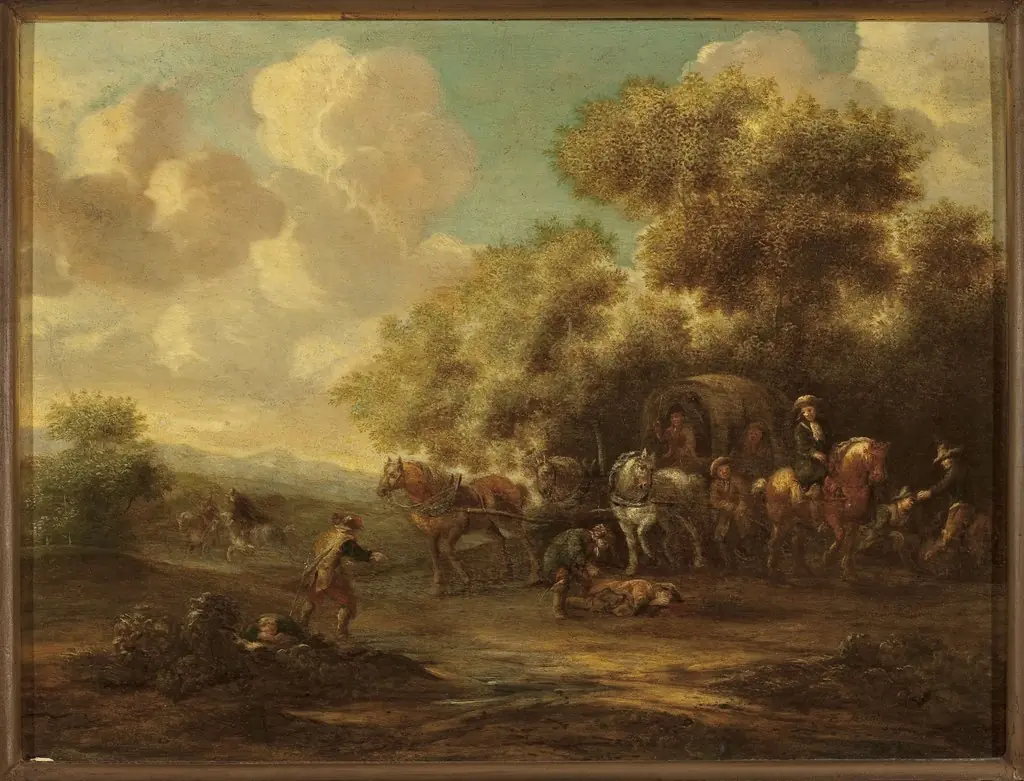 Assault on travellers
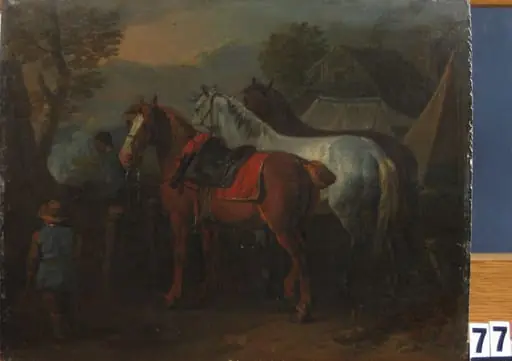 Trei cai în fața unor corturi. Pandant: Doi cai în fața unor corturi
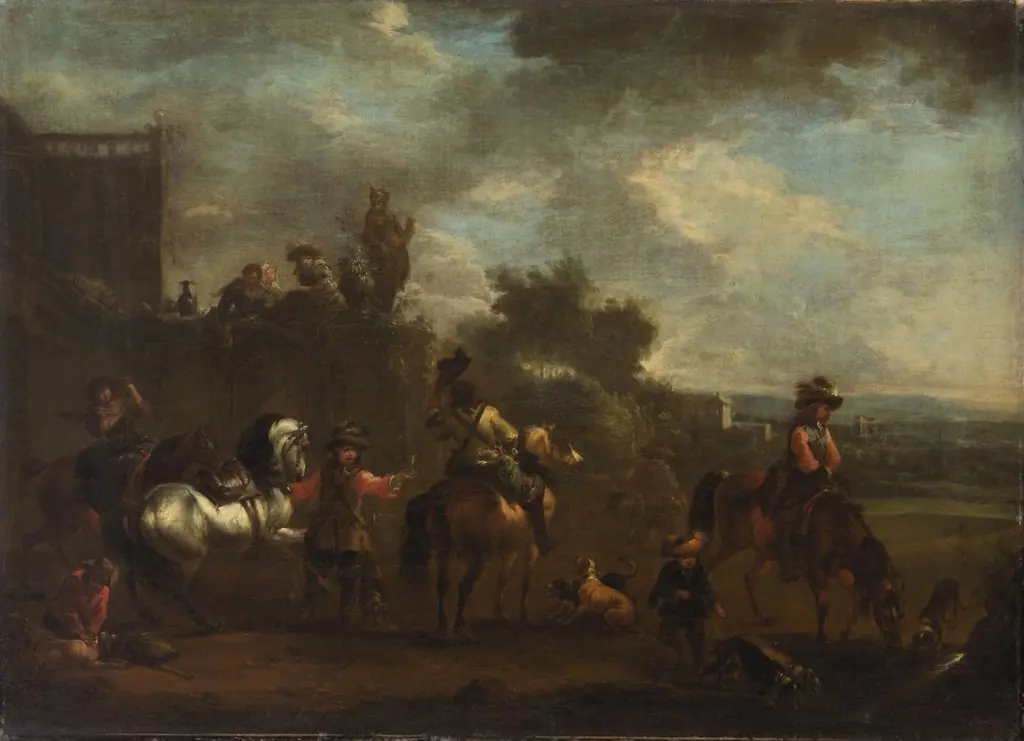 Ausritt zur Jagd
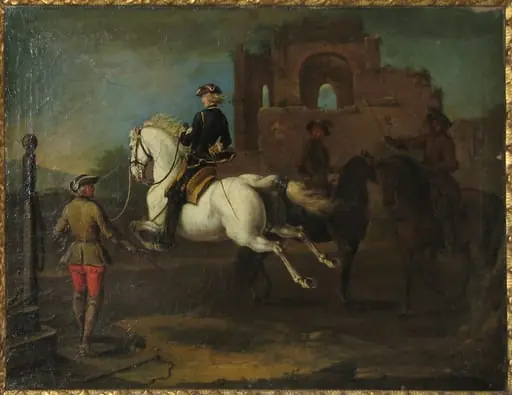 Manej
Manej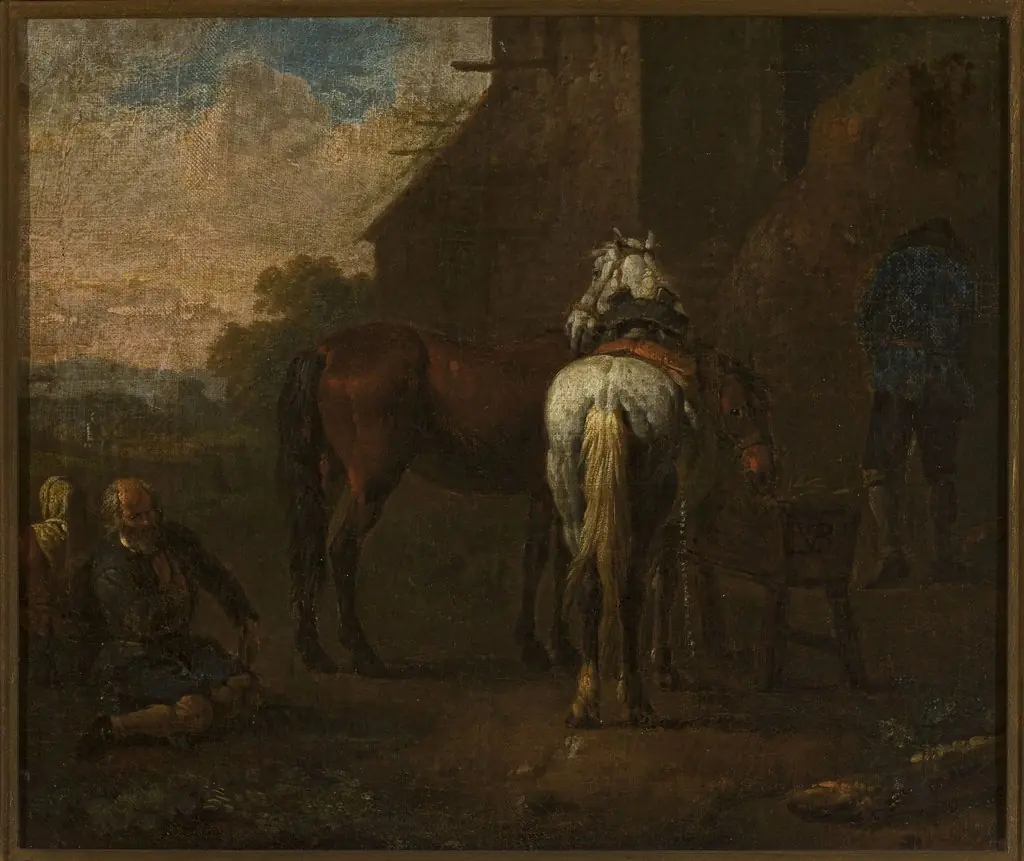 Horses in front of a tavern
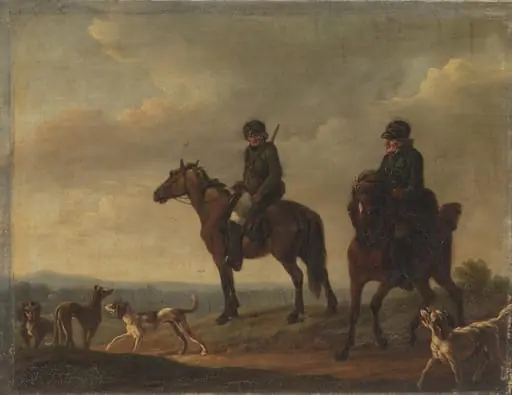 To jægere til hest
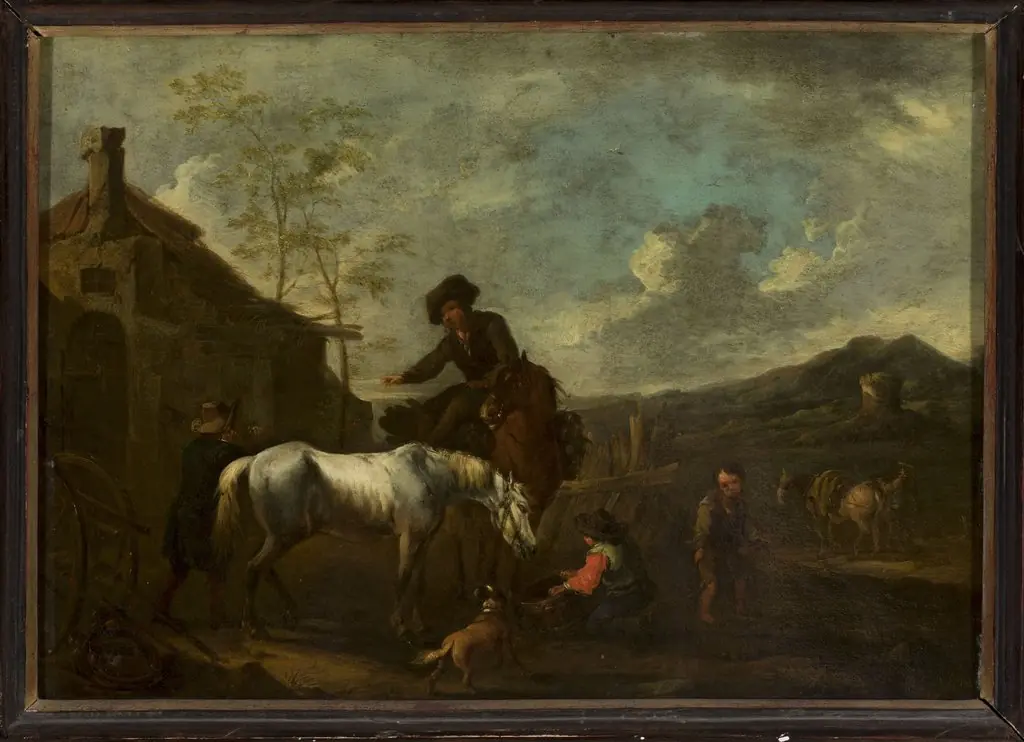 Watering the horses