Artwork
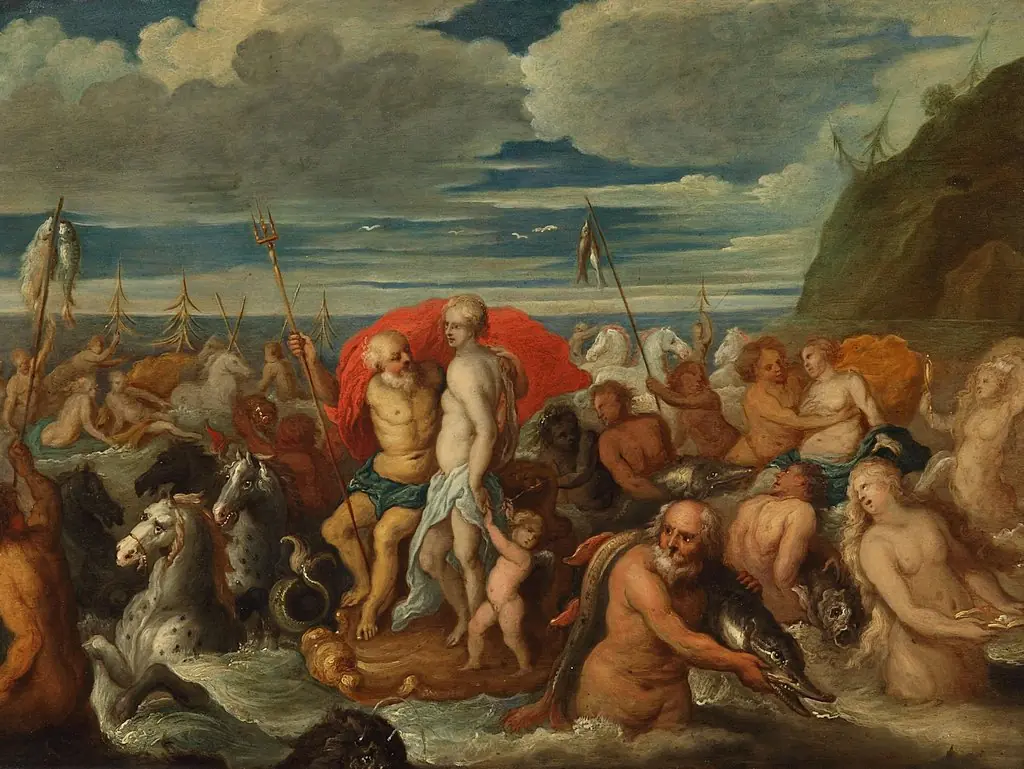
Triumph of Neptune and Amphitrite
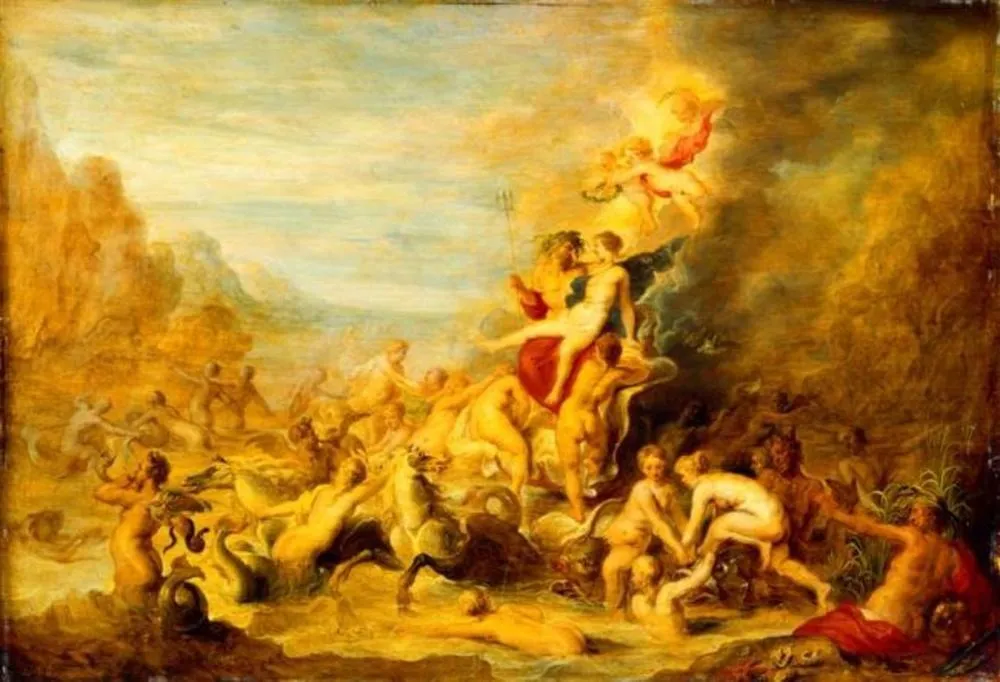
Triumph of Neptune and Amphitrite is an oil painting by the Early Baroque Italian artist Abraham van Diepenbeeck. It dates from 1611 and is held in the collection of the Staatliche Kunstsammlungen Dresden.
About this work
Overview
Abraham van Diepenbeeck’s *Triumph of Neptune and Amphitrite*, executed in oil in 1611, presents a bustling mythological procession. The composition centers on a chariot bearing the sea deities, surrounded by a crowd of semi‑nude figures, hybrid creatures and animals. Warm golden hues dominate the palette, lending the scene a radiant, sun‑lit atmosphere that emphasizes movement and celebration.
Subject & Meaning
The work illustrates the Roman myth of Neptune’s marriage to Amphitrite, portraying the couple in a triumphal ride. Neptune, identified by his trident, and Amphitrite are flanked by attendants and sea‑creatures such as hippocampi—horses with fish tails—symbolising the union of land and sea and the divine order of the natural world.
Technique & Style
Executed in the early Baroque idiom, the painting employs layered glazing to achieve depth and luminous colour. Van Diepenbeeck’s handling of light creates a shimmering surface, while the dynamic arrangement of figures and the vigorous brushwork convey a sense of immediacy and theatricality characteristic of the period.
History & Provenance
Although van Diepenbeeck was a Dutch native, he spent most of his career in Antwerp, where he worked in painting, glass design, printmaking and tapestry. The canvas entered the collection of the Gemäldegalerie Alte Meister, where it remains part of the museum’s Baroque holdings.
Context
The painting reflects van Diepenbeeck’s collaboration with leading Antwerp workshops, notably the studio of Peter Paul Rubens, and his connections to prominent printers. These networks facilitated the exchange of stylistic ideas across media, situating the work within the vibrant artistic milieu of early 17th‑century Flanders.
Artist & collection
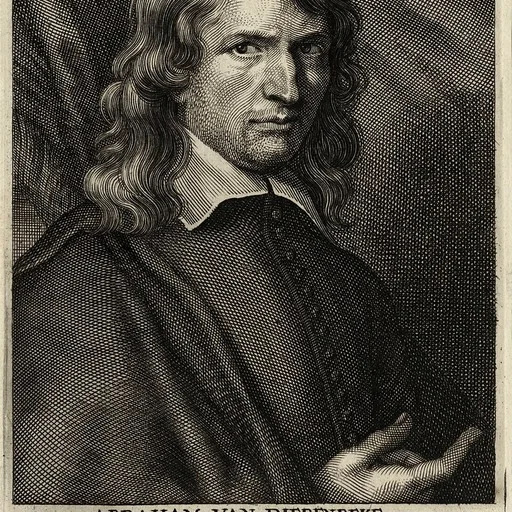
Artist
Abraham van Diepenbeeck (9 May 1596 (baptised) – between May and September 1675) was a Dutch painter, draftsman, glass painter, print maker and tapestry designer who worked most of his active career in Antwerp.