Artwork
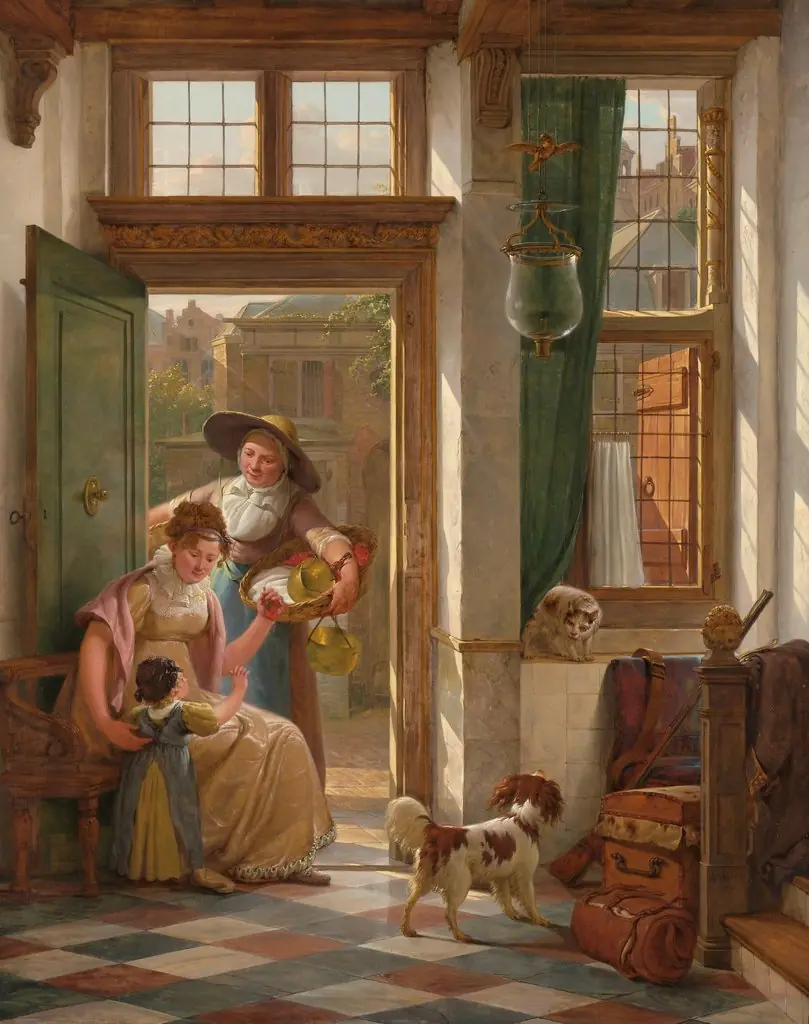
A Cherry Seller at the Door
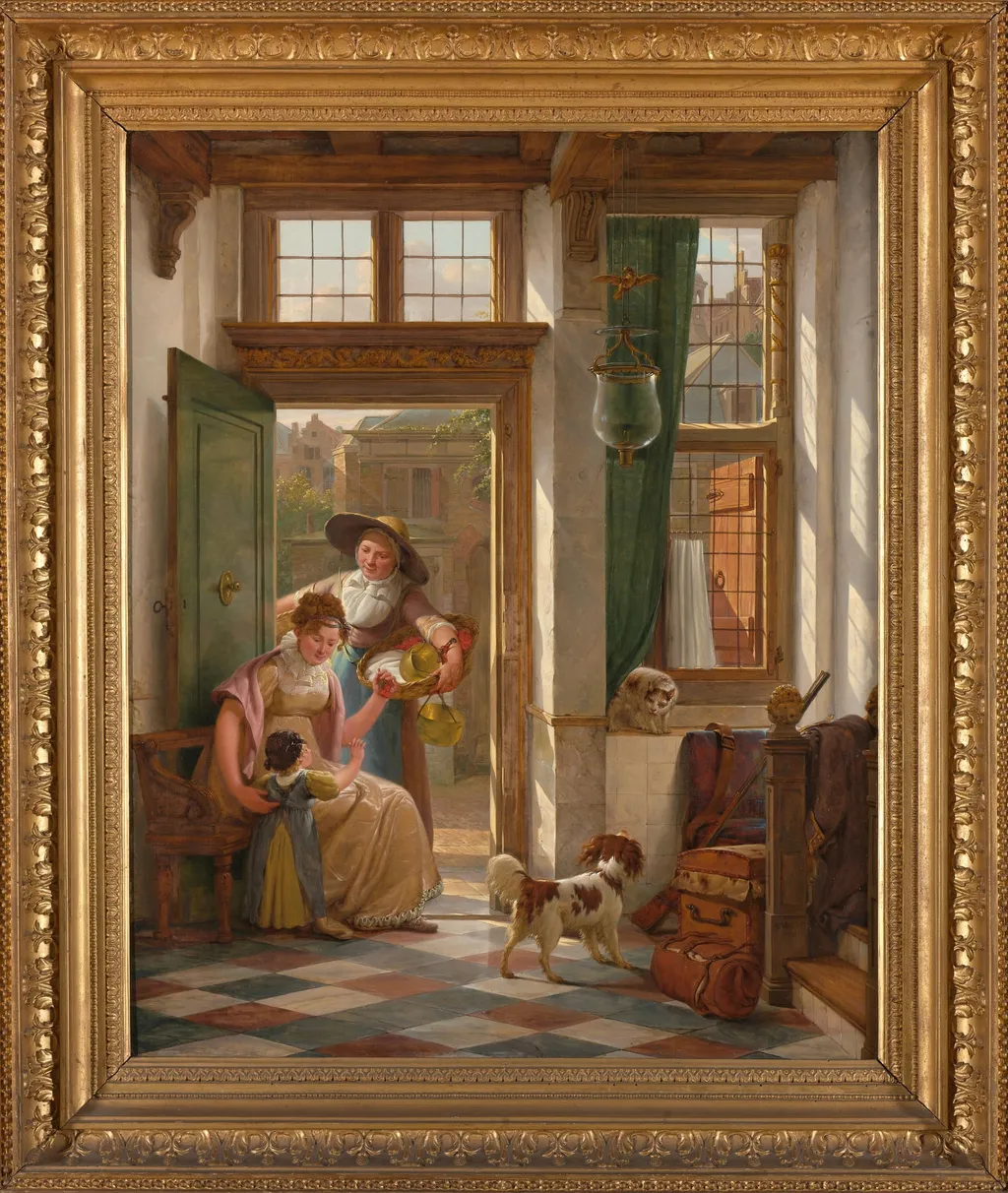
A Cherry Seller at the Door is an unspecified painting by the Dutch Golden Age artist Abraham van Strij. It dates from 1816 and is held in the collection of the Rijksmuseum.
About this work
The artist, Van Strij, was from Dordrecht, a Dutch city known for its quiet, detailed street scenes.
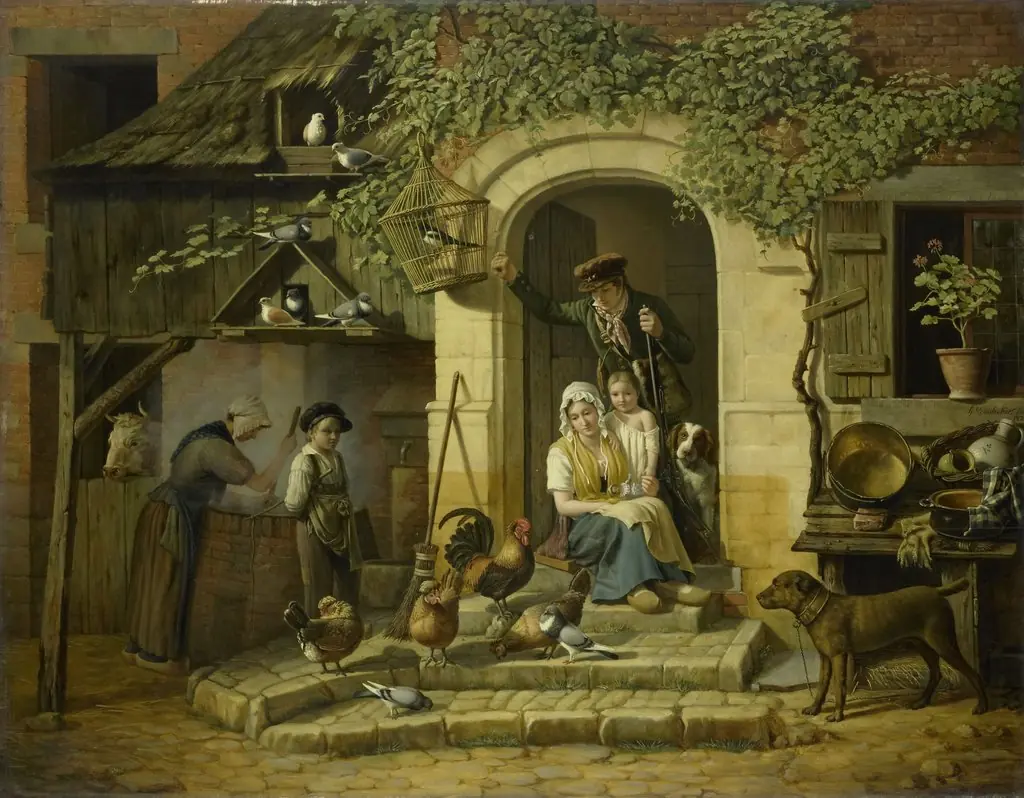
A woman in a red shawl stands at an open door, selling cherries from two big baskets. A well-dressed lady inside holds out a handful, while a little girl reaches up. A dog barks at a cat, adding a little chaos to the sunny scene.
This painting feels like a snapshot of everyday life in 1816. The artist, Van Strij, was from Dordrecht, a Dutch city known for its quiet, detailed street scenes. The bright colors and careful details make the moment feel real, almost like you could step into it.
To see more paintings like this, visit the Rijksmuseum.
Overview
A Cherry Seller at the Door is a painting by Van Strij, a Dordrecht artist, depicting a cherry seller at an open doorway. The scene is characterized by its sunny atmosphere and vivid colors.
Subject & Meaning
The painting shows a woman selling cherries from baskets to a well-dressed lady and her young daughter inside a house. The interaction is lively, with the dog barking at a cat, creating a sense of gentle chaos.
Technique & Style
The work is notable for its detailed and colorful representation, capturing a moment of everyday life. Van Strij's style is reminiscent of the detailed street scenes associated with Dordrecht.
History & Provenance
The painting was created in 1816. It is now part of the collection at the Rijksmuseum, which houses other similar works.
Artist & collection