Artwork
De eerste tand
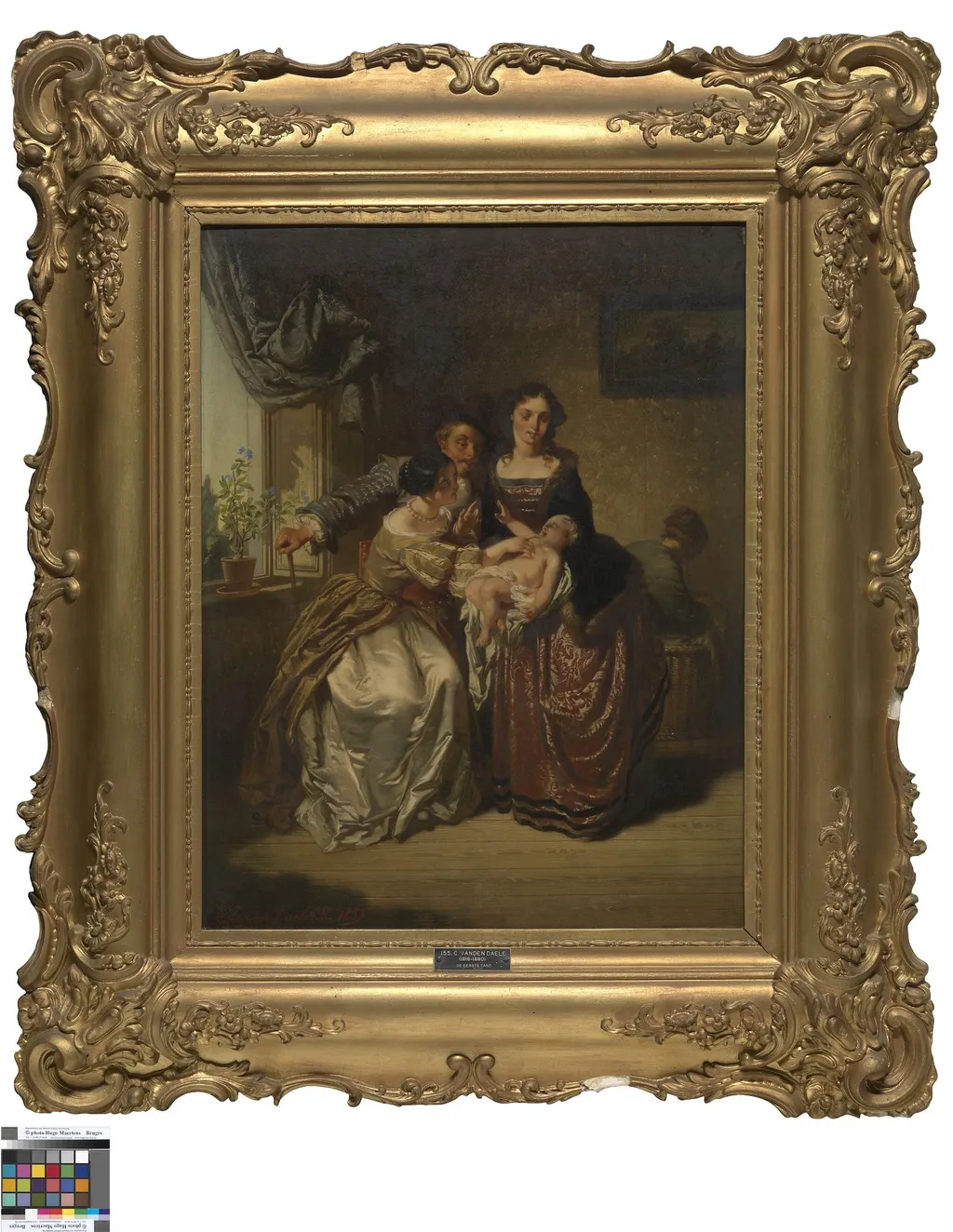
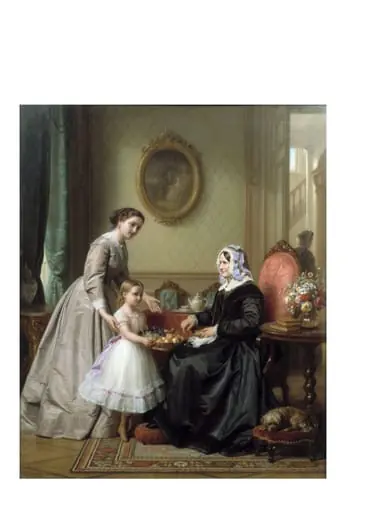
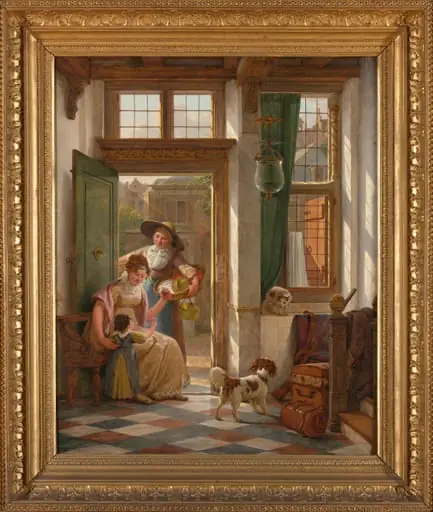
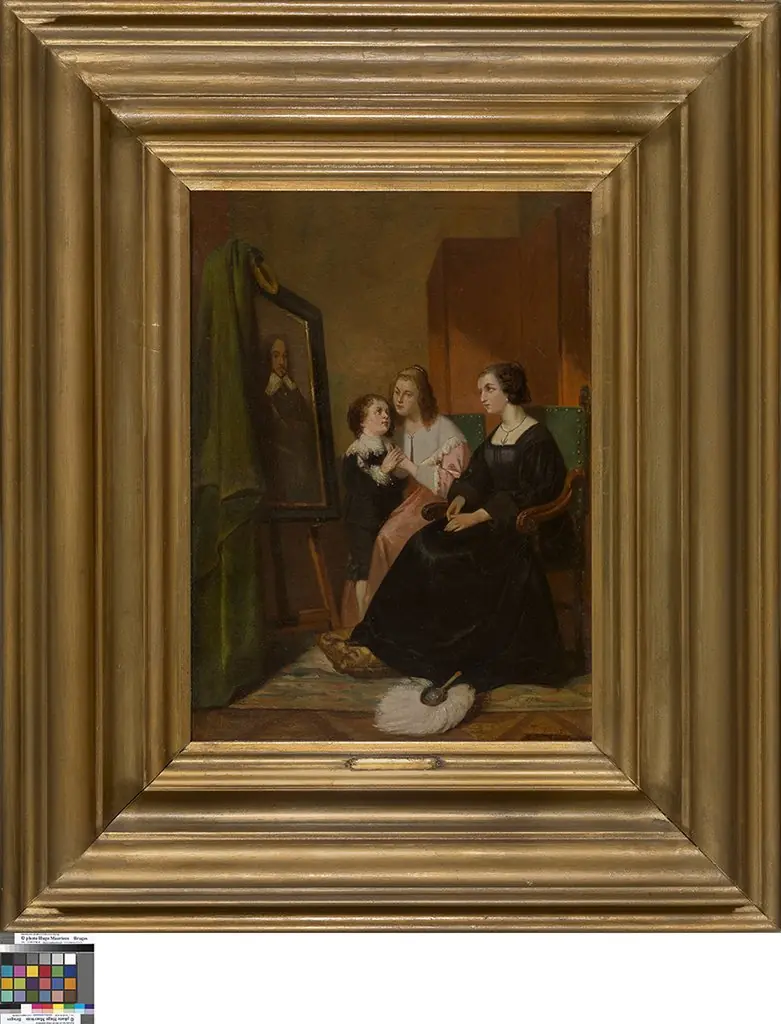
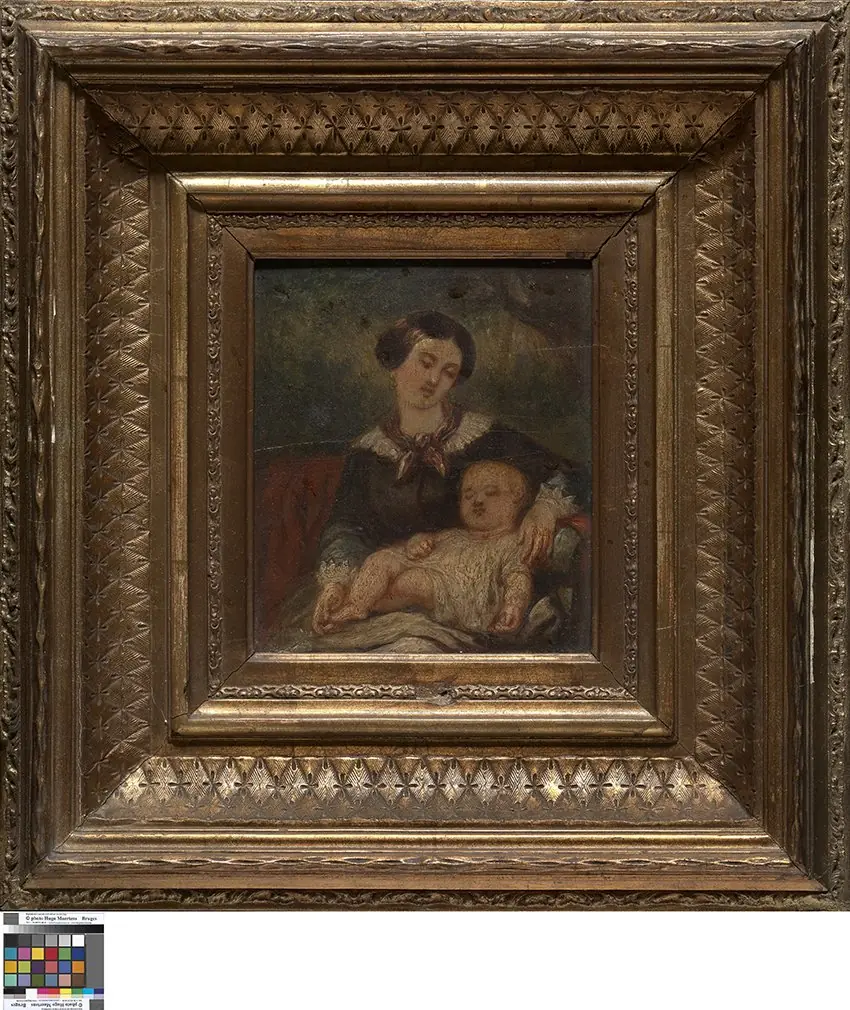
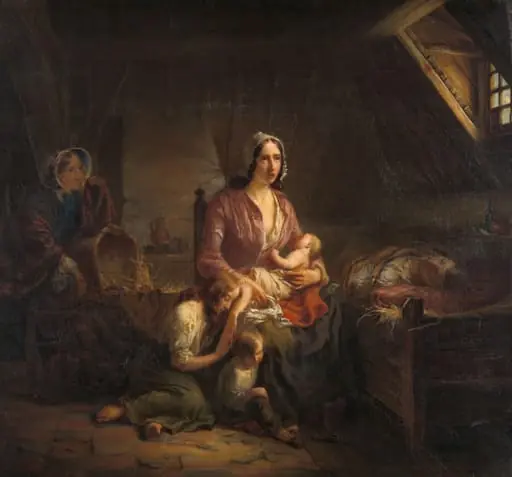
De eerste tand is an oil painting by Unknown. It dates from 1855 and is held in the collection of the Groeningemuseum. This oil painting depicts a quiet interior scene with women and children gathered in a domestic space.
About this work
Overview
This oil painting depicts a quiet interior scene with women and children gathered in a domestic space. The composition centers on moments of stillness and care, with figures arranged naturally as if caught in an unposed moment. The muted tones of brown and beige create a subdued atmosphere, while the textured brushwork of oil paint adds tactile depth to the surfaces of skin, fabric, and wood.
Subject & Meaning
The figures—women in long dresses and barefoot children—suggest a private, possibly maternal setting. One woman holds an infant, another gazes directly at the viewer, creating a subtle tension between intimacy and observation. The scene avoids narrative drama, instead emphasizing quiet routine and the unspoken bonds of care, inviting contemplation rather than interpretation.
Technique & Style
Oil paint is applied with deliberate texture, enhancing the softness of skin and the weight of fabric.
Oil paint is applied with deliberate texture, enhancing the softness of skin and the weight of fabric. The palette is restrained, dominated by earth tones that unify the space and mute any sharp contrasts. Light filters through a window, casting gentle shadows and highlighting the plant on the sill, while the dark curtain recedes into the background, framing the figures in a contained, enclosed world.
History & Provenance
The painting’s title, 'De eerste tand,' references the first tooth, hinting at a moment of childhood development. Though no documented provenance is provided, the subject and style align with late 19th-century Dutch genre painting, which often focused on domestic life with psychological subtlety. The work remains without known exhibition history or collector lineage.
Context
The scene reflects a broader trend in European art of the period that valued intimate, unidealized portrayals of everyday life. Unlike grand historical or mythological subjects, this work finds significance in the ordinary: a child’s milestone, a mother’s gaze, the stillness of a room. The absence of overt symbolism reinforces its quiet realism.
Legacy
The painting contributes to a tradition of domestic genre scenes that prioritize emotional nuance over spectacle. While not widely exhibited or studied, its restrained composition and sensitivity to light and gesture echo the work of contemporaries who sought dignity in the private sphere. Its endurance lies in its understated humanity.
Artist & collection

 Domestic Scene
 Giacomo and Cardinal Marco, investing Andrea, Abbot of San Zeno, with his Benefice
 The Nymph of Fontainebleau
 Portrait of a Woman
 Madonna and Child with Saints in the Enclosed Garden
 Venus and Minerva
 Family Group of Four on Sofa
 Wall painting from Room H of the Villa of P. Fannius Synistor at Boscoreale