Artwork
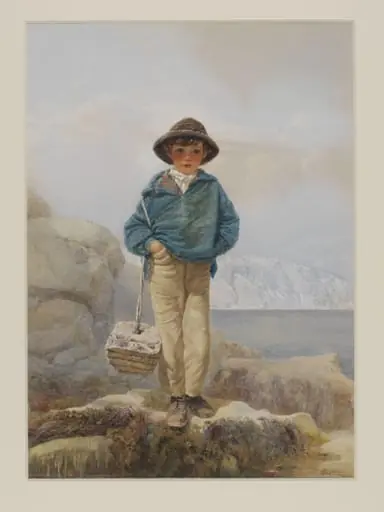
A Boulogne fisher-girl
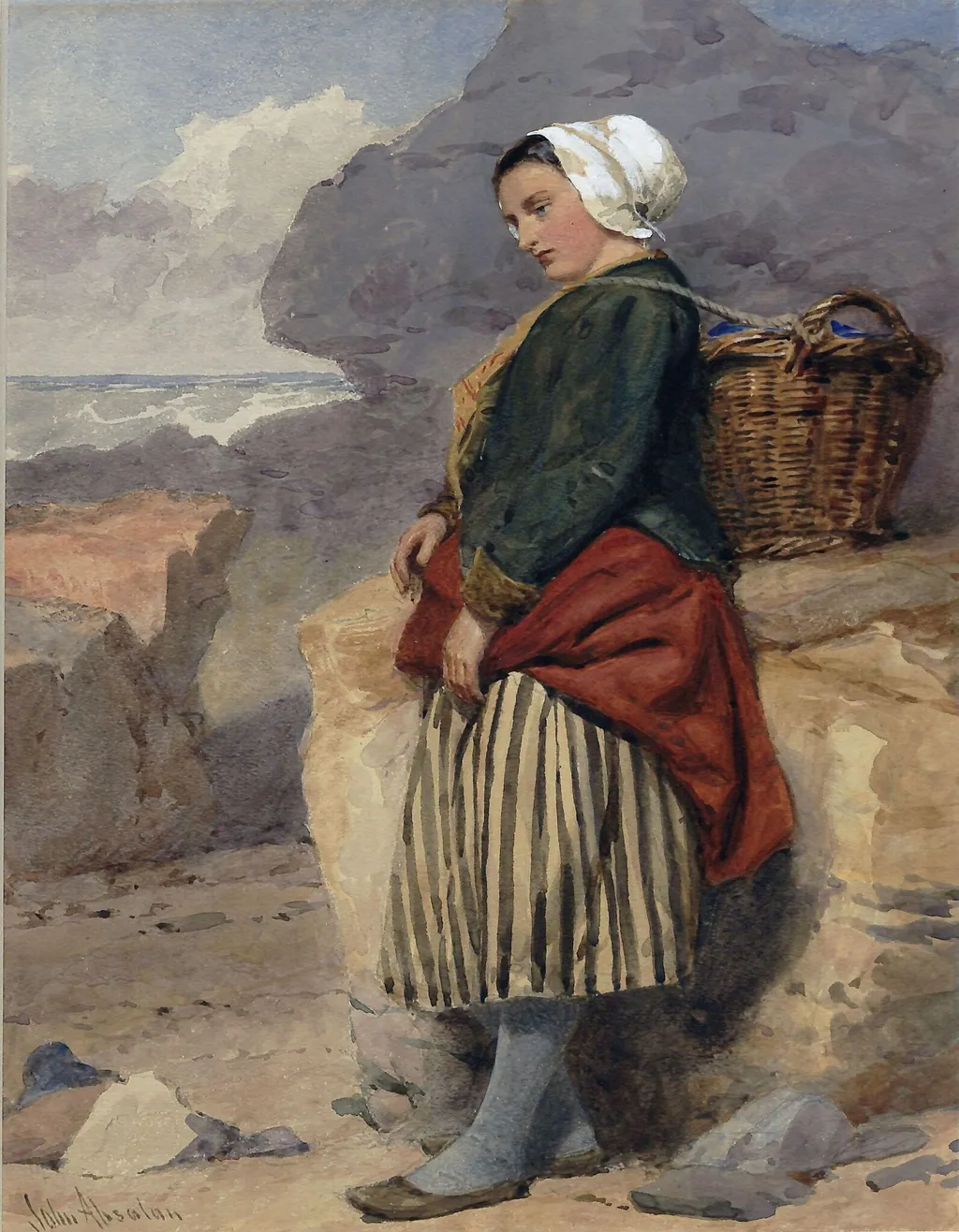
A Boulogne fisher-girl is a watercolor work on paper by the British Romanticist artist John Absolon. It dates from 1830 and is held in the collection of the Victoria and Albert Museum.
About this work
Overview
It is part of the Victoria and Albert Museum’s collection, where it represents 19th-century British interest in everyday coastal life.
Created in 1830 by John Absolon, this watercolour depicts a fisher-girl from Boulogne-sur-Mer. Executed in delicate washes, the work captures a quiet moment of rest on a rugged coastline. It is part of the Victoria and Albert Museum’s collection, where it represents 19th-century British interest in everyday coastal life. The composition avoids grandeur, focusing instead on the quiet dignity of a working woman in her natural setting.
Subject & Meaning
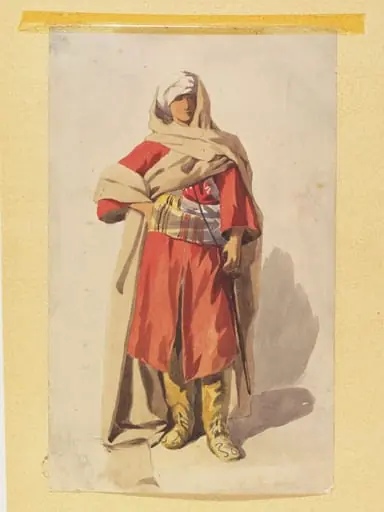
The figure is a local fisherwoman, seated on stones near the shore, her posture suggesting a pause between labor and return. Her attire—white cap, dark green jacket, red shawl, and striped skirt—reflects regional working dress of the period. The presence of a wicker basket implies her trade, while the empty sea behind her underscores solitude and routine. The image conveys no narrative drama, only the unadorned reality of coastal labor.
Technique & Style
Absolon employed transparent watercolour washes to build subtle tonal gradations, particularly in the sea and rocks. The red shawl and green jacket stand out against muted blues and greys, creating quiet contrast without harshness. Fine linework defines folds in fabric and texture in stone, while the background remains softly blurred, directing focus to the figure. The technique favors observation over idealization, aligning with early Victorian realism.
History & Provenance
The painting entered the Victoria and Albert Museum’s collection in the 19th century, likely through acquisition or donation. Its survival in good condition reflects its modest scale and the care taken with watercolours in institutional collections. No significant exhibition history or private ownership records are widely documented, suggesting it was valued more for its artistic merit than its fame.
Context
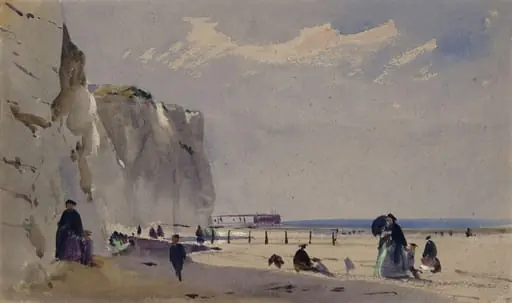
In the 1830s, British artists increasingly turned to scenes of ordinary life, influenced by social realism and travel literature. Boulogne, a French port easily accessible to English artists, became a subject of interest. Absolon’s work aligns with this trend, capturing regional dress and labor without exoticism. The painting reflects a growing cultural curiosity in the lives of working people beyond urban centers.
Legacy
Though not widely reproduced, the painting remains a quiet example of early Victorian watercolour practice. It contributes to the understanding of how British artists engaged with continental subjects and everyday subjects with restraint. Its presence in the V&A underscores the museum’s historical commitment to documenting domestic and regional life through minor, yet carefully observed, works.
Own this work as a print
Artist & collection
Artist
John Absolon was a British watercolourist, specialising in figure painting. He studied in London and then Paris.