Artwork
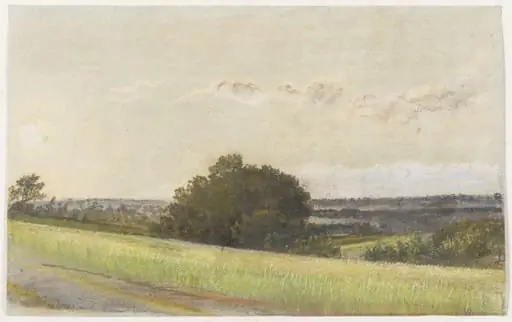
Landscape with a cornfield in the foreground and hills in the distance
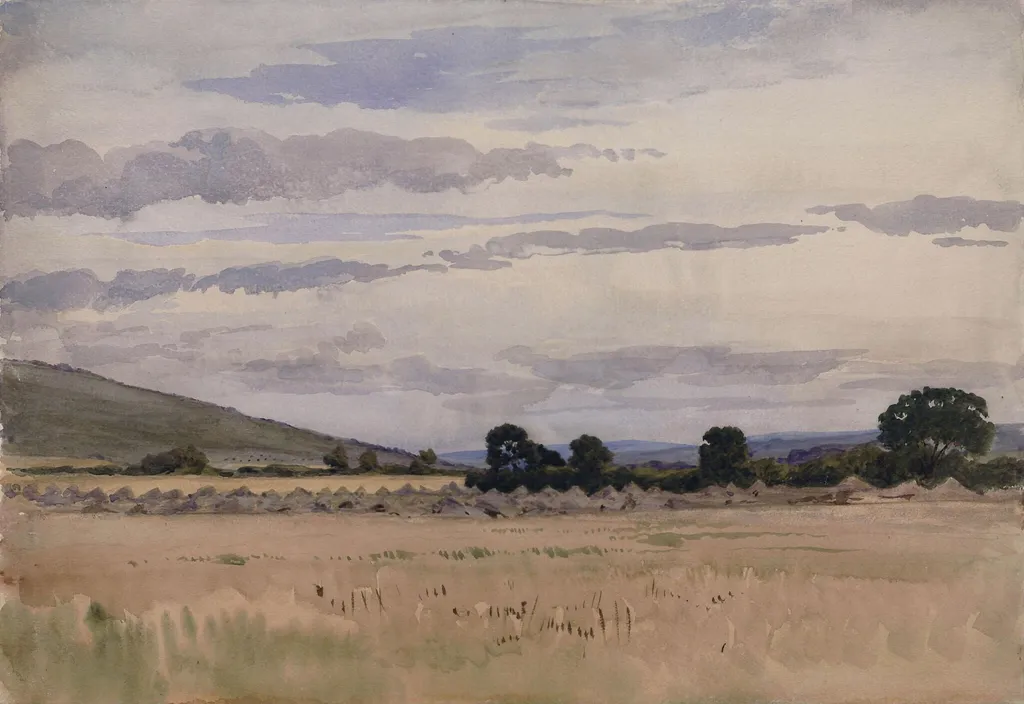
Landscape with a cornfield in the foreground and hills in the distance is a watercolor work on paper by the British Romanticist artist John Absolon. It dates from 1850 and is held in the collection of the Victoria and Albert Museum.
About this work
The Victoria and Albert Museum holds this painting, offering a glimpse into the artistic styles of the 19th century.
This watercolour painting shows a landscape with a cornfield in the foreground and hills in the distance. The cornfield is depicted in shades of brown and green, with the hills rising up in the background. The sky above is filled with clouds, adding depth to the scene.
The painting is done in a style that emphasizes the natural beauty of the landscape. The artist has used gentle brushstrokes and soft colours to create a sense of serenity and calm.
The Victoria and Albert Museum holds this painting, offering a glimpse into the artistic styles of the 19th century.
Overview
This watercolour by John Absolon presents a quiet rural scene, dominated by a field of ripening corn in the foreground and rolling hills receding into the distance. Executed with restrained tonal variation, the work captures a moment of stillness, where earth and sky meet under a cloud-streaked heavens. The composition avoids dramatic contrast, favoring a muted harmony between land and atmosphere.
Subject & Meaning
The painting focuses on ordinary agricultural land, elevating the everyday countryside through attentive observation. The cornfield, rendered in earthy greens and browns, suggests seasonal labor and the rhythms of rural life. The distant hills and expansive sky imply openness and continuity, reinforcing a quiet reverence for the natural world without overt symbolism.
Technique & Style
Absolon employed delicate watercolour washes to build subtle gradations of color, avoiding sharp outlines. Soft brushwork defines the texture of the cornstalks and the contours of the hills, while the sky is layered with translucent clouds that suggest movement without disruption. The technique reflects a 19th-century preference for atmospheric effect over detailed realism.
History & Provenance
The work is held in the collection of the Victoria and Albert Museum, where it contributes to the institution’s documentation of British watercolour traditions. Its presence there indicates it was recognized during its time as a representative example of landscape watercolour, though specific details of its commission or early ownership remain undocumented.
Context
Created during a period when British artists increasingly turned to domestic landscapes as subjects, Absolon’s painting aligns with a broader cultural interest in the pastoral. Unlike Romanticized vistas, this scene offers an unembellished view of cultivated land, reflecting the growing appreciation for ordinary nature in mid-19th-century art.
Legacy
Though not widely known today, the painting endures as a quiet example of watercolour practice in Victorian Britain. It illustrates how artists of the time used the medium’s transparency and subtlety to convey tranquility and observation, preserving a visual record of rural England’s quiet beauty without grandeur or sentiment.
Artist & collection
Artist
John Absolon was a British watercolourist, specialising in figure painting. He studied in London and then Paris.


 East Ilsley, Berkshire, Looking North
 Vale of Dedham
 Landscape near Boulogne
 Landscape with Farm and Fields in Flat Country
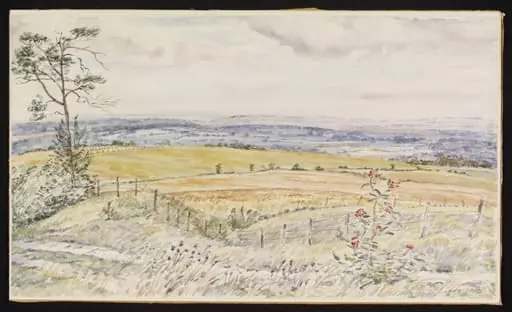 View from Calne Golf Course near Heddington
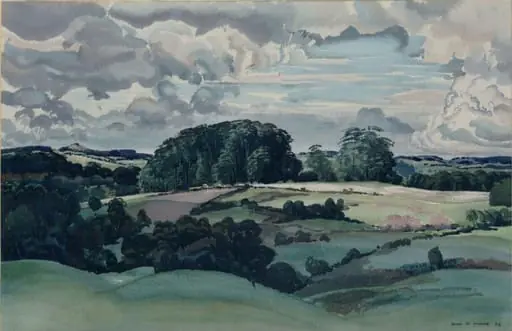 Landscape near Robertson, New South Wales
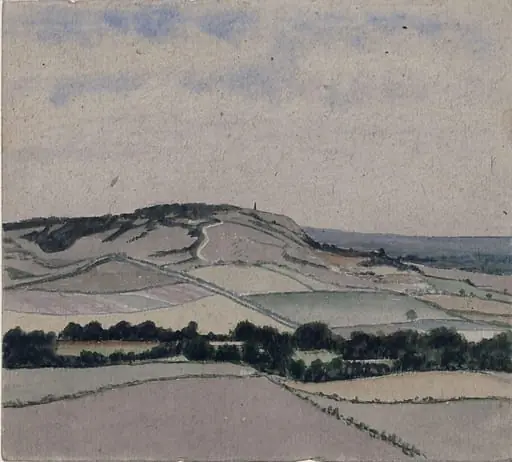 Coombe Hill, Wendover
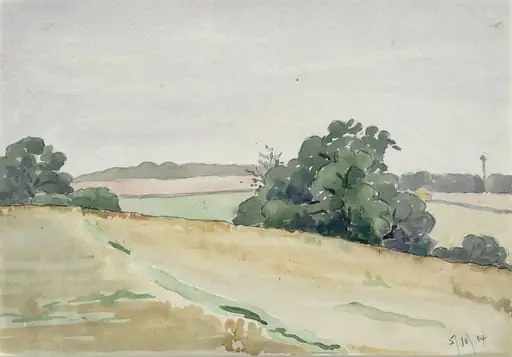 Untitled
 Landscape with evening effect, Abinger, Surrey
 Sussex Weald
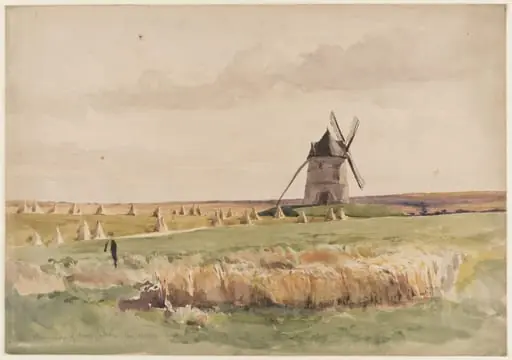
 Landscape with Cornfield and Windmill
 Rayleigh, Essex