Artwork
Νύχτες από γραφίτη
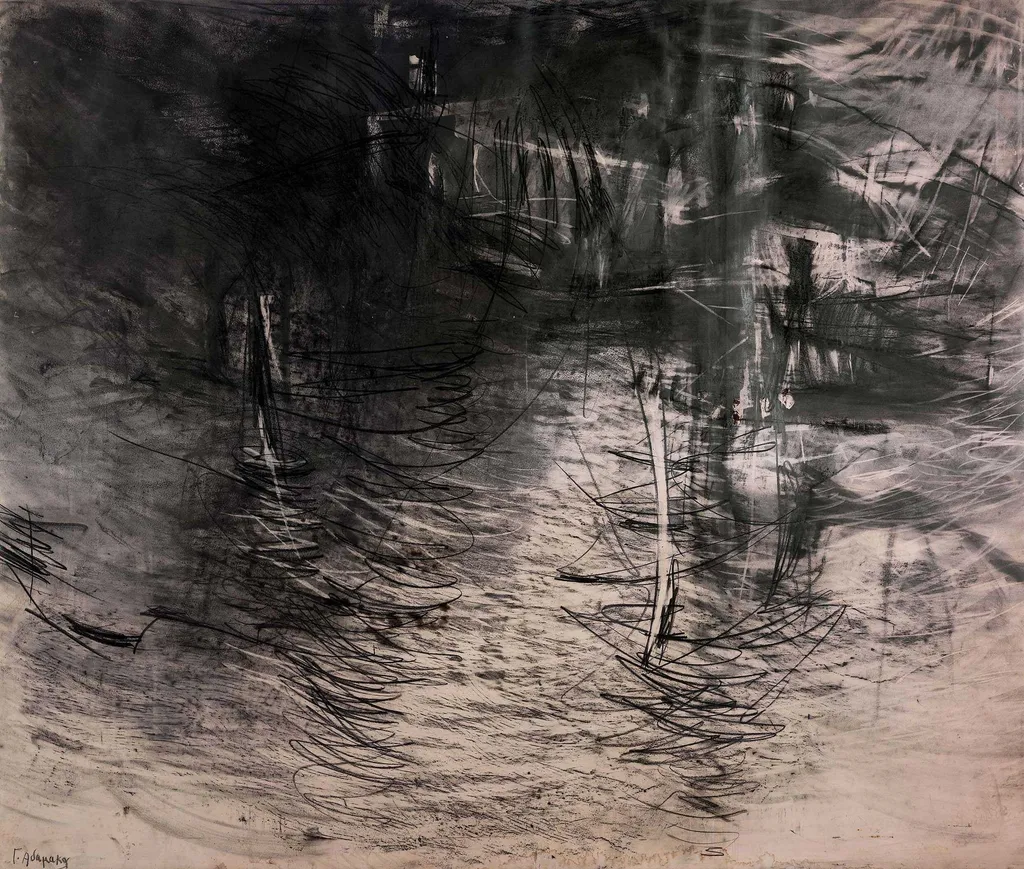
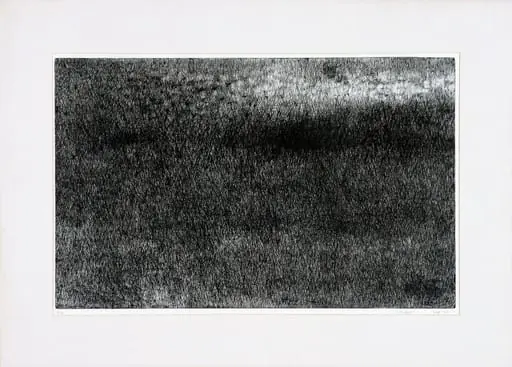
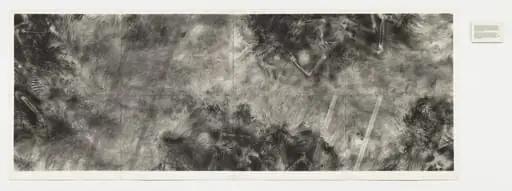
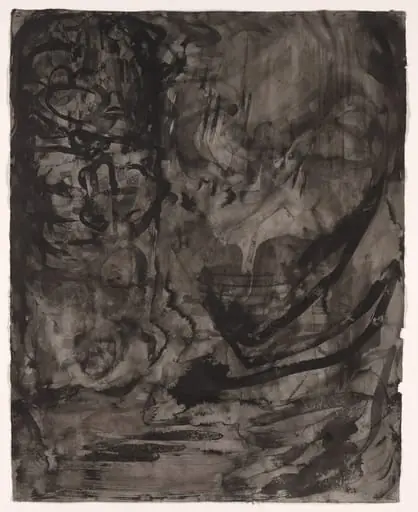
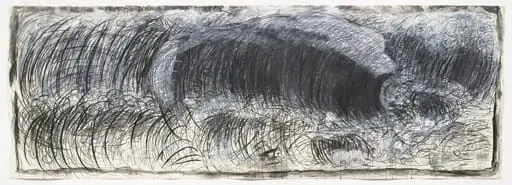
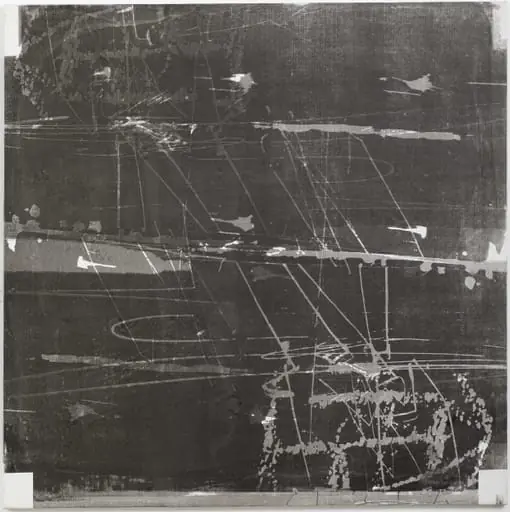
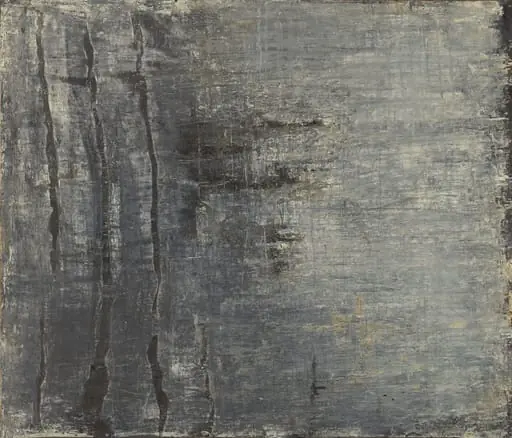
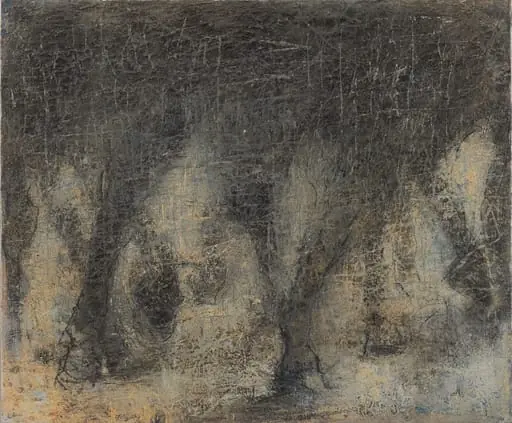
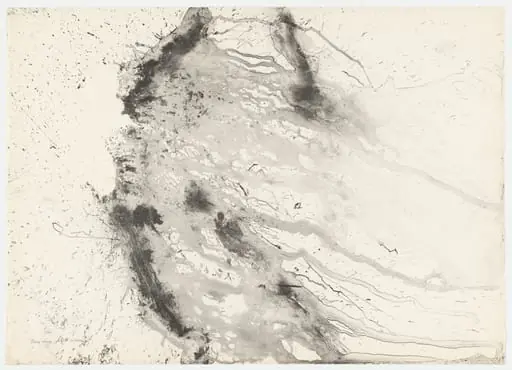
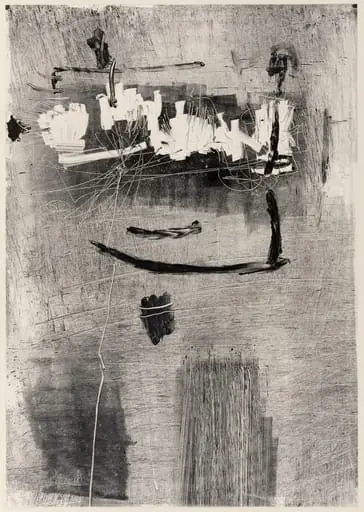
Νύχτες από γραφίτη is a drawing by Yiannis Adamakos. It dates from 1992 and is held in the collection of the Metropolitan Organisation of Museums of Visual Arts of Thessaloniki – MOMus. This graphite drawing on paper presents a non-representational field of marks, where pressure and motion replace figurative content.
About this work
Overview
The work’s energy emerges not from depiction but from the physicality of its making — each stroke and smear a record of gesture and intent.
This graphite drawing on paper presents a non-representational field of marks, where pressure and motion replace figurative content. The artist employs a sharp pencil to carve aggressive lines across the surface, while softer smudges create gradients of gray that hover between presence and absence. The work’s energy emerges not from depiction but from the physicality of its making — each stroke and smear a record of gesture and intent.
Subject & Meaning
No recognizable subject anchors the composition. Instead, meaning arises from the tension between force and restraint: jagged lines clash with diffuse smudges, creating a visual rhythm of eruption and dissolution. The absence of form invites interpretation as an emotional landscape, where darkness and light function as expressions of inner states rather than external scenes.
Technique & Style
The artist uses graphite with extreme contrast — sharp, incised lines cut through the paper’s surface, while broad, smudged areas blur into near-transparency. The pencil’s edge is pushed to its limit, producing both brittle fractures and velvety halos of gray. The white paper remains active, not merely a background but a counterpoint that breathes through the darkness, suggesting containment and release.
History & Provenance
The work is held in the collection of the Museum of Ethnography, though its origin and date remain undocumented. It was likely created in a private, experimental context, without intention for public display. Its presence in the museum reflects a broader institutional interest in non-traditional graphic expressions from the late 20th century, particularly those emphasizing materiality over narrative.
Context
Emerging from a post-war European milieu where abstraction and raw expression gained traction, the drawing aligns with tendencies in informal art and tachisme. It shares affinities with artists who treated drawing as a direct conduit for psychological states, rejecting polished technique in favor of immediacy. The use of graphite — humble, accessible — underscores a rejection of grand media in favor of intimate, unmediated mark-making.
Legacy
The work contributes to a quiet but persistent lineage of abstract drawings that prioritize process over product. Its endurance in museum collections signals a shift in how drawing is valued — not as preparatory or illustrative, but as a complete, autonomous act. Its rawness continues to resonate with viewers seeking authenticity in mark-making, beyond representation or ornament.
Artist & collection
Artist
Museum
Metropolitan Organisation of Museums of Visual Arts of Thessaloniki – MOMus
Continue through works from the same source collection.